A New Experience: My Kentucky Kitchen Table Project

By Abigail

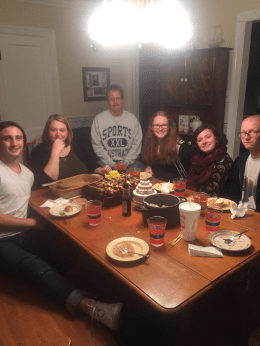
IMG_4885.JPG

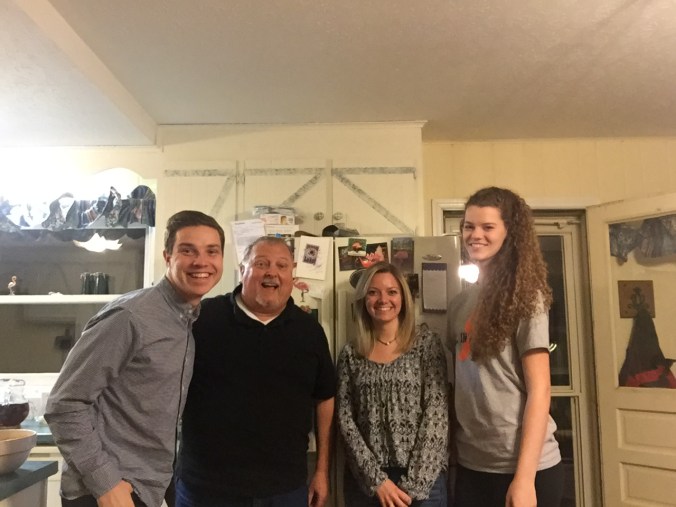
For my Kentucky Kitchen Table Project, I had the opportunity to travel to a home in Bowling Green, Kentucky that I had never been to before. The host was a very friendly man, named Nate, who was very open to sharing personal stories and what it means to live in society today. Nate is a retired school teacher and is currently preaching at a local Christian church in Bowling Green, Kentucky. His wife Nancy has passed away but he is very close with his son, daughter-in-law, and grandchildren, whom he visits quite regularly in Florida. He is very outgoing and not afraid at all to tell embarrassing stories about himself or tell of many experiences he has faced. Also seated at the dinner table were two of my classmates from Citizen and Self. Zachary, a sophomore at Western Kentucky University, is from Louisville, Kentucky and is majoring in English. He told of his experiences as a swimmer in Louisville, Kentucky and his new involvement with Greek life on campus. Cate is a freshman at Western Kentucky University who is also majoring in English. She told of her experiences as a volleyball player in high school and of her job working at a local barbeque restaurant in her hometown: Glasgow, Kentucky. However, she is not involved with a Greek organization on campus.

When we first arrived at Nate’s house, we sat down at his dinner table and began getting to know one another better. We each described our adjustments to living on campus, and shared our backgrounds with one another. Nate talked about his experiences as a college student at Western Kentucky University and also at University of Kentucky and told us many stories about him and his wife. He also talked about how close he is with his neighbors and how they have a Fourth of July party every year full of fun and fireworks. Zach also discussed his closeness with his neighbors and how his parents host a neighborhood Bible study. I talked about how my neighborhood road is named after my last name because everyone who used to live there was related.

We then went and filled our plates with the delicious food that each person had contributed to the table. Nate cooked a full course meal including chicken, spaghetti, salad, rolls, green beans, and corn. Zachary, Cate, and I were responsible for bringing the deserts which consisted of chocolate chip cookies, rice crispy treats, and chocolate cupcakes. Nate said that he loves to cook and used to cook all the time when his wife Nancy was living, but it is so difficult now to cook for only one. Since Bowling Green, Kentucky is home to a wide variety of restaurants, Nate states that he likes to eat out a lot. We then directed the conversation to community and citizenship, and we began asking many questions that helped guide the discussion. We first asked him what citizenship meant to him. He said that citizenship means protecting, voting, paying taxes, and following laws. He also mentioned how he recognized that although there is a separation between church and state, he wishes that everyone would act morally by caring for one another. He believes that people have to be taught to care. Coming from a teacher’s standpoint, he used to see kids all the time who had feelings but did not see the responsibility to act on those feelings and care for others. His idea of citizenship and the act of caring for one another showed that his religious or spiritual identity, Christianity, related to how he thinks we should treat other people. He thinks that no matter what religious affiliation you are associated with, whether it be Buddhism, Christianity, or Islam, a person is expected to care. Nate shared his story of how he first became a preacher at the church he attends. He said he originally began on the minister supply list, a list including fill-in preachers when the main preacher is sick or in the hospital. However, his main preacher was fired and Nate was called to take his place. Willingly, he decided to do so and has been there ever since. He has been preaching for ten years. As we were on the subject of religion and its role in democracy, we went around the dinner table and shared our denominations. We are all Christians but I am a member of a Church of Christ, Cate attends a Baptist church, Zachary is non-denominational, and Nate preaches at a Christian church: Disciples of Christ.

Another topic that we discussed was the social issue that Nate holds closest to his heart. He said that working with the LGBTQ community has meant more to him than anything. His experience as a school teacher showed him that many who sexually identify as this were picked on and ridiculed. He said that his room was a safe space for them to go to and that they knew that. He said that many of them would come in his room during lunchtime and eat with him, that way they would not be bullied.

Lastly, we talked of the presidential election and the uproar it has caused on social media and in society. I told Nate about the discussion we had in our Citizen and Self class about the election and although some agreed with the decision made, and others opposed it, the students were still very respectful of others feelings. Nate told us that the reason why everyone was able to accept the differences in the room was because we had built relationships with one another and arguing over the election would hinder or hurt those relationships. He talked about the importance of connections and finding common ground. His advice for people running for office in our country is to learn to love your opposition. Although disagreements will occur, it is essential to love and respect the person that you are disagreeing with. Whenever we refuse to love and respect those we are disagreeing with, we have lost our humanity.

By doing this project, I learned a lot about other people’s views of our world today and how important it is to discuss with others the most prominent affairs affecting our country. Essentially, living well together involves understanding where others are coming from and being open-minded to other perspectives. It is not only about sharing your beliefs but it is about really listening and understanding others also. While sitting at the dinner table, it was very interesting to hear Nate’s take on the world. Nate is a man who lives in the same city as me, but I would have never had the opportunity to meet with him if it was not for connections and this project. Although I was very nervous when coming into the situation, I am glad that I went as I now see it as a great activity that really ties into the whole basis of the Citizen and Self class: understanding how we live and work well with others. I would definitely recommend this project to other students because although every individual at the kitchen table came from diverse backgrounds, we each brought something new to the table and was able to talk through our differences.
Blue Dog Democrats and Microfiches: My Kentucky Kitchen Table Project

By Erik

img_5899

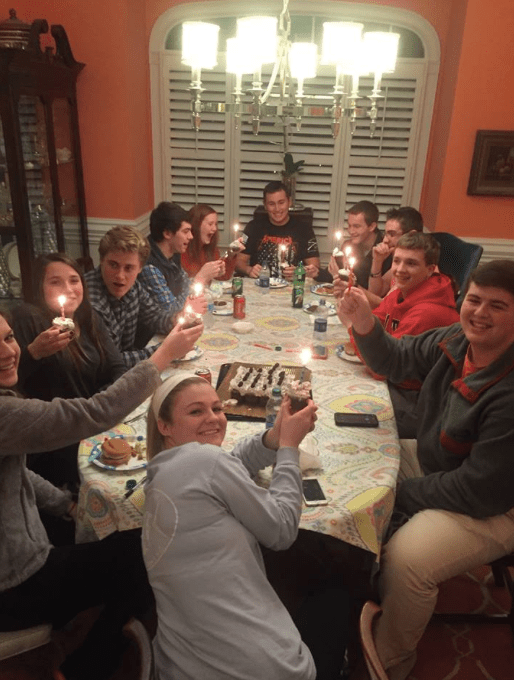
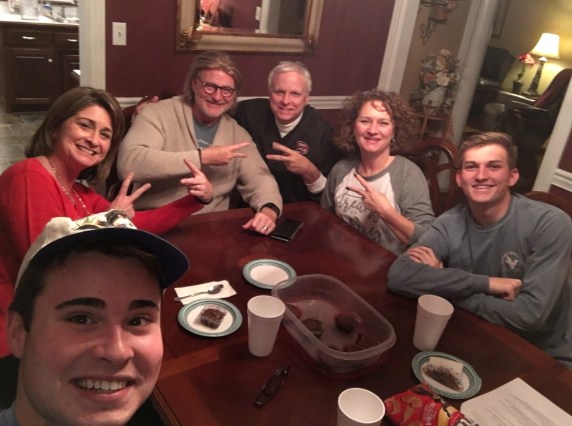
This fall, I had the pleasure of hosting my Kentucky Kitchen Table in my own dining room.  Since I have lived in Bowling Green, Kentucky my whole life, it was a convenient ten-minute drive from campus for me and John Mark, the cohost of the project.  Around the table (from left to right) was John Mark, a junior in the Honors College at WKU who is majoring in creative writing; DeAnn, John Mark’s mother, a very sweet woman who works as a physical therapist and is from Roanoke, Virginia; Rick R., my father, who works as a cognitive behavioral therapist, is infamous for his cheesy “dad jokes,” and is from Minnesota; Rick T., an accountant, history buff, and talker of all things politics who is from Carroll county and had lived in Franklin, Kentucky for many years; Kathy, my mother, who works as a marriage and family therapist, has the kindest of hearts, and is from Tennessee; and myself, a freshman in the Honors College at WKU who is majoring in chemistry and biology.

As the night began, we all gathered around the table and each enjoyed a big bowl of chili or two, making a few brief comments about my dogs who were loudly pleading for liberation from the bedroom in which they were locked in for the night.  Since the 2016 presidential election was earlier in the week, I knew political talk was inevitable, but I was excited to hear the various opinions that our guests had brought to the table, nevertheless.

Like most Kentucky Kitchen Table projects, we started out by discussing what it truly means to be a citizen, apart from voting and paying taxes.  The common response to this question was along the lines of how you should offer help to those who are in need, and how you should respectfully voice your opinions to the community when the opportunities arise.  In other words, you should be open to serving the community in hopes of making it a better place to live.  Connecting these ideas to the class, I presented the idea of how Thomas Jefferson highly valued town meetings because it was the healthiest way that the community could discuss societal issues.  After we explored many different answers, Rick T. posed his own question in response:  where has civility gone in today’s society?  His explanation to the question was composed of his experiences throughout his life, telling us about his noticing of society beginning to shift toward a lack of respect for one another’s opinions.  John Mark followed by talking about how people’s ideas are so polarized from each other, which oftentimes leads to people arguing with a closed mind, thus neglecting the idea of seeking a common ground to settle upon.

Switching the mood of the conversation, I asked those around the table what they thought some of the best things in today’s society were.  Those who were quick to answer listed off things such as technology, medicine, education, transportation, and the growth of capitalism and freedom.  DeAnn, reminiscing about old technology, asked me and John Mark if we happened to know about microfiches.   As we shook our heads no, DeAnn and Rick T. both took the opportunity to explain to us how troublesome it used to be to have to use a microfiche to research information for a school paper since all of your work had to be done at the library.  In contrast, the point was made about how our generation is fortunate enough to live in the age of technology, and how we are always roughly five clicks away from finding the answer to a myriad of questions online.  Being the philosopher that Rick T. is, he once again smoothly made his way into the conversation and posed another great question:  is the convenience of technology always a good thing?  We made the conclusion that in moderation, it is a good thing.  Rick R. talked about how thousands of years ago, people relied on each other for both safety and social interaction, and in contrast, people now just hunker down in the comfort of their home because technology and social media provides people with a sense of social connectedness.  This is one of the largest reasons that keeps us from getting to know our neighbors, and many of us are guilty of it.

Finally, with the election fresh on our minds, I posed the question, “what is some advice that you would give to the president-elect?”  A mutual agreement amongst everyone at the table was that the best piece of advice to is to tell him that the government is an institution, not a person.  This piece of advice would be good to tell the president-elect so that he may humble himself, and it is also a good piece of advice for those who are troubled by the thought of Mr. Trump in office.  Rick T. took this opportunity to access the perpetual history vault in his noggin to compare this situation to one seen earlier in American history: Ronald Reagan’s presidency.  Rick T. explained how Reagan was viewed as unfit for the presidency because he was a “stupid actor,” but went on to hold his own because of the smart individuals that he surrounded himself with in office – something that I think most of us hope Mr. Trump will do.  Also, one of the biggest revelations that occurred at the table was when Rick T. stated that he was a Blue Dog Democrat.  As a look of confusion emerged from many of our faces, Rick T. quickly explained that it was a term used for democrats who hold conservative views on many issues.  After Rick T. dropped this bomb on us, I personally began to question my stances on political issues and sift through the views that I can consider bipartisan.  As for DeAnn, she learned that her political views best matched up with Rick T.’s, considering herself a newly-found Blue Dog Democrat.

In closing, I came into this project expecting the night to be short, boring, and full of expected answers; however, I was shocked at how insightful and enjoyable the night turned out to be.  I am very thankful that I was required to complete this project, and I would absolutely do it again.  From the time I asked the first question of the night, to the time we cleaned up the dining room table, two, almost three hours had sped by.  Never in my life had I perceived the saying, “everyone has something to bring to the table,” as being so accurate.  If you ever have the chance to organize your own Kentucky Kitchen Table, I highly encourage you to, for you may walk away from the night with a different perspective on society, or maybe even discover that you are a Blue Dog Democrat, who knows…

By Kelby

Kentucky Kitchen Table .png

For my Kentucky Kitchen Table project, I hosted a hometown dinner. Instead of me being the one who invited the guest I let my sister decide who would be invited. I thought that letting her decide who should be there would put an interesting spin on how the project works. All the guests were younger than me which I expected to give a different perspective than what I would have gotten if I had invited people the same age as me here in Bowling Green. I had the dinner at my home in Louisville. My mother very graciously made my family’s favorite dinner for every one that was there.  This was to make sure that guests would not have to provide anything and would be able to just enjoy the evening.

Kylee, my sister, invited three of her friends that I had only met briefly in passing. The one girl invited was her friend Cate, who is her coworker at the library. They both work as clerks. Cate is a very liberal person and does not hesitate to share her views on anything, especially things that involve politics. Cate’s brother Bob was also invited. He has a lot of political views, but is often not as vocal about them as Cate. The last person she invited was her friend Brandon. He is an out gay man who she met through friends at school. My sister and my parents, Jon and Misty, were also there. My entire family is very conservative. My father is a southern Baptist preacher and my parents raised me and my sister very religiously.

When I talked to Kylee before the meal she said that Cate, Bob, and Brandon were very excited to meet our family and to participate in this project. The only thing that she mentioned in a negative way was that Brandon was not sure how my parents would react to him. I was interested to see how things unfolded. Knowing my parents, I know that while they have very strong views they are also very welcoming of anyone they meet. They like to get to know people’s stories. I knew that there would not be any issues even though there were would be several different views and beliefs presented that night.

This dinner happened to fall right around the same time as my sister’s birthday, so the conversations that took place early on were directed around that. We soon drifted into other subjects and had some very deep, meaningful conversations about current events. It became clear that there were several different opinions in the room. Everyone did a really good job of listening to others’ opinions and sharing their own viewpoints without chastising or belittling the other people in the room. We were able to have very good conversations and really learn about why people believe what they believe.

The way the conversation went reminded me of the reading How We Talk Matters. In that article we discussed the trend of people not listening to others when they talk about social or political issues and almost yelling and forcing their views on others. We also talked about how this trend is hurting society because no one will take the time to listen to others to gain an understanding about what they believe. This was not at all the case with this project. Everyone who was present really seemed interested in what others there had to say and were willing to think about things differently.

One of my favorite moments of the night actually happened after dinner was over. Cate, Bob, and Brandon stuck around after the meal and we all played Apples to Apples. At first it was just me, my sister, and her friends, the younger crowd. My parents were loading the dishes into the dishwasher and tidying up the kitchen. Toward the middle of the game my dad decided that he wanted to join in play. You could tell that Kylee’s friends were not sure how this was going to go and were afraid the fun we were having was about to be dampened by a middle age father wanting to play. They soon realized that my father was not easily offended, had a good sense of humor, and would play along with most anything that was happening. We spent a good part of the night playing different games and I think that was much more fun than the dinner itself was.

I think that this just goes to show that sometimes people defy your expectations. Sometimes you can find common ground in the funniest places with people you think may not except your way of life or agree with what you believe. I believe if more people realized this we would all be able to live better together, which is a key theme to this class. Also, the fact that my sister is such good friends with people who obviously believe very differently than her, shows that people can live in harmony if they are willing to work together and respect each other’s differences.

Overall this project was pretty fun. It was originally kind of hard to organize, and I had to change plans a several times for it to work out. An unexpected bonus, I believe that I gained three new friends out of it. It is so funny how you can hit it off with different people even if you think that you will probably only be acquaintances. Brandon and I ended up getting along really well and have stayed in contact since the project. To me, this new friendship is greater than any grade I might get for this project. I am glad that something that will hopefully last for a long time can blossom from an assignment that I wasn’t sure would be very fun. I hope that everyone else’s project went as well as mine did and I hope that classes in future semesters enjoy it as much as I did.

Zachary’s Kentucky Kitchen Table

By Zachary

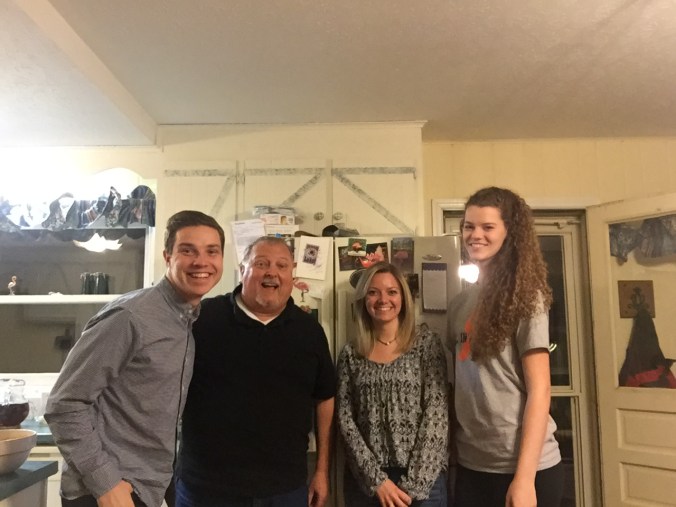
Our dinner consisted of myself, Abigail, and Cate at Nate’s house.  I arrived first and Nate began telling me about the different jobs he’d had throughout his life before he settled on teaching.  The transition he made that I thought was most interesting was how he went from working in a restaurant to being a food salesman.  He just changed who he was selling to food to.  Abigail and Cate arrived shortly after and we sat down and began chatting before we began to eat.  We all went around and briefly shared our major and where we are from.  I don’t recall Abigail and Cate’s majors but I know they were both in the sciences.  Abigail is a freshman who went to GSP before her senior year of high school and is from Kentucky.  Right now she is on a club cheer team in Bowling Green.  Cate is also from Kentucky and played volleyball in high school.  Next Nate began sharing with us.  He told us about his son and grandchildren and pointed out photos of them on his fridge.  He then proceeded to tell us about how he met his wife.  The story was very funny.  He was almost hit by someone driving a car and proceeded to flip them off.  The driver stopped and rolled down the window and he realized that he knew her.  From then on they hit it off pretty well and eventually he followed her to another school where they realized they had feeling for each other and began dating before eventually getting married.

Nate shared a lot of stories of us.  One that was particularly interesting was why he does not swim in the ocean anymore.  On him and his wife’s anniversary one year they were able to go snorkeling one day.  They began and he told us it was beautiful because of the amount of fish and how blue the water was.  But he was not able to stay in the water long.  Soon all the fish began swimming to him and nibbling on his body.  He told us how he immediately got swam up from there, got back in the boat, and did not got back in the ocean for the rest of their trip.  We began talking about this story after we talked about how Cate lived near a lake which prompted Nate telling us about why he can’t swim in the lake.  Another interesting story he told us was about how he helped teach a student in Germany about finding the volume of a cucumber by unconventional means.  He gave him a few ways to do it but the most interesting was dropping it into a body if water and then using the resulting displacement to find the volume of the cucumber.  He then took this way of learning and had his own high school class do it in class to make the whole experience more interesting and fulfilling for his students.

Around this point we began eating the dinner that Nate made for us.  It consisted of fried Italian style chicken, spaghetti with red sauce, corn, green beans, some rolls, and salad.  The food was delicious and was a great supplement to the conversation.  The conversation slowed a little bit as we began eating.  He told us that he has always enjoyed cooking and before his wife passed away.  He told us about some other meals he had prepared when he had friends over to play bridge.  He took particular pride in the Bourbon balls he had made for them.

As we finished our meal we began to have a more pointed conversation as Abigail began asking some questions from our guide.  This led to our most interesting conversation of the night.  Nate began telling us about his worldview, where it came from, how it informed the way he treated others, and how it informed his outlook on America.  He told us how he truly believes the most important thing that exists in how we interact is having respect and kindness for everyone, especially those we disagree with.  He said this worldview came partially from his faith but was informed largely from his time as a teacher.  He told us about seeing how LGBTQ kids were treated in his school and how he reached out to them to help them feel safe and wanted.  He opened up his room for lunch and they often came and ate in his room.  Because of this he is supports LGBTQ individuals but also understands how important it is to treat everyone with kindness.  The conversation moved towards deliberation and he told us how he went about talking to those he disagrees with on issues.  He emphasized how important having a base position of common ground was to having a civil conversation.  When a conversation began to become more hostile than he preferred he would bring them back to why they were friends in the first place.  This way of discussion leads to conversations that are productive and insightful instead of conversations that are just two people yelling their opinions at each other.

Without knowing it Nate had begun sharing his view on what I feel is the most important aspect of our class: how to have civil and productive conversations with those that stand opposite of us on issues.  While I feel we have learned a lot about deliberation during class, talking about outside of the class setting gave me an understanding of how important it is that is hard to gain in an academic setting.  Treating people that we think our wrong with the same respect we would want for our self only has positive outcomes.  The informal way he spoke of this was a perfect supplement to the formal way of learning we have in class.  Using deliberation while talking about abstract things in class is helpful to use, but talking about it in relation to “that guy on Facebook” gave it a realism that is hard to gain in a classroom setting.  As the conversation closed I was very glad to have had the chance to meet Nate and hear his stories and opinions.  He was able to put to words a lot of things I had felt about the election without being positive or negative toward either candidate.  The entire experience was a very positive one that I hope many students will get to experience in the future.

img_4885

My Kentucky Kitchen Table Experience

idk

By Tyler

I never really thought that I’d find myself at a stranger’s house for dinner, nor did it sound very appealing, but 10/10 would recommend. I’m more of an introvert and having conversations with people I don’t know makes me nervous. So I’m glad I was kind of forced to break out of my shell because I would never have done this on my own.

Kaylin, Amy, and I began our little journey using Google Maps to try and find where we were supposed to go. After a few wrong turns we finally made it only to realize there were two doors and we had no idea which to go in. After circling the house, we finally decided on a door because we could see people cooking through the window. When we walked in we were greeted by Alison’s dog, Hazel, and then Alison and Leila. Alison, our host, teaches in the English department at WKU. Leila was a guest also eating with us who teaches Citizen and Self at WKU. I guess I should also give a brief description about me and my classmates. I’m from a small town in Kentucky, Kaylin is from an even smaller town in Kentucky, and Amy grew up in a bigger town in Tennessee that neighbored an army base.

After introducing ourselves, Alison put us to work right away chopping vegetables and setting the table. I’m glad she gave us something to do to make the meal seem more like a team effort. We made small talk while doing so and once everything was ready, we took our plates and sat down to eat. I was starving and was super glad that we were having chicken tacos instead of some weird vegetarian food that Kaylin, Amy and I had joked about on our way there. We first talked about our majors and different little things about ourselves. Then Alison really got my attention when she told us about her college experience. She had originally gone to college with the goal of becoming a lawyer but then she got a random opportunity to go teach English in Japan. Since she had never gotten to study abroad, she took up this opportunity and ended up falling in love with it. She stayed for two years in Japan and went on to teach other countries as well. She dropped the idea of becoming a lawyer and became a teacher instead. Her advice to us was just try everything and jump at the random opportunities. This made me think of the Jane Addams reading for our class “Snare of Preparation.” We have to just throw ourselves into the world and not really think about it. We just have to actually do it.

As we were eating, Leila and Alison were guessing spices that were in each other’s dish. They both seemed to really like to cook and it wasn’t your normal everyday country cookin’. They knew a lot about different ethnic foods and seemed to have tried it all. Alison says she learned a lot of it from her experience in Japan. They gave us some suggestions for the best places to get sushi and told us to visit the salt cave in Bowling Green if we ever needed to clear up our sinuses.

We then decided we should probably ask the question of the day, “What does citizenship mean to you?” Leila laughed a little saying that she should have a good answer to it since she teaches the class and then Alison said that she thinks it means recognizing that everyone is dealing with something. I immediately started to wonder if she had sat in on one of our classes because those exact words have come up many times in our discussions about empathy and how to live better together. I was not expecting her to say something so dead on to what we have been discussing all semester. Honestly, I was expecting Leila to say something about it since she teaches the class, but she just agreed with Alison and added that we should always think about why a person is acting the way they are, maybe they’ve had a bad day, or maybe they weren’t brought up the same way we were. We had a small discussion about citizenship, much like ours in class, about putting ourselves in another person’s shoes.

We then got on the topic of dress codes at our high schools. We talked about how Amy and I had teachers that would sit at the door as we walked in to look at how we were dressed and make sure it was appropriate. We mentioned how guys were allowed to wear shorter clothes than us and then Leila made a comment about imagining if all of this time was spent teaching men about consent instead. This conversation eventually led into the talk about feminism. Amy mentioned how surprised she was by how few people stepped forward when asked if they were a feminist in the game we played in class. I have to be honest, I didn’t step forward in class because I thought that it meant that I got super offended when guys made jokes about women or got mad if a guy held a door open for me or something. I didn’t know that it actually just meant that you believe women should be equal to men. Someone mentioned that people just don’t know how to express themselves and Kaylin went on to tell a story about her boyfriend’s mom talking about how she didn’t believe in interracial marriage but eventually went on to say that she just didn’t want it for herself but she didn’t look down upon others who do it. Sometimes when people say things, they don’t actually mean what it sounds like. Sometimes things are definitely worth deliberating on.

We moved onto dessert, which consisted of cookies, Nutella, and goat caramel. After Alison said it tasted “goaty” I decided I would pass on that part of the dessert. However, everyone else seemed to really enjoy it. Alison offered us tea with rice in it and I decided that I should probably pass on that as well. As you can tell, I’m not very adventurous with the foods that I try. We wrapped up our conversations and said our goodbyes. Instead of the dreaded dinner that I had imagined, it ended up being my favorite part of this class. It’s not too often that you actually sit down at a dinner table and have a home-cooked meal filled with meaningful conversations, especially in college.

My Kentucky Kitchen Table

By Katie

Screen Shot 2016-11-21 at 10.11.51 AM.png

The lovely people seated at the table are a few of my great friends and some of their friends. We are religiously similar but culturally, politically, and geographically diverse. Starting at the bottom, there is Savannah, she is my spunky friend who does not really care about political conversations, which was interesting to have her there and hear her input. To her left is Mary Margaret, she is blunt yet loving. Then there is me. To my left is Lee, he is also very blunt and conservative and an all around goofball. To his left is Nick, Nick is also conservative but mostly keeps to himself. The girl next to him is Ellie, she did not eat with us but wanted to join the picture. The male in the back is Jonathan, he is currently in training to be in the US Army. Next to him is Spencer, a firefighter. Then the male with the glasses is Connor, he is shy but speaks up when he finds something important. He came with Jonathan to our dinner. The male in the red sweatshirt is Ty. He is also very conservative and follows conservative beliefs when it comes to politics. Harrison is the last person in the bottom right corner with the grey and red Patagonia pullover. He is very opinionated and not very open minded when it comes to political topics.

At this dinner we discussed many different topics including sports, religion, the presidential election, what it means to be a citizen, our jobs and their purposes, our ideal futures, the status of our world today, and many other topics that could be considered irrelevant to this topic.

When I asked my friends what citizenship meant to them beyond voting and taxes, one of them said “Citizenship gives you a sense of belonging to something bigger than yourself. It gives you the rights and responsibilities that come with living in the greatest democracy in the world. It gives you the ability to be and do anything you want to do.” Just from reading that, one could gather that my friends are proud to be Americans. We also discussed the privileges American citizens have that other countries such as China do not have, especially privacy. We deliberated for a couple of minutes about the privacy in America. Although our government does not listen to what we say on the streets out in public through bugging traffic lights and things on the street, our government can view our computers and that was disturbing to us. Some brought up the notion that the government filters our technology to keep us safe from potential terrorists and people that can harm us.

The presidential election was also a hot topic at our dinner. A great number of people at the table sided with Trump on a few of his issues, especially with abortion. However, some of the girls were frightened by the idea of not being able to have control over their own bodies, but were conflicted with the idea of abortion because of their religious views on the right of life and who should be in control of such things. The boys brought up how Hillary was guilty and should be held accountable for the Benghazi deaths and that she cannot be trusted with our lives.

Since the major thing we all have in common is religion we also discussed how we should treat others based on our religious views. One of the main points brought up is that the changes in society are making Christians look hateful and ignorant. This really bothered us. We discussed homosexuality and the House Bill 2 in North Carolina. Since we are Christians, the Bible tells us to love one another and treat each other with respect, grace, and kindness. It also says that homosexuality is a sin and is wrong. Someone at the table said that if we (the government) condones people to use the bathrooms that they most identify with, it would almost be promoting homosexuality, bisexuality, etcetera. It is conflicting because we are called to love and not judge, but it is confusing on who is to draw the line because none of us here on earth are God, the ultimate judge.

We also discussed our experiences growing up in different families with different lifestyles. When I asked about family meals and eating at home, this is what one of my friends said, “I had meals with my family growing up but it wasn’t every night because we had really busy schedules. I really liked it and it made time together special.” One of my friends is a dancer and an athlete with three other siblings. She said her family rarely gets to eat dinner at home around their table and that their dinners mostly consist of drive through meals on the weekdays. Another friend of mine was only involved in the marching band at his school and ate dinner at home with his family almost every night. He enjoys the time spent together and the conversations but also wishes that his family would go out more often.

Being young adults, we of course discussed our jobs and the purpose behind them. One of my female friends that works in an office said this, “I see my job as serving a higher purpose. When I go to work I am earning money that is not just for myself. My money goes to support businesses, charities, and to support myself and my future family.” On the other hand, one of my friends has a rather wealthy family and has not had to work a steady part-time job other than working at a dress shop once a week. Since she has most of her needs taken care of by her parents, she does not feel the need to work. Unlike her, one of my male friends that is also wealthy has a strong work drive and works for things he wants and is already saving for his future. He plans to work in real estate, so he works for his father who is a real estate agent and builder, and for other builders in the community so he can get career related experience.

Another topic discussed was our plans for the future and future home life. Some of us want to live in neighborhoods where our children can play with their friends in the neighborhood while some of my friends want to live out in the middle of nowhere, where no one can bother them. I asked if any of them know or knew their neighbors growing up and one of my friends responded with this, “I also don’t really know my neighbors. I know their names and say hi to them when I see them, but we’ve lived by them my whole life but never really gotten to know them. I think it’s because life is so hectic and I don’t live in a neighborhood with a community atmosphere. And my neighbor may or may not deal drugs, that is also a factor.”

Through this assignment, I learned a lot about my friends that I would not have learned otherwise. I was somewhat concerned with how some of them are so closed minded when it comes to political issues and ways to deal with issues in our democracy. Our discussion at our meal related to the three questions of the class: How do we live together? How do we solve problems? How can people have more say over what their lives look like? Over all of those three questions, the one discussed the most was how we live together.

I think this assignment was very unique and interesting. I got to meet people and also meet my friends I already had on a deeper level. We discussed many things that would not usually be discussed in a normal gathering. Some of the topics made people feel uncomfortable, but it was good because people were able to form opinions and learn how to express themselves.

Debating with class

By Kaitlyn

Brooke and I held our Kentucky Kitchen Table project at a house here in Bowling Green, Kentucky. A sorority sister of Brooke’s opened her home to us and her mother agreed as long as everyone supplied a dish for the meal. I contributed by making the macaroni and cheese that can be seen to the right of the picture. Brooke made the shredded steak and banana pepper mix. Three of my sorority sisters (Alpha Omicron Pi’s) brought a vegetable and cheese plate and three of Brooke’s sorority sisters (Kappa Delta’s) brought rolls and cheese slices. The mother of the home also chipped in by making pumpkin cheesecake brownies that we were able to enjoy after dinner. You can see all of the food and most of the people in the photos below (the brownies were still baking).

Brooke and I both (as noted above) had invited three women from each of our sororities to the dinner. Along with our sorority sisters, the mom of the house and her youngest daughter were in accompaniment as well, Kelli and Allison. Kelli is the mom of Brooke’s sorority sister, Caroline. She is a middle-aged woman and is a pharmacist here in Bowling Green. Kelli is an alumna of WKU. Through speaking with Kelli we learned that she is a Christian woman and doesn’t claim a particular denomination. Kelli is a registered Democrat and grew up in Harlan County. In further discussion about Harlan, we learned that it’s a poor area in Eastern Kentucky and growing up in this area she was from a family with little means. Kelli was a first generation college student. Kelli’s youngest daughter Allison is currently a junior in High School. She has grown up in a middle class family in Bowling Green, Kentucky. We questioned Allison about her political views, but she is too young to register and hasn’t quite made up her mind yet on which political party she sides more with. When discussing her faith, she explained that she is still discovering her faith and wishes to explore different denominations once she comes to college. Allison is undecided on what major she will choose when coming to college and has yet to decide where she would like to attend. Having a younger perspective, especially one from a very unbiased party was a nice addition to the conversation and at times helped us all see the issues we were discussing from a, sort of, birds eye view.

The three sorority women I invited were a few of my sorority sisters that Brooke hadn’t met before, Brittany, Sarah, and Haleigh. Brittany is a senior here at WKU and is from Versailles, Kentucky and is majoring in social work. Brittany says that she would describe her socioeconomic status as upper class. When asked she said that she identifies with the Republican Party and is Southern Baptist.

Sarah is a junior at WKU and is from Franklin, Kentucky. Sarah is majoring in elementary education and describes her socioeconomic status as lower-middle class. She identifies as a member of the Democratic Party and is a nondenominational Christian.

Haleigh is a senior at WKU and is from Glasgow, Kentucky. Haleigh states that her family is upper class. Haleigh is in the process of applying to law schools. She identifies with the Republican Party and is a member of the Church of Christ.

Brooke’s guests were some of her sorority sisters that I had never met before, the Kelli’s oldest daughter, Caroline, along with Christa, and Madison. Caroline is a junior at WKU. Caroline is working on a double major in biology and psychology with a pre-physician’s assistant concentration. Caroline is a member of the Honors college here at WKU. When asked, Caroline explained that she identifies as having independent political beliefs. She said that she has liberal social beliefs, but conservative beliefs regarding government policies. She grew up in the same family as Allison, a middle class family in Bowling Green, Kentucky. Caroline identifies as a Christian and seems to fit in best with the Presbyterian denomination.

Christa is a freshman and is also in the Honors college at WKU. Christa is working on a major in biology and is from Louisville, Kentucky. When asked Christa describes her family as upper class and says she is a devout Catholic as well as very conservative. She is a registered Republican.

Madison is a sophomore and a member of the Honors college at WKU as well. Madison is majoring in finance as well as accounting. Madison grew up in Northern Kentucky and describes her family as lower class. Her residual check from the university is the means she uses in order to pay for her sorority dues. Madison identifies with the Democratic Party and describes herself as spiritual rather than religious.

Overall, there was a decent amount of diversity at our table. As you can see from above, the political parties were split about half and half between the Republican party and the Democratic party. Plus, we had the generational diversity which gave us a nice range from the host, someone who had been around and seen different things then the college students at the table did, as well as having a younger viewpoint with the host’s daughter. I truly enjoyed having the different generations represented at dinner because the generation diversity gave a different take on every aspect of the conversation. In regards to diversity of religion, most of our group were Christians, however there was diversity in the denominations that everyone associated themselves with which allowed for some diversity in conversation.

The dinner went very smoothly for the most part. I think this was in large part due to the way Brooke and I approached the dinner. Brooke and I began the dinner by explaining the purpose of the project and set the tone for the dinner by laying out some guidelines. There were three guidelines: 1. We would all remain respectful of others’ opinions and beliefs, 2. No one would be required to share if they felt in any way uncomfortable doing so, and 3. Brooke and I reserved the right to change the topic of conversation if we felt that the conversation was deteriorating and was no longer productive. Throughout the dinner the guidelines never had to be referenced, however I think they set the tone for the dinner and helped all of us stay on track with our discussions.

Our opening question for the dinner was, “Beyond voting, paying taxes, and following laws, what does citizenship mean to you?” After a few minutes of thinking discussion began. The participants at the table were all in agreement that a good citizen is one who goes through their everyday duties, but always goes that one step further. A good citizen is the one who truly takes an interest in their neighbors as people and plays a role in helping them and the community however they can. I then asked the question, why do we all think that this is how a good citizen should act? It seemed unanimous that the women in the room were stemming their answers from their Christian roots. They were all thinking in the aspect of living for Christ. From there, Brooke questioned the group about the extension of the radius of support they were discussing in regards to the good citizen. Who in the group seemed to view it more locally and who viewed it more globally? The women who lived in cities, Christa and Allison, seemed to think of themselves as more global citizens and when asked couldn’t tell us much about their neighbors, however, Madison and Haleigh who were from more rural areas knew a lot about their neighbors and had developed those personal connections and saw themselves as more local citizens. Sarah, was the outlier, being from Franklin we would have assumed she may see herself as more of a local citizen, but when asked she described herself as a global citizen and said she attributed this to her mission work that she had done in Haiti. Spending time in Haiti changed Sarah’s viewpoints on citizenship and she thinks that we should help where we can whenever we can. Sarah brought a different aspect to the table with her experience abroad and I think everyone enjoyed hearing her perspective.

The next hot topic of our discussion was the presidential election. Our dinner was hosted the week prior to elections and it seemed that everyone was slightly more edgy about this topic. We had a multitude of varying viewpoints in the room which gave us an in-depth debate, however, Brooke and I steered the conversation towards what each person in the room wanted America to be and who of the candidates in the running could achieve those desires. Caroline began this discussion and explained that she saw an America that had expanded rights for all citizens, no matter the race, sexual orientation, etc. Christa took her turn after Caroline and described her America as extremely conservative. After discussing for a bit it was clear that we were not going to be able to come to an agreement about which candidate could give America what it needed nor could we agree on what exactly it was we thought America should look like. Many questions were then posed such as, how can we make America better when a better America looks different for each of us? If this is how divided a group of ten of us are, imagine how divided this country is. Is our country ever going to be united? Is the division of our country going to get worse every year? How will that effect coming elections? Kelli shared her experience over the years and explained that there had been awful elections in the past and yet, we were still standing. This made us all feel a little better and then sent us into a topic of discussion about the media and how this election may just seem worse than others due to the medias involvement. One conversation led to another and soon enough I realized we had been discussing different topics for almost two hours and we all decided it was about time to head home.

Through this project I learned how important it is to be open-minded and to not judge a book by its cover, or even its overview. The women in this house looked similar to me, and had similar religious beliefs, and most went to the same school and were also in sororities, however, not one of these women had the exact same viewpoints as me. We all varied in ideals and what we thought was best, but we all listened and respected one another’s opinions. We all practiced being open-minded. This dinner and these conversations gave me an insight on what deliberation can achieve when done right. In the atmosphere we all created, everyone’s voice could be heard and was honestly considered. In Melville’s, “How We Talk Matters,” a reading for our class, he states, “Talk is the essential ingredient of politics. It not only shapes decisions, it shapes us – our thinking, and our understanding of ourselves and others, our way of dealing with conflict and differences.” What Melville is saying here is exactly what we put into practice at this dinner. Talking is a way of understanding one another and a way of figuring out our differences. I think that if our country was able to talk the way Melville describes talking, then maybe, just maybe America could get on the right track. This project was very enjoyable and I truly learned so much about myself and the new friends I made at our dinner. I hope that I can continue my life practicing the art of talking and actively listening that was shown to me during our discussions at our Kentucky Kitchen Table and within this class.

Lexi’s Kentucky Kitchen Table

When we first got assigned this project, I was immediately stressed out! I rarely go home because it is such a long distance, but I decided this project would make for a good excuse to travel the distance and plus I would get to meet up with old friends and make new ones. I texted my mom and told her we had to host a dinner for my friends for a class project. She was ecstatic; she lives for opportunities to host my friends (and listen to all the gossip). I invited friends who lived nearby and went to the University of Cincinnati and Northern Kentucky University and told them each to bring a friend they had made in college. The table would consist of seven college students, which doesn’t necessarily sound diverse, but after having mature conversations it turned out to be.

img_4932Sarah, Lacey, Lauren, and Meredith all grew up with me and were who I considered my best friends. Before we left for college my friends and I were all fairly similar: white, middle class, Republican. We all grew up in the same area: Fort Thomas, Kentucky (a suburb of Cincinnati), and attended the top rated achieving public high school, Highlands High School. Our parents all supported us in everything we did; they came to our sporting events, volunteered at school, and supported us financially.  As we went off to college we all grew somewhat distant of each other and came back home with completely different perspectives on all sorts of things.

Mia, a friend of Sarah’s who attended the University of Cincinnati, had grown up in a small town outside of Columbus, Ohio. She was very Christian and had ambitious goals of becoming a missionary. She brought such diversity to the table by sharing her experiences of when she traveled to Haiti and Ecuador to help educate young kids in third world countries. I personally had never really believed in missionary work and had a viewpoint similar to Ivan Illich in his essay we read in class “To Hell with Good Intentions.” I had never sought out stories of missionaries to change my mind, but hearing her story did change my perspective. It was truly incredible to see pictures of her in these places and inspiring to know that one person can make such a big impact where it is really needed.

Brooke, a friend of Lauren’s who attended Northern Kentucky University, was very shy! She grew up in Florence, Kentucky with not a lot of money, divorced parents, and four other siblings. She was surprised at how nice the dining room table was set and all the effort that was put into this dinner because growing up, she did not eat around a table with her family. It was always fending for yourself at her household. With having so many siblings and divorced parents, she talked about it being hard to find time to spend with her parents.

I knew for this project to be successful, the conversation needed to be more than surface level drama. With Trump just being elected President, I asked everyone how they felt about it. Just by this one question I learned a lot about everyone at the table and the things they believed in and stood for. Sarah, who used to have mostly Republican views, had suddenly very Democratic views. Lacey, who used to not stand for LGBT rights, had become surprisingly accepting. Lauren was very fond of Trump because of the way he prioritized jobs as she was looking further into her future. Meredith was kind of lost in the whole conversation as she does not like to affiliate with any sort of politics. Mia spoke very strongly on behalf of Hilary Clinton because of the opportunistic ideas she had about spreading democracy and helping third world countries. And Brooke had always had a very Democratic stance on things since her family was on public assistance while she was growing up and her view on government was very thankful for the opportunities it provided her family. It was crazy to see how everyone’s viewpoints were changing as we moved off on our own and did not just follow what our parents told us. Lacey even mentioned that she went to college and felt like she had been living in full ignorance inside the “Fort Thomas Bubble” and it wasn’t until she experienced everyday life on her own that she was able to learn what she believed in.

When I asked the question “beyond voting, paying taxes, and following laws, what does citizenship mean to you?” everyone had something to say, but the one that stuck out the most was Mia’s when she said “citizenship means that you are a part of something bigger than yourself. Its knowing that you are doing your duty to do what’s best for your country and in return, hopefully, the government will do the same for us.” I thought this was the strongest answer because a lot of what we learned in Honors 251 can be tied into this definition. In order for us to be productive citizens we have a duty to share our knowledge throughout government. In order to make changes to things we do not like, we have the responsibility to make it better and speak up for what we believe in. Really, being a productive citizen, we can begin to answer the three main problems this class brings to fruition: How do we live better together? How do we solve problems? How can people have more say over their lives? This class has been so helpful in making me realize that it is up to me to make a difference.

It’s fascinating to me to see all of us growing up. I’m really glad I got to meet new people in the process, too. They brought a whole different perspective to the dining room table and talked about things the rest of us had never been exposed to. They will be people that I definitely see myself hanging out with again when I come home. It was also refreshing to hear stories that were encouraging. What I thought would be a miserable project was actually one of my best memories with my friends.

Kentucky’s Kitchen Table- Learning to be Inclusive

By Katie

Citizenship means different things to all people depending on their background and upbringing. For this Kentucky Kitchen Table project, my friend Kenoa and I were able to have dinner around a kitchen table which held people from all different walks of life. The hosts were Dick and Cindy, an older couple, in their eighties, that attend that same church as Kenoa and me. Dick and Cindy are American but spent most of their lives serving Christ overseas, Dick in Pakistan and Cindy in different countries in Africa. They now live in Bowling Green serving international populations here. Also at the table was Jessie, one of Dick and Cindy’s neighbors. Joel, Jessie’s husband is currently in Turkey at a conference. Joel and Jessie are preparing to move to Turkey to do missions. Because of this and because of Dick and Cindy’s extensive overseas experience, they had the idea to have Turkish breakfast for our dinner. Since most of us had no knowledge of authentic Turkish food, Dick and Cindy told us a list of things we could bring (bread, eggs, butter, olives, feta cheese, etc.) and we all chose something from the list and brought it.

Another guest at the table was Douda, a student at WKU and the son of two Liberian refugees. He is a friend of Joel and Jessie’s. His experiences with citizenship were enlightening and very different from everyone else’s at the table. He brought to the table very diverse experiences with culture and upbringing. Mary Lou, a WKU faculty member, was also an attendee at the dinner. She works at the International Enrollment Office on campus where she assists our very large number of international students. She has lived in America for almost her entire life but is originally Colombian. Mary Lou and Douda had very interesting cultural experiences. Mary Lou feels that her job really does a lot in serving a greater purpose in the world because she helps international students get involved on campus which is often difficult for them to do. Mary Lou defines citizenship as being involved in a community, and that is exactly what she helps international students do.

Other students who attended include Macy, a student worker in the international enrollment office and Kathleen, a graduate student at WKU studying math. They had very interesting perspectives to bring to the table. Macy spent this past summer volunteering at a refugee camp in Greece. Through this, she gained insight into what life is like for people who don’t have a place they feel they belong. Citizenship and democracy feel very different to someone who spent their whole summer in a place absent of these two concepts. Alex, another resident of Bowling Green and friend of Dick and Cindy’s also attended the dinner. He was born in a small town in Lexington, KY where he was homeschooled before coming to college. This caused him to have an interesting concept of citizenship and inclusion.

Citizenship took on very different meanings to everyone around the table: safety, community, inclusion. Dick and Cindy spoke of their time serving on mission overseas and the way the community was different in the places they served. Cindy expressed that while serving in Africa, she felt like more of a “true citizen” than she does sometimes in America. She believes this is because of the closeness of community in the small villages in which she served. Dick thinks that citizenship represents being there for one another and helping each other out. He stated, sadly, that he feels Americans sometimes forget that as the meaning of citizenship. We focus too much on our responsibilities as citizens instead of what we can do to make each other’s lives better.

Douda and Mary Lou had similar definitions of citizenship, as far as what it’s like coming from a different country or gaining American citizenship. Coming from an oppressed family, Douda equated citizenship with safety. Douda and Mary Lou emphasized the importance of the people in America who reached out to their families and made them feel welcome. They found that reaching out to people and making their transitions easier is a big part of what makes a community. Macy agreed wholeheartedly with what they were saying, especially considering her heart for refugees. She believes it is a gift and a passion of hers to make refugees feel that they are at home in America. To them, this doesn’t necessarily mean just gaining American citizenship and the rights to do things most citizens can, but it means being included by Americans and being shown different American customs and ways of life. Dick and Cindy were those people for Mary Lou and Joel and Jessie were those people for Douda so it was a great experience to be able to see those relationships come full circle.

Coming from a white, middle class family who has been exposed to very little oppression and exclusion, it was a very eye-opening experience to be able to see the way people go through the journey of feeling like a citizen in America. I have only had one experience overseas and that was last December when I went to Haiti. During that week, I experienced more feelings of not belonging than I ever have before and got to understand a little bit of how it feels to know you don’t fit in culturally or racially. Now, hearing Douda and Mary Lou’s stories, I think back on the kids in Haiti yelling “Blanc, blanc!” as we drove by and do not by any means equate those stories because the minimal exclusion I felt is monumentally smaller than anything they and their families have felt. However, I am glad I got the opportunity to hear their stories and hear everyone else describe their experience with citizenship. Because of this experience, I believe I am more educated and aware of ways I can become a better citizen here in Bowling Green. By going out of my way to be inclusive and empathetic toward those around me, I will be bettering the community by creating a more loving environment in which we can all live better together in unity.

My Kentucky Kitchen Table

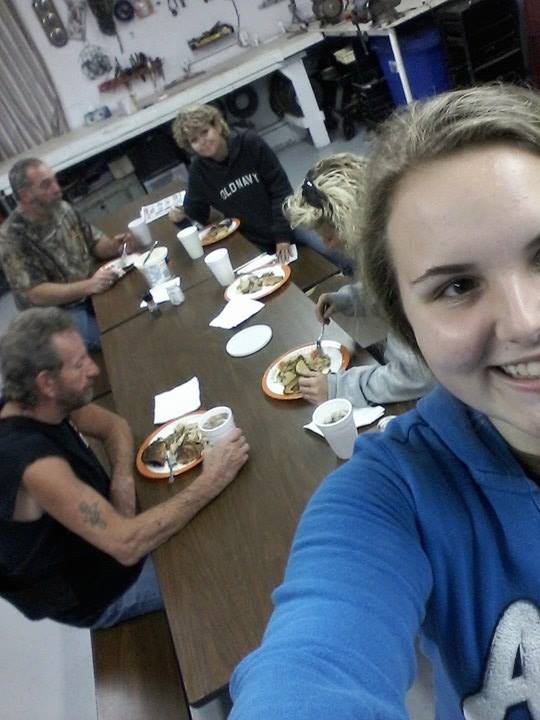
kitchen-table

By: KP

I had my Kentucky Kitchen Table on Election Day of November 8, 2016. There were five people including myself. I did not have a partner for this class project. I knew my mom and her best friend Kim but I did not know the other two men before the dinner. In my group was my Mom, who is forty-six, a single mom and her occupation is a barber. She went to technical school after high school. Kim is thirty-nine and has been for three years. She works at a salvage yard. She graduated from high school and is currently divorced. Keith is forty-seven. He works around his family’s farm and other farm jobs for different people. He got through high school. He has three kids and a possible fourth on the way. He has a preference for open relationships. Gibson is fifty-eight and works as a cattle driver. His wife passed away last year. He also completed high school. My mom cooked the pot roast and I made the lemonade. Our kitchen is a bit small, so we held the dinner in the garage on our lunchroom table.

I started off the dinner asking what did citizenship mean to them. My mom replied freedom. Kim said it was freedoms such as freedom of speech. Gibson said citizenship was rights that lessened every day. Keith agreed with Gibson saying citizenship was slavery. Things began to go South here. I asked Keith and Gibson why they felt this way. Gibson said they, as in the government, were taking away the right to own guns. I reminded him the right to bears arms was in the Bill of Rights and could not be fully taken away. My mother chimed in saying the government was limiting the ammunition, which made the guns useless. Keith began to join in saying we should overthrow this new government under Hilary. Keep in mind the election results were still being counted as it was only seven o’clock. I reminded Keith the reason we have government is to protect us and keep order and with that we have to give up some rights because with every exchange there is always an equal and opposite reaction.

Now I am unsure how it happened, but Keith began talking about how the Free Masons controlled the government. Gibson joined in with how the US currency was going to fall in the next 5 years because we are no longer on the gold standard. My mother joined in saying there was no gold at Fort Knox. I looked to Kim for help here, she had been quiet the entire time. I could tell she also wanted to get back to my original intent for the discussion. When the discussion turned to how the government prohibited the use of lead paint because it prevented the government from using mind control on us citizens, courtesy of Keith, I knew it was time for me to step in and turn this around.

I then asked the group if we could restart the conversation because I was not here to discuss conspiracies, I was there to discuss citizenship. I told them how I saw citizenship as being part of a certain nation. I asked the group if they believed they should help out their fellow citizens. Surprisingly there was a unanimous answer of yes. I asked why they felt that way. My mom spoke for the group saying because we can and somewhere along the way we have needed help.

Next, I asked the group if they knew their neighbors since neighbors are fellow citizens. Gibson said he has known his neighbors for thirty years where he lives currently and at his home before that he knew everybody because he used to deliver milk. My mom said she had met our neighbors when there was a wreck in front of our houses. I remember this time too because I had made my first 911 call that night. Kim pointed out that that was an act of good citizenship. Kim also said she knew her neighbors because her next door neighbor was her brother. Keith said he did not know his neighbors because he was too busy. Keith asked me if I knew my neighbors at my residence hall. I said yes and told them about my RA who lives right in front of me. I also told them of how one of the girls on my floor even shared the same birthday as me! I was very pleased of how the conversation had greatly approved.

At this point everyone was finishing up their plates and were complimenting my mom on her delicious pot roast. I asked the group if they had home cooked meals often. Gibson said when he was younger, he and his family rarely went out to eat. My mom replied with “when you were home”, referring to me. Kim and Keith said they were too busy to cook at home. The group all said home cooked meals were important. Kim said it helped with communication skills, Mom said it helped with sharing and Keith said it helped prevent him from spilling food on his shirt. The group was confused by this then Keith explained when he got a home cooked meal he usually was not going to end up eating in his recliner, but at a kitchen table. Everyone laughed when they realized what Keith was trying to convey.

The experience was definitely an interesting one. At first I thought this was going to be an awful project, but then things turned around and it was a great time! I learned a lot about the perspectives of other people, especially those older than me. My group was not the most diverse in terms of ethnicity but my group comes from and lives in different situations socially and economically. Although they did have one thing in common. They all loved to piddle with stuff in the garage, something I have never really got into. When I had to leave to return to campus, they had found a project to work on together. I hope to have another dinner with this group to see how their project is turning out and maybe discover some more of their oddball conspiracies. They are all friends now which is cute. I was worried about how my mom would handle life without having to worry about me twenty-four seven but now I know she will be ok. I do not regret doing this project!