Carlee’s Kentucky Kitchen Table

By Carlee

KKT

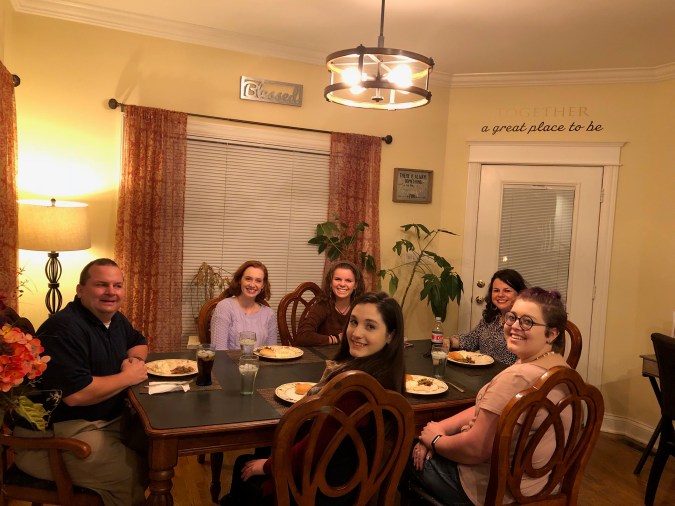
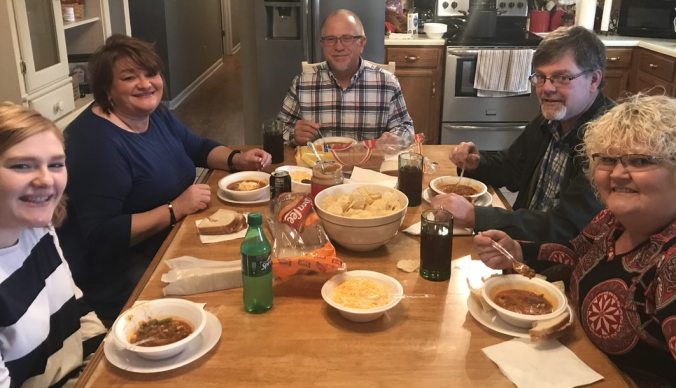
Left to Right: Caity, Kristy, Steve, Jason, and Pam

My Kentucky Kitchen Table took place at my home in Cave City on November 4, 2018. There were 5 people present at the dinner, not including myself. I invited my parents, my sister, and friends of my parents. Caity, 16 years old, works at a local shoe store after school and is an honors student. Kristy, 46 years old, is my mom, a nurse, and Sunday school teacher. Steve, 51 years old, is my dad and owns and operates a bread business and teaches Sunday school. Jason, 47 years old, is a grandpa and works two jobs in a factory and on his farm. Pam, 53 years old, is a grandma and nurse. Kristy and Pam both have college degrees. Kristy is currently a student at the University of the Cumberlands working on her bachelor’s degree. Steve and Jason both only have high school diplomas.

I started the conversation with the question “beyond voting, paying taxes, and following laws, what does citizenship mean to you?” It took a minute for conversation to really get going. My sister jokingly answered “nothing” after I asked the question, but immediately took it back. We then entered a discussion of American citizenship specifically. Jason was eager to say that citizenship was about freedom. As a group, we talked about how we should be intentional to use our freedom wisely and to help others. Jason and Steve talked about how being a good citizen is being a good neighbor – being there for others and willing to help them. This led to the topic of politics. Everyone concluded that the problem with politics today is people simply aren’t good citizens. It’s rare people actually consider others’ opinions or sides of the story different than their own. All anyone cares about is their political party winning, not who would make the best leader. I then asked, “how can we steer clear from this selfishness in politics?” The elimination of political parties on ballots was suggested by Kristy, but we all were aware that it’s rare this would ever happen. But it was discussed how helpful this would be in making thoughtful decisions – citizens would be forced to vote for candidates based on who they are as people, not on the political party they identify with.

Next, I asked what my guests thought the best things were about our world today. There were some mumbled responses about how that was a tough question. I encouraged the group to take time to really think about what is good in the world despite their instinctive thoughts that the world is bad. Kristy and Pam, both nurses, discussed how the advances in medicine are remarkable and how thankful they are for them. Then, all the adults talked about how technology is good. This quickly turned into a nostalgic conversation as they brought up how calls across the state used to be considered long distance. They all began to share stories from their childhoods – how they would have to wait for their neighbors to get off the phone line when they wanted to call their friends and how their parents never knew their location once they left the house. It was fun for Caity and I to get to hear these stories since we’ve never had to have patience like that with technology at the end of our fingertips.

The next few questions I asked were about neighbors. Jason and Pam have gotten to know their neighbors in every house they’ve ever lived in. My family knows our neighbors but not personally. When I asked what everyone could do to make things better for their neighbors, Jason immediately said “just talk to them. Encourage them.” He then talked about how you never know if other people are going through a hard time and how an encouraging word can go a long way. Pam then talked about doing little nice things. She mentioned that she loves to bake pies or pick flowers from her garden to take her to neighbors. After she told us that, I couldn’t help but encourage Pam to keep doing what she was doing because I thought those little acts of kindness were so awesome. Steve then mentioned that we had good neighbors. He told us that a couple weeks ago, he got a text from one of our neighbors that our pear tree had fallen into the road. Steve was on his way home at the moment and told our neighbor that he would be there shortly to take care of it, but when he got home, the tree was already moved out of the road and into our yard. He then told us that the way he thinks we can make things better for our neighbors is to “be present.” Steve and Kristy then talked about how they needed to do better and be more intentional to build relationships with our neighbors. Caity and I then talked about how our interactions with our neighbors have changed over the years. We used to go outside and play with the kids that lived next door, but once we entered middle school, we stopped talking to them altogether. There was a significant age difference between us, but we talked about how sad it is that they probably don’t even remember our names. Overall, everyone at the table agreed that you can’t say you’re there for your neighbors if you don’t know them.

One of the last questions I asked related to everyone’s jobs. Everyone assumed that their jobs related to their roles as citizens in that they help people. Kristy and Pam help patients get ready for surgery, Jason helps his company make checkout lanes, Steve helps stores and schools sell and serve bread, and Caity helps people buy shoes. However, when I asked if their jobs serve a greater purpose, responses were more hesitant. Altogether, they eventually all said that they did. Steve seemed to struggle with the question the most. He laughed when I first asked it but talked himself into thinking he does serve a greater purpose. “Well, people have got to eat,” he finally said.

I learned a lot during this meal, but the one thing that stood out to me most was that when people talk through it, they see that there’s more good in the world than they first thought. I assumed that as I asked these questions that I would get consistently negative responses about the state of our world today, specifically from Steve and Jason. I was shocked to hear all the positive things they had to say about citizenship, neighbors, and the state of our world in general. Another thing that stood out to me was everyone at the table, at some point in the dinner, mentioned something about needing to better – whether that’s being more positive at work, getting to know their neighbors, or making more informed decisions when voting. This didn’t necessarily surprise me. I fully expected for our conversations to somehow result in feeling like we need to change the way we live. I think that’s just what happens when people talk about the condition of our world today. We’re all aware of the problems, but when we come together and discuss how to change them, we realize that we can make change ourselves.

I walked away from my KKT with “The Snare of Preparation” by Jane Addams on my mind. Based on all the responses I got from my guests, I felt like they had the same mindset as Addams: they just need to do something. And I think that’s totally awesome. It’s one thing to sit in a classroom and talk about how we should talk about things to make change happen. It’s another thing to actually talk about making change happen. This dinner was a really unique opportunity and I appreciated my time with my guests and their vulnerability to share how they’ve been bad citizens. I think asking these questions impacted them far more than they thought it would. They began to seriously consider what they need to change so they can live well with their fellow citizens. I think that now, whether at the hospital or the shoe store or the farm or the grocery store, these workers are going to keep in mind that they are serving a greater purpose of helping people. I think that now these neighbors are going to be intentional to start (or continue) being present and encouraging those they live beside. I think that now these citizens are going to consider the character of the candidates they’re voting for, not just the political parties. I think that part of the answer to the question “how can we live well together?” is talking about how we can live well together – my KKT is evidence of that. What’s the most exciting thing about this dinner is the possibility that this spark in my guests could impact those they come in contact with every day, like Michael Pollan talks about in “Why Bother?” If everyone present at my KKT begins having citizen conversations with those around them, I may soon be living in a community of world changers.

 

Gavin Geralds’ Kentucky Kitchen Table

By Gavin

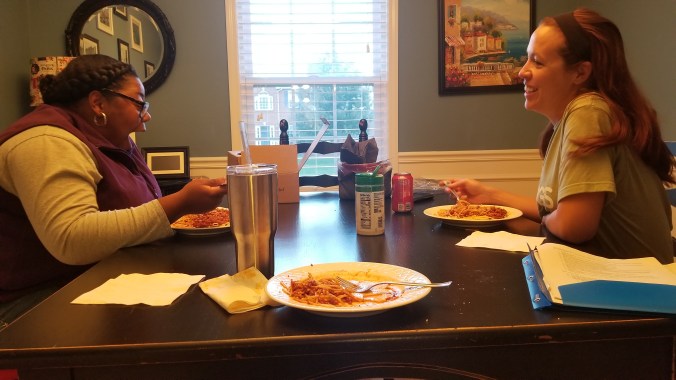
On November 8th 2018, I conducted my Kentucky Kitchen Table project. I chose to do this in my hometown which is a small city that consists of about two thousand people in its city’s limits located about an hour away from Bowling Green called Tompkinsville.

My dinner consisted of five people including myself. These people were Sara, Callie, Tommy and Glenna.

Tommy is my father whom has resided his entire life in Tompkinsville. He received his bachelor’s degree with a major in English from Western Kentucky University. He taught seventh grade English at Monroe County Middle School, was a principal at Gamaliel Elementary School, and now works at the Monroe County Board of Education. Tommy loves to spend time with his two sons and wife. Whether it be through raising tobacco, watching the kids play sports, or going to church, he likes to have fun in any activity that his family takes on.

Glenna is Tommy’s wife. Glenna is from Leitchfield, Kentucky and met Tommy while attending Western Kentucky University. She currently is the Family Resource Coordinator for two elementary schools and has been in this position for over fifteen years now. Like her husband, she too has been around the farm lifestyle her entire life and loves doing anything that involves spending time with her family.

Sara is a much younger and is the mother of a 4-month-old. She is a nearby neighbor who grew up in the urban area of Lexington, Kentucky and married a man from Tompkinsville. She graduated from the University of Kentucky and is currently a stay-at-home mom.

Callie is a relative of Sara who was staying at her house for the weekend. She is from Livingston, Tennessee and is still in high school. She is her senior class president and loves to go to the lake and spend time with her family and friends.

To get our meal started off, I asked the question “Beyond voting, paying taxes, and following laws, what does citizenship mean to you?” The responses were along the lines of the following:

Tommy- “I am a part that makes a community function, or part of a whole,”

Glenna- “Belonging to a community.”

Sara- “Being legally a part of something.”

Callie: “Being free in the land of America.”

From here we started to discuss how generally, people from a bigger city tend to have more liberal views on social issues. Sara has lived her entire life in a large, urban area and has much different political views than Tommy, Glenna, Callie, and me. We then moved into the conversation of Donald Trump and his tactics leading this country and even brought up our ideas on gay marriage and abortion. I believe this came up because we were also discussing our religious beliefs a tad and the two seem to be intertwined a lot in today’s society. Callie is younger than all of us and is very vocal about her political views and adores Donald Trump. Sara, on the other hand, cannot stand the presence of his name in a room.

This led me to ask another question, which was “In general, what type of person would you like to be?” Again, the answers are not exact, but somewhat along these lines:

Tommy- “An honest and thoughtful person.”

Glenna- “Kind and caring.”

Sara- “Neighborly.”

Callie- “A good Christian lady.”

Callie’s answers always seemed to amuse me. She is a very flamboyant person and makes sure everyone knows her views on everything. She is a very funny person and definitely an open book.

Through the entire dinner of our conversations, there were many topics that you could see the differences among everyone. When it came to anything political related, Sara was had many different views than the rest. Even though I may hate to admit this, I noticed that myself and Callie were the only two at the table that ever looked at our phones during the dinner. I thought this was relevant considering we were the only two teenagers at the table.

When I was scrolling through some conversation starters before the dinner, one that stuck out to me was the question that if the people at the table knew their neighbors. Tommy and Glenna have neighbors around but not directly beside them on either side of their property, so they have never made it a huge priority to get to know them. When Sara lived in Lexington, she resided in a subdivision where she knew most all of her nearby neighbors. They would jog together and come over for dinner sometimes. Callie does not have any close neighbors that she would trust to talk to, she concluded that most of them appeared to be on some type of drugs and were not people she would want to associate with. I thought this was interesting because people often stereotype those in large cities of just staying inside and not making an effort to know those around them. It stood out to me that Sara was actually the only one that had interacted with her neighbors on a personal level.

I never knew I could learn so much from a dinner at a kitchen table. I learned a lot from people I did not know before not only from hearing their thoughts on sensitive topics that they were open to willingly share, but I also learned a lot from paying attention to detail. Listening to thoughts from Sara that I barely knew before this conversation, and Callie whom I did not know at all, really opened up my eyes on how different people can be and view things. This may be related to where all of us grew up in our geographical location, but it is interesting to learn that we all live relatively within the same area and can still have very different views on so many things. I think this is one of the many beauties of living in the United States of America, things like this give us a chance to show our individuality and that most citizens can agree that we are blessed to live in this country.

During Honors 251 throughout this semester, I have learned many things about being a citizen in a community. Before this class, if someone were to ask me what being a citizen meant to me, I would have more than likely given the cliché answers like any other person would say. For example: voting, paying taxes, and all of the others that we often hear. Now, if someone were to ask me what my thoughts on being a citizen were, my answers would have much more of a broad range. One thing I have learned from this course is how to correctly have a conversation about sensitive issues without starting conflict. In class, we have discussed things that people have different views on and at the end of the day, everything is fine. I believe this has taught me skills about deliberating and even at the kitchen table, I had different views than some of those, but we still did not let this interfere with our composure we had with each other.

I can also see the conversations at the table relating to many readings we have read throughout this semester. When I think of a democracy or even just the government in general, I think of how I have responsibilities and a possibility of an impact on things. Many people do not fulfill their civic duties because they have the misconception that one person does not make much of a difference in issues that are so broad. I saw the resemblance of this while conducting my Kentucky Kitchen Table project. Coming to this realization reminded me of the article that we were assigned to read and discussed in class, The Energy Diet by Andrew Postman. In a quick summary, this article illustrates the idea that we must start small. One person may not have a relatively huge impact on being a citizen, but if multiple people come together in an act or anything of that matter, then the possibilities are limitless of what people can accomplish.

The question that arose to myself making this correlation was “Is there anything you can think to do that might make things better for you or your neighbors where you live?” I really did not know what type of answers to expect, but this was actually one act that everyone agreed on. Tommy, Glenna, Callie, and Sara all concluded that knowing people is power. The more people you know and the more connections you make, the more you will succeed. This is a group effort that relates to the topic of working together. They said that introverts typically do not succeed as much as extroverts, so it is important to know those around you. The Energy Diet says to start small. This may be one person having an idea and enticing others after that. Drawing more people in will get the movement or action more attention. You must start small, like changing a lightbulb in the article, then the end-product will be amazing because everyone has come together to accomplish one common goal.

This project was one that really opened up my eyes. It gave me a new perspective on ideas that I had never really considered and showed me that people can be very diverse and still have a common ground on certain things. From this project, I gained a tasty meal and a new viewpoint for many things.

IMG_5552.jpeg

Mya’s Kentucky Kitchen Table

By Mya

20181102_173102.jpg

     My Kentucky Kitchen Table was at my mom’s house around our dining room table in my hometown of Murfreesboro, Tennessee on Friday November 2. Murfreesboro is the suburb of Nashville and therefore has an interesting mix of small town values and big city opinions. The area has changed dramatically in the past ten to twenty years, which has led to some changes in opinions or led to opinions even being held more dearly. My mother, Melinda, her friend and former co-worker, Monte, and my grandmother, Debra (who is not pictured as she arrived quite later – just how timing worked out) were at the dinner along with myself, Mya (who was taking the picture).
     Melinda is a middle school teacher mainly working with special needs and behavior cases and is a part time college professor. She has raised me as a single mother; we have a very strong relationship. My mother is more private with politics and political opinions; we only have conversations if I am asking questions or need help understanding something. She believes that while it is important to be informed, politics does not need to be an every day discussion with everyone. She loves helping students especially those who need it most. Melinda has her doctorate degree, and has done multiple grants including those that involved research.
     Monte used to work at the same school my mother does. Even though do not work in the same school anymore, they have continued their friendship. I have only met Monte a couple times and very briefly, so this was a great way to get to know her apart from her name and how she knew my mother. While currently teaching at another middle school, Monte is going to school to get her Masters degree. She also is an African-American woman, and thus has had different experiences compared to the rest of us at the dinner.
     Debra is my maternal grandmother. She grew up and still lives in Shelbyville, Tennessee, which is a small town just south of Murfreesboro. She is a retired school teacher; she mainly taught with elementary school students and English as a Second Language (ESL). She is very vocal politically. We have previously had multiple conversations about politics and the world we live in today, but this was the first time I entered a conversation with a specific question in mind.
     Besides the question dealing with class (which I will discuss later), one of the things we talked about how college was for me and how my mother’s and Monte’s jobs were going. Everyone at the table was somehow involved or formerly involved with the education system. Education is an important aspect in all of our lives. I went to a more privileged middle school and high school because it was a magnet school, yet the rest of the women at the table have taught or do teach at lower income schools. There is a vast difference in hearing the stories from their experiences. At the middle schools my mother and Monte teach at, it is common for students to have more behavioral and academic problems. It is not a matter of the students at my school being better, and the students at other school being worse. That is not the case. In hearing the stories, there is typically a recurring theme. The students in lower income schools generally have more difficult home lives such as parents are not often home because of work, lack of help with school in the home, and other responsibilities that can put school on the back burner. Some of these issues can also cause students to act out. While some parents try to excuse their child’s issues, many parents want to work with the school and the teachers to help the student succeed. There is also a greater amount of special needs students in the schools my mother and Monte work at. These students need unique care that is sometimes difficult to give them in a typical school setting and with the availability of resources (or lack thereof). My mother, my grandmother, and Monte all formerly or currently work everyday to help these students succeed in their academics and in their lives and overcome the difficulties they face. Talking to them at dinner gives me a new perspective each time I hear such stories because I am not only able to see how blessed I was and am but also am opened to the many different experiences and backgrounds that affect other people especially now since I am in college where the students and their backgrounds are diverse.
     At the table, we also discussed things we have been doing or are planning on doing outside of work and school. I enjoyed discussing about my experiences at football games, with friends, and in my sorority. My grandmother has taken trips, gone to do many things with her friends, and has done many house projects given she has the time since being retired. For my mother, she has been enjoying living on her own and taking time for herself. Monte and my mom have even gone to the farmers’ market in Nashville and to see plays in Nashville. Despite everyone having busy lives, we all agreed that having things to do that are relaxing and fun helps us better ourselves by creating an outlet for happiness.
     While the purpose of the Kentucky Kitchen Table is beyond the scope of one question, there was a required question – “Beyond voting, paying taxes, and following laws, what does citizenship mean to you?” – that had to be discussed. As someone who just turned eighteen this year and had not experienced paying taxes or voting, citizenship to me was already more than those. I explained how to me citizenship was supporting and acting towards bettering yourself, your community, and your country even if and when it is not always easy or when it is not something I agreed or approved of. Supporting to me does not mean just going along with every decision, but standing with people and having their backs even while trying to promote change. Citizenship to me also means if you see something going in the wrong direction to speak up and be a voice for change in whatever way (legally) that means for you.
     For my mother, citizenship meant actively participating in her community and being a part of something to make it better. Citizenship is having a role in society that leaves a mark even if that means just helping one individual; you help and you care. My mother believes one should be education on the topics that affect his or her life and should know beyond what the news or social media says before he or she forms a belief. She continually tells me that I can think and believe what I want, but I need to be able to know why I do. The skills and values she raised me with help me be an active citizen.
     Citizenship to Monte means being a part of your country in such a way that you give your opinions and your support. Citizenship involves being concerned enough about what’s going on in the country that you are willing and try to make changes when necessary whether that is through voting, petitions, or just individual actions. To Monte, citizenship on an individual level means being a good representation of your community and of your country. Citizenship also means actively helping fellow citizens; a theme that kept meaning mentioned during the dinner.
     For my grandmother, citizenship means having freedoms that she is able to enjoy in America such as the ability to vote, free speech, and freedom of religion. In America, we are able to be a part of a community that is able to live in each individual’s uniqueness. Citizenship is respecting and honoring the ability to have that freedom. A part of that means honoring the military and the flag. Citizenship also means appreciating the sacrifices that the men and women fighting for our freedoms have made. This is not because of agreement but out of respect. Citizenship and communities are built out of mutual respect for each other and the values we hold dear.
     This Kentucky Kitchen Table taught me how even people from different background and different generations can all connect through our citizenship. Each person believed that citizenship is one of the core values of America that brings us all together. We each demonstrate our citizenship in unique ways and hold different opinions, but at the end of the day we are Americans. We want to help improve our country and the lives of those in it. We want to be proud of our country and who we are. While our everyday lives focus more on who we individually affect and interact with, we take the time and actions to be involved in our communities and our country. During the dinner, as I tried to think how the conversation could relate to our readings, I remembered the stories “The Power of Patience” and “Why Bother”. The women at the table with me are helping teach and grow the children that will be deciding the future of our world. Each day they struggle trying to help these kids and sometimes it takes a toll, but every morning they get up and go to work. They bother to help and teach again and again. They have patience with the students and try to teach the students the skills they need to succeed such as patience and work ethic. Teachers and schools are some of the essential building blocks in making an individual into a citizen through skills, values, and education not only about academics but also about the world. Citizenship is more than just voting, paying taxes, and following laws; citizenship is built of what people do everyday to improve and help their lives, the lives they affect, and the communities they are a part of.

My Little Kentucky Kitchen Table

By Lily

My Kentucky Kitchen Table was hosted in Bowling Green Kentucky, on November 5th. A couple girls from my class, five sorority girls with some others popping into the conversation, and I all had a unique dinner squished around a small black table. We had to grab stools from another table in the house to fit all of us. Even though we were a group of college girls we came from different backgrounds and all have different thoughts and opinions. Our majors ranged from sciences to the arts. We came together from all over Kentucky and even from Nashville and our parents did different things while teaching us different values.

I am not in a sorority and never considered being in one because I felt like I wouldn’t fit in or I would be judged by them. My image of a typical sorority girl was a girl who judged people, was unkind and only cared about herself or her sorority sisters. However, the girls I talked to were all very sweet and happy to have me over. I am ashamed of myself for stereotyping all these nice girls. At the end of the night we all got to know each other, and I had a lot more fun than I thought I would. Although I still don’t think I’ll join the sisterhood, I will rethink the way I see their members.

It was a cold, windy night and the rain was pouring, so I was already uncomfortable and nervous. I was relieved to be out of the rain, but once I walked into the sorority house and saw all the girls gathered in the kitchen making spaghetti, I started to feel more relaxed. The dinner actually started before we even started eating. We were talking with each other while we were cooking and asking questions about each other’s days and what we were doing. While I was cooking we were all laughing and talking about the most random things. It was a great way to get the night started and break the ice.

Our dinner was not what you would call fancy. My classmates cooked spaghetti and meatballs, which is a great entrée, but the sides was where it got interesting. One girl brought garden grown green beans in a mason jar, and I made macaroni and cheese with a recipe from my mom. So our plates were made up of two pasta dishes and green beans, which was an interesting sight. There were also freshly baked brownies to close our meal. Even though the meal sounds strange everything was very good and was super fun to make.

The hardest part of the dinner was getting a good conversation started. The beginning of the dinner was more about getting to know everyone. When we first started asking questions we got short answers followed by some awkward silence. When we started eating however, people became more comfortable and open to the idea of talking more. This shows how the power of sharing a meal. It helps bring everyone together and you can’t argue and scream at each other with food in your mouth.

We asked everyone what citizenship means to you and we had answers from being a good neighbor to being a good person in general. A common theme going through the dinner was that no one had super strong opinions on politics in general. There were opinions for sure, they just weren’t very passionate about it. In today’s world it seems like everyone will be at each other’s throats about politics and every mention of the word turns into a heated argument, it was nice to have a calm chat about voting and running for office.

Social issues were a big topic at the dinner table. With the Me Too movement and lgbtq+ at the forefront. When politics did not get us invested, the problems that our loved one’s faced got the real conversation started. In order to solve a social problem you have to approach it from different angels. All of us agreed that there are many problems in America that need to be solved and they all cannot be solved by just politics. However, with the elections being the next day we were hopeful that we could start to make a change. In America, there are many ways to change the way people think for the better. There is never a time where you should give up hope. I think a great lesson to learn is that even if times are hard and problems cannot be solved, being positive and having  hope will get you through it.

One of the girls began talking about her trip to the English Isles and what a great experience it was. She learned about different cultures by actually visiting them. The people she talked about ranged from polite British people to a rude Scotsman. We then began talking about other places all of us wanted to go. We all wanted to go to different places for different reasons. Some wanted to go on vacation, while others wanted to know the culture. I’m so glad that all of us wanted to travel at least some part of the world. We began a very insightful chat about weather America was a blend of cultures or if we even have a proper culture. I believe that traveling is one of if not the best way to learn about the world. You can look things up and learn some things but once you experience it you know. Others agreed with this idea and thought that they learned a lot from their trip.

I learned that there is always new things to learn and new ways to grow. Most of the sorority girls were all upperclassmen and they seemed to know a lot about Bowling Green and Western Kentucky University. There was even a joke about how Bowling Green has so many restaurants. These girls were older and somewhat more mature, but they still were having fun eating ungodly amounts of mac and cheese. Their opinions on things were still looked at in a more mature way, with focusing on how people were effected rather than based on emotions. Some of these girls will be going into the workplace soon and I couldn’t be happier that there are good people who are going to be successful and make their mark on the world.

Family was brought up a lot at the dinner. Some of the girl’s families would always get together for a family dinner, while others only did it on occasion. It was clear that everyone at that table loved their family. We had stories of grandmothers fawning over their perfect granddaughters and mothers being strict yet kind. We had a couple of girls that believed they were put on this earth to be a mother. They wanted up to five kids and have a large, loving family to mother. While I get the sentiment, I don’t think I could handle more than two kids let alone five. It was interesting hearing why these girls wanted to start a family later in life. I learned why some people would want to have a large family.

Love and kindness to everyone was a popular discussion as well. With people saying to give food to the homeless and donating money to charities. We all agreed that everyone deserved some love and kindness no matter who or where they are. People having equal opportunities regardless of race, religion, gender, and sexual preference was very important to all of us. We talked briefly about money and how greed is something common yet very dangerous. We wanted jobs that are open to everyone and making sure people had at least what they needed to survive.

On the subject of economy most of us said that we would rather be happy than rich and some even said they could just be scraping by, but if they were happy, their life would be a success. We understood that money was very important, we also knew we didn’t need it to be happy. Including that greed can be detrimental to the enjoyment of your life. I the purpose of your life is to make money you are not actually living your life. Of course, our opinion can still change once we actually begin having to earn money and pay for things we need. However, the values we have about money are something we should think about.

All in all I learned a lot from this experience and made some new friends that I wouldn’t have talked to without having to do this project. I was taught by others how to have hope and to learn more about your environment. I also learned again to not judge a book by its cover. People throughout history have shared food as a way to bond, and I now know the power of cooking and sharing a meal. It’s an easy way to get people relaxed and open to sharing stories. I’m so glad this all happened over one simple meal together.


Shayla’s Kentucky Kitchen Table Assignment Hosted by Kelsey


IMG_6197

From left going clockwise: Brian, Emily, Kelsey, Laura, Eliza, and me. 

On Monday, November 5th, I went to a classmates home in Bowling Green for my Kentucky Kitchen Table Project. The dinner took place at Kelsey’s dining table in the kitchen, where we all ate chicken and dumplings, green beans, mashed potatoes, and rolls. In attendance were me, Kelsey, her parents, Brian and Laura, Eliza, and Emily. Each of us are honors students, but I had either never met or was not well acquainted with any of them. Kelsey attends Western Kentucky University and is majoring in Psychology. Her mother, Laura, is a psychologist at a local elementary school. Her father, Brian, works at Western Kentucky University. Eliza is in my Honors 251 section, but we were not well-acquainted prior to the dinner. She is from Duncombe, Iowa and is majoring in Psychological Science. Emily is from Evansville, Indiana, also attends Western Kentucky University, and is double majoring in English Literature and Spanish. The last guest was me, Shayla, also a freshman at Western Kentucky University who is double majoring in Dance and Biology.

The conversation began with the required question: Beyond voting, paying taxes, and following laws, what does citizenship mean to you? Kelsey was the first to answer, saying that to her, citizenship is helping people around you and being kind. It involves lending help to others when they need it.  Laura said that citizenship to her was caring for each other and making a difference in people’s lives, to which Eliza added that it means going above what is expected and making an effort to help those that are struggling. Emily said that to her, citizenship is doing what we can to make our world a better place to live in through acts of service. Brian agreed, saying that citizenship to him was being an overall good person whois kind, caring, and generous. I added that citizenship to me relates to the central questions of the class, as it is about trying to live better with each other, helping to solve problems faced by society, and helping ourselves and others have as much say over our lives as possible.

The next question Kelsey brought up was: What do you think are the best things about our world today? Eliza said she liked how people in today’s world have a greater sense of community, or at least the people from her hometown. She then told a story of one of her best friends that had a rough family life. One night they were texting and she brought up how cold she was because her mom did not pay the bills and they had no heat. Eliza made her stay at her house that night, and she stayed for several days. Eliza said it was her first experience of a typical family life. Since then, her friends created a network of places she can stay at whenever she feels like. They give her a place to sleep, food to eat, and a sense of familial connection that she was lacking in all of her life. I added that I liked how far today’s world has come in the acceptance of other people’s differences despite still having a long way to go. While there is definitely still room for improvement when it comes to accepting all people, we have made big strides forward compared to even a decade ago. Emily liked how people today are kind to each other. She believes it is important to be that little bit of kindness in people’s lives because it can make a huge impact. Brian added that he liked how close-knit his community is and how they go out of their way to help each other out when needed. Kelsey chimed in that she likes how today’s world possesses faith and a hope for the future. She explained what she sees as the difference in faith and hope; faith to her is the belief in a higher power. She told us that she isa Christian and that it plays a large role in her life and the decisions she makes. To her, hope is assurance of the future or an expectation of how it will go. She believes that today, we have a hope for a better future and there are many people that are taking actions towards that expectation.

Kelsey then asked how we think our jobs/majors relate to our role as citizens. Kelsey was the first to answer, saying that her major was important to her role as a citizen because it involves helping others to be happier and more productive citizens. Eliza agreed, saying that her major also involves helping people better their mental health. She is very passionate about mental health and mental health awareness and wants to make a difference in people’s lives in that respect. Although she claimed to dislike science, so far she has been really enjoying all of her major-focused classes. Emily added in that her education major will contribute to educating the younger generation. She said that she has always loved English and Literature and knew this is what she wanted to study in college and have a career in. She told us about her old high school and how tough the curriculum was. Whenever she and her classmates would be having a difficult time, they could always confide in the teachers, and she wants to provide that for others in the future. When recently visiting her old school, she entered her old English classroom and immediately knew that is where she wanted to be. Laura answered next, telling us that her job as a school psychologist was all about improving the mental health of children in the community, which contributes to bettering the community both now and later. She then explained some of the hardships the children she works with go through, such as abuse and being aware of financial hardship.

The conversation then shifted to the privileges most of us have that we are unaware of and the hardships faced by a significant number of people even within our own community that we are, for the most part, oblivious to. The recent reading of “Seven Days of Heroin: This is What an Epidemic Looks Like” was brought up, and we briefly summarized it for Laura and Brian. Laura added that she works with many children that share a similar life, including a GAT student in the fourth grade who’s parent is in jail for drugs. He has started to have outbursts in class and can’t control his anger. We talked about how drug addiction not only affects the sufferer, but also the spouses, parents, children, siblings, family, and friends as well. Everyone agreed that the opioid epidemic is a huge issue, especially considering the number of deaths and overdoses recorded for the week were for only one city out of the entire country. The most shocking part of the reading to all of us was the mother who decided to recover when she found out she was pregnant. She was at a follow-up appointment for her baby, and they both seemed healthy and happy. However, only ten days after the appointment, the mother was dead from an overdose.  This only further validates the magnitude and urgency of the issue.

At one point, the conversation took a turn and Eliza somehow ended up discussing how she and her roommate bought hummus and pretzels, but they ran out of pretzels to eat the rest of the hummus with. In a perfect display of how to be a model citizen, Laura went to the pantry and came back with a bag of pretzels for Eliza, who was very grateful and happy.

My experience of attending a Kentucky Kitchen Table was nothing but positive. I got to know fellow classmates who, despite being very different, share many of the same interests as I do. The assignment related to what he have learned in Honors 251 because the questions asked could all be applied to the central questions and themes of the class, which are: How do we live better (or, at the least, less badly) together? How do we solve problems? How do we have more of a say over our lives? How do we help other have more of a say over their lives? We also mentioned topics pertaining to some of the readings from the class, such as the opioid epidemic readings and empathy readings. The conversation revolved around being a better citizen, which is the basis of the class. It was also great practice in deliberating, an important step in solving societal issues that we learned in class. I learned that sitting down with a group of people discussing things makes people more aware and open to other ideas, opinions, and experiences, even if they are conflicting. It proves that we could potentially make the world a much better place if more people took the time to listen and empathize with others. This assignment led me to a better understanding of what it means to be a model citizen.


Mackenzie’s Kentucky Kitchen Table

Starting left and going around the table: Larry, Brian, Melissa, Mikaela, Ann, then Mackenzie (me-front center)

By Mackenzie

My Kentucky Kitchen Table meal took place on Sunday, November 4, 2018. I hosted the dinner at my grandmother’s house in Powderly, Kentucky – a small city in Muhlenberg County. I had five guests at my meal. My first guest was my father, Brian, who is a lifelong citizen of Muhlenberg County. He works at a manufacturing plant called Logan Aluminum as a general technician. He is the sole financial provider for my family. He is also the world’s biggest fan of the Kentucky Wildcats, and I must add that I have never seen something broken he could not fix. My second guest was my mother, Melissa, who has lived both in Pontiac, Michigan during her early childhood years, and in Muhlenberg County for the rest of the time. She used to work for a supply company at a local sporting goods store called Uncle Lee’s when I was younger, but she decided to become a stay-at-home mom because she was missing out on so many valuable memories as my sister and I grew up. This decision is one of the best things that I think could have happened for my family because it has allowed us to create such a close bond and truly appreciate all that she does for us. She is truly the glue that holds us together. Neither Brian or Melissa attended college, but Brian has taken a few courses here and there to move up positions at work. Also, neither Brian or Melissa came from very wealthy families. They both came from families on the lower side of middle class. Melissa’s father, a coal miner, passed away when she was only sixteen years old. This sudden loss took a great toll on her, my grandmother, and my uncle both emotionally and financially, but they still made it work and never went without. To continue, my next guest was my sister, Mikaela, who is in her first year of teaching second grade in Logan County, Kentucky. She graduated from Murray State University this spring with a degree in elementary education. She is a lover of all things from Target, and she is quite easily my best friend. My grandmother, Ann, was also there and allowed me to host the meal in her home. She cooked a majority of the dishes we served for dinner, and Melissa cooked the rest. The recipes Ann and Melissa used have been ones that we have followed and served for numerous occasions my whole life. Ann is a retired elementary school janitor and lunch lady, who now cleans at a local appliance store because she cannot sit still, even in her retirement. She has a heart of pure gold, and she never ceases to make you smile. My fifth guest was my uncle, Larry, who is a former butcher at a local grocery store and a current employee at Carhartt. He is a total jokester, and he keeps us on our toes. Of course, both Ann and Larry have also lived in Pontiac, Michigan since they are my extended family members on Melissa’s side. Finally, there was me, Mackenzie. I am a freshman at Western Kentucky University majoring in Elementary Education.

Before starting the conversation, I had some expectations for how the conversation would go. I was worried I would have to pry a lot to get my guests to engage in the conversation, but I also was pretty certain I knew what to expect based purely off of the majority of my family’s political and religious standpoints. Brian, specifically, has very strong Republican values, so I anticipated he would have a lot to say for my questions. I expected my other guests to follow his lead once he said his thoughts, but I was definitely surprised when the conversation began. As planned, I started the conversation by asking the mandatory question: “Beyond voting, paying taxes, and following laws, what does citizenship mean to you?” Ann was actually the first to respond by simply saying, “Freedom.” I asked my other guests to elaborate more and expand on the idea of citizenship, and Melissa began naming more qualities of a good citizen by saying, “Trustworthiness and honesty.” Mikaela and Larry agreed with Melissa. At this point, I realized that Brian was being quiet, which was definitely out of character for him. I asked what he thought about the question and he said he agreed with freedom, but he also pointed out the importance of serving in a community role. Whether that be through volunteering, starting a community organization, serving in local offices, or so on, he expressed that it is necessary that good citizens work toward the greater good of the community. That being said, he believes a large part of being a good citizen is looking out for and taking care of others. This conjecture led me into my next question perfectly: “Do you think we have any obligations to other people in our country or our community?” All of my guests astoundingly agreed that we have a role to help others in our country and our community as much as we can. Brian, although he brought the idea up prior to my question, admitted that he does not always take the time or make an effort to do all he possibly could to help others. I pressed on by asking whether they believed their religious views led them to feeling that it was their duty to help others, and they all agreed that it definitely did. Brian, Melissa, Mikaela, Ann, Larry, and I all identify as Christians, so service to others means a lot to us spiritually. In addition to this, I believe that religious views even contributed to the kinds of persons my guests wanted to be when asked. I received answers such as kind, caring, thoughtful, faithful, dependable, honest, and so on. These answers line up a lot with the ideas of what my guests believed embodies a good citizen.

From this point, I decided to see what my guests thought about how their jobs measured up as far as serving a special purpose. Brian and Larry were quick to say no because they both work factory jobs. In my opinion, they do not know how it serves a special purpose because they do not always really see the ways their products are used worldwide. However, Melissa was quick to remind Brian that his job was what has financially supported my family for years. Mikaela had a much different answer to this question. Because she is an elementary school teacher, she serves a huge role in society as an educator, a role model, and a motivator for children of all different backgrounds. She literally is teaching and shaping the future of America every day, and it is a job that she is very passionate about. Because Ann is retired, she did not have much to say about jobs except that she completely believes in the importance of each role of the public-school system in Kentucky from teachers, to administrators, to janitorial and cafeteria staff, and so on.

A final point worth noting from our discussion at my meal was my guest’s answers for the question: “What social issue is closest to your heart and why?” Mikaela was the first to answer by saying that poverty and hunger were very close to her heart. As a teacher, these issues were so evident to her and brought her to exhibit such empathy because schools consist of students from all different socioeconomic statuses. The rest of my guests strongly agreed with Mikaela in that poverty and hunger were social issues that they cared deeply about. The conversation sparked Melissa and Ann to tell stories of their involvement in Thanksgiving food drives and other donations they had made to those in need. The answers to this question helped my guests reevaluate just how much they have looked out for those in their community, and hopefully even encouraged them to look for ways to be more involved in the future.

One of the overall themes I noticed at my Kentucky Kitchen Table dinner was definitely one that I had anticipated and touched on a little earlier. My guests based a lot of their answers on their religious outlooks and moral beliefs. For example, through the conversation I learned that my family really appreciates living where we do because of the simple, laid-back lifestyle it has. They enjoy that people in our community hold similar values and morals to us. This example was one of many instances throughout the meal that reiterated that religion and morals truly are a sort of handbook for how many citizens live their lives, especially in the Bible Belt where we live. I was not at all surprised that my guests placed so much importance on morals because for a majority of people, moral aspects rule the mind since they are what lie in our hearts. As the reading, “The Irrational Dog and Its Intuitive Tail” by Jonathan Haidt noted, many people make moral decisions based on the emotions in their hearts. Haidt elaborated by saying that we reason about what is wrong and what is right because of what we feel emotionally – that reason serves to support our emotions.

When I was first given the Kentucky Kitchen Table assignment for my Honors Citizen and Self class, I expected it to be a bit of a hassle to get my family involved. On the contrary, it turned out to be really interesting to see how the people I have literally grown up with think and to learn things about them I never knew before. While my guests and I frequently have dinners around the table, never before have we had such a thought-provoking conversation and discussion as this. It allowed me to see more of why I think and feel the way I do. I have definitely developed plenty of my own views, but I cannot deny the relationship between my family’s views and my own. This dinner has allowed me to realize even more how truly blessed I am to be surrounded by such a loving, supportive family that encourages me to think freely and serve others.

Overall, this assignment really relates to what we have been learning in Honors 251 because a lot of the questions asked of my guests provoked answers that could be applied to our three central questions. I believe that if we truly began to look out for each other more and realize that we do have an obligation to help those around us, we could solve so many issues our country faces on the daily basis. Many of the themes that we have discussed in class such as morality, empathy, and education were topics that quickly arose during my dinner, even with little provocation on my part. This really taught me that generally, we can agree on what is important of citizens and what we can do to live better together and help others.

Mary Beth’s KY Kitchen Table

IMG_5153.jpg

By Mary Beth

On Sunday, November 4th, I went home to Owensboro, Kentucky to host my Kentucky Kitchen Table project. The brunch took place in my home at my dining table, where we ate chicken and waffles, fruit, biscuits and gravy, and hash brown casserole. I invited a neighbor, two of my mom’s co-workers, and one of the co-worker’s fiancé. My neighbor, Julie, has been around for most of my life, but beyond living in the same area, I did not know her very well prior to the brunch. She is a widow, her husband died from cancer when I was very young, and the mother to three biracial children-two daughters and a son. Julie works at a rape crisis center where she counsels victims of sexual abuse. My mom’s coworkers, Delanie and Sarah, I have met before when visiting my mom at work. Delanie is fresh out of college, in her mid-twenties, and lives alone in a rural area outside of town. Sarah, in her thirties, is engaged to Ben. Both Sarah and Delanie are social workers, specifically working in case management. Ben and Sarah live together and have three rescue dogs. Ben is a technical writer for BB&T Bank, also in his thirties, and works from home. I had not met Ben prior to the brunch. My mom was also there, and she is in her late forties and works as a social worker. The last guest is me, Mary Beth, an 18-year-old girl who attends Western Kentucky University and is double majoring in International Affairs and Public Relations.

I began the conversation with the required question: beyond voting, paying taxes, and following laws, what does citizenship mean to you? Julie was the first to answer, saying she believed citizenship is speaking up for those that are oppressed. She stated being a good citizen is an extension of “love thy neighbor.” Julie is Methodist and very religious, all though she said she rarely agrees with everything said at her church. To her, citizenship is thinking outside one’s own family and taking care of others when needed, stressing the importance of volunteerism. Delanie spoke next, saying she believes citizenship is being tolerant and respectful of other people’s religious views and opinions. She also thinks citizenship should emphasize integrity and honesty.

Sarah chimed in, agreeing with Julie, saying being a citizen requires compassion and giving to others. Ben answered next, straying away from the moral obligations the others at the table had expressed, and spoke about the importance of being involved. He thinks as citizens, it is our duty to pay attention to politics and the world around us, particularly local news. While national politics often hold our attention more, he thinks citizens should be knowledgeable on what is happening in our community as it often has more impact than we realize. I mentioned the primaries coming up and how many people do not even know who they are voting for, myself included. Ben agreed on this sentiment, saying we all should pay more attention to the things that will impact our everyday lives and be aware of what is happening in our community.

I next posed the question: what kind of community do you want to live in? Sarah was the first to answer and said she wants to live in a proud community, one that can celebrate and appreciate our community’s history and shared identity. Julie agreed, adding she wants to be a part of a community where individuals understand where their rights end and others’ begin. I brought up the recent event in my hometown where a man dressed up as a Nazi and his child as Hitler for Halloween, saying that the situation was appalling and shed a bad light on our community. They all agreed that the event did not embody what kind of community they wanted to live in, but it made them confront the problem’s our community has. While bad, the situation almost brought the community together, as many people rallied against the man. Delanie said it was refreshing to see the backlash he received, while our community has a long way to go, one man’s actions do not reflect the sentiment of our town as a whole. The topic shifted with Ben jokingly saying his ideal community was one where people went to bed at a decent hour and mow their lawns.

I then asked whether religion influenced how they see themselves. Julie answered quickly, saying it 100% influenced how she sees herself. She strongly believes in the Golden Rule, “love thy neighbor,” and said it is prevalent in every major religion. Sarah and Ben disagreed, as they are not religious. They both agreed religion does not define them as people, rather they chose to live their core values, whether it is rooted in a deity or not. Ben said he believes a person should strive to maintain equality and be a good person, regardless of religion. I liked this part of our conversation because it reflected the diversity of thought among the people at the table. While Julie is very religious and bases her life off her religious beliefs, but Ben and Sarah do not practice any religion at all, they can politely disagree on how it defines them. All parties at the table agreed, however, that being a good person transcends any religion and can be universally practiced.

The topic of conversation shifted as I asked what social issues they all hold close to their hearts. Sarah immediately answered with the right to marry. She and Ben agreed that gay rights are the most important issue to them. Julie agreed, as her son is gay. She added that the oppression of marginalized people is the most important issue, whether it’s women, black people, or the LGBT community. She mentioned a story that happened on Halloween where a fellow neighbor called her daughter the n-word. I was shocked, saying that as a society, you would think we were becoming more progressive, not digressing to old racism. The event also made me think of the book, Love Thy Neighbor, about how quickly neighbors in Bosnia turned on each other and expressed hatred towards one another. Julie explained that her youngest daughter has experienced more blatant racism than her two older college kids. Delanie joined in, saying people are not more racist than previous years, just that the political climate has emboldened them to express it more. They table agreed that with political leaders like Trump, people feel they can express their opinions, however hateful, more freely.

With the topic of political leaders brought up, I asked what advice they would give to those running for office. Delanie advised those running for office to listen to people and what they truly want. Julie stressed the importance of running positive campaigns and not smearing the other candidates, making me think of the presidential ads we watched in class. Ben added to the conversation, saying candidates shouldn’t be afraid to swing for the fences and be brave in taking a stand. He advised aspiring politicians to get more people involved and allow others to express their views. Even though most people have their minds already made up, he thinks it is a poisonous thought to not think that we can make an impact. I mentioned to him a book we read titled, The Political Brain, that states a third of voters already have their minds made up and the goal should be to target those whose minds are not unchangeable.

I ended the conversation on a positive question: what are the best things in our world today? The question was met with silence as all my guests considered something good in the world. Ben finally answered, saying the interconnectivity of the modern world has made it easier than ever to meet new people, learn new things, and encounter ideas different from your own. New technology, he said, has greatly changed the way we communicate and broadened our ability to connect with others. Julie agreed, saying technology can be used for positive change and allow us to see things from others’ point of view. She thinks that in our world, people are given the opportunity to use their voice more.

The whole project reminded me of an article we read in class, “How We Talk Matters.” By sitting around a dining room table and calmly discussing, sometimes disagreeing, we embodied the deliberative engagement the article mentions. Deliberation, rather than argument, centers on the ideas of divergent thinking, a “groan zone” of figuring out a possible solution, and convergent thinking, finally coming to a common ground. My guests showed that deliberative engagement on a personal level can affect the way we interact with our community.

The Kentucky Kitchen Table project inspired me to engage in more thoughtful conversations with my peers and college community. Finding a common ground, something all as humans can agree on, is not as impossible as we previously thought. When we come together, share a meal, and discuss what it means to be citizens, we acknowledge the rights of others to be heard. The project has taught me the importance of not only being a good citizen, but having beliefs on what citizenship is.


Lindsey’s Kentucky Kitchen Table

img_2649My Kentucky Kitchen Table took place on October 13th in Walton, Kentucky. We gathered around the dining room table and my aunt Lyn and uncle Bob’s as we do 2 or 3 times a month. I was joined by my uncle Keith (a globe-trotting bachelor in his mid 40s who never really bothered to grow up), my mother (a school librarian who always tries to keep the peace on every issue), my aunt Lyn (an opinionated stay at home grandmother), my cousin Emily (a bold and outspoken VA caseworker), my uncle Bob (a soft spoken airport electrician), my cousin Rachel (a former elementary school teacher turned stay at home mom of two children under 4), my father (who has held various positions in the education system for over 20 years, most recently as an assistant superintendent), and Rachel’s husband Jamie (a veterinarian). I chose Jamie to be the participant who I do not know very well. Even though he’s been in a relationship with my cousin for a number a years, I cannot tell you much about him other than the fact that he is a veterinarian who works a lot and that he falls asleep on the couch after almost every family meal. Rachel and Jamie’s kids, Henry (4) and Natalie (2), were also occupying the room with fits of laughter from The Muppet Babies on the television. While culturally this group appears to be fairly similar, their personalities, opinions, and ways of handling various situations is quite diverse.
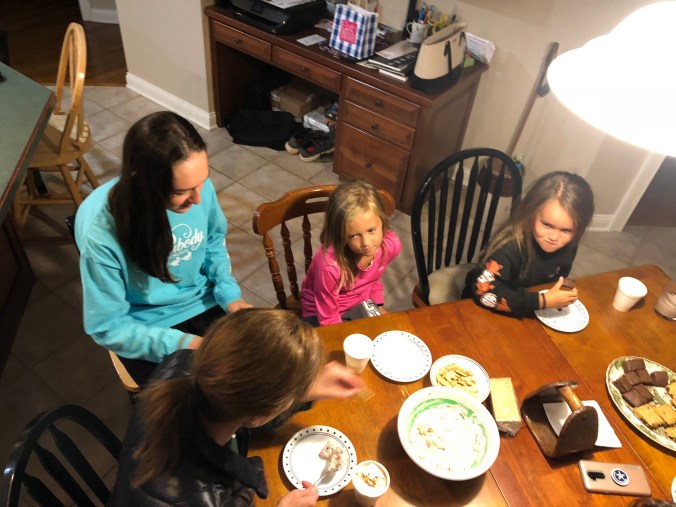
 

I started our conversation off by asking the required question about what citizenship means to everyone. No one really knew how to begin, but after a few seconds of silence my mother suggested being a good neighbor. Everyone seemed to agree and my aunt Lyn added making sure that the next generation be better off. Even though we has only barely answered one question, my Dad, Jamie, and Keith all checked out and began to talk about sports. They would each occasionally provide input on the following topics, but not very much. We then began to discuss what we each perceived as the best things about our world today. Again, those who were still paying attention to the conversation grew quiet for a second. As the sound of her 4 year old grandson’s laughter filled the room, Lyn said “grandchildren” as she glanced at the attentive little boy in front of the TV. My mother suggested neighbors again. Cousin Emily says how much more politically active people are becoming. I then asked what kind of community everyone would ideally like to live in. Everyone quickly agreed to somewhere safe and where you are friendly with your neighbors. I then asked what everyone likes about where they live now. My mother and Lyn, who were next door neighbors until a few months ago, both said they liked being slightly secluded yet still close to neighbors. Cousin Rachel spoke of how much she like being able to let her young children play outside without ever really worrying about their safety. Emily, who has been living in Louisville for the past 2 year, raved about the Louisville food scene. Keith joined the conversation for a moment and went on about the Cincinnati night-life. He then noted how different each person’s answer was. We then discussed how each person thinks their job relates to their role as a citizen. Rachel, Lyn, and my mother all agreed that they are raising the next generation and see nothing else that could possibly help to better society. Bob, who has been mostly quiet up until this point, briefly mentioned how critical his job at the airport would be in the case of a terrorist attack. We could all tell this was not a topic he really wanted to think much about, so none of us pressured him to elaborate. Emily, however, explained in depth her duties at the VA. She shared how, when she first started her job, she was told that it was her duty to take as much money from the government as possible and put it in the hands of service veterans. We then moved on to talk about the obligations we might have to other people in our country. My mother, who always believes in being the bigger person, said we must always be nice to others no matter what. Emily agreed somewhat agreed to this, then added if someone cannot help themselves, she does not feel that they deserve her help. I found this statement extremely interesting, especially considered how to just spoke of the duties at work. I then asked what advice each person would give to people running for office in our country. Bob’s answer was quick and to the point: don’t lie and stay away from social media. This sparked a giant debate about the usefulness of social media that, to be completely honest, I did not retain much from because everyone was talking all at once. I instead chose to move on to the new topic. I regathered the attention of the table, including those who had been discussing sports the whole time. I asked if anyone had ever had a conversation with someone from a really different background than their own and braced myself for the answers. Keith, who we joke is never in the country because he spends so much time traveling world, simply said “Well I travel so yeah” and provided no further explanation. Lyn told a winding tale of how she never spoke to a black person until she was an adult and started working in downtown Cincinnati. She explained the stereotypes around which she was raised and how still now in her middle age she sometimes finds herself believing them. The most shocking statement of the night occured next. Jamie, who had contributed nothing so far, said “I stay as white as possible” then followed that with “Oh, but I’m not racist”. His wife, my cousin Rachel, then accused him of being racist. They went back and forth about this for several minutes while I tried to wrap my head around what just happened. It was clear before that I did not know much about Jamie, but this statement still caught me by surprise. Instead of further opening that can of worms, I asked everyone which social issue they consider closest to their heart. At this time, the men chose to return to their sports conversation. Those still participating in our discussion took several minutes to ponder this one. Emily eventually responded with the access to healthier foods across various communities. My mother and Lyn again went back to raising the next generation right. I did not entirely agree that that is a social issue, but I let them speak their thoughts.


My family has never been one to talk about any of this stuff, so I was very hesitant going into the meal. I tried to dig thoughtful answers out of everyone, but was not very successful because I did not want to offend anyone. However, I do still feel like I learned quite a bit. I certainly learned learned a little more about Jamie. I continued to think about what he said after dinner as I sat in the floor and played with his two young children. How will this affect them? Will they grow up to see things like their father?  From observing Keith on a different level, I learned that just because someone has been to every corner of the world, it does not mean they are “cultured”. He can show me thousands of pictures he has taken from foreign lands, but he could never tell me about the problems and beliefs of those places. I also learned that the VA, for a lack of a better term, is awesome. I always knew that Emily worked for them, but never really knew just what she was doing. Hearing her talk about her job reminded me of one of our central questions for this course. Emily is helping others (the veterans) have more control over their lives. She helps them obtain the proper funding to keep them housed and healthy. It also reminded me of Derrick Jensen’s message in “Forget Shorter Showers”. He urges the reader to confront systems of injustice (those in power) and that is exactly what Emily is doing when she, in her own words, “attempts to increase the national debt to give veterans a proper payday” I walked away from this dinner with a much deeper admiration and respect for my cousin Emily.


I must admit, I had been dreading this project all semester for fear that too many problematic things would be said. While that certainly did happen, I am still glad I was able to have these conversations with my family. I learned many new things from observing what they said and how they said it. The topics discussed and shared gave me a new insight on the experiences and thinkings of my closest family members.


Turner’s Kentucky Kitchen Table

By Turner

My Kentucky Kitchen Table Project took place in my hometown, Versailles, Kentucky, on September 20. We happily gathered around the kitchen table in my family home, even adding chairs to make room for more people and more opinions! Those present each contributed to the conversation, making for a good night.

There were eight people there, myself and all of my family, and four others. My mother, Keli, is a democrat that works for the state with finding housing for various homeless populations. My father, Jeremy, is a republican assistant principal for the public-school system in Woodford County and my sister, Morgan, is a high schooler in this same school system. The other non-family members there were Hunter, a republican in college in Indiana and Tasha, the local middle and high school cheer coach who knows absolutely everyone; she is also very, very conservative. Tasha’s ten-year-old daughter, Chloe, also came and with her came a surprise visitor, her friend, Reagan.

This may seem like an odd mix of people; however, I strove to diversify the people in the conversation because I wanted to know the difference of opinions that came with different upbringings and political ideologies. I also wanted to have a difference of ages. I have always thought that children tell things simply, like they see it, and that was the idea I had when I invited an elementary aged child. This particular child is very outspoken about the way that she feels and very smart when it comes to national happenings. Because of these things, I expected to have a very interesting conversation and my expectations were satisfied.

We opened with casual conversation to ease nerves, some were very nervous about being a part of this project but soon got over it. We then moved on to the first, required question; “Beyond voting, paying taxes, and following laws, what does citizenship meant to you?” Jeremy started the conversation off by introducing the idea that in order to be a good citizen one must pull their own weight to the best of their ability. Several others also seconded that opinion, at which point Chloe asserted that she did not understand what that meant but that she did not understand why people could not just get a job. This launched an in-depth discussion about what “pulling your own weight” means exactly. This was interesting because it really relates to political debates today, concerning healthcare, government assistance, and many other things; at what point should we, the government, stop helping others and expect them to help themselves. Keli, who works with people not in the position to help themselves, also added some interesting thoughts. She explained that some people are not able to get their own jobs, whether it be due to disability or never learning the work ethic required to have one.

This particular part of the conversation interested me because of the social issue project that I have been working on in this class. I have been researching and writing about the foster care system and how youth aging out are virtually unequipped to move into the world, get jobs, and live on their own. Many times, these people are not able to get jobs or support themselves which is the point Keli was trying to make. It is not necessarily their fault, but the fault of those around them, their biological parents and the system, for not teaching them the work ethic they must have to pull their own weight. Applying what I have learned throughout this class to the idea that good citizens must pull their own weight, helped me realize that it is not always possible, which is not something that I have always thought.

Along this same vein, we discussed what being a citizen means to us which started a conversation about the need to regulate the resources the country does have available to those in need. Some felt that these are often abused and need more regulations in order to gain assistance, such as drug tests. Keli said that she did agree that there needed to be more regulations due to the fact that people often stay on government assistance simply because it helps more than going out and getting a job that pays minimum wage.

We also discussed the best things in our world today. I was thankful that we can still live in a world where we can know our neighbors and have relationships with them. Keli was thankful that there are still people in this world that care for others and are charitable and giving. Most of the other responses ran along this same vein. This reminded me of the very first week’s reading, “Love Thy Neighbor.” This reading explored neighbors turning on each other and killing based on things that do not matter. Applying this reading made me thankful that we live in a country where this is not a problem. We live in a world where we love and help each other regardless of race or religion, and this helps keep us all sane and, for the most part, good.

Finally, we discussed how religion has shaped our worldview and view on citizenship. Morgan and most people felt that going to church and being a Christian has made them better citizens. She said that you see what is right and how to treat people and that helps you to do it. Reagan and Chloe felt that what they learned at church made them better at school and taught them to treat their classmates better because the Bible teaches to treat others how you would like to be treated which is a good practice to follow as a citizen. God says to feed the hungry and help the widows and this is what we should do as citizens, as much as possible. Adding religion to the equation really changed a lot of the opinions of the table to an extent; adding it helped people to see that we should help people and that caring for others is part of being a great citizen. It was a great finishing question because it summed up the whole activity and really helped all of us think in depth about why being a good citizen is important and what that means.

Overall, this conversation helped me gain a lot of insight into people’s minds and what they think about citizenship and America as a whole. Hearing republicans and democrats agree gave me a lot of hope for the country and the political gridlock that we see so often today. The overall thought seemed to be that being a good citizen means helping people that need it to a certain extent. This idea can easily be affected by upbringing, political ideologies, and spiritual identity.

The Kentucky Kitchen Table project made me think a lot about the pieces that we have read throughout the Citizen and Self course, but most specifically the piece, “How We Talk Matters.” This talks about how we can benefit from taking time to listen and talk with people, which is what we did during dinner. As we talked, we began to see what others see and at one-point Hunter even said, “Keli makes me feel bad about some of the things I say.” This really speaks to the importance of talking about opinions. Sometimes just listening is all it takes to see what other people see. Talking truly is the way to fixing many of the issues of America; however, we often do not take the time to talk, and when we do, we do not listen. Having the simple conversation, we had at the dinner table helped Hunter and Jeremy and some others at least see why it could be considered a citizen’s duty to help other Americans and helped Keli see why they believed every citizen should pull their own weight.

Through this assignment I personally decided that it is my duty as a citizen to keep having these conversations, and to instigate them whenever I can. I believe that doing this can help us to live better together. Talking about opinions and ideas can help people to agree better and compromise. It is the good citizen’s job to ensure that this keeps happening and we keep talking. The minute we stop talking to those we disagree with is the minute that our country can no longer get things accomplished and protect our citizens. One of the ways to solve wicked problems is to talk about them and find ways we can compromise for the better of the people. Talking is the best way to solving problems together and although it was just a small group, in a small setting, it was a step in the right direction. Sometimes all it takes is a small group of “little” people to make a large difference. Talking is always a step in the right direction which is why as a citizen it is my duty to make sure we are all talking.

KKT2

Picture taken during dessert time! From left to right: Keli, Morgan, Reagan, and Chloe

KKT

From left to right: Chloe, Jeremy, Tasha, and Hunter


Kentucky Kitchen Table: Birthday Edition

By Emma
For my Kentucky Kitchen Table project, I decided to host a post birthday dinner on October 12th in my hometown Union, Kentucky. It was a super great, rather than a potluck (since most of the people there live in dorms) we cooked the meal together which was a great way to get the conversation going. We talked over chorizo rice, taco meat, and trying to peel avocados. I invited my two friends Toney and Morgan and their two roommates who I didn’t know very well, Jordyn and Sarah. Then my family joined the meal a little later because they got home late and seemed pretty excited to chow down on some homemade Mexican. My family consists of my younger brother Carter, my mom Allison, and my dad Jason. To begin we sat around my kitchen table and had some casual conversation to get to know Sarah and Jordyn better. I learned that both Sarah and Jordyn grew up around the same area that Toney, Morgan, my brother, and I grew up in. We talked about what their lives were like at home growing up. Morgan’s parents worked alternate shifts at Fed Ex, so they weren’t together at home very often and kitchen table dinners were saved for the major holidays, if that worked out with their schedules. Toney spent a lot of her time with babysitters growing up because her mom was often away on business and she doesn’t see her dad, so their dinners weren’t around the kitchen table often. Jordyn spent time at both of her parents houses so she would have dinner with them, but as she got older and busier it was harder and harder to keep up with, so they eventually stopped. Sarah’s family dinners were very similar to mine, we would get home from school, do homework, have dinner with our family at the kitchen table, and then would play. That is, until we got older and busier and kitchen table dinners weren’t a priority. The same goes for my little brother. Finally, my parents told us a bit about their upbringing. My mom was raised on a farm where they had hogs and tobacco and my grandpa was a truck driver because of that she didn’t see him very often. My dad on the other hand grew up in a military family. He moved a few times throughout his childhood until settling in relatively poor part of northern Kentucky and his parents worked a lot to support them. Our homelives were very different growing up which was really interesting to see how each of us perceived a family dinner around a kitchen table. One big thing we touched on was how valuable that time is and truly special it is to really get to bond over good food and conversation.
When I asked the main question of the night, “Beyond voting, paying taxes, and following laws, what does citizenship mean to you?” I received different answers, as the discussion moved on the ideas sort of merged together and we began to talk about the ideal citizen. The “good” citizen we created through this discussion was involved in their community, passionate for those who need assistance, and truly cared for the safety and well being of those around them. Another thing we came across was the need for conversation between citizens, not just to be cordial, but conversation that can lead to development of the community that they reside in. Then we talked about our current jobs (my parents) or our jobs that we want (everyone else at the table who was a student) and how our jobs to relate as roles of a citizen. Four people at the table are in health care or want to be in health care talked about how their job is to ensure the wellness of the people in our community, that it is their job as a citizen to have a “good head and a good heart”, as Morgan said, for the people in the community to help keep them happy and healthy which was really interesting and impactful. Jordyn wants to go into architecture and interior design, she felt that her job was to provide safe and beautiful architecture and decoration to the community to create a special feel to the place in which other citizens live and work. Honestly, it was really exciting to see what everyone wanted to do and how they truly want to help out their community. The third question that we discussed that night was asking what kind of person the people at the table wanted to be. We heard the obvious answers that we assume everyone wants us to be such as nice or giving. The biggest trait that we talked about was being genuine. To be the type of person who is real in whatever situation they’re placed in, to be honest and trusted. There are so many good traits that go along with that word and I feel that it can really encompass the traits of a good citizen or person. No selfish characteristics were said like I had expected. I was waiting to hear, rich or powerful or influential but I generally heard things that were for the betterment of those around us. These questions were a really great way to get to hear everyone’s thoughts and beliefs and I absolutely loved getting to absorb and consider their them.
Overall, I loved this project. I enjoyed getting to sit at the kitchen table I grew up around and have genuine conversation about real things. As the time passed the conversation drifted to the most random of topics, some were serious, and some were so funny I had tears in my eyes. That’s something I miss about being at home. But, through these conversations I learned that the world isn’t as dark as it is portrayed in the media. Most people want to be good, they want to help others, and they want to make a positive impact on their community. I also learned that there is a general desire to understand those around us, during dinner we didn’t just sit there and talk on and on or listen to one person do so. We interacted, asked questions, and sometimes debated statements just to better understand their perspective. One of my favorite questions was about the issue closest to everyone’s heart. What was interesting to see was that all of them whether they were education, the wage gap, international relations, mental health awareness, they were centered around everyone being treated equally. This was really eye opening because it showed that everyone wanted everyone in our society to have a chance to be themselves or to have the opportunity that someone else had no matter their circumstances. Mostly, I learned to listen more than talk because you get to see what really matters to everyone and how they perceive the world. Once you gain that understanding you have the opportunity to make change and answer the three central questions of the class.
This totally relates to our class because we talked about right and wrong, values, and what it means to be a good and proactive citizen. It really reminded me of our reading How We Talk Matters because what we say and how we say it really does impact how we view people and how we view ourselves. Good communication indeed transforms people and can transform the society we are living in. So, how can we live better together? Maybe it’s by sitting around a dinner table and talking. Maybe it’s just better conversation, better communication. We can live better together by understanding those that live around us, so we can make it better for everyone else, not just ourselves.