Kentucky Fried Kitchen Table

By Andrew

20170406_200326

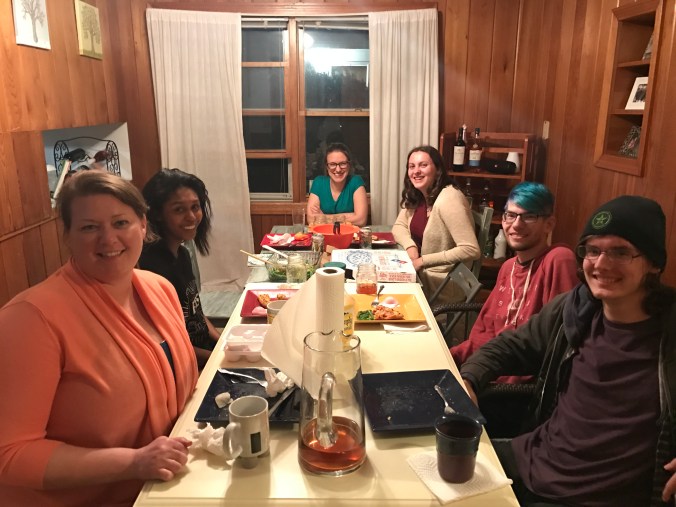
This past Thursday, I rang the doorbell of a stranger while holding a bucket of fried chicken. Before you stop reading, this isn’t as awkward as it sounds. It was the beginning of my Kentucky Kitchen Table, an interesting experience with some equally interesting people. I, along with Hannah and Camille, participated in a dinner hosted by Blake and his mother Stacy at their home in Bowling Green, Kentucky.

Sitting around the dining room table with my fried chicken and heaping helpings of mac-n-cheese, baked beans, corn, and chocolate cake, we began our dinner with some timid introductions. Blake is a film major at WKU with a great interest in film production, and his mother Stacy is a nurse practitioner. They have lived in the Bowling Green area for around 12 years, and Blake has a brother who also attends WKU. Hannah is a social psychology major with an interest in performing research, and her friend Camille recently transitioned to an engineering major. After some brief talk about where we are from, including the coincidental realization that Camille and I grew up in fairly close towns, we started our conversation with a big question: What does citizenship mean to you?

I decided to get the ball rolling by describing my friendly neighbor ideal of citizenship within a community, where each member of the community is active in helping improve the community and helping each other. I added that this also means letting others live their lives in peace, unless their actions are harmful to the community. Everybody else seemed to have a similar definition, and Stacy emphasized that what we believe is harmful to the community is subjective. We then discussed how this is often the cause of debate within a community, as debates are often about problems that don’t have clear cut solutions, which we call wicked problems in our class.

From here, we transitioned to a conversation about how well we knew our neighbors/members of our community. While all of us knew some of our neighbors, we all agreed that we didn’t know all of them, including some of the next door neighbors. However, for some of us this wasn’t always the case. For example, Stacy said that during her childhood on the family farm, she knew everyone from the surrounding farms very well, and either Hannah or Camille commented that they knew all of the kids their age that lived close by. Blake commented that now he didn’t see kids outside as much anymore, and that nobody seemed to be around the neighborhood, especially on weekends. We thought that perhaps this isolation among people was due to an increase in technology.

While speaking about other people in our community, we switched topics and talked about people we knew who had very different backgrounds from ourselves. I had a hard time thinking of somebody as I realized that I don’t surround myself with very diverse people. Hannah talked about an exchange student she knew from South America. She described how one of the most peculiar things about him was how intense his work ethic was for school work. He and those that he traveled with all seemed to have this strong desire to work really hard on their school work, showing how different education is portrayed in different cultures. Blake also mentioned a German exchange student from high school who somewhat lacked a sense of humor. Stacy then remembered a man from the Middle East who is still here in Bowling Green. He is a friend of Blake’s brother, and he was taking classes to become a translator at WKU, but when his country fell into war, he couldn’t continue to receive money from his parents. So now he lives with the Baptist Campus Ministry, while trying to learn to drive so he can get a job. However, even under such circumstances, he was very respectful, and at a meal at Stacy’s house, he would even stand up when an adult male walked in the room and introduce himself. We find this odd in our culture, but to him it is just a sign of respect.

After some more food, we continued our conversation with a question of my own. I wanted to know what everyone’s thoughts are on the increasing price of a college education. I pointed out how it has changed the way that colleges operate, as they act more like businesses than they used to, causing things like grade inflation.  I also mentioned how much harder it is to get a sustainable job without getting a college education. I continued to point out a couple characteristics of the problem, and then Stacy asked us if we knew the root cause of the issue. We didn’t have an answer, and we agreed that this is due to the wicked nature of the problem.

From there we changed topics to a conversation about obligation to those in our communities. The first aspect of the question was whether we have any obligation. Stemming off of the citizen conversation earlier in the meal, we all seemed to agree that we have some sort of obligation to help those within our communities live their lives peacefully. Then Blake asked if we felt the same obligation to somebody who wasn’t in your actual neighborhood or town, but halfway around the world. I felt that there was an obligation, depending on how close your relationship is to the person or community you are helping.  However, I also brought up that some people help those far away from them while ignoring those closest to them in need. Stacy asked us if we thought that was common, and we all seemed to agree that while everybody doesn’t do it, it can be easier to send money or aid to a distant place rather than spend your time helping locally. Hannah said she thought that in a capitalist culture like ours, that we would be greedier about our money, but Blake and Camille pointed out that often people would rather lose some money if they can be lazier.

To finish up the meal, we then talked about how often we sat down at meals like that with our families. Stacy told us how she was required to sit and eat dinner with her family at the same time every day, and how she tried to continue that with her family. She pointed out that with the scheduling of activities, it became hard to find a time that worked, and that practice slowly faded away. I talked about how I regretfully didn’t often eat with everyone in my family. While we all in the same area during meals, often the television was on, and the focus wasn’t on conversation. Blake mentioned how he wishes his family sat down and ate together more often, even though he didn’t like it when they still did it. He said that as he got older he started to appreciate that time together, and that sometimes he just wants that time back with his family.

After this, we decided that we needed to go, and we cleaned up and headed out. Thinking back on the meal, I find that I really enjoyed it. While I am not too socially anxious, I often don’t like to put myself in situations where I don’t know anybody, since I hate awkward conversation. However, I found that some prompted questions in addition to food helped get rid of those awkward silences, and created a meaningful conversation that helped me get to know everyone a little bit better. The idea behind the Kentucky Kitchen Table reminds me of Nussbaum’s article, “Socratic Pedagogy: The Importance of Argument.” While this wasn’t a Socratic town hall debate, the concept behind such a debate is reflected in the way we conversed at our meal. The ability to listen to respectfully hear the point of others in a constructive way and speak for yourself to obtain a constructive result (which happened to just be a thoughtful conversation) is central to our democracy, especially in local government. Meals like this are a great way to teach this core aspect of democracy, and I was amazed after leaving the meal at how natural it felt. Perhaps such meals need to happen more often in our communities. A central point of our class is how do we get along with each other, and such conversations are may be the key. The nature of the situation gets rid of that tension between people, and brings out a peaceful conversation that feels like it can resolve any conflict.
Kentucky Kitchen Table Blog Post

By Blake20170406_200326

As I was the host of my group’s Kentucky Kitchen Table assignment, our meeting took place in the city of Bowling Green. There were five people involved – Andrew, Hannah, Hannah’s friend Camille, my mother Stacy, and myself. I included my mother in the meal because I wanted someone who grew up in a different generation to provide additional insights into concepts that college students might not have. Plus, she makes a great macaroni and cheese dish! My mother is a nurse practitioner that works at Logan Aluminum in Russellville, Kentucky, providing health care to the factory workers and their families. She grew up on a farm, was the first in her family to attend college, and now has attained her doctorate degree as of last year.

Camille is an engineering student. She was interested in pre-med, but recently has changed her desire to engage in a career in civil engineering. Hannah also transitioned from a pre-med background to the field of social psychology.  Andrew, a former Gatton student, expressed interest in becoming a professor, as he takes a great interest in mathematics. Then, there was me, the lone film student in a room full of math and science careers.

Both Camille and Hannah grew up in Christian households, as did I. My mother is a religious woman as well, having grown up in a strictly religious household. My household was quite strict on religious beliefs; however, Andrew and I both now hold agnostic/atheist viewpoints on religion.

Each of us brought our own dish. My mother made macaroni and cheese, as I expressed earlier, while I brought an apple pie. Hannah also brought a dessert, a chocolate cake, but hers had been eaten much more than my dish by the end. Camille brought a bowl of baked beans, and Andrew brought a plate of friend chicken. We had a nice home-cooked Southern meal!

We discussed many topics throughout the meal, but I will only elaborate on the most important parts of the night for time’s sake. First, we started off deliberating on what citizenship means to each of us. As the conversation went around the table, most of us agreed that a quality of a good citizen is being engaged in the community that you are a part of, not just being stagnant and watching events in the town pass you by. In order to be a productive member of society and fully be a part of a community, one must make an effort to shape the town in a way that will change it for the better. Often, members of a city or town will complain about various aspects of the community, but will do nothing to solve the problem. Without ever taking action, the town as well as one’s role as a citizen will grow stale and empty.

Additionally, we discussed the question of whether we knew our neighbors or not. My mother and I replied, saying that when we used to live in the small town of Munfordville, Kentucky, we knew everyone on our street as well as the next street over. However, when we moved to Bowling Green, even after twelve years of being a part of our neighborhood, we know very few people. Our family knows people sporadically throughout the subdivision, but we have difficulty remembering the names of the people who live on the right side of our house, even despite the close vicinity of the houses in our subdivision. Hannah and Camille expressed similar sentiment, while Andrew related to the table his neighborhood experience as a child. He told us that his neighborhood was mostly filled with elderly couples, leaving him no children to play with as he grew up. Additionally, we all noted the rapid decline of neighbors spending time outside in recent years. Before the cell phone technology boom, kids and adults would spend more time in their yards during the warm summer periods, barbequing, playing sports, and riding bicycles. In the present day, however, we have all noticed a greater number of families staying inside, keeping their attention on their various screens, and not requiring their children to engage in physical activity.

Next, we related memories of times in which we have engaged with people of considerably different backgrounds than our own. Andrew told the group that he feels a problem he faces is not having enough diversity in his friend group. He has acquaintances and has met people from different backgrounds, but could not say he had ever had a close friendship with someone whose history was much different than his. Hannah told us stories of her foreign exchange student friend, with whom she still keeps in touch, despite the long distance. She described his incredible sense of humor, but, conversely, I also shared a story of a German exchange student that lived with a friend of mine in high school. From what I experienced of the German exchange students that I came in contact with, they acted more serious and hesitant when it came to humorous subjects.

My mother brought up a story I had forgotten mostly about. She talked about when my brother brought a friend whose background was from the Middle East to our Christmas holiday dinner. His country had been barred off due to wartime, so he had no contact with his family and could no longer afford his schooling. He was studying to become a translator because he already knew six different languages. My brother, who worked at the Baptist Campus Ministry, offered his friend a job in exchange for a room at the building. My mother remembered an aspect of his personality that I had failed to notice. She recalled that every time an adult male entered the room, the young man would immediately rise and shake the adult male’s hand. It seemed to be an automatic response for him, which struck us as odd. We would not expect American college students to greet patriarchal figures in such a manner every time they entered a room.

After that, Andrew brought up the topic of college education and the high cost of tuition. Hannah, Andrew, and I identified the wickedness of the problem, while I explained to my mother the definition of what a wicked problem. As we discussed possible solutions to the problem, we realized the many different ways of treating it and the increasing complications as the conversation endured. However, after a minute, my mother commented, expressing her feeling that we need to first identify why there is a problem before attempting to solve it. Although none of us knew exactly why college tuition has become increasingly more difficult to pay for students, we all thought this was an important point.

Switching topics, we decided to deliberate on our obligations to others in our community as well as our country. We each agreed that we all have obligations to the individuals around us. If everyone isolated themselves inside of their own bubble, a community can suffer. As the topic went around the table, I asked the question “Does distance affect the willingness you have to help an individual?” I related the question back to the exercise in which we participated in class, where we decided whether or not we would send money to a family whom we had stayed with on a study abroad trip. Andrew expressed his morals, sharing that he felt distance should not matter when someone was in trouble. The rest of the table agreed, arguing that the only aspect that should matter is your personal relationship to the individual in question.

Lastly, we discussed whether each of us ever ate meals at the table with our families growing up. Andrew expressed regret, realizing that most of his meals as a child were spent on the couch, watching television alone. He wishes his parents had forced him to sit down and eat, as he felt this would have helped them to form closer relationships in the future. Hannah and Camille both related how they would frequently eat as a family, but sometimes schedules would conflict and family dinnertime would have to be sacrificed. Similarly, in my family, my parents would always force us to eat at the table for dinner. However, as my siblings and I grew up, we had to give up family time in order for my parents to transport all of us to our extracurricular activities after school. Now, my family has realized that many of our family meals now occur at restaurants, as my older brother and I are in college. Our parents realized the effective way of planning family time — by promising free food. On the other hand, my mother described a different experience from when she grew up. She recalled being forced to eat at the dinner table every day, at the same time every day. They also rarely ever went out to eat to restaurants for food because eating out was deemed too expensive. Because of these strict dinnertime rules, my mother always wanted her kids to share similar experiences around the dinner table with their family.

After the meal ended, my mother and I cleaned the plates, and the group sliced into the desserts. Camille, Hannah, and Andrew respectfully thanked us for offering up our house for the project, and we each commented on how easily the conversation went after it got going. I believe our group’s Kentucky Kitchen Table was a success!

By Ryan P.

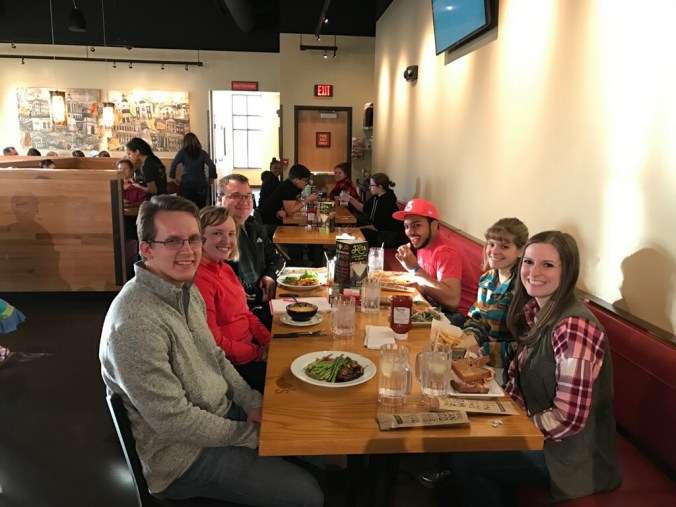
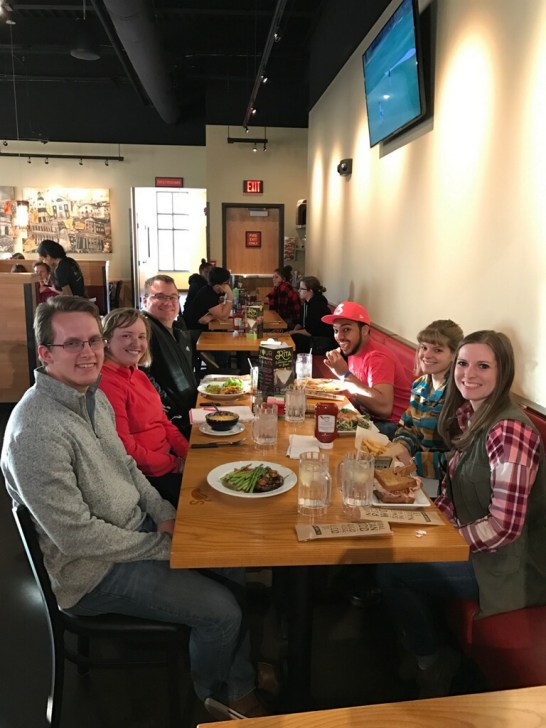
On Friday, April 7, 2017, I along with five others attended our Kentuckys Kitchen Table assignment. Our group had dinner at WKU’s campus Chili’s in Bowling Green, Kentucky. The people in our group included Anne and her friend Jill. Anne is an environmental health sciences and philosophy double major from Frankfurt Kentucky. She wants to work with water quality in the future. Jill is a recreation administration major from Louisville, Kentucky, who plans on working for the national park system. Hannah invited her friend Thomas to join her for the dinner. Hannah is a chemistry and biology double major from Madisonville, KY. She plans on going to dental school. Thomas is from Brandenburg, KY. He is majoring in exercise science and plans on becoming a clinical exercise physiologist. Mahesan, who is the friend I brought with me, is a biology major and chemistry minor. His parents both work in the healthcare profession, which has had an impact on him wanting to become a doctor. I am a senior accounting major and I plan on becoming a CPA for a public accounting firm. My family lives in Owensboro, KY, but we are originally from St. Louis, MO. While each of us at the table was a member of the Honor’s College we all had diverse backgrounds that helped to make a memorable conversation.

Our conversation started with us introducing ourselves and speaking a little bit about ourselves. At around this time the server came to the table and we learned that Anne is vegetarian and Jill is vegan. We then had an interesting and informative conversation on dietary choices and lifestyles, how people should work with dietary restrictions, and even other dietary choices and food allergies. After speaking about dietary choices, we talked about the required question of what citizenship means to us. One of the main themes in our conversation was that citizenship is about our personal choices to help those around us and working daily to be an individual who is concerned about what is happening around them. The point was made that most people have a desire to think of themselves, but also a need to connect with others. This could help make a case for deliberation and town hall forums. These settings are a more personal form of being involved in citizenship than say voting. They have the potential to allow others of differing viewpoints to connect and learn from each other. If we can put a face to a cause or viewpoint we can sometimes bring our walls down to see from other perspectives. I brought up that I believed most people are naturally good or have good intentions. One rebuttal to this was that humans are very self-interested and as an infant our minds are naturally a blank slate that is written upon by our upbringing and experiences. This makes the case that people’s good intentions may vary greatly depending on their experiences.

The next question we asked was what we think are the best things in the world, or what is good in the world today. I mentioned that in my economics class we had been viewing overall rates of poverty worldwide and per these statistics recently the global standard of living has been on the rise with less people in poverty. The rebuttal to this was how do we truly know that the statistics are accurate and that globally there have been many social justice and human rights violations. These human rights violations can be evidenced by Syrian chemical weapons attacks or many country’s oppressive treatment of women and persecution of the LGBT communities. This theme relates closely to the wicked problems readings, which consisted of the wicked problems handout and Carcasson’s article on dealing with wicked problems through deliberative engagement. We talked about how these human rights violations are wicked problems since they are difficult to end, but we can seek to minimize them to the best of our abilities. Like the bridge metaphor, the shape of the world (our side of the bridge) is rather dangerous. We do not want to be here with the atrocities happening worldwide. We want to be on the other side of the bridge where people’s human rights are protected and the world is a safer place. One way is for countries to openly talk about these issues and work together to help alleviate them. Not only should representatives of countries deliberate, but it is important for people to deliberate and help alleviate these problems locally. Working together on both fronts may help drive the metaphorical car (us) across the bridge.

A key social justice and human rights issue we talked about was sex trafficking and the prevalence of sex trafficking in Bowling Green. We talked about the factors that go into this complex problem. Due to Bowling Green’s large number of refugee populations, its location near a busy interstate, and lack of resources to fight this issue it has become more prevalent. We discussed how there are organizations that are seeking to help people escape and recover from sex trafficking experiences.

Another key theme we discussed was the role of rapidly advancing technology in the wicked problems of society and our lack of deliberative engagement. We talked about how it was normal in previous generations for families to eat together for dinner daily. We were a more familial and less individualistic society and would discuss life with each other. It seems that nowadays we are always on the move. Our smartphones, tablets, wireless headsets and other mobile technology have enabled us to just grab a quick bite to eat then to spend time to enjoy our meals. Even when people enjoy meals together they are tempted to have their cell phone’s out on the table. It’s almost as if we need to be prepared for when someone may text or call, instead of just enjoying the company of a friend or peer. Humans are social beings, but we are turning to text based, online, and even online video technology to fill these needs. This reliance on technology is not necessarily a negative thing, as technological advances have also benefited society. For the purposes of this class we agreed that text-based and other communications cannot fully substitute face-to-face deliberative engagement. For example, there is still an awkwardness factor on skype conference calls. It is also easier to misinterpret textual communication, especially when trying to express multiple viewpoints. In this situation, face-to-face communication allows for necessary social ques, tones of voice, and inflections. There is also a personal sense of being in the presence of others in face-to-face communication. These factors contribute to effective deliberations.

Related to the rapid evolution of technology and individualism is the treatment of the elderly in society. Thomas shared some of his experiences of working with the elderly. He mentioned that oftentimes those in elderly living communities are put into these care facilities after having just lost a spouse or loved one. Many are also placed into care because they are becoming unable to take care of themselves.  What they need most during these times is the love and support of family members. Many times, though, these elderly individuals rarely receive family visitors. We discussed the emotional and physical toll that loneliness and stress has on the elderly. While it is heartbreaking to hear of the neglect that the elderly often experience, there are countries and programs that seek to help the elderly stay connected. One such program in Finland seeks to offer young adults reduced rent at a senior home. In this way, the younger generation can spend time with the older generation. The experience of an elderly individual spending time with a younger person alleviates their loneliness. It also allows the younger generation to draw on the knowledge of the previous generations.

I learned many important things from our Kentucky Kitchen Table. I learned the importance of seeing the world in a human perspective. I am very used to viewing the world in my limited knowledge through statistical trends. When many people are involved I tend to think in a way that distances myself from the situation. I learned that whether the world is less in poverty than years ago, there are still large amounts of human rights violations occurring worldwide. Many countries are still struggling and dealing with wicked problems. Often countries or foreign aid go into a country, but do not reach their intended destination and attempts to help other countries can end in worse results socially and economically. I started to realize the prevalence of wicked problems in our world. The point we had made in class and the readings about wicked problems being caused by those who intend to remedy them started to resonate with me. Oftentimes a new politician comes along and vows to remedy America’s problems, but does not realize the unintended policy consequences that worsen the issue. In these types of situations if our representatives could reason through deliberation instead of polarization, we could come up with better plans to help alleviate societies problems.

I also learned from our conversation of the treatment of the elderly. It never occurred to me the stress that many elderly in elderly living homes are going through even before they come into the facilities. I learned to empathize with their situation and put myself in their shoes. Thomas brought up the point of how people would feel if they were 90, recently lost their spouses, and were put into a home where there is a chance their familys will not visit them often or at all. In the class and readings on empathy we had talked about having the correct balance of empathy to understand that each other’s points of view are valid without making someone’s situation our own. I feel like empathy is useful when deliberating, because deliberation requires listening to opposing viewpoints. Listening to opposing viewpoints often requires empathy.

To sum up our conversation themes, we first touched on dietary choices, lifestyles, and food allergies and being empathetic in regards to that topic. We then talked about citizenship as the individual ways we seek to help the world around us and how deliberation seeks to solve local and global problems and help the world around us. Relating deliberation to citizenship is an important aspect of the class. The next topic we touched on was the state of the world as it relates to wicked problems of human rights violations. One such human rights issue is sex trafficking, which is a more local issue than many are aware. There was some debate on if human beings are naturally good and the rapid advancement of technology was discussed. We ended with a discussion on elderly people being neglected by family and the importance of empathy and sympathy for them at that stage of their lives. To sum up what I learned from the dinner, I learned about the prevalence of wicked problems in our society and the difficulty there is due to polarization to talk about these problems. I also learned the importance of empathy in the context of wicked problems and the need for it to truly listen when deliberating. Overall, I enjoyed our Kentucky Kitchen Table meal. I found it energizing to have a meaningful discussion around the dinner table and realized that I should try to have memorable meals with my loved ones and friends more often.

KKT Chilis


Kentucky Kitchen Table

KKT pic

By Gage

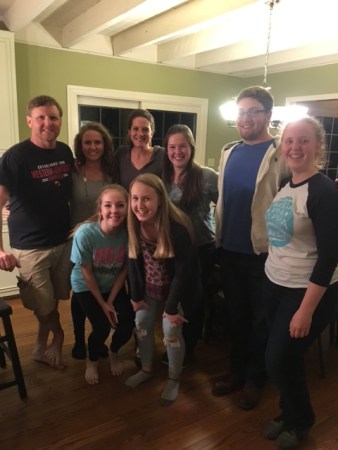
On March 28th, I went to a lovely dinner at a family’s home in Bowling Green hosted by Chris and Leah. I did not know this family before the dinner, however, we all got to know each other during our meal. It made me feel like I was at home having dinner with my family. The family was a unique family in that both Leah and Chris had two daughters each and they were the same ages. They both have a daughter that is a senior in high school and a daughter that is a freshman in high school. Chris’s daughter’s, MacKenna and Riley, were present for the dinner, and one of Leah’s daughter, Katie, was also in attendance. Leah’s oldest daughter was, unfortunately, unable to make it though.

Chris, Leah’s fiancé, works for a construction company out of Nashville. He was originally from Michigan but moved to Bowling Green to pursue work. He contributed to the diversity of the group because of the many different types of people that work for him. His experiences working with them and hearing their perspectives on many different social issues allowed him to provide us with different perspectives in our discussions. His oldest daughter, MacKenna, is a senior at Bowling Green High School. She plans to attend Western Kentucky University in the fall with a major in something in the medical field. MacKenna’s boyfriend Cole was also present at the dinner with us. He, too, is a senior at Bowling Green High School, however, he did not plan on attending college. He is an outdoorsman who spends a lot of his time in the outdoors hunting and fishing. Chris’s younger daughter, Riley, is a freshman who also attends Bowling Green High. She plays soccer for her school.

Leah works on Western Kentucky University’s campus at the Social Center for Citizenship and Justice so she has a pretty good understanding of the social issues in our community as well as around the world. At her job, she is involved in many things trying to help the citizens of Bowling Green. When asked about her opinion on the biggest social problem here in Bowling Green, she talked about the refusal of many immigrants to seek healthcare, among other things. This was ironic for me because health care is the focus of my group paper and the local immigrant populations refusal to go to the free clinics are a major problem.There is a high immigrant population in our community, and many of those immigrants are afraid to seek medical care because they do not have proper identification. Leah’s daughter, Katie, was the only one of her two daughters able to make it to the dinner. Katie is also a freshman at Bowling Green High School. She is a cheerleader for the school as well.

Throughout the wonderful taco dinner, we talked about many things, from citizenship to the community to the city of Bowling Green. The first question we asked was about citizenship. We asked, “Beyond voting, paying taxes, and following laws, what does citizenship mean to you?” The two younger daughters answered first, saying that being a citizen, to them, meant reaching out to other citizens and participating in marches on protests to share what you feel is right. Leah said that the biggest ways to get involved as a citizen in her opinion is by doing things such as attending a city council meeting or writing a letter to the local newspaper editor. Leah also commented that this is the most active American citizens have been that she can remember. The women’s marches and civil rights movements throughout the United States are very prevalent, and they are an easy way to get involved as a citizen. We asked if they thought they had an obligation to their community, Katie responded by saying that some people do not have the same opportunities as us and that it is our duty to help them. She also said, “it’s the right thing to do”. This relates to the class because it shows a sense of wanting everyone to live well together. She admits that the best way for her to help these homeless people, immigrants, starving children, etc. is by doing all that she can to make their lives better and that is an example of trying to live well together. It exemplifies her caring for others and wanting to improve their lives, not just her own.

One of the students also present at the meal, Victoria, talked about her experiences at Western. Victoria is a member of the Honors College at Western. She says that the campus makes her feel at home, similar to Bowling Green as a whole. It is a very welcoming community that makes individuals feel less like a statistic and more like a person. She loves that Bowling Green is a refugee resettlement city. It shows how accepting it truly is and how our community wants to help people, whether you are from another country half way around the world or have lived here your whole life. Grace, the other student at the meal, is also an Honors college student and her major is photo-journalism.

During the dinner, I was able to learn more about the residents of the city and some of its biggest social issues. Leah, having worked at the Social Center for Citizenship and Justice, has seen many of the hardships that have happened throughout the community as well the positive impacts it has had on lives. She talks about rights towards people who are different from others in the community and it makes you wonder how truly accepting Bowling Green is. She has seen many cases of homosexuality causing disruptions at workplaces. One of the worst scenarios she has to deal with, an openly homosexual member of a primarily Christian workforce was asked to resign because of his sexuality. That is one of the areas where she believes Bowling Green could better accept members of the community.

Talking with their family helped me to understand the city’s residents much better. Being from a small town, Bowling Green has always seemed like a big city to me. After I moved up here though, I realized that some of its residents are ready to move away as quick as they can. MacKenna’s boyfriend, Cole, said he had lived here his whole life and when we asked what he liked most about Bowling Green, he couldn’t think of anything. He was ready to move away to somewhere small like where I’m from and live out in the country away from cities.

We also had a very interesting conversation on favorite types of food. Everyone at the table had a different favorite food, however, about half of the people there’s favorite foods were some kind of foreign food, whether it be Mexican, Japanese, Chinese, or Thai. I think everyone being able to have a variety of different foreign foods speaks to the diversity of Bowling Green.

The dinner table was comprised of a very diverse group. That diversity being comprised by different experiences, generations, and geographical identity. Chris, being from Michigan, has been influenced by the people in Michigan. Me, being from an extremely small town, was able to recognize different positive aspects of Bowling Green that they might not have noticed since many have lived here or in a similar town their whole lives. Chris and Leah were able to add another different perspective to our discussions due to generational difference.

The dinner was very relatable to the class. The most relatable reading to our dinner is Paul Bloom’s “The Baby in the Well”. This is because of how much empathy the whole family showed in regard to world hunger, homelessness, and even social issues here in Bowling Green. When problems live starving children in Africa, their moral intuition immediately kicked in. They said they wanted to help them, which is the right thing to do, but most of the time we tend to ignore wicked problems such as those that seem to be never ending. Like the Sandy Hook incident, our society tends to focus on social issues that are new or more televised such as the women’s marches rather than something that’s always there but never really noticed like world hunger.

My experience with their family allowed me to understand more about them, and the citizens of Bowling Green. I learned about their diverse beliefs in regard to many things, such as citizenship, social issues, and the city of Bowling Green. I learned of new social issues in Bowling Green such as the sexuality discrimination in some workforces. I learned about some things that people could dislike about living here in Bowling Green while also, hopefully, shedding new light on the many positives that come with living here. This assignment allowed me to experience a family meal, which as a college student away from home does not happen much. It was a very enjoyable experience, they were very gracious hosts and this assignment allowed me to learn more about my community as well as the people in it.


Democracy as Empathetic Citizenship

IMG_2034[1]By Anne

On April 7, 2017, our group had our Kentucky Kitchen Table in Bowling Green, Kentucky. We visited the local Chili’s, with a group of 6 diverse students. While enjoying our food, we talked about everything from the situation in Syria to vegans. While our conversation over dinner may have seemed random, it provided insight into the way that many people view their role as citizens, and how we can make small changes in our lives to make a lasting impact on the wicked problems surrounding us.

The names of the participants were Ryan, Anne, Mahesan, Jill, Thomas, and Hannah. Of the group, all of us were students but there were a variety of ages. Additionally, we talked a lot about our hometowns from around the Kentucky and Tennessee area, and even learned that one of the group members, Thomas, never had a true hometown because he grew up with a military family who constantly moved around. Ryan is from Owensboro, Kentucky, but was born in St. Louis. He is an accounting major working on his CPA. He brought along Mahesan, who is a Biology major and Chemistry minor. Mahesan wants to become a doctor. Hannah is from Madisonville, Kentucky, and is also majoring in Chemistry with a double major in Biology. She plans on going to dental school. She brought along Thomas, who is from Brandenburg. He is an exercise science major who plans on becoming a clinical exercise physiologist. I am from Frankfort, the capital of Kentucky, and I am double majoring in Philosophy and Environmental Health Science. I plan on working with water quality. I brought along Jill, who is majoring in Recreation Administration and plans on working for the National Parks. Our group was truly diverse, and hails from a variety of different backgrounds.

The first question that we asked to get our conversation was, “Beyond voting, paying taxes, and following laws, what does citizenship mean to you?” While it was difficult for us all to think of the answers, some people talked about how much it means to them to be empathetic toward other people in order to truly be a good citizen. To do this, some people suggested that we treat others like we care about them, while others suggested that you simply “be a good person.” Additionally, we talked about how there is an importance to building a community where people care about one another, notably a community in which neighbors would work together to solve a common problem.

Finally, we talked about the importance of communication with others. Technology was deemed as one of the main obstacles against effective communication, whether it be from miscommunications online or the lack of communication face-to-face. However, someone did mention that, while communicating online, we tend to disclose more about ourselves, and in that sense, we form closer relationships with other people. I, and others, agreed with this notion. Regardless, we decided that people seem to be naturally good and will be as good of citizens as they can be with the resources they have, regardless of their natural communication or social skills.

The second question brought up during the dinner was, “What do you think are the best things about our world today?” Immediately, everyone began thinking of the worst things in our world today, and noting the exceptions to the worst things as some “good things” about our world. Ryan talked about how the overall standard of living, economically, has gone up in the United States over the past few years. However, Jill mentioned that just because the technical standard of living has increased doesn’t mean that people are any happier. People in our society can be pretty lonely and unhappy, although compared to some other countries in the world we are quite fortunate.

We also brought this idea into thinking about the situation in war-torn countries such as Syria. As a country, Syria has more problems than the US in terms of basic human rights and standards of living. When considering this, we talked about the wicked problem of fixing these conditions for the inhabitants of Syria, as well as the wicked problem of whether it would be better to focus on raising the standard of living, and in that way impact human rights, or whether the country should focus on getting its citizens basic human rights which would than impact the standard of living. Many people in the group expressed that they felt hopeless and helpless in being able to solve this wicked problem. As a problem, it seems too big for any one person to put a dent in. However, we talked about how making small changes in your own community to be more accepting of refugees and people in general can make a large impact if everyone does it. This invokes the thought of the “Why Bother” reading which we read in class, which talks about the large impacts a community can make if they band together.

An example of this was brought up by Ryan. He talked about how one of the big issues in Bowling Green is the sex trafficking rings which have been found here. These organizations often prey on the abnormally large refugee population which Bowling Green houses. These refugees sometimes have little choice in what they do to survive, and are vulnerable to these types of organizations. To combat this wicked problem, a faculty member named Dr. Thrasher helps out at a local organization named Hotel, Inc., as well as providing a place for sex trafficking victims of Bowling Green and the surrounding area to recover and find a place in the world. This is a great example of one person doing their part to help remedy the issues that they care most about.

Another example of an issue brought up was the overall treatment of elderly people in our society. These people are often ignored and forcibly put into nursing homes, where they sometimes subjected to unfair treatment and an environment which is not conducive to creativity. Thomas talked in depth about how if we all treated elderly people with more respect it would be a better world. Personally, Thomas volunteers at a nursing home, and tries to do his part in keeping the local elderly people company and helping them to, in turn, have good end-of-life care. He did mention, though, that his efforts do not help with the systematic bias that happens in the nursing home system. More affluent people will always get better care.

From this conversation, there were several themes: that doing your small part can make a difference, that having empathy for your fellow citizen can make the world a better place, and that while the world may seem like a hopeless place filled with wicked problems, we can all make a difference in our own ways. These relate heavily to some of the things we have talked about in class.

The first reading I would like to talk about is the empathy reading. We talked a lot about empathy as a route to being an impactful citizen. Empathy, as discussed in the reading, involves knowing that you know nothing about another person’s struggles and accepting that they are struggling, even if you don’t believe them. Relating to empathy, we talked about how it is important to be empathetic to your neighbors and peers as a good citizen. In doing this, we said, society as a whole will be better. While empathy seems to be a small thing to do, it can make a large impact when we all validate each other’s feelings by empathizing.

Another reading which related to our conversation was the reading, “Why Bother?” In this reading, the author talks about how if everyone approached the environmental wicked problem by making small personal changes that we can all solve the issue together. In our conversation, we related this concept to the wicked problem of the war in Syria and the surrounding areas. By doing small things such as calling Congress about accepting refugees into the US and by donating some money to the cause, we can do our small part to solving the issue. Wicked problems such as this do not have one cause or one solution, and so it is important to keep trying to contribute to the solution, even when you might sometimes feel hopeless.

Overall, I learned a lot about the different ways we all try to be good citizens. While we all have different ways of getting over the “bridge” of solving the problems in our world, we all try to cross it by using our own talents to do good. While Thomas volunteers at nursing homes and Dr. Thrasher works with sexual assault victims, I will be right here in my corner of the world, working on purifying the world’s water supply.

While we all approach citizenship in different ways, there is no one “right” way to be a good citizen. While our efforts may sometimes seem fruitless in the complicated problems our world faces, when citizens band together as a community we can make a noticeable difference.  

Table Talk for Togetherness

IMG_8023

By Sabrina

On a rainy Thursday evening, I trekked the 15 minute walk into unknown territory for a dinner. Nervous, but excited, I knocked on the door, cookies in hand, to meet our gracious host, McKenzie.

The apartment was decorated with Western Kentucky University paraphernalia, and an eager dog, Johnny greeted me.

Our dinner in Bowling Green, Kentucky was very relaxed with plentiful helpings of macaroni and cheese and chicken nuggets. We gathered around on the couches and kitchen counters,  discussing majors, hometowns, and traveling.

McKenzie, our host, is a graduate student at Western Kentucky University. She is from a rural area outside of Louisville. Johnny, her dog, remained close to her side, and she shared with us her love for senior dogs. Mckenzie is the oldest of five in her family.

Hannah, another student in Honors 251, is studying to become a nurse anesthesiologist. Hannah is the youngest in her family, and both her older sister and brother also attended Western Kentucky University. Outgoing and friendly, Hannah talked about her cat she misses at home and her tight-knit group of friends she has made her at Western.

As we ate our meal, we discussed how our semester was going. McKenzie and I, both having communication in our degrees, discussed our favorite professors in the field. Mckenzie studied abroad in England at Harlaxton, saying she would love to live in England. After living in Kentucky for 23 years, she is ready to travel and go someplace new, but it will still be a few years, as she finishes school in 2019. Hannah and I both asked her many questions about study abroad, as I plan on studying abroad the Spring of 2018 in England at East Anglia University in Norwich. Hannah would like to go on some trips, but specifically a trip to Bolivia, where nursing students get the opportunity to help people with various medical needs.

When asked, “what does citizenship mean to you?” McKenzie pondered the thought for a while before responding. She concluded that it means helping each other out, as we are all here on this Earth, we might as well make it easier for each other. We get so wrapped into our own lives, but kindness and being helpful is a small thing that can make a huge difference. Hannah and I agreed. Hannah added that we all need to be kind to each other because we don’t know what is going on in people’s lives, and the harmony it gives can bring us all together. I added that citizenship is about community, and working to live well with people around us.

Jokingly, McKenzie asked “what does citizenship mean to you, Johnny?” Johnny, wagging his tail, stared up at Mckenzie, his eyes begging for food and attention. Throughout the dinner, he strutted around, eyeing plates of food, and even being adventurous enough to climb the couch and almost reach over to my plate on the table, but he proved to be slightly too short. “Is it about getting chicken nuggets?” she asked, feeding one to the now elated dog.

We asked each other how we liked living in Bowling Green, and we all agreed it is a nice place to live with low crime rates and things to do. Being from Nashville, I do get bored from time to time, and McKenzie agreed that she would like to live somewhere else eventually.

We discovered at the dinner that Hannah’s older sister and McKenzie knew each other beforehand, as Mckenzie has her Resident Assistant. Hannah was able to update Mckenzie on how her older sister was going, and they talked about an amazing trip her sister took to South Africa, full of helping people and animals, and petting wildlife.

From there, McKenzie talked about Johnny’s story. Johnny, her 10 year-old dog, was a fairly recent addition to her family, as her previous dog had passed away. Johnny was rescued from a Wal-Mart parking lot, where his previous owners had left him. The shelter took him in, and after being there for two months, Mckenzie decided to adopt him.

She asked us “Do either of you guys have dogs or pets at home?” to which i replied with my extensive story about our history of animals in the house, from cats to lizards. Both Mckenzie’s mom and my mom are not huge animal-lovers, so it was hard convincing our parents to let us have pets growing up.

Hannah has a cat, named Chunks, that was a birthday present a few years back. Her sister came across a litter of kittens, and was able to take some to care for, and Hannah fell in love with them.

While our conversations seemed relatively basic in writing, I found it interesting how our lives tied together in certain ways, and how easily conversation flowed among us. It truly demonstrated to me that people of various ages, majors, backgrounds, can sit down and still have a peaceful and enjoyable dinner. We helped each other throughout the dinner as well, by sharing our thoughts, giving tips about certain classes and professors, and showing enthusiasm for opportunities others had.

By doing this, we demonstrated our own sense of citizenship by being kind to each other. We each brought food for the others, provided each other transportation, and our host graciously opened up her house to the community.

I think doing events like this reminds us that we are a community and we work best when we get along with each other and take others’ lives into account. Hannah could have chosen not to give me a ride to the dinner, McKenzie could have chosen not to open up her home, each of us could have chosen not to bring food. All of these things are small things that didn’t take much effort, but show kindness and is simply a mannerly way of living in society. Community involves looking out for each other and putting aside differences and ultimately understanding other perspectives to better our relationships with other people in our community who may be different from us.

Our whole dinner and this assignment relates to one of our central questions in class, “How do we live well (or at least somewhat better) together?” Individually, each person has their own array of gifts and talents, as well as their own backgrounds and cultures. By working together, communities can strengthen each other and make the atmosphere we all live in more harmonious.

The Kentucky Kitchen Table dinner reminded me of one of our readings we did near the beginning of the semester by Keith Melville, called “How We Talk Matters.” Melville discusses how we shouldn’t be against each other, as we all live in this world together, which related to how our table views citizenship. It is not an “us versus them” mentality that we should have. We discussed issues rationally, and genuinely listened to each other’s thoughts and ideas, and built off of each other. Not only is this a more productive approach to talking about issues within our community, but it was a more sincere and thoughtful conversation, and demonstrated warmth and care for each other.
I was nervous going into the assignment, and part of me was dreaded it as I didn’t know the people I would be having dinner with, and I am generally shy around new people. However, the conversation seemed to run smoothly and while we have different interests and beliefs, we managed to find common-ground and had an enjoyable evening full of food and good conversation.  

Alissa’s Kentucky Kitchen Table

By Alissa

For my Kentucky Kitchen Table assignment, Dr. Youngblood and Dr. Watkins kindly offered their kitchen table in Bowling Green to Margee and I. Going around the table, those in attendance were Dr. Youngblood, Dr. Watkins, Emily, Margee, Dimitri, AJ, and I. All of us have a connection to WKU, either attending the university as a freshman student or as faculty. Dimitri, Margee, and I found out that we are all originally from Louisville, Kentucky. AJ is from Hopkinsville, Kentucky and Emily is from Glasgow, Kentucky. Margee is a girl with a rather bubbly personality and is a psychological science major. She is in the Kappa Delta sorority on campus, in fact she holds an office position in her sorority, and is very passionate about working in the community for their service projects. Dimitri is a gay, nonbinary person who prefers the pronouns they/them. They are very passionate about social issues, especially with regards to the LGBT+ community, and about mental health issues. They are also a psychological science major and found out that they share a class with Margee. AJ is a rather quiet person who enjoyed entertaining Dr. Youngblood’s dog, Hazel. He is a psychology major here at WKU. Emily is an African-American girl who loves Korean pop music and is an English major. Dr. Youngblood is a professor in the English department and is also the moderator of the KPCC- the Korean pop culture club here on campus. Dr. Watkins teaches another section of Honors 251 in the Honors College. Last but not least, I am a chemistry major with a criminology minor. I have a twin sister who I share a dorm room with, and I am also an aromantic asexual, meaning I don’t experience either romantic or sexual attraction.

During the dinner we talked about a variety of things, including what citizenship meant to all of us. Most of us responded by discussing how feeling like a part of a group is necessary to citizenship and how being willing to be a citizen and act is also necessary. Other things that we talked about centered around traveling and comparing customs from other countries to the ones we have here in the United States. We also discussed our high school experiences, since all of us graduated about a year ago. Dimitri and I both attended private, single-gendered high schools while Margee attended a public high school in the same city. We talked about the positives and negatives of attending single-gender high schools versus attending public high schools, and how we thought our respective high schools prepared us for college. Dimitri expressed how they wished they could have attended one of the all female schools instead of an all male high school because everything turned into a masculinity contest. I brought up how it seemed that the girls who attended an all female school would speak up more in class, especially if there were more males enrolled in the class. Margee and Dr. Watkins both agreed with my observation, saying that they had noticed that as well.

I learned that while it was slightly awkward to discuss things like citizenship with people I don’t know all that well, doing it over dinner made it easier. I also learned that while people can be very diverse, you can find similarities and connect with just about anyone if you are willing. All of us arrived at the dinner not knowing much about one another, but we managed to connect through our discovery of shared hometowns, desire to travel/past travelling experiences, and music tastes to name a few.

To me this assignment really connected to the reading, “Giving Employers What They Don’t Really Want” not only because a large part of our conversation discussed education, but because one of the things that the article discussed was how employers want to hire people with good communication skills. We all had to talk to each other, face-to-face, and effectively communicate the point that we were trying to make to people who weren’t necessarily the same as us. That, in turn, fits with the first central question to the class: How can we live well together? A major factor affecting how we live together is whether we can communicate effectively with people who are similar to us as well as with people who are different.


IMG_0133

Kentucky and Tacos

By Victoria

KKT pic

The Kentucky Kitchen Table that I attended was in Bowling Green, Kentucky, right outside from Western Kentucky University’s campus. Grace, Gage, and I (all students in the Honors 251 Citizen and Self class) were invited to attend dinner at Leah’s house; Leah is the director for the center of citizenship and social justice. Gage and I happened to pull up to the driveway right behind each other; he is in an earlier citizen and self class than I am. Grace, on the other hand, is many a times my partner when it comes to discussions in our 251 class. When the three of us arrived, we were introduced to her husband who works in construction, her three daughters; Makenna who is a senior in high school, Katie who is a freshman in high school, and Riley who is also a freshman in high school, and Cole who is Makenna’s boyfriend, also currently a senior in high school. All together, there were nine people at this Kentucky Kitchen Table.
Even though the three of us had not previously met this family, it was not too awkward upon entering their home. I felt very welcomed, not to mention that the tacos we had for dinner were very good. The conversation formed on its own, with questions being asked about where we were all from and some of our interests. Leah grew up in Bowling Green, whereas her husband grew up in the north, later moving to Bowling Green. Makenna, the oldest daughter there, is planning on attending Western in the fall, with her boyfriend planning on working on a farm. Grace is originally from Evansville, Indiana, and Gage is originally from Kentucky, with myself representing East Tennessee

After our miniature introductions, the three of us asked the required question for this project: “Beyond voting, paying taxes, and following laws, what does citizenship mean to you?” Leah’s husband responded first, saying that for him, citizenship meant being more involved in one’s community, such as volunteering. During the first part of our discussion, it was a little hard to get the conversation moving, which is expected since all of us did not know each other, though I think this really added to our experience. The next response was from Leah, which was probably one of the best of the night. She mentioned the right of protesting, specifically concerning the protests of the recent election. She said, “Engaging in citizenship means to try and make or bring about changes in your community, for example, through marches or protests. She proceeded to say that this is the most active that she has seen citizens become in cities, particularly with the younger generations for the past few decades or maybe even ever.” Some of the girls in the family agreed on saying that there are some rights that you have earned as a citizen, such as having a house, having a school, and having a recycling bin.

The next question that we asked was “Do you think we have any other obligations to people in our community?” Katie, who is one of the freshmen daughters here in Bowling Green, mentioned homelessness. She said “It is not the people who are homeless’ fault that they do not have a place to live, and because of that we should help them because it is the right thing to do.” As a group, we all agreed that we, as citizens of the United States, do have a responsibility to help others in our community.

After the question concerning helping others in our community, we asked the family what social issue is closest to their hearts. The topic of hunger was brought up, and it was mentioned that while the problem of world hunger needed to be addressed specifically in third-world countries, we need to also focus on the situation here at home in the United States, and even on a more local level, like the community of Bowling Green. Leah said that this is especially seen in public schools with free and reduced lunch programs. Children who meet the requirements to receive such services are sometimes sent home with food for the night and for the duration of the weekends. However, this food is often times hardly adequate enough to last when it is to be split between siblings.

The next question concerned what we did and did not like about Bowling Green, Kentucky. One of the things that I said was how much it felt more like a community to me compared to some of the other universities that I visited. One of the stories that I told regarding why I came to Western aside from the Chinese Flagship program was on account of this welcoming feeling, specifically seen when I met with my advisor. He really personalized the time my family and I spent with him, going over possible classes for my schedule and the different requirements needed for a Spanish major, and he was genuinely interested in the questions we asked and what we had to say, making me and my family feel that my experience at Western would be more individualized and less like a statistic. Leah also commented that she liked how the Bowling Green community was also a refugee resettlement community, and how that added to the diversity on Western’s campus and throughout the city. All in all, there were no negative comments about this community.

Overall, I really enjoyed this project. At first the idea of eating dinner with many people whom I did not know so well was a bit daunting, but it was definitely a worth-while experience. I think one of the over-arching ideas that I learned from this was that no matter how different everyone is, whether that be their age, their ideas, their education level, their political stance, or their socioeconomic stance, we are still able to come together as a community to have a civilized discussion around a dinner table. In today’s modern society, particularly in the younger generation, I think that the skills needed to participate in an activity like this are slowly being diminished. Participating in the KKT definitely enables you to work on your people skills and be willing to hear other peoples’ opinions even though you may not agree with them.

Another aspect that I found very insightful from this process was hearing everyone’s opinions on various issues with regards to their life experiences. I always enjoyed listening to Leah give her ideas and opinions since she worked at the center of citizenship and social justice. I learned a bit more about what the center stands for and some of their purposes. I also thought it was interesting listening to what the high schoolers had to say in regards to certain issues. Referring back to the need for younger people (including college age students) to have more experience in communication, I think one of the reasons it was a little awkward was because we are so used to communicating with people through technology, without having to take into account body language and improvising the conversation, rather than having some time to think about what you are going to say before you send it or tell it.

Obviously, the Kentucky Kitchen Table experience largely relates to the citizen and self class, along with some of the readings. One aspect of the class that I relate the Kentucky Kitchen Table to is the bridge metaphor. On the far left side of the bridge is where we are in today’s society, on the far right side is where we would like to be in today’s society, and then the bridge itself is the journey to meet the goal. As students, we started out on the far left side of the bridge, with the goal on the far right side being to be a fully engaged, model citizen. The Kentucky Kitchen Table is one of the events on the journey to becoming a model citizen that is on the bridge. Therefore, through activities like this, we are able to better ourselves as citizens.

In addition, one of the readings in particular, Jane Addams’ The Snare of Preparation, relates to the Kentucky Kitchen Table. In this article, Jane talks about the fault that preparing so much has, that being someone who spends so much time preparing for an event or for action, but never actually follows through after the preparations or does not spend an adequate amount of time acting. I see the preparing proportion of this as the time spent in the citizen and self class, preparing ourselves on how to effectively deliberate with others and how to be a better citizen in general. However, simply learning the “how-to’s” is not enough until you have put what you have learned into practice. An example of this would be to participate and organize deliberations in your own community, to become more active in your community through volunteering and voting in local elections, and to even host or organize more events like the Kentucky Kitchen Table.

In conclusion, I think that this experience was very beneficial in understanding the class more, and it also helped in making connections with people in the Bowling Green community. Furthermore, it solidified some of the key points in the citizen and self class, like the bridge metaphor. Hearing other people’s opinions and thoughts concerning what citizenship means to them and how they view controversial issues was also insightful, making this a memorable experience.

Coming Together as a Community

 kkt


By Hannah

This past weekend, I had the opportunity to participate in a Kentucky Kitchen Table, where six of us sat around a table and discussed citizenship and other issues globally. We had our Kentucky Kitchen Table at Chili’s, a restaurant at Western Kentucky University in Bowling Green, KY. There were six of us there, all of us with different backgrounds and studying different majors. Ryan was the host of our group. He is from Owensboro, KY and a junior at WKU studying accounting. There was Mahesan, who is from Clarksville, TN, and also a junior. He is studying biochemistry at WKU and plans to go to medical school once he graduates. Then there was Jill, who is from Louisville and a freshman currently studying music, but she is looking to change her major next year. Jill is also a vegan, which is something very interesting that I had the opportunity to learn what that entailed. Next, there was Thomas. He is a senior at WKU and graduating this year with an exercise science degree. He is from Brandenburg, KY and looking to becoming a clinical exercise physiologist once he graduates. The next person is Anne, who is also a freshman at WKU. She is from Frankfort, KY, and studying philosophy. Although Anne is not a vegan, she is a vegetarian since she came to college, and she loves it. Lastly, there was myself. I am a junior at WKU, and from a small little town by the name of Madisonville, KY. I am a biology and chemistry double major, and planning on attending dental school, preferably at the University of Louisville, to become a dentist.

Honestly, I was a little nervous of how the night was going to go. I am sometimes a shy, quiet person that does not care to talk very much with other people that I do not really know. I was more nervous of how the conversation would go if there were any awkward pauses where no one really had anything to say or add to the conversation. However, once we got there, it was very natural to talk to everyone, especially when Anne was from my Honors 251 class, and Mahesan and I have had several of our major science classes together since sophomore year. Knowing these two in addition to Thomas, made the evening go much smoother than expected. It was also great to get to know Ryan, Jill, and Anne more. I learned a lot about them and took a lot of what they had to say throughout the dinner. It was great to talk to people that I would have never talked to or met here while at Western, and it was great to see everyone’s different perspectives. It was also natural for me to have dinner around the table because my family has always done that when I was growing up. Every night, my mom would cook dinner as I helped, and we would have dinner together as a family, taking about our days and what we learned at school or church if it was Sunday. Although we do not do that as much because of the busyness of our schedules and the fact that I have moved to college, I still remember those days and miss them. I have such great memories sitting around a table and just talking with my family.

The first question that we asked each other was the question, “Beyond voting, paying taxes, and following laws, what does citizenship mean to you?” This was a great question to start out with because it allowed us to break the ice as well as carry the conversation onto other topics throughout dinner. The overall agreement of the group was that being a good citizen means being a good person and caring about others. Citizenship is working together towards a common goal, putting others’ needs ahead of your own, and building a community of people. Thomas made a good point that people were more like this in the past. Neighbors cared for one another and people and communities interacted with one another more compared to now. Due to technology, people, especially our generation, have become more self-centered through texting and emailing. We do not have to speak with each other face to face anymore if we do not want to. We can limit our relationships with others and just focus on ourselves if we desire to. In addition to this, technology causes discrepancies in communication. We have misunderstanding because of the lack of body language and mannerisms. I have experienced this in my own life when texting others. I mean to say one thing, but the other person thinks that it means something else because they could not see my facial expressions or hear my tone of voice. Although technology is great and has many positive aspects, there are also drawbacks to it where it takes the personal connection away from relationships. Ryan concluded that people are all naturally good. We choose to help others in our own way in which we think is best. However, there is always something to learn from the generations before us because they have been where we are. We cannot ignore their wisdom and personal experiences.

This discussion led us to talk about another question: “What do you think are the best things about our world today?” Ryan answered this question first looking at the world from an analytical and economic viewpoint. The standard of living has greatly increased compared to the past. People and countries have become more economically stable. However, as Jill pointed out, the increase in the standard of living does not necessarily make people around the world happier. There are still so many people without necessities to live or do not have basic human rights. This brought up the question of do we raise the standard of living first or do we focus on giving people their basic human rights. Will giving people their basic human rights raise the standard of living, or will raising the standard of living give people their human rights? We came to the conclusion that this is a very wicked problem that does not have any one correct answer. For me personally, giving people around the world human rights seems out of reach. I don’t understand how that can ever happen because of the communications and agreements that would have to be made among so many countries together. I do not see how relationships between The United States and the Middle Eastern countries can ever be mended because we are in such conflict with each other currently. However, we concluded that if we each do our small part in the community, we can have such a great impact on others on an everyday basis. We are unable focus on international issues, but we do have the opportunity to focus on our own communities. 

If we come together as a community, we can do so much good in the world. I learned through this experience that people who are random strangers can have a calm, rational conversation even if we disagree on some things. This is what people across the nation need to take a part in, especially when discussing major wicked problems in our own nation as well as across the world. Learning this also relates to what we have been talking about in our Honors 251 class throughout the semester. It reminds me of the article we read of “How We Talk Matters” by Keith Melville. He writes in this article that how we talk truly matters.We need to speak calmly and rationally with others whom we do not agree with. We need to see their point of view and see where they are coming from because we all have our own personal experiences that we have gone through. What we talked about at dinner also reminded me of the articles we read about the environmental case study and the wicked problem of saving our plant from carbon emissions. I learned through these readings, or deliberation in class, and what we discussed at our Kentucky kitchen table, that even if we cannot make a huge difference personally around the world, we can make a difference in our own communities. We can change our habits and the way we think about ourselves and the community. We can truly impact others positively just by talking with them and forming a relationship with them. If we take the time to understand where they are coming from through their experiences and to learn their point of view, we might be able to actually learn something new and see things in another way that we would have never considered. Not only will this allow us to become good citizens, it will also give us the opportunity to become people that care about others and put others’ needs before their own. Through this experience, I hope to take what I have learned and use it in my everyday life now as well as in the future.

Culture and Citizenship

By Andrew J.

This dinner took place in Bowling Green, Kentucky at my German Professors house. For dinner, Laura provided the schnitzel, salad and potatoes, but we had to cook them together in small groups. I did, however, bring chocolate as a gift to Laura for hosting this dinner, and Alex brought two pies as dessert. The dinner was attended by Laura, Heike, Julia, Alex, Ryan, Carlos, Maggie, Eric, Jack and I. Laura is my German professor and the department head of modern languages at Western Kentucky University. Heike is an English teacher from Germany who had come over with her students to Bowling Green for a few weeks. Julia is an instructor of Russian at Western Kentucky University. My classmates are of a diverse background as well. Carlos is a Mexican-American from Indiana who is studying mechanical engineering and German, and Maggie is a Chinese-American who is studying German and Chinese in order to be a translator after college. Ryan is studying German and Computer Science, and Alex is studying German and International Business. Erin is studying German and International Business, and Eric is studying Architecture and German. Jack is also studying German, and he recently came back from a semester in Germany. I myself am studying German and Geography. Since nearly everyone at the kitchen table had several years’ worth of experience with German, one of the topics that often came up in our dinner discussion was the difference between citizenship and politics in both the United States and Germany.

As we initially sat down for dinner, the table was relatively quiet. Eric was the first to bring up recent news to the dinner table, speaking about a recent political move made by President Trump to build the wall between the United States and Mexico. There was a shared sentiment of disapproval about Trump’s actions in the White House at the dinner table; however, Carlos, being Mexican-American, quickly called out the absurdity of the plan, noting that the proposal of building a wall between the United States and Mexico was not American. At this point, I thought it would be an appropriate time to ask everyone what it meant to be American. Everyone there had a different idea of citizenship, but there were recurring themes of opportunity and egalitarianism throughout each person’s opinion. Carlos held the belief that being a citizen entailed having the opportunity to speak and move freely and the right to pursue happiness by one’s own accord. He particularly emphasized examples in history of the importance of the right to pursue happiness, such as Mexicans immigrating to the United States to work so that they could better support their families. I supported this notion by stating that many of the anti-immigrant sentiments in the United States are based on scapegoating when in reality Latin American immigrants often work jobs that the typical person in the United States would refuse to. Ryan iterated that the United States was founded on the ideals of living one’s life the way they choose to, though he also added that the United States has an interesting quality regarding citizenship compared to the rest of the western world. It was his belief that the United States was the most individualistic western country, and that this affects how many citizens of the United States see themselves as Americans. Afterwards, Heike added to the topic, mentioning how a more collectivist attitude towards social issues exists in Germany and the rest of Western Europe. This means that while there are more government laws for assisting people, there is also more order and less free speech due to Germany’s troubled past.

The conversation shifted towards politics after talking about citizenship, as Jack recalled the current widespread malcontent with politicians currently. This brought the wide spectrum of political beliefs present in the United States to the dinner table. Virtually everyone at the table was disappointed with the current administration in a multitude of ways, which I didn’t find too surprising honestly. It did, however, become more interesting when Alex brought up the cause of the election’s results. He mentioned that the divide between rural and urban America has stratified our country, and that to move forwards the nation would have to first take an introspective look as to how we are all united as Americans, rather than divided. In agreement I replied that there appeared to be more challenging economic problems in areas like Appalachia and the Rust Belt, which a person living in an urban area would not understand. Jack noted that living in general has become more expensive, and that many well-paying jobs that once existed in rural areas are now gone. As we were all sitting at the table and pondering the situation, Ryan said that while the situation regarding work and economic prosperity looks somewhat grim at the moment, the same situation of a debilitated economy has happened several times before in the United States history, and that the tough conditions facing Americans today would, in some form or another, be overcome. The dinner was over shortly afterwards, though there were a few additional discussion topics that I felt taught me.

There were a few highlights from the night that I feel are worth mentioning in greater detail. My German professor, Laura, made an excellent point as to how the education system has evolved over the past fifty years. Where the University experience was once far more academic in nature, it has become more similar to a business model, since Universities now compete to get the best students by having the most amenities and accreditation. This, she noted, has heavily increased the cost of college, along with the increased need for a post-secondary education to obtain a fair-paying job. Many well-paying industrial jobs that one could obtain once they were finished with school are now gone, and the United States economy is increasingly based on service jobs, which are either minimum wage jobs or professional jobs. An important perspective on citizenship in different cultures came from Maggie, as she shared her opinion on the differences between Chinese and American culture. She remarked that there’s a higher sense of duty to one’s family in China than in the United States, and that this sense of duty will often manifest itself when decisions for the children are made. Parents are willing to sacrifice much of their own happiness for the sake of their child’s future. This resonated with me, as I had never heard a firsthand account of what life is like in China, where the cultural values are fairly different than in the United States. A final point that I found intriguing, though not in the main discussion around the dinner table, was a point brought up between Julia and Ryan, as they discussed learning Russian. Everyone at the table knew German to some degree, but Russian was familiar only to the two. It became very interesting as they talked about the varying contexts between Russian and German, agreeing that Russian is a higher-context language than German, which meant that the language is worded more implicitly. Although this small section of conversation wasn’t related to the rest of the discussion about citizenship and politics, I found it to be interesting on a more personal level, since I never really examined languages outside of my native English and German.

Of all the subjects we talked about in class, this dinner most reminded of the readings on global warming. Everyone at the table agreed that there were new political and social issues facing the world, but everyone seemed to have a different solution – or lack thereof – for the problem. The instructors, Laura, Julia, and Heike all seemed to agree that learning a second language is an important avenue towards higher intercultural sensitivity, which is important for citizenship in the 21st century. The other students and I had varying opinions on the meaning of citizenship in our modern world.  I, like Michael Pollan, admittedly had the bleakest outlook on the future. I feared that the world was going to be increasingly put under pressure by corrupt government and corporate rule which would limit our freedoms and force a more totalitarian system upon us. In short, I found that any good we could do as active citizens would be mitigated by forces on a larger scale. The other people attending the dinner, however, were not as cynical as I was. They came to a general consensus that through active citizenship and critical thinking, this generation would be able to overcome the pitfalls that impeded progress in the last two. One of the bigger ideas in class I feel this dinner alluded to was one of the three main questions: “How can we have more say over our own lives?” It seemed as though most of the conversation revolved around plans for the future and current global issues, with a heavy emphasis placed on what may happen to the world in the near future. While we couldn’t come to a conclusion as to what the future held, I think everyone at the table enjoyed the dinner and the conversation that came with it on this night.