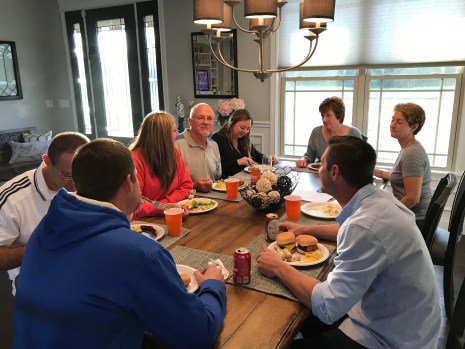
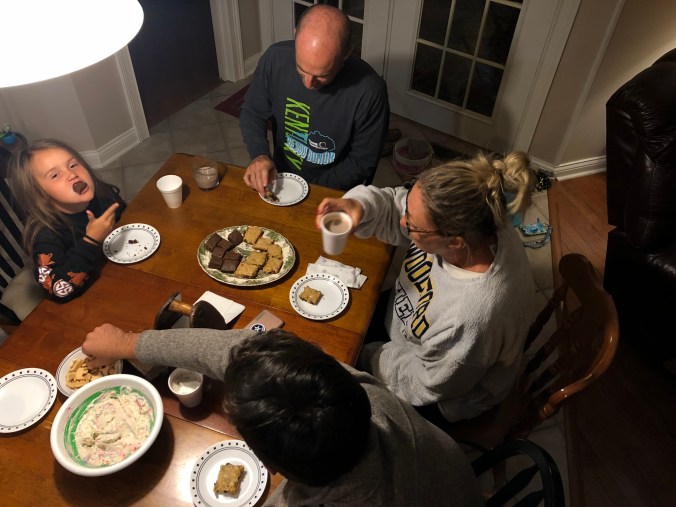
Pasta with Perspective

By Avery

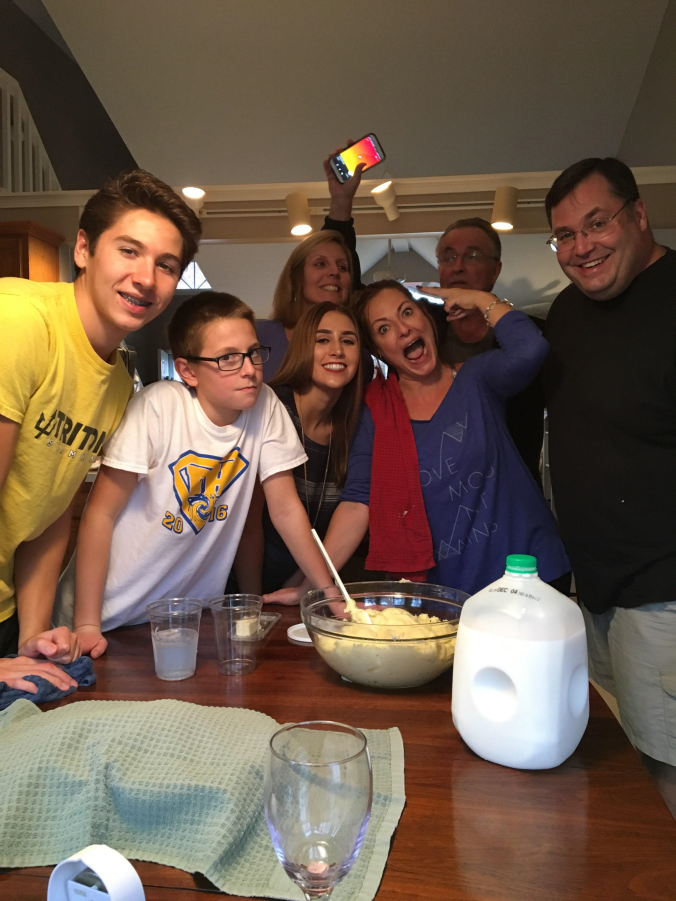
My Kentucky Kitchen Table took place at my home in Murray, KY on November 4, 2018. This project highly intimidated me at first because I did not know whom I would invite. I live in a single parent home with my mom and my 15-year-old sister Annabel. Originally, I planned on asking my sister to invite a friend over and calling that good enough, but as the day of the meal began approaching, I realized that doing so would bypass the entire goal of this experience. Sitting around a table with two teenage girls and my mom would be nothing new to me—it is basically what I have done my entire life.

After I told my mom more about the purpose of the Kentucky Kitchen Table—to engage in meaningful conversation, embrace diversity, and foster new relationships—she was thrilled that she could be a part of it. Immediately she began reaching out to individuals in our community who she thought would add something to the table, and before I knew it, there were seven of us gathered around my dining room!

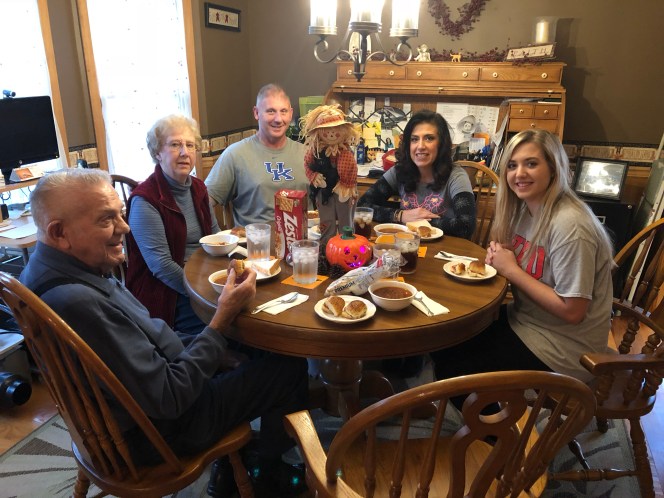
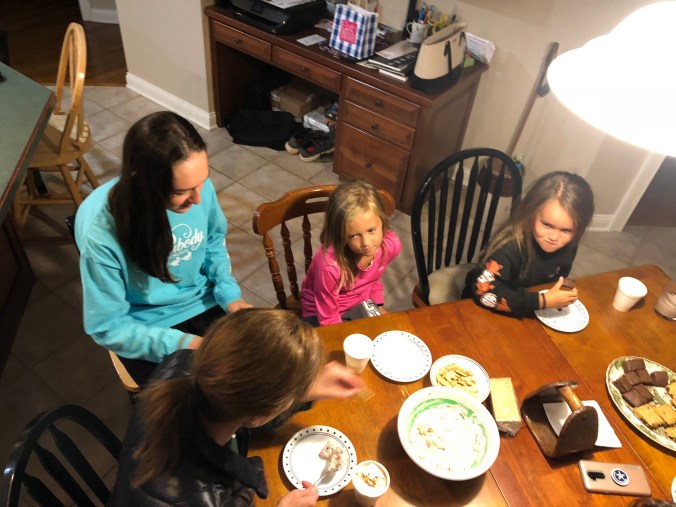
After church on Sunday, my mom and I began the massive task of preparing our house for visitors. We had dishes to clean, floors to sweep, and food to cook. We decided to provide the main course for our guests and asked them to bring desserts. To eat we had a tortellini dish with garlic bread, and for dessert our guests brought peppermint bark, cupcakes, and Oreo balls. The guests at my kitchen table were my mom, Molly, Annabel (15), Ainsley (15), Peggy, Rachel, and my Grandma Ann.

My mom, Molly, is from Paris, TN. She moved to Murray after high school to attend Murray State University. After graduating from MSU with a degree in Occupational Safety and Health, she got married to my dad. My sister and I were born shortly after. My parents divorced when I was two years old, but they still have a healthy relationship; my dad actually lives one street over from my mom. When I was around five, my mom decided to go back to school full time, while also working full time, in order to get her degree in Elementary Education. Today my mom is a third-grade teacher at an elementary school, and she teaches English online to children in China through a program called VIPKid. My mom has instilled in me the value of education and she has demonstrated to me the importance of finding a career I love.

My sister, Annabel, is 15 years old, and she is the exact opposite of me. Annabel is extremely feisty, athletic, outspoken, and dramatic. In school she is a sophomore, and she is involved in several sports: volleyball, softball, and basketball. Annabel is also very talented. She has acted in several musicals and has competed at various levels in speaking contests for different clubs and organizations. As of right now, Annabel wants to be an FBI agent when she grows up, which fits her personality perfectly.

Ainsley is one of Annabel’s close friends. She is also a sophomore in high school and 15 years old. Ainsley and Annabel have been friends for a while, but their friendship solidified when they became improv duo partners on the speech team in middle school. Together, Ainsley and Annabel are dynamic. In school, Ainsley is a leader. She is an officer in several clubs and is also a class officer. She runs track and cross country, and at the time of this meal, she had recently returned from the state cross country meet.

It is only appropriate to introduce Peggy and Rachel together. These ladies are both older and attend the same Baptist church as my family does. Upon first meeting these two, they can easily be mistaken as sisters—they even call each other sister and will tell you that they share a mother. In fact, Peggy and Rachel are just extremely close friends. When their husbands were alive, both couples traveled the world together and made incredible memories. Today, both ladies are widows and have since moved into a duplex together. Rachel lives on one side of the duplex with her 94-year-old mother, and Peggy lives right next door. Rachel is a retired elementary school teacher, and Peggy is still working at JCPenney in Murray, and she has been for almost 20 years. I have only met Rachel and Peggy probably once in my life before this day. My mom met them through a bible study at church, where the ladies decided to adopt her as their little sister.

Finally, my Grandma Ann, who lives in Paris, TN, was also present at my kitchen table. My Grandma is the daughter of immigrants from Czechoslovakia and grew up in Pittsburg, PA. My grandma was raised Catholic and is still a practicing Catholic today. After she married my grandpa, he started his own company called Universal Coatings, which is focused on lining the insides of trailers with protective coatings to prepare them for shipping. My Grandparents had five kids—4 sons and my mom, who is the youngest by several years. My mom often jokes that she was an only child because the house was basically empty by the time she came along. Today, my grandpa has since passed away, but my grandma has kept the family business alive with the help of my uncle Tom. My Grandma goes to work at the shop every weekday, and she says she will continue to do so until it is impossible for her to do so.

Our conversation started off by discussing the value of hard work. Peggy obviously believed working was an important part of living a meaningful life, as she goes to work every single day at JCPenney. Side note: she said she is dreading Black Friday, but it is also her favorite work day of the year. While Rachel does not work anymore, she actively volunteers with meals on wheels twice a week and finds evidence in the importance of work through her 94-year-old mother, who still cleans the church every week. Everyone at the table agreed that working hard throughout life is what keeps people young. This was an interesting conversation to have from the perspective of older people who are working by choice and not to make a living.

A little later, I introduced the required question, “beyond voting, paying taxes, and following laws, what does citizenship mean to you?” I purposely warned Annabel of this question days in advance—hoping she would come up with something meaningful to add to the conversation. I was disappointed, but not surprised, when she only responded with “I think pretty much the same thing everyone else said.” Despite that failure, this question did spark interesting conversation about building communities, lending a helping hand, and the controversial issue of government “hand-outs.” Rachel had the most insightful answer to this question: she said that being a good citizen was about stepping up when you are needed and working to make your community a better place. This part of the conversation reminded me of “The Energy Diet” because we discussed how small actions can end up making a big difference in the long run. Smiling at people, introducing yourself to your neighbors, and being a servant to those are around you are all small steps that can be taken to build a community. Ainsley brought up the point that part of being a good citizen was working hard to go beyond what is required of you. The older women around the table had very strong opinions about people who do not work to earn their living, which did not surprise me. They believed part of being a good citizen was doing your part in society and that being unemployed is the exact opposite of that.

The rest of our conversation was typical of what you would find around a dinner table. Peggy and Rachel talked about their recent trip to Iceland. Ainsley talked about the sports she was involved in and discovered that Rachel is the grandmother of two of her teammates! My sister mentioned that she wanted to be in the FBI, and everyone roared with excitement—urging her to continue following that dream.

Another reading that I feel my Kentucky Kitchen Table experience connects with would be “How We Talk Matters” by Keith Melville. At one point in the article, the author discusses the importance of informal conversation, and how that can help us explore who we are and what we are concerned about. At my kitchen table I had the opportunity to engage in conversation that allowed me to see into the lives of others whom I might have never talked to before. I would not have had the opportunity to gain their unique perspectives by any other means.

Going into this project I thought it was just going to be another pointless, time-consuming task, but it ended up being very enjoyable for all of us involved. My mom rarely has people over anymore, so she was excited to have the opportunity to open our home. My grandma, Peggy, and Rachel talked like old friends and have started making plans to get together again. Through this experience I was reminded of the value of human connection. As cliché as it sounds, it had been so long since I gathered around a table with anyone other than family or close friends. When I was younger, it was not uncommon for us to have meals with neighbors, co-workers, or church family, but now we hardly ever do so. It is so neat how people who have no reason to relate to each other can find so much in common just by having a conversation. That thought reminds me of one of our central questions: “how can we live better together?” Maybe if we all took the time to slow down and engage in conversation, we could gain a better understanding of where people are coming from. Just simply talking to someone you would not normally talk with can open your eyes to a completely different perspective.
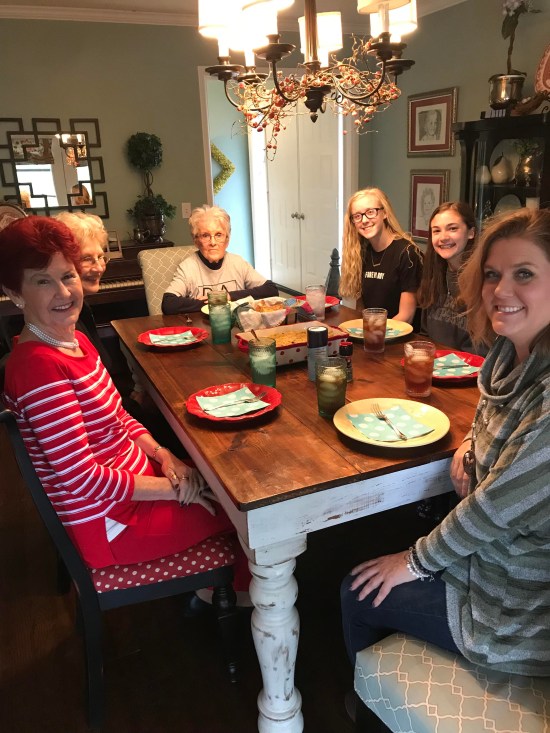
table

Pictured from left to right: Rachel, Peggy, Ann, Annabel, Ainsley, and Molly. I took the photo, so I am not pictured.

thank you

A thank you note my family received from Rachel the day after our meal. “Little sister” refers to my mom– as I mentioned they adopted her.
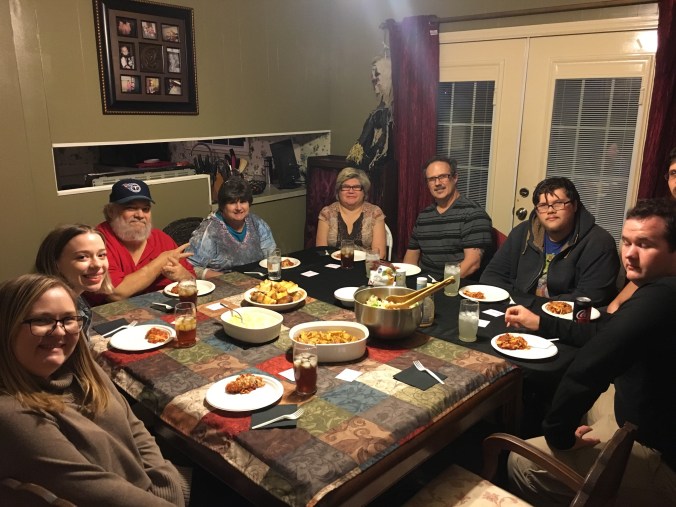
Kerby’s Kentucky Kitchen Table

By Kerby

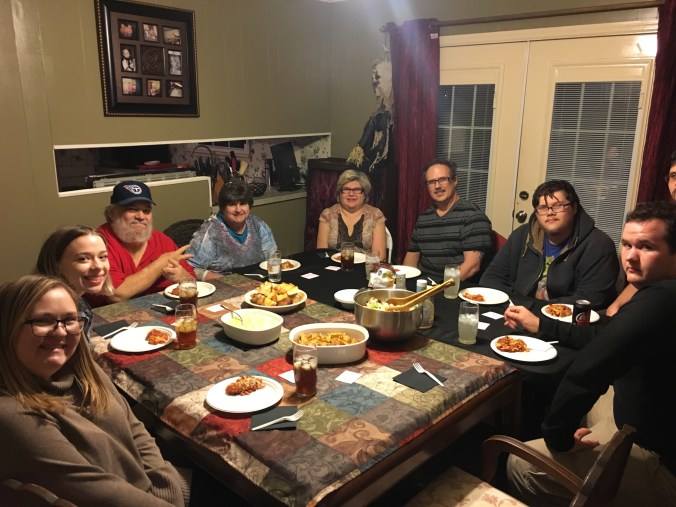
KentuckyKitchenTableI hosted my Kentucky Kitchen Table Project in my hometown of Bowling Green on Friday, November 2nd, 2018. The dinner took place at my home around our dinner table. We had to put two tables together to accommodate everyone. I was able to partner with my classmate Megan for the assignment. In total, we had 8 guests come to my home, with a total of 10 people in attendance. Since Megan is a vegetarian, I made sure that everyone brought food she could eat. John and Renee brought lasagna and garlic bread; Beverly, Eddie, Spencer, and Dalton brought salad ingredients; Kim and Owen made cream cheese corn and brownies for dessert; Megan brought french fries; and I brought tea and lemonade for drinks.

Megan is a freshman at WKU who is from Nashville, Tennessee. She is majoring in English with a minor in photojournalism. John is a retired professor who once worked for WKU. John is diverse because of his age and because of his health problems. He is also from West Virginia, as is his wife Renee. He and his wife  met when they were in college at Marshall University in West Virginia. Renee is also a professor at the community college in Bowling Green. She spends most of her free time volunteering with SKyPAC in town. She also supported her daughter’s high school activities by volunteering on many boards at Bowling Green High School. Beverly and her husband Eddie brought both of their sons to the dinner, Spencer and Dalton. Beverly and Eddie both have a high school diploma. They met their senior year of high school in Louisville, Kentucky. They used to work in retail and ran a small business for many years. They now work at General Motors Assembly Plant in Bowling Green. Their son Dalton is a twice college dropout who works at Kroger. Spencer is currently enrolled at SKYCTC to study computer science and become a programer. Owen, who is my brother, is a high school graduate who works as a security guard for the General Motors Assembly Plant. He is currently enrolled in school to become a law enforcement officer, and he recently joined the National Guard. He is diverse because of his youth and his political affiliation as more right leaning. Kim, my mom, is a single mother of three who works as an operations planner at a factory called Essity that has international reach. She has also recently gone through many life changes including her first child going off to college and losing nearly one-hundred pounds in the past sixteen months.

As people were introducing themselves, one common theme came up among many of the guests and that was the importance of doing service in the Bowling Green community. Many of our guests thought this was something that made them have diverse experiences. I asked why doing service in our community was important and Beverly said “what if it were me who needed an extra hand?” Many guests echoed these thoughts. We should help our neighbors in times of need. That statement reminded me of the chapter in Love Thy Neighbor about the Bosnian civil war. During the war, people who grew up right next to each other started killing one another overnight. The story the chapter tells is strikingly antithetical to the conversation we were having around my kitchen table.  I am glad to know that people in my community do not share this survival of the fittest mentality expressed in the reading, and they are willing to give a helping hand. However, John believed that service was just a requirement of his job. It’s something he had to do for work, and it doesn’t extend further than that. At the same time, he would help those who are in desperate need of it, but he does not actively choose to serve the larger Bowling Green community outside of what is required of him.

We also discussed the health industry and hospital bills. John was a professor in health education at WKU so he was able to contribute a lot to the discussion of how payment works in hospitals. John has also suffered from several health issues for the past ten years, issues that actually caused him to go into retirement. Many of the guests complained of how expensive everything is in the healthcare industry. Eddie even made the comment that some industries are not designed to make a profit, such as hospitals and universities. As a society, we push the numbers too much. That also brought up a discussion about workers rights since many of our guests work in factories here in Bowling Green. At Kim’s work, Essity, the company is planning to eliminate over 1,000 jobs worldwide to reduce costs. They care more about the bottom line than those who work for them.

When I asked “Beyond voting, paying taxes, and following laws, what does citizenship mean to you?” there was a silence that followed. Everyone had to really think about the question, which shows me they may have never contemplated it before. Owen brought up the caravan of immigrants that is moving through Southern America up to the United States. This of course led to a discussion about immigration and President Donald Trump’s latest ramblings on changing the fourteenth amendment with an executive order. But then  the conversation took a turn and we started to have a discussion of what it means to be a good citizen. It echoed much of what we discussed in class about citizenship last Thursday. John said that as long as you work and contribute to our society, he does not care how you get here or what your background is. He added that before World War II, citizenship was not even something the government kept track of. If you crossed the borders into the United States and felt like a U.S. citizen, you were one; that was all it took. We have only recently developed this high standard of citizenship in which people must pass a citizenship test and live in the United States for so many years before they can become a U.S. citizen.

Citizenship is helping the people around you. It is knowing your neighbors and lending them a hand when they need it. It is having dinner with friends and talking about more than what is going on in the world. It is about learning how your friends met each other, or how they met their spouse. It is about discussing your past selves, where you grew up, or where your family is from. It is about how you were raised and how that has impacted your worldview. It is about being able to disagree on a subject while also being able to find a common ground in that subject or on anything. It is about recognizing that all humans are equal, despite what country they are citizens of or how they obtained their citizenship in our country.

After the dinner and as we were cleaning up, Kim was discussing with Megan and I about how nice it was to host this dinner. We each enjoyed having conversations we otherwise would not have had. We were able to discuss and talk about issues in a civil manner, and we were all tolerant of disagreement. We were able to find common ground on most anything. However, even if we could not find that common ground, we still respected the opinions of the people around us. Kim made the comment that we should do dinners like this more often because it is important to talk about how we have been shaped by our country, but more importantly how we can shape our country. This reminded me greatly of chapter ten in “The Impossible Will Take a Little While” called Reluctant Activists by Mary Pipher. This is the chapter about the Keystone XL Pipeline that the corporation Trans-Canada planned to cut through the midwestern United States to build, destroying homes and farmland along the way. Ms. Pipher hated the thought of the pipeline running through her area, so she invited some friends to her home to discuss how they felt about it. They gathered around her kitchen table and just talked with one another about what they knew in regards to the pipeline. They agreed that they did not like it and that action needed to be taken, so they made a game plan and met again and again. All it took to put an end to the Keystone XL Pipeline were a few conversations around a kitchen table and with people from their hometown. These regular people started a movement.

Before the dinner, I knew the names and faces of everyone invited. However, after having the dinner, I know them on a much more personal level. I know how they met their partner; I know some of the struggles they have experienced; I know more about their beliefs religiously and politically, but most importantly, I know how to keep having those conversations. That’s what this project was all about for me. It was about learning how to have and seek out those conversations. When problems in my community arise, I am better equipped to speak with my neighbors about how they feel on an issue and taking their thoughts/opinions to develop collaborative solutions.

Mallory’s Kentucky Kitchen Table


By Mallory

I conducted my Kentucky Kitchen Table on November 3rd, 2018. I did it around my own kitchen table in Hodgenville, Kentucky. There were eight people present. Vicky, who works part time as an accountant, Darin, who owns his own business and has held multiple management positions, Kenny, who is a retired veteran and has a tax business, Ruth who is retired, Rita, who is also retired but holds many responsibilities in her community, Kathryn, who is a college student, Jessica, who did not graduate from college but holds a job that pay minimum wage, and myself, another college student. I described every one’s job because it felt it had an important impact on the conversation that took place at this Kentucky Kitchen Table.

The people at this Kentucky Kitchen Tables all come from different backgrounds, political parties, and communities. With that being said, there still wasn’t much difference in the answers to the question “beyond voting, paying taxes, and following laws, what does citizenship mean to you?” Darin answered first with “freedom.” I thought this was very interesting and I thought someone would answer with a specific action that citizens do. Following that, Rita joined in and started talking about how it is our job as citizens to be informed and to inform others in the community. I also thought this was unique because it lead me to ask the question “do you think we have any obligations to other people in our country or community?” To my surprise, everyone around the table said yes. I found this shocking because everyone agreed even coming from different political parties, as usually, Republicans and Democrats have different views on who helps who.

The next part of the conversation dealt with the community. Even though people came from different communities, all of them being from Kentucky made them similar in the way that they are all small communities. The conversation started with a broad question about the world and the best part about it. Kenny jumped in and talked about freedom once again and the rights that citizens have in the United States specifically. Everyone continued with things like resources and money. Kathryn, being a college student, talked about education and how everyone has the right to education and how that has helped our world grow and become a better place, as people are more informed. This sparked interest in most people, since it was something people didn’t think about at first since everyone goes to school because it is just what you do in the United States. This lead into how blessed we all were to live where we do. The United States may sometimes seem like it is about to fall through, communities as well, but ultimately there are a lot of things, like education, that we take for granted. As citizens, we have a lot of responsibilities, but we also have a lot of rights, even if we don’t choose to take part in each. We also have rights in our communities that make us part of that community. Coming from small communities, everyone at this Kentucky Kitchen Table was describing the positives of their small communities. Rita started with knowing a lot of people. I agreed with this statement as it helped me get to the place I am in my life. Knowing people in your community makes it easier to communicate and, in some ways, helps make the community stronger.

Next was family. I asked the question, “did you ever have meals around the table with your family or neighbors growing up?” Mostly everyone answered yes to having family dinners. Ruth mentioned her family being close with some neighbors but never really having dinner around a kitchen table with them. She did, however, mention taking dinner in times of need and just going over to talk. I found this very relevant as well. I live in a neighborhood and know most of the people that live within. This also comes with a close community. My neighbors and my family will get together and talk all the time and even sometimes have dinner together. We all thought it was important for families to sit down and eat dinner together because it is a time to reflect on the day and take a break from our busy lives. I know for me personally, when I was younger my dad worked a lot and the only time I really saw him was at the dinner table. We were able to talk and relax until he had to go back to work, but it also made me think about what he was doing for my family. Within this conversation I asked the question about people’s jobs. As Vicky pointed out, money isn’t everything, but everyone at the table agreed that it helped if you had some. Everyone reflected on their lives at a younger age and realized that everyone worked in order to provide for their families. Kenny talked about working when he could to help out his parents. Darin told a story of his college years when he would come home every weekend in order to mow yards and make some money to help pay for his college. Me, being a college student, thought about how much college cost. I know college wasn’t as expensive when he went as it is now, but I also know he wasn’t making a ton of money mowing yards. This made me realize how much people have changed when it comes to jobs. It is a stereotypical saying, but todays work force doesn’t have the work ethic that people used to have. If everyone would have the same work ethic as people did twenty years ago, I feel that our world would be a better place because they would feel a sense of pride because they have something to work for.

The last part of the conversation was centered around people from different backgrounds. There are two people in my family who have significant others from different countries. With that being said, I have a lot of personal experiences with them. Rita, however, brought up another good point: people from the north are different. Being from Kentucky, we like to think we have “southern hospitality.” Rita recently took a trip to Connecticut to visit her family and celebrate her granddaughter’s college graduation. She talked to everyone about how she felt the people from the north are a lot different than the people from the south because they have different backgrounds than us. I think it is interesting how people notice such small things when they are speaking or interacting with others. From there I shared my experiences from high school when I was friends with our foreign exchange students. I loved talking to them and seeing how our lives differed just because of where we lived in the world. Darin also brought up one of his past coworkers who was from Turkey. He said similar things about talking to people with different backgrounds, but he also pointed out that the person he was talking with liked the United States and was curious to learn more about it.

Overall, I liked this assignment because I feel like it helped me understand citizenship and our world, country and community better. There were things brought up about citizenship that I hadn’t thought of and basically have taken advantage of since I’ve been alive. I also learned how important communities are. I think part of being a good citizen is getting involved in your community in order to help your community grow. In order to do that, you must communicate with those in your community and grow bonds. I know recognize how much goes into being a citizen, so hopefully I can start being a better one and so will everyone else at this Kentucky Kitchen Table.

Meredith’s Kentucky Kitchen Table

By Meredith

I went home to Louisville, Kentucky on Sunday, November 4th with the intent of having my Kentucky Kitchen Table meal with my four intermediate family members and my 17-year-old brother’s girlfriend. This assignment ended up turning into a surprise 19th birthday dinner for myself, and I was greeted by my paternal aunt, grandmother and grandfather whom I rarely dine with. In fact, I rarely dine with my immediate family either. Our family dinners around the dining table died out long ago, around the time that I picked up competitive swimming and my youngest brother graduated from Wilder Elementary and enrolled in Meyzeek Middle School. Things got busy, so we all filtered in and out of the kitchen at whatever time convenienced us, saying not much more than, “Hello!” when in passing. I’ve only been home once before this since starting school at Western Kentucky University, so I was excited to have a family gathering in the comforts of my home and have a home cooked meal instead of swiping into the Fresh Food Company. The surprise of finding my Aunt Sarah, Grandma Marge, and PopPop waiting for me in my doorway as I pulled up was something very special, as they all live in Las Vegas, Nevada, so I rarely see them.

Last minute, my brother’s girlfriend bailed due to having caught a stomach bug. I had been banking on her being the person around my dinner table whom I didn’t know very well, but my aunt, grandmother, and grandfather were great substitutes, as I have only seen them a handful of times in my life, due to the distance between us.

My parents lived very different lives until they met one another, and after that they built their current lives hand-in-hand. My mom, Gail, grew up wealthily in Albuquerque, New Mexico and is of Hispanic descent, which you’d never be able to see past her blonde hair dye. Nonetheless, her Western childhood allows her to bring unique perspectives to the table that my brothers and I, having grown up in Kentucky, would never dream of. At the age of 18 she chose the University of Texas to be her home for the following four years, a college where she knew not a single soul. She spent one of her summers working on an Alaskan oil rig as the lead mechanical engineer, and ended up settling down afterwards in Louisville, Kentucky, working for the General Electric Company (GE). My dad, Scott, grew up very differently. He was born and raised in a tiny town, home to 500 people, in rural New York state near the city of Buffalo. His family grew up without much money and he spent much of his time working. His perspectives are always unexpected to me. I tend to stereotype small-town residents as rather narrow-minded, but my father has the most open mind that I know. He went to school for mechanical engineering, same as my mom, and was also hired on at GE in Louisville at the same time that she was. This is where their story began.

A little later down the line, my parents had me, their first-born. Two years later, they had my 17-year-old brother, Clayton. Clayton is a quiet boy with a good head on his shoulders. People often dismiss him as shy, when he just reserves his words for times that he feels that are of value. Clayton has always been an athlete and played every sport under the sun growing up. Not only did he play them, but he was good at them. I’ve always been jealous of his athletic ability, and of the grace with which he receives praise for his abilities. He is a humble boy and takes after my dad in the way that he is open-minded.

Four years after Clayton, Curtis came along. Curtis is a 13-year-old geek who absolutely loves science, Rubik’s Cubes, magic tricks, swimming, and his trumpet. He is wise beyond his years, dedicated, and passionate. He spends his days in the math, science, and technology magnet program at his middle school, his afternoons at swim practice, and his evenings repeating over and over, “Want to see a magic trick?” At heart, he loves to learn.

My aunt and grandparents made the move from Eden, New York to Vegas a little after my dad made the move to Louisville. There, my aunt married and divorced an ex-sniper, recovered, and eventually settled down with a construction worker named Brandon. Over the years, she somehow managed to collect five dogs, which she refers to as her children. She works in a nursing home and has a unique outlook on life because rather than having experience with children, like most women her age do, she has extensive experience with older folks.

My PopPop and Grandma have been married since before my dad was born and have always been a symbol of a united front to me. No word does my PopPop justice, save for “goofball.” He is a graduate of Syracuse University, as is my grandmother, a retired insurance salesman, a part-time Home Depot employee, and a big trickster. He is a lover of flashlights in any form of fashion, whether they be ten mini-flashlights that strap onto every finger or color-changing toilet bowl lights for better bathroom vision in the nighttime. This passion of his probably makes him well suited for his job at Home Depot. My grandmother is quite the opposite and often comes across as strict. Their love is proof that opposites attract, and I don’t believe that I’ve ever seen them butt heads, despite their polar personality differences. They have a unique perspective, as they have had to raise three kids on an insufficient amount of money and were unable to escape that poverty even after their children graduated on to adulthood. They ended up declaring bankruptcy, which rocked their world and ours. Many things changed during that period of their lives, and they see things a lot differently now.

I began our discussion while peeling potatoes at the kitchen counter with my mom, aunt and grandmother while the boys prepared the meat. I was disappointed in the fact that my aunt and grandparents reserved themselves for most of the conversation, but they provoked and enabled my intermediate family to dive into a discussion deeper than one we’d ever had before. This depth could not have been reached without their facilitation. It ended up with the three of them asking some of the questions that I had prepared from the list of questions we were provided with in class, which I found to be interesting. It showed that concerns regarding citizenship are relatively universal: they span generations, genders, geographic differences, differences in financial status, and so many factors that could segregate populations, even ones small enough to fit in my kitchen. I thought it was cool that the conversation took the turns that I had anticipated, but that nobody else around the table knew were premeditated. I had been worried that conversation would seem unnatural with all the prompting I planned to do, but I should have saved my worry for something that deserved it more!

I already knew that my mother was registered Republican, my father was registered Independent, and my grandfather was a big Trump supporter. I was unaware of the political affiliations of everyone else around the table, including my own. I was a bit afraid that our conversation would be solely political, but it was the opposite. My mom’s Republican affiliation shown through her answers a bit as most of them involved leading a Christian life and acting as a light to others, while my dad’s answers were a bit more exploratory and varied in terms of religion and logic. My grandfather cracked a few Trump jokes, but nothing serious or overbearing. I expected this.

I was most surprised by my brothers’ answers. Of 13 and 17-year-old boys, I didn’t expect much. They’re still fooling around and growing up along the way and at times I wonder whether they really put much thought into things like citizenship, community, and their own obligations to the society as human beings. My brothers don’t have much experience in the real world, so I couldn’t fathom how they could formulate the real-world answers that I was looking for.

Despite this, Clayton ended up drawing a lot upon his lifeguarding job, saying that it taught him about fiscal responsibility which allowed him, in turn, to consider donating to causes that he had only supported morally until then. He said that his job helped him meet more people in the neighborhood which taught him about the importance of a united community. This also showed him something he had always had but always taken for granted: the fact that my parents had introduced him to every last one of our neighbors and that he knew there was always someone around to help him in times of emergency, spare him an egg, or shoot basketball with. He also learned about the importance of genuinely caring for the well-being of others. He mentioned that while it is difficult to attend to a few hundred people in a 50-meter long pool for hours in the hot sun, he learned how to pay attention even when it was difficult because not only did he not want to be in trouble with his boss if a drowning occurred on his watch, but he didn’t want that loss on his own conscience either.

Curtis also spouted out some impressive answers that I figured he was incapable of. He didn’t have a summer lifeguarding job to refer to for validation of his answers, so I knew that everything he was saying was something that he genuinely felt, not something that he had personally experienced, watched, or been taught. When asked whether his “job” served a greater purpose, he acknowledged that while he did not have a part-time or full-time job that was paying him checks bi-weekly, he was a student and his time in school was spent learning valuable skills that would one day enable him to earn a job that helps others. He aspires to be in the military, and I believe his hopes of that were the driving force behind the answer he provided. Later, Curtis made my favorite astounding comment of the night. When asked what advice he would give to someone running for office, he said, “I would tell them not to do things because of their political identity. I would tell them to make decisions and do things the way they know is right.” Politics and leadership are complicated in ways that Curtis’s innocent brain can’t comprehend, but sometimes it’s necessary to take the seriousness down a notch and remember that we simply need to upkeep the best version of our country to later pass on to Curtis’s generation. While he’s too young to register as a voter, I think that if he holds onto this simplistic piece of advice, our country will be in good hands when it comes his time. His comment reminded me of “If It Feels Right” by David Brooks. The article discussed morality in terms of it being in its decline, but Curtis reminded me that sometimes going by your gut feeling is for the best.

Through this discussion, I learned a lot of the same things that I’ve learned in class but never really seen played out in my household. It’s not necessarily that these themes haven’t been prioritized-citizenship, morality, religion, etc.-but we’ve never actually sat down and discussed the driving forces behind them all. Our discussion also reminded me of “The Energy Diet” by Andrew Postman. Postman noted that even just the tiniest intentional expenditures of energy could make a big difference. I realized that my family members, specifically my brothers, have been making these tiny intentional expenditures of energy all along, when I just thought they were stumbling through life, accidentally becoming good, respectable citizens and neighbors.

KY Kitchen Table Image.png

Pictured from left to right are Clayton, Curtis, myself, my mom Gail above me, my Aunt Sarah next to me, my PopPop, and my dad, Scott. My Grandma Marge insisted on taking the picture because she wasn’t “camera ready.”

Haleigh’s Kentucky Kitchen Table

IMG_1651

Counterclockwise: Haleigh (me), Lisa, Deron, Wanda, Hubert, Brent (not photographed)

By Haleigh

I conducted my Kentucky Kitchen Table project on November 3, 2018. I hosted the dinner at my own house in Bremen, Kentucky around my dining room table. The following people were at my dinner: Lisa, my mother, who is middle-aged and has lived in Bremen her whole life. She works for the school system and enjoys being physically active. Deron, my father, who is also middle-aged and is originally from White Plains, Kentucky while also living in Florida for a time. He is the manager of a saw mill and enjoys being outdoors. My brother, Brent, who is in his mid-twenties and is a student at the University of Kentucky. He is getting his degree in Pharmacy and enjoys sports. My grandmother, Wanda, who is in her late seventies and has lived in Bremen her whole life.  She helped raise me and my brother, and enjoys cooking and sewing. My grandfather, Hubert, who is in his early eighties. I do not share a close relationship with him like my grandmother because he was always busy working while I was growing up. Lastly, me, Haleigh. I am eighteen years old, I grew up in the very same house that my Kentucky Kitchen Table project was hosted, and I am majoring in Dental Hygiene.

I began the conversation with the mandatory question: Beyond voting, paying taxes, and following laws, what does citizenship mean to you? Lisa was the first to answer saying that all American citizens should have a respect for the American flag. She talked about how it is the very symbol of our citizenship to this country and a symbol of freedom. She said that it is a shame how many people are choosing to disrespect the flag in such ways that have been broadcasted on the news recently. I then brought up how some people do not see the flag as a symbol for freedom in the way that we do. Everyone at the table agreed that the flag is indeed a symbol for freedom, and that protestors should find alternative ways to express their concerns in order to uphold the consecration of the flag.

Hubert joined in, speaking of his days in the United States Air Force and how he saw people bleed and die for the sake of our country. He believed that citizenship means supporting the military while they are in service and after. He expressed his concern for the number of veterans in the United States that are not treated with the amount of respect or care that he believes they should.

I then asked the table if they saw our President, Donald Trump, as a model for what citizenship should be in the United States. They seemed hesitant to answer, and Lisa ended up saying that he does in “some ways.” But Brent was strong in his opinion that the President does not embody what an American citizen should be for a variety of reasons. I asked the question: What advice would you give to the people running for office in our country? Deron answered that the main piece of advice he would give is to just do what is right. Hubert said to be honest and follow through on your promises.

I then brought up the issues of bipartisan-ism and how our country is being divided because of it. Some members at the table said that they wish the parties would be done away with while others thought it should stay. I asked Hubert and Wanda, who are Democrats, why they registered for that party when they came of age to vote. They said the Democratic party used to not be so liberal and was the “poor people’s party.” I then asked if they thought the Democratic party has changed and they agreed that it has but have not changed their registration status. They normally choose not to vote in primaries because they normally do not support the motives of Democratic candidates. I believe this a problem for many people from their generation because the parties have changed over time. My personal opinion was that the parties cause unnecessary animosity between Americans because it creates a label which leads to stereotypes.

I then asked how they thought Americans should treat each other. Answers were those such as helping your neighbors, being involved in your community through church, school functions, and community events, and having respect for others. I asked if they thought that Americans are losing respect for one another. Deron said that he believes that a lot of Americans are choosing to alienate one another because of difference in beliefs. He said he thinks social media has a lot to do with the increase in tension. I asked if they believed their religious beliefs influenced their perspectives on how they treat others. Lisa said she felt like it was her duty as a Christian to help others who are in need and church provides a lot of ways to get involved in the community and participate in acts of service. I agreed that a lot of the service hours I worked in grade school came from events through church. Wanda also made reference to the bible verse that states, “Do unto others as they would do unto you.” She said that it is a verse she chooses to live by and she feels that it has influenced her as a citizen.

My next question was: What do you think are the best things about our country today? Hubert said it is that America is still a free country and we are free to live and worship in the ways that we want to that falls within the laws of the country. Brent said the medical field is making huge accomplishments as of recent years and is improving all the time. He talked about the increase of lives that have been saved because of better technology and research. Lisa talked about the education system and how all children in the United States are able to attend public schools while many countries around the world do not allow certain children to attend school at all.

My final question was: What words would you use to describe the United States and our values as a country? Deron said freedom and equality. Brent said sports and technology. Lisa said independence and economic success. Wanda said worship and family. Hubert said jobs and self-esteem. My opinion was power, love, and wealth. I made sure to write down all of these answers because I wanted to remember them specifically. I feel like each of them are correct to some degree and it was interesting to see how they varied.

Through this Kentucky Kitchen Table project, I learned that even people within the same family can have a variety of opinions. I thought it was interesting how the different ages of the individuals seemed to affect their opinions on certain topics. It is true that things in the United States have changed over the years and people in Hubert and Wanda’s generation grew up in a very different country than Brent and I. However, there were still many values that everyone at the table shared and many opinions that were agreed upon. I think this just reinforced the idea that people from similar areas have similar beliefs and can commonly be passed down through families.

This project relates to our class, Citizen and Self, in a variety of ways. It emphasizes the power of deliberation like in “How We Talk Matters.” The meal provided a good way to calmly discuss the social issues in our country and try to reach a common ground on how to solve these problems. I think the central question that most related to my project was “How do we live well together?” I think many of the questions I asked related to this question and answered it in many different ways. Being more involved in your community, having respect for others, and helping your neighbors are all answers that help us citizens live better together. I also think the Kentucky Kitchen Table project allows good opportunities for us to explore ways we can cross the “bridge” from how things are to how things should be in our society.

Overall, I believe my Kentucky Kitchen Table project was a success. We had good food and good conversation about topics that are often times dismissed or ignored around the kitchen table. It was interesting getting to hear all the different opinions on the social issues of our modern society and seeing how different backgrounds played a part in those opinions. This project was essentially a deliberation about a broad range of topics while eating food around a table. I feel like projects like this are beneficial to students and those who attend the dinners because it allows a calm setting where opinions can be shared freely but respectfully. This was the first time I have ever gotten to experience something like this with my family. I feel like it would be a positive thing if more families around the country allowed themselves to be open with one another instead of arguing about their differences.


Megan’s Kentucky Kitchen Table

By Megan

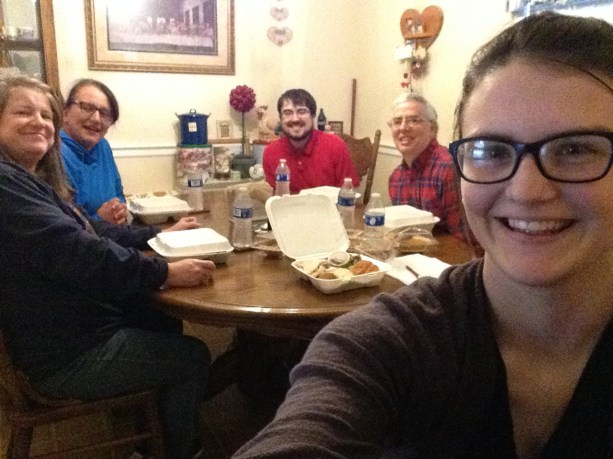
My Kentucky Kitchen Table took place in Bowling Green, KY on November 2nd, 2018. I partnered with Kerby and the meal took place around the kitchen table at her house. Including myself, ten people were in attendance. The people in attendance were Megan (myself), Kerby, John, Renee, Beverly, Eddie, Spencer, Dalton, Owen, and Kim. Kerby is a freshman at Western Kentucky University like myself and she is double majoring in International Affairs and Arabic. Kerby was the only person in attendance that I knew, and everyone else in attendance was a stranger to me before the meal.  John is a retired former professor at Western Kentucky University, and is married to Renee. Renee is a college professor married to John, whom she met in college. Beverly and Eddie are a married couple that met when they were in high school, and both are employed at the General Motors Assembly Plant in Bowling Green. They also previously worked in retail as well as owned a small business. Spencer and Dalton are Beverly and Eddie’s children. Spencer is studying computer science in college and wants to work in programming. Dalton is employed at Kroger and has dropped out of college twice. Owen is currently studying to work in law enforcement, and is Kerby’s brother. Kim is Kerby’s mother, and is a single mother working for a company called Essity. There was definitely diversity present through the occupations of each person in attendance, as well as religious and political identity. The political opinions of those present certainly differed, as Owen specifically identified himself as more conservative and right-leaning, whereas others in attendance identified as more liberal or left-leaning. There was also diversity present in the age of those in attendance, as several of us were college-age students, while some were older and parents, and some were retired. The generation gap between the people at the dinner obviously gave different perspectives on the issues and topics we discussed.

After we went around the table with initial introductions so everyone knew who everyone was, we jumped into a conversation surrounding service within communities. The main question we discussed was “What does doing service in your community mean to you and how important is service to you?” I brought up my personal experiences, which with my religion and private school history, included a service requirement – a certain number of hours each year I was required to complete in service to my community. I told the group how originally, I viewed the service requirement negatively and as an obligation, believing that having to complete the requirement was a drain on my time and energy, while I already had so much going on in middle and high school. However, after working with organizations within my community like Second Harvest Food Bank and Cottage Cove Child Ministries, and getting to reap the personal rewards of having served my community, I began to view the requirement not so much as an obligation, but an opportunity to give what I could to the local community, like my time and energy. Renee mentioned volunteering her personal time to the local community through things like SKyPAC or in her daughter’s school, and how it benefited her. Both Eddie and Beverly made the point of spending time and energy in service because of the idea of “What if it were me that needed help from someone else?” Beverly specifically noted that if she were in need of help, she would want for someone else to be so giving of their time and energy that they would be willing to help her or her family if they were in need of it. She said this was the driving force behind her doing service in the area, because she very much empathized with those who were being helped by this kind of service. It reminded me of our class discussions regarding empathy, and how the general consensus that empathy was important and necessary to enact change on both smaller and larger scale issues. I think everyone at the table would agree with what we discussed in class, and that empathy is something that is needed by everyone in different situations, and especially to help tackle problems affecting those within the community. People definitely need to have a common ground and understand each other’s struggles in order to be able to effectively serve each other and find solutions to issues.

We talked about the situation of the caravan of immigrants coming to the Mexico-US border from Central America while discussing the meaning of citizenship. We first wanted to discuss the traditional meaning of the word “citizenship” and what it meant to each of us within the legal realm (such as through taxes, voting, and following laws). Most of us agreed that “citizenship,” even in its traditional sense, could be achieved without and is not entirely dependent on a legal document that declares one a citizen. Most of the people who are illegal immigrants in the country, we agreed, are here to make a living for their families, abide by the same laws as all other citizens, and live normal lives in a country that provides opportunity for them, whereas not every country does, and that is something we as a country should celebrate to some extent. The consensus seemed to be that those who stereotype illegal immigrants as criminals and gang members are wrong and making broad, unfair generalizations about a group of people. Beverly and Kim brought up the fact that there are criminals and gang members of every race, nationality, and religion, and that committing crimes or acts of violence cannot simply be attributed to a single group of people. This part of our discussion, I believe, directly correlated with our discussion of the same matter in class on Thursday, November 1, when we discussed empathy and the readings from the “Beyond Hope” section of The Impossible Will Take A Little While. We discussed both at our dinner and in class how the wonderful thing about America is that unless you can trace your roots back to the Native Americans who inhabited America before anyone else, everyone and their family was an immigrant at some point, and they did not always become legal citizens and acquire a visa like we expect immigrants to do now. We agreed that there should be some standard of becoming a citizen in the country, but judging groups of people seeking a better life in America is the same as judging all those that came before you.

We also briefly touched on the topic of the cost of medicine in this country. We generally agreed that medical bills can become almost unnecessarily or outrageously expensive, and unfortunately many in this country do not have the means of paying expensive medical bills like this or even receiving medical treatment due to the cost, especially if they are lacking insurance that might cover a large portion of the expenses. This reminded me of the readings on the opioid crisis, as many dealing with opioid addiction do not have the funds to pay for rehabilitation or programs that might help them to get clean, and that a large portion of those with an opioid addiction developed that addiction after being prescribed a high dosage of extremely addictive painkillers and strong opioids. We discussed how the medical industry largely seeks to profit almost more than necessary or excessively off the bills being paid by those who, most of the time cannot afford it or it will be in financial trouble because of it. This reminded me of how, in the readings, we learned that the pharmaceutical industry makes a large profit off of prescribing the opioids that many become addicted to, even if those who are prescribed them could get by on a lower dosage or a different, less addictive painkiller. Everyone’s individual response to this idea reminded me of how the class regarded the issue of the profit being made off the opioid addiction.

After we brushed up on the traditional definition of citizenship, we all shared what citizenship in the nontraditional sense meant to us. Kim stated that to her, citizenship was being able to contribute to your community in one way or another, whether it be through love, compassion, time, or energy. I agreed and stated that to me, citizenship is making oneself engaged, involved, and aware of the world around them. We agreed that we all have a responsibility towards each other to learn about the people and history within our community, as well as to be involved with what takes place in our surroundings. There is no wrong way to be a citizen, just as long as you act. Regardless of a person’s identity, especially a person’s cultural identity and nationality, we are all called to be citizens through how we act. We discussed how our individual callings and occupations related to that, and how each person’s job on this earth is different but important all the same as long as we have a job to do on this planet and do it well. We agreed that to us, citizenship meant being an active member of not just our country, but the entire world around us. We remarked how important and great it was, as people who may not even know anything about each other, to put aside our differences, come together, and just talk to each other. We spend so much time in our own bubble, that we are not actively engaging with the people who are even just a short distance away from us within the community. It was so nice to be able to have a discussion with each other without letting all the divisive elements of our current society and political climate get in the way. We were all able to just sit together, share a meal that everyone individually contributed to, as we pooled our strengths together, and share in our collective humanity. That was what was so important to me about this meal. I felt like I was doing my duty as a citizen by engaging with those around me, even though it may have been uncomfortable at first and not something I was used to doing, especially with strangers. Throughout the whole meal, nobody was on their phone, distracted by work or school or our personal lives. We put away the distractions, and focused in on each other. It felt so good to have shared a piece of my life with people I didn’t know, but was glad to have met by the end of dinner, and to share in a little piece of everyone else’s life as well.

Through this assignment, I learned so much about the importance of being a part of the community you live in, even if it means stepping outside your comfort zone to share our lives with each other. I learned how important it is to step away from the distractions and divisive nature of our society and just have a conversation with people, respecting their opinions, as they respect yours. There were moments when we did not all agree with each other, but it was still important to all of us to hear everyone’s viewpoint and acknowledge it, even when it differed from ours. Being around the kitchen table together taught me the importance of being a part of the collective humanity in the world and recognizing that everyone else is, too.

(Kim is not pictured as she was the one who took the photo)

IMG_3795

Rachel’s Kentucky Kitchen Table

By Rachel

IMG_6994

On Saturday, October 27, 2018, my Kentucky Kitchen Table Project took place around the kitchen table at my house in my hometown of Springfield, Kentucky. Springfield is a small, rural town in central Kentucky that has the reputation of being a friendly, close knit city where everyone pretty much knows each other. At my Kentucky Kitchen Table, I had dinner with my family and one of my mom’s friends that I knew but didn’t know entirely well. My family members involved in this dinner included my mom, dad, and older brother. My mom, whose first name is Karen, is a 48-year-old woman who is married to my dad and a mother to three children. Some specific things that define her include working full time for the Washington County School System as a food service worker as well as being the 14th child in her big family that consists of 15 children. My dad, Tom, is a 52-year-old man who is married to my mom and is a father to three children. He works at the family business which is a furniture store and is the youngest in his big family that consists of nine kids. Some words he uses to describe himself include humorous and easygoing. Christopher, my older brother, is a 23-year-old man who is from the small town of Springfield. He graduated from Western Kentucky University in 2017 with a bachelor’s degree in Communication Studies and a minor in Broadcasting. Lastly, my mom’s friend’s name is Jennifer who is a mother of three with a military background. She has a bachelor’s degree and is currently working on a master’s degree. All of these descriptions are the ways in which the people who attended my KKT wanted to be described. Although these people seem similar since they all grew up in the same area, they all have different experiences and opinions that display the diversity that exists among them.
To start off the dinner, I asked the required question of what citizenship means to you. After looking stumped and thinking about it for a minute, Jennifer jumped in and said that service was a major part of citizenship to her. Christopher stated that it was about being a good person and treating each other right. My dad brought up taking care of the environment and my mom provided the general comment of helping others. Next, we went around the table and began to discuss what the best things are in the world today. Despite getting some negative comments about the world being mostly bad by what is displayed on the news, some answers that were thrown out included technology, more diversity in the world today, friendship, compassion, people coming together in a time of need, and even some simple answers of babies and old people. I then went on to start the discussion of their interpretation of the community we live in. When asked what kind of community they would like to live in, all of them agreed on a small rural community while Christopher added in a diverse community where race and sexuality are not noticed as much as just being a person. After asking what they loved most about their community, they are all generally agreed on the characteristics of a small-town atmosphere, no traffic, low crime area, and genuine people. The next question which asked if they knew their neighbors included some different answers. Jennifer stated that she did know her neighbor since her neighbor was her brother. The rest of my family members explained that they knew who they were and had small talk with them occasionally but did not know them personally because most of the people that live on my street keep to themselves. After an off-topic conversation about their neighbors, I switched gears and began talking about their jobs and how they relate to their role as a citizen. Jennifer, who is a nurse, stated that she has the responsibility to help people get well while Christopher acknowledged that his job as a board operator at the local radio station provided the public with entertainment. My dad said that he provided people with furniture to use such as a bed to sleep in and my mom brought up her job as a food service worker and how she provides kids with food, so they can learn. We then went on to acknowledge the question of if we have any obligations to other people in our country or in our community. All of them immediately responded with an unwavering yes to both questions with Jennifer and my dad adding an extra explanation to their answer. Jennifer reasoned that Jesus tells us to serve the less fortunate while my dad brought up that we should especially help those who have a difficult situation such as people who are born with and dealing with certain detrimental diseases. Next, we preceded to talk about what advice should be given to people running for office in our country or voters in general. Christopher had very particular opinions about what he would say such as keeping your promises and not just focusing on political party but on what the actual person believes. Jennifer jokingly added to cut taxes and then started to laugh. Lastly, I asked them what social issue is closest to their hearts. Jennifer brought up the lack of knowing the Gospel or turning away from religion. My mom said drug use among the population because it is killing many young people today. My dad then said gun violence was an issue because it is seen everywhere today. Christopher wrapped up the discussion by saying that stereotyping was a big problem because it’s not getting us anywhere as a society and is predominately judging a book by its cover.
I believe that all of the answers provided by each individual throughout the dinner helps to reveal a little bit about what each of the people value or think is most important in their lives. Jennifer’s answers seemed to all revolve around the ideas of religion and service, so she must value those things the most in her life. Christopher’s answers mostly were diversity and the importance of treating each other right, so he must think of these as important parts of life and being a good person. My mom and dad each had very general answers about caring and providing help to others in need, however they didn’t have a distinct theme like Jennifer or Christopher.
By having this meaningful conversation, I feel as though I have learned a lot more about the kinds of things my family and Jennifer believes. Specifically, their beliefs about citizenship in general helped me to see what being a citizen really means. According to them, being a good citizen means helping others out when they need it and being a good person to all. In addition, this project helped me better understand the people around me and see different topics and ideas from a different perspective than my own. This dinner allowed me to discuss topics with people that I never would have before because rarely does anyone have time anymore to sit down and talk about the real problems that exist in society and what should be done about them. Lastly, this project has given me the chance to actually listen and understand how they view the world. Learning these things connects to the central questions of the class by letting us talk about how we can live better together, solve problems, and help each other have more of a say over our own lives.
One reading that I thought related well to this project was “How We Talk Matters.” Within it, it discusses how good conversation and communication is needed to understand each other and know what each person values in their lives. In addition, this helps us to identify the problems that exist in our lives and the ways in which we can go about fixing those problems. It goes on to introduce deliberation and how this is needed to solve problems that are difficult in society. Although not a lot of differences were seen in the answers in my Kentucky Kitchen Table, good communication is still important in everyday conversations so that we are provided with a good idea of who a person is. Also, taking into consideration the things we say and how we say them says a lot about who we are and how others view us.
Overall, even though I was doubtful and didn’t think this assignment would allow me to see much difference between people, I am very glad that I did it. It allowed me to open my eyes and see that although some people can seem so similar, they are all actually very different because everyone lives a completely different life in which they experience many things that someone else doesn’t experience. This brought about some meaningful and insightful conversations that allowed me to form new perceptions of people that I thought I already knew.

Lindsey’s Kentucky Kitchen Table

img_2649My Kentucky Kitchen Table took place on October 13th in Walton, Kentucky. We gathered around the dining room table and my aunt Lyn and uncle Bob’s as we do 2 or 3 times a month. I was joined by my uncle Keith (a globe-trotting bachelor in his mid 40s who never really bothered to grow up), my mother (a school librarian who always tries to keep the peace on every issue), my aunt Lyn (an opinionated stay at home grandmother), my cousin Emily (a bold and outspoken VA caseworker), my uncle Bob (a soft spoken airport electrician), my cousin Rachel (a former elementary school teacher turned stay at home mom of two children under 4), my father (who has held various positions in the education system for over 20 years, most recently as an assistant superintendent), and Rachel’s husband Jamie (a veterinarian). I chose Jamie to be the participant who I do not know very well. Even though he’s been in a relationship with my cousin for a number a years, I cannot tell you much about him other than the fact that he is a veterinarian who works a lot and that he falls asleep on the couch after almost every family meal. Rachel and Jamie’s kids, Henry (4) and Natalie (2), were also occupying the room with fits of laughter from The Muppet Babies on the television. While culturally this group appears to be fairly similar, their personalities, opinions, and ways of handling various situations is quite diverse.
 

I started our conversation off by asking the required question about what citizenship means to everyone. No one really knew how to begin, but after a few seconds of silence my mother suggested being a good neighbor. Everyone seemed to agree and my aunt Lyn added making sure that the next generation be better off. Even though we has only barely answered one question, my Dad, Jamie, and Keith all checked out and began to talk about sports. They would each occasionally provide input on the following topics, but not very much. We then began to discuss what we each perceived as the best things about our world today. Again, those who were still paying attention to the conversation grew quiet for a second. As the sound of her 4 year old grandson’s laughter filled the room, Lyn said “grandchildren” as she glanced at the attentive little boy in front of the TV. My mother suggested neighbors again. Cousin Emily says how much more politically active people are becoming. I then asked what kind of community everyone would ideally like to live in. Everyone quickly agreed to somewhere safe and where you are friendly with your neighbors. I then asked what everyone likes about where they live now. My mother and Lyn, who were next door neighbors until a few months ago, both said they liked being slightly secluded yet still close to neighbors. Cousin Rachel spoke of how much she like being able to let her young children play outside without ever really worrying about their safety. Emily, who has been living in Louisville for the past 2 year, raved about the Louisville food scene. Keith joined the conversation for a moment and went on about the Cincinnati night-life. He then noted how different each person’s answer was. We then discussed how each person thinks their job relates to their role as a citizen. Rachel, Lyn, and my mother all agreed that they are raising the next generation and see nothing else that could possibly help to better society. Bob, who has been mostly quiet up until this point, briefly mentioned how critical his job at the airport would be in the case of a terrorist attack. We could all tell this was not a topic he really wanted to think much about, so none of us pressured him to elaborate. Emily, however, explained in depth her duties at the VA. She shared how, when she first started her job, she was told that it was her duty to take as much money from the government as possible and put it in the hands of service veterans. We then moved on to talk about the obligations we might have to other people in our country. My mother, who always believes in being the bigger person, said we must always be nice to others no matter what. Emily agreed somewhat agreed to this, then added if someone cannot help themselves, she does not feel that they deserve her help. I found this statement extremely interesting, especially considered how to just spoke of the duties at work. I then asked what advice each person would give to people running for office in our country. Bob’s answer was quick and to the point: don’t lie and stay away from social media. This sparked a giant debate about the usefulness of social media that, to be completely honest, I did not retain much from because everyone was talking all at once. I instead chose to move on to the new topic. I regathered the attention of the table, including those who had been discussing sports the whole time. I asked if anyone had ever had a conversation with someone from a really different background than their own and braced myself for the answers. Keith, who we joke is never in the country because he spends so much time traveling world, simply said “Well I travel so yeah” and provided no further explanation. Lyn told a winding tale of how she never spoke to a black person until she was an adult and started working in downtown Cincinnati. She explained the stereotypes around which she was raised and how still now in her middle age she sometimes finds herself believing them. The most shocking statement of the night occured next. Jamie, who had contributed nothing so far, said “I stay as white as possible” then followed that with “Oh, but I’m not racist”. His wife, my cousin Rachel, then accused him of being racist. They went back and forth about this for several minutes while I tried to wrap my head around what just happened. It was clear before that I did not know much about Jamie, but this statement still caught me by surprise. Instead of further opening that can of worms, I asked everyone which social issue they consider closest to their heart. At this time, the men chose to return to their sports conversation. Those still participating in our discussion took several minutes to ponder this one. Emily eventually responded with the access to healthier foods across various communities. My mother and Lyn again went back to raising the next generation right. I did not entirely agree that that is a social issue, but I let them speak their thoughts.


My family has never been one to talk about any of this stuff, so I was very hesitant going into the meal. I tried to dig thoughtful answers out of everyone, but was not very successful because I did not want to offend anyone. However, I do still feel like I learned quite a bit. I certainly learned learned a little more about Jamie. I continued to think about what he said after dinner as I sat in the floor and played with his two young children. How will this affect them? Will they grow up to see things like their father?  From observing Keith on a different level, I learned that just because someone has been to every corner of the world, it does not mean they are “cultured”. He can show me thousands of pictures he has taken from foreign lands, but he could never tell me about the problems and beliefs of those places. I also learned that the VA, for a lack of a better term, is awesome. I always knew that Emily worked for them, but never really knew just what she was doing. Hearing her talk about her job reminded me of one of our central questions for this course. Emily is helping others (the veterans) have more control over their lives. She helps them obtain the proper funding to keep them housed and healthy. It also reminded me of Derrick Jensen’s message in “Forget Shorter Showers”. He urges the reader to confront systems of injustice (those in power) and that is exactly what Emily is doing when she, in her own words, “attempts to increase the national debt to give veterans a proper payday” I walked away from this dinner with a much deeper admiration and respect for my cousin Emily.


I must admit, I had been dreading this project all semester for fear that too many problematic things would be said. While that certainly did happen, I am still glad I was able to have these conversations with my family. I learned many new things from observing what they said and how they said it. The topics discussed and shared gave me a new insight on the experiences and thinkings of my closest family members.


Turner’s Kentucky Kitchen Table

By Turner

My Kentucky Kitchen Table Project took place in my hometown, Versailles, Kentucky, on September 20. We happily gathered around the kitchen table in my family home, even adding chairs to make room for more people and more opinions! Those present each contributed to the conversation, making for a good night.

There were eight people there, myself and all of my family, and four others. My mother, Keli, is a democrat that works for the state with finding housing for various homeless populations. My father, Jeremy, is a republican assistant principal for the public-school system in Woodford County and my sister, Morgan, is a high schooler in this same school system. The other non-family members there were Hunter, a republican in college in Indiana and Tasha, the local middle and high school cheer coach who knows absolutely everyone; she is also very, very conservative. Tasha’s ten-year-old daughter, Chloe, also came and with her came a surprise visitor, her friend, Reagan.

This may seem like an odd mix of people; however, I strove to diversify the people in the conversation because I wanted to know the difference of opinions that came with different upbringings and political ideologies. I also wanted to have a difference of ages. I have always thought that children tell things simply, like they see it, and that was the idea I had when I invited an elementary aged child. This particular child is very outspoken about the way that she feels and very smart when it comes to national happenings. Because of these things, I expected to have a very interesting conversation and my expectations were satisfied.

We opened with casual conversation to ease nerves, some were very nervous about being a part of this project but soon got over it. We then moved on to the first, required question; “Beyond voting, paying taxes, and following laws, what does citizenship meant to you?” Jeremy started the conversation off by introducing the idea that in order to be a good citizen one must pull their own weight to the best of their ability. Several others also seconded that opinion, at which point Chloe asserted that she did not understand what that meant but that she did not understand why people could not just get a job. This launched an in-depth discussion about what “pulling your own weight” means exactly. This was interesting because it really relates to political debates today, concerning healthcare, government assistance, and many other things; at what point should we, the government, stop helping others and expect them to help themselves. Keli, who works with people not in the position to help themselves, also added some interesting thoughts. She explained that some people are not able to get their own jobs, whether it be due to disability or never learning the work ethic required to have one.

This particular part of the conversation interested me because of the social issue project that I have been working on in this class. I have been researching and writing about the foster care system and how youth aging out are virtually unequipped to move into the world, get jobs, and live on their own. Many times, these people are not able to get jobs or support themselves which is the point Keli was trying to make. It is not necessarily their fault, but the fault of those around them, their biological parents and the system, for not teaching them the work ethic they must have to pull their own weight. Applying what I have learned throughout this class to the idea that good citizens must pull their own weight, helped me realize that it is not always possible, which is not something that I have always thought.

Along this same vein, we discussed what being a citizen means to us which started a conversation about the need to regulate the resources the country does have available to those in need. Some felt that these are often abused and need more regulations in order to gain assistance, such as drug tests. Keli said that she did agree that there needed to be more regulations due to the fact that people often stay on government assistance simply because it helps more than going out and getting a job that pays minimum wage.

We also discussed the best things in our world today. I was thankful that we can still live in a world where we can know our neighbors and have relationships with them. Keli was thankful that there are still people in this world that care for others and are charitable and giving. Most of the other responses ran along this same vein. This reminded me of the very first week’s reading, “Love Thy Neighbor.” This reading explored neighbors turning on each other and killing based on things that do not matter. Applying this reading made me thankful that we live in a country where this is not a problem. We live in a world where we love and help each other regardless of race or religion, and this helps keep us all sane and, for the most part, good.

Finally, we discussed how religion has shaped our worldview and view on citizenship. Morgan and most people felt that going to church and being a Christian has made them better citizens. She said that you see what is right and how to treat people and that helps you to do it. Reagan and Chloe felt that what they learned at church made them better at school and taught them to treat their classmates better because the Bible teaches to treat others how you would like to be treated which is a good practice to follow as a citizen. God says to feed the hungry and help the widows and this is what we should do as citizens, as much as possible. Adding religion to the equation really changed a lot of the opinions of the table to an extent; adding it helped people to see that we should help people and that caring for others is part of being a great citizen. It was a great finishing question because it summed up the whole activity and really helped all of us think in depth about why being a good citizen is important and what that means.

Overall, this conversation helped me gain a lot of insight into people’s minds and what they think about citizenship and America as a whole. Hearing republicans and democrats agree gave me a lot of hope for the country and the political gridlock that we see so often today. The overall thought seemed to be that being a good citizen means helping people that need it to a certain extent. This idea can easily be affected by upbringing, political ideologies, and spiritual identity.

The Kentucky Kitchen Table project made me think a lot about the pieces that we have read throughout the Citizen and Self course, but most specifically the piece, “How We Talk Matters.” This talks about how we can benefit from taking time to listen and talk with people, which is what we did during dinner. As we talked, we began to see what others see and at one-point Hunter even said, “Keli makes me feel bad about some of the things I say.” This really speaks to the importance of talking about opinions. Sometimes just listening is all it takes to see what other people see. Talking truly is the way to fixing many of the issues of America; however, we often do not take the time to talk, and when we do, we do not listen. Having the simple conversation, we had at the dinner table helped Hunter and Jeremy and some others at least see why it could be considered a citizen’s duty to help other Americans and helped Keli see why they believed every citizen should pull their own weight.

Through this assignment I personally decided that it is my duty as a citizen to keep having these conversations, and to instigate them whenever I can. I believe that doing this can help us to live better together. Talking about opinions and ideas can help people to agree better and compromise. It is the good citizen’s job to ensure that this keeps happening and we keep talking. The minute we stop talking to those we disagree with is the minute that our country can no longer get things accomplished and protect our citizens. One of the ways to solve wicked problems is to talk about them and find ways we can compromise for the better of the people. Talking is the best way to solving problems together and although it was just a small group, in a small setting, it was a step in the right direction. Sometimes all it takes is a small group of “little” people to make a large difference. Talking is always a step in the right direction which is why as a citizen it is my duty to make sure we are all talking.

KKT2

Picture taken during dessert time! From left to right: Keli, Morgan, Reagan, and Chloe

KKT

From left to right: Chloe, Jeremy, Tasha, and Hunter


Kentucky Kitchen Table: Birthday Edition

By Emma
For my Kentucky Kitchen Table project, I decided to host a post birthday dinner on October 12th in my hometown Union, Kentucky. It was a super great, rather than a potluck (since most of the people there live in dorms) we cooked the meal together which was a great way to get the conversation going. We talked over chorizo rice, taco meat, and trying to peel avocados. I invited my two friends Toney and Morgan and their two roommates who I didn’t know very well, Jordyn and Sarah. Then my family joined the meal a little later because they got home late and seemed pretty excited to chow down on some homemade Mexican. My family consists of my younger brother Carter, my mom Allison, and my dad Jason. To begin we sat around my kitchen table and had some casual conversation to get to know Sarah and Jordyn better. I learned that both Sarah and Jordyn grew up around the same area that Toney, Morgan, my brother, and I grew up in. We talked about what their lives were like at home growing up. Morgan’s parents worked alternate shifts at Fed Ex, so they weren’t together at home very often and kitchen table dinners were saved for the major holidays, if that worked out with their schedules. Toney spent a lot of her time with babysitters growing up because her mom was often away on business and she doesn’t see her dad, so their dinners weren’t around the kitchen table often. Jordyn spent time at both of her parents houses so she would have dinner with them, but as she got older and busier it was harder and harder to keep up with, so they eventually stopped. Sarah’s family dinners were very similar to mine, we would get home from school, do homework, have dinner with our family at the kitchen table, and then would play. That is, until we got older and busier and kitchen table dinners weren’t a priority. The same goes for my little brother. Finally, my parents told us a bit about their upbringing. My mom was raised on a farm where they had hogs and tobacco and my grandpa was a truck driver because of that she didn’t see him very often. My dad on the other hand grew up in a military family. He moved a few times throughout his childhood until settling in relatively poor part of northern Kentucky and his parents worked a lot to support them. Our homelives were very different growing up which was really interesting to see how each of us perceived a family dinner around a kitchen table. One big thing we touched on was how valuable that time is and truly special it is to really get to bond over good food and conversation.
When I asked the main question of the night, “Beyond voting, paying taxes, and following laws, what does citizenship mean to you?” I received different answers, as the discussion moved on the ideas sort of merged together and we began to talk about the ideal citizen. The “good” citizen we created through this discussion was involved in their community, passionate for those who need assistance, and truly cared for the safety and well being of those around them. Another thing we came across was the need for conversation between citizens, not just to be cordial, but conversation that can lead to development of the community that they reside in. Then we talked about our current jobs (my parents) or our jobs that we want (everyone else at the table who was a student) and how our jobs to relate as roles of a citizen. Four people at the table are in health care or want to be in health care talked about how their job is to ensure the wellness of the people in our community, that it is their job as a citizen to have a “good head and a good heart”, as Morgan said, for the people in the community to help keep them happy and healthy which was really interesting and impactful. Jordyn wants to go into architecture and interior design, she felt that her job was to provide safe and beautiful architecture and decoration to the community to create a special feel to the place in which other citizens live and work. Honestly, it was really exciting to see what everyone wanted to do and how they truly want to help out their community. The third question that we discussed that night was asking what kind of person the people at the table wanted to be. We heard the obvious answers that we assume everyone wants us to be such as nice or giving. The biggest trait that we talked about was being genuine. To be the type of person who is real in whatever situation they’re placed in, to be honest and trusted. There are so many good traits that go along with that word and I feel that it can really encompass the traits of a good citizen or person. No selfish characteristics were said like I had expected. I was waiting to hear, rich or powerful or influential but I generally heard things that were for the betterment of those around us. These questions were a really great way to get to hear everyone’s thoughts and beliefs and I absolutely loved getting to absorb and consider their them.
Overall, I loved this project. I enjoyed getting to sit at the kitchen table I grew up around and have genuine conversation about real things. As the time passed the conversation drifted to the most random of topics, some were serious, and some were so funny I had tears in my eyes. That’s something I miss about being at home. But, through these conversations I learned that the world isn’t as dark as it is portrayed in the media. Most people want to be good, they want to help others, and they want to make a positive impact on their community. I also learned that there is a general desire to understand those around us, during dinner we didn’t just sit there and talk on and on or listen to one person do so. We interacted, asked questions, and sometimes debated statements just to better understand their perspective. One of my favorite questions was about the issue closest to everyone’s heart. What was interesting to see was that all of them whether they were education, the wage gap, international relations, mental health awareness, they were centered around everyone being treated equally. This was really eye opening because it showed that everyone wanted everyone in our society to have a chance to be themselves or to have the opportunity that someone else had no matter their circumstances. Mostly, I learned to listen more than talk because you get to see what really matters to everyone and how they perceive the world. Once you gain that understanding you have the opportunity to make change and answer the three central questions of the class.
This totally relates to our class because we talked about right and wrong, values, and what it means to be a good and proactive citizen. It really reminded me of our reading How We Talk Matters because what we say and how we say it really does impact how we view people and how we view ourselves. Good communication indeed transforms people and can transform the society we are living in. So, how can we live better together? Maybe it’s by sitting around a dinner table and talking. Maybe it’s just better conversation, better communication. We can live better together by understanding those that live around us, so we can make it better for everyone else, not just ourselves.