Lexi’s Kentucky Kitchen Table

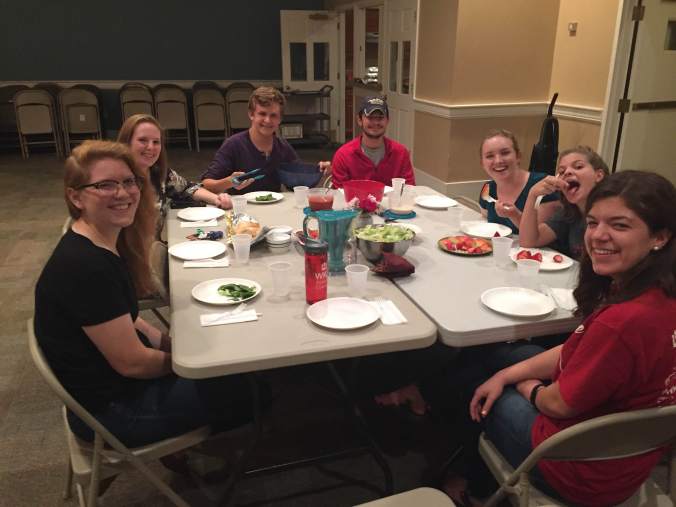
When we first got assigned this project, I was immediately stressed out! I rarely go home because it is such a long distance, but I decided this project would make for a good excuse to travel the distance and plus I would get to meet up with old friends and make new ones. I texted my mom and told her we had to host a dinner for my friends for a class project. She was ecstatic; she lives for opportunities to host my friends (and listen to all the gossip). I invited friends who lived nearby and went to the University of Cincinnati and Northern Kentucky University and told them each to bring a friend they had made in college. The table would consist of seven college students, which doesn’t necessarily sound diverse, but after having mature conversations it turned out to be.

img_4932Sarah, Lacey, Lauren, and Meredith all grew up with me and were who I considered my best friends. Before we left for college my friends and I were all fairly similar: white, middle class, Republican. We all grew up in the same area: Fort Thomas, Kentucky (a suburb of Cincinnati), and attended the top rated achieving public high school, Highlands High School. Our parents all supported us in everything we did; they came to our sporting events, volunteered at school, and supported us financially.  As we went off to college we all grew somewhat distant of each other and came back home with completely different perspectives on all sorts of things.

Mia, a friend of Sarah’s who attended the University of Cincinnati, had grown up in a small town outside of Columbus, Ohio. She was very Christian and had ambitious goals of becoming a missionary. She brought such diversity to the table by sharing her experiences of when she traveled to Haiti and Ecuador to help educate young kids in third world countries. I personally had never really believed in missionary work and had a viewpoint similar to Ivan Illich in his essay we read in class “To Hell with Good Intentions.” I had never sought out stories of missionaries to change my mind, but hearing her story did change my perspective. It was truly incredible to see pictures of her in these places and inspiring to know that one person can make such a big impact where it is really needed.

Brooke, a friend of Lauren’s who attended Northern Kentucky University, was very shy! She grew up in Florence, Kentucky with not a lot of money, divorced parents, and four other siblings. She was surprised at how nice the dining room table was set and all the effort that was put into this dinner because growing up, she did not eat around a table with her family. It was always fending for yourself at her household. With having so many siblings and divorced parents, she talked about it being hard to find time to spend with her parents.

I knew for this project to be successful, the conversation needed to be more than surface level drama. With Trump just being elected President, I asked everyone how they felt about it. Just by this one question I learned a lot about everyone at the table and the things they believed in and stood for. Sarah, who used to have mostly Republican views, had suddenly very Democratic views. Lacey, who used to not stand for LGBT rights, had become surprisingly accepting. Lauren was very fond of Trump because of the way he prioritized jobs as she was looking further into her future. Meredith was kind of lost in the whole conversation as she does not like to affiliate with any sort of politics. Mia spoke very strongly on behalf of Hilary Clinton because of the opportunistic ideas she had about spreading democracy and helping third world countries. And Brooke had always had a very Democratic stance on things since her family was on public assistance while she was growing up and her view on government was very thankful for the opportunities it provided her family. It was crazy to see how everyone’s viewpoints were changing as we moved off on our own and did not just follow what our parents told us. Lacey even mentioned that she went to college and felt like she had been living in full ignorance inside the “Fort Thomas Bubble” and it wasn’t until she experienced everyday life on her own that she was able to learn what she believed in.

When I asked the question “beyond voting, paying taxes, and following laws, what does citizenship mean to you?” everyone had something to say, but the one that stuck out the most was Mia’s when she said “citizenship means that you are a part of something bigger than yourself. Its knowing that you are doing your duty to do what’s best for your country and in return, hopefully, the government will do the same for us.” I thought this was the strongest answer because a lot of what we learned in Honors 251 can be tied into this definition. In order for us to be productive citizens we have a duty to share our knowledge throughout government. In order to make changes to things we do not like, we have the responsibility to make it better and speak up for what we believe in. Really, being a productive citizen, we can begin to answer the three main problems this class brings to fruition: How do we live better together? How do we solve problems? How can people have more say over their lives? This class has been so helpful in making me realize that it is up to me to make a difference.

It’s fascinating to me to see all of us growing up. I’m really glad I got to meet new people in the process, too. They brought a whole different perspective to the dining room table and talked about things the rest of us had never been exposed to. They will be people that I definitely see myself hanging out with again when I come home. It was also refreshing to hear stories that were encouraging. What I thought would be a miserable project was actually one of my best memories with my friends.

Kentucky’s Kitchen Table- Learning to be Inclusive

By Katie

Citizenship means different things to all people depending on their background and upbringing. For this Kentucky Kitchen Table project, my friend Kenoa and I were able to have dinner around a kitchen table which held people from all different walks of life. The hosts were Dick and Cindy, an older couple, in their eighties, that attend that same church as Kenoa and me. Dick and Cindy are American but spent most of their lives serving Christ overseas, Dick in Pakistan and Cindy in different countries in Africa. They now live in Bowling Green serving international populations here. Also at the table was Jessie, one of Dick and Cindy’s neighbors. Joel, Jessie’s husband is currently in Turkey at a conference. Joel and Jessie are preparing to move to Turkey to do missions. Because of this and because of Dick and Cindy’s extensive overseas experience, they had the idea to have Turkish breakfast for our dinner. Since most of us had no knowledge of authentic Turkish food, Dick and Cindy told us a list of things we could bring (bread, eggs, butter, olives, feta cheese, etc.) and we all chose something from the list and brought it.

Another guest at the table was Douda, a student at WKU and the son of two Liberian refugees. He is a friend of Joel and Jessie’s. His experiences with citizenship were enlightening and very different from everyone else’s at the table. He brought to the table very diverse experiences with culture and upbringing. Mary Lou, a WKU faculty member, was also an attendee at the dinner. She works at the International Enrollment Office on campus where she assists our very large number of international students. She has lived in America for almost her entire life but is originally Colombian. Mary Lou and Douda had very interesting cultural experiences. Mary Lou feels that her job really does a lot in serving a greater purpose in the world because she helps international students get involved on campus which is often difficult for them to do. Mary Lou defines citizenship as being involved in a community, and that is exactly what she helps international students do.

Other students who attended include Macy, a student worker in the international enrollment office and Kathleen, a graduate student at WKU studying math. They had very interesting perspectives to bring to the table. Macy spent this past summer volunteering at a refugee camp in Greece. Through this, she gained insight into what life is like for people who don’t have a place they feel they belong. Citizenship and democracy feel very different to someone who spent their whole summer in a place absent of these two concepts. Alex, another resident of Bowling Green and friend of Dick and Cindy’s also attended the dinner. He was born in a small town in Lexington, KY where he was homeschooled before coming to college. This caused him to have an interesting concept of citizenship and inclusion.

Citizenship took on very different meanings to everyone around the table: safety, community, inclusion. Dick and Cindy spoke of their time serving on mission overseas and the way the community was different in the places they served. Cindy expressed that while serving in Africa, she felt like more of a “true citizen” than she does sometimes in America. She believes this is because of the closeness of community in the small villages in which she served. Dick thinks that citizenship represents being there for one another and helping each other out. He stated, sadly, that he feels Americans sometimes forget that as the meaning of citizenship. We focus too much on our responsibilities as citizens instead of what we can do to make each other’s lives better.

Douda and Mary Lou had similar definitions of citizenship, as far as what it’s like coming from a different country or gaining American citizenship. Coming from an oppressed family, Douda equated citizenship with safety. Douda and Mary Lou emphasized the importance of the people in America who reached out to their families and made them feel welcome. They found that reaching out to people and making their transitions easier is a big part of what makes a community. Macy agreed wholeheartedly with what they were saying, especially considering her heart for refugees. She believes it is a gift and a passion of hers to make refugees feel that they are at home in America. To them, this doesn’t necessarily mean just gaining American citizenship and the rights to do things most citizens can, but it means being included by Americans and being shown different American customs and ways of life. Dick and Cindy were those people for Mary Lou and Joel and Jessie were those people for Douda so it was a great experience to be able to see those relationships come full circle.

Coming from a white, middle class family who has been exposed to very little oppression and exclusion, it was a very eye-opening experience to be able to see the way people go through the journey of feeling like a citizen in America. I have only had one experience overseas and that was last December when I went to Haiti. During that week, I experienced more feelings of not belonging than I ever have before and got to understand a little bit of how it feels to know you don’t fit in culturally or racially. Now, hearing Douda and Mary Lou’s stories, I think back on the kids in Haiti yelling “Blanc, blanc!” as we drove by and do not by any means equate those stories because the minimal exclusion I felt is monumentally smaller than anything they and their families have felt. However, I am glad I got the opportunity to hear their stories and hear everyone else describe their experience with citizenship. Because of this experience, I believe I am more educated and aware of ways I can become a better citizen here in Bowling Green. By going out of my way to be inclusive and empathetic toward those around me, I will be bettering the community by creating a more loving environment in which we can all live better together in unity.

My Kentucky Kitchen Table

kitchen-table

By: KP

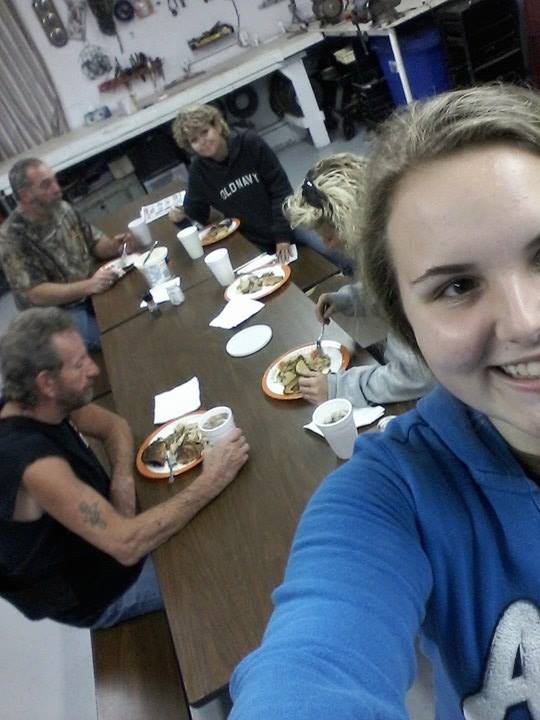
I had my Kentucky Kitchen Table on Election Day of November 8, 2016. There were five people including myself. I did not have a partner for this class project. I knew my mom and her best friend Kim but I did not know the other two men before the dinner. In my group was my Mom, who is forty-six, a single mom and her occupation is a barber. She went to technical school after high school. Kim is thirty-nine and has been for three years. She works at a salvage yard. She graduated from high school and is currently divorced. Keith is forty-seven. He works around his family’s farm and other farm jobs for different people. He got through high school. He has three kids and a possible fourth on the way. He has a preference for open relationships. Gibson is fifty-eight and works as a cattle driver. His wife passed away last year. He also completed high school. My mom cooked the pot roast and I made the lemonade. Our kitchen is a bit small, so we held the dinner in the garage on our lunchroom table.

I started off the dinner asking what did citizenship mean to them. My mom replied freedom. Kim said it was freedoms such as freedom of speech. Gibson said citizenship was rights that lessened every day. Keith agreed with Gibson saying citizenship was slavery. Things began to go South here. I asked Keith and Gibson why they felt this way. Gibson said they, as in the government, were taking away the right to own guns. I reminded him the right to bears arms was in the Bill of Rights and could not be fully taken away. My mother chimed in saying the government was limiting the ammunition, which made the guns useless. Keith began to join in saying we should overthrow this new government under Hilary. Keep in mind the election results were still being counted as it was only seven o’clock. I reminded Keith the reason we have government is to protect us and keep order and with that we have to give up some rights because with every exchange there is always an equal and opposite reaction.

Now I am unsure how it happened, but Keith began talking about how the Free Masons controlled the government. Gibson joined in with how the US currency was going to fall in the next 5 years because we are no longer on the gold standard. My mother joined in saying there was no gold at Fort Knox. I looked to Kim for help here, she had been quiet the entire time. I could tell she also wanted to get back to my original intent for the discussion. When the discussion turned to how the government prohibited the use of lead paint because it prevented the government from using mind control on us citizens, courtesy of Keith, I knew it was time for me to step in and turn this around.

I then asked the group if we could restart the conversation because I was not here to discuss conspiracies, I was there to discuss citizenship. I told them how I saw citizenship as being part of a certain nation. I asked the group if they believed they should help out their fellow citizens. Surprisingly there was a unanimous answer of yes. I asked why they felt that way. My mom spoke for the group saying because we can and somewhere along the way we have needed help.

Next, I asked the group if they knew their neighbors since neighbors are fellow citizens. Gibson said he has known his neighbors for thirty years where he lives currently and at his home before that he knew everybody because he used to deliver milk. My mom said she had met our neighbors when there was a wreck in front of our houses. I remember this time too because I had made my first 911 call that night. Kim pointed out that that was an act of good citizenship. Kim also said she knew her neighbors because her next door neighbor was her brother. Keith said he did not know his neighbors because he was too busy. Keith asked me if I knew my neighbors at my residence hall. I said yes and told them about my RA who lives right in front of me. I also told them of how one of the girls on my floor even shared the same birthday as me! I was very pleased of how the conversation had greatly approved.

At this point everyone was finishing up their plates and were complimenting my mom on her delicious pot roast. I asked the group if they had home cooked meals often. Gibson said when he was younger, he and his family rarely went out to eat. My mom replied with “when you were home”, referring to me. Kim and Keith said they were too busy to cook at home. The group all said home cooked meals were important. Kim said it helped with communication skills, Mom said it helped with sharing and Keith said it helped prevent him from spilling food on his shirt. The group was confused by this then Keith explained when he got a home cooked meal he usually was not going to end up eating in his recliner, but at a kitchen table. Everyone laughed when they realized what Keith was trying to convey.

The experience was definitely an interesting one. At first I thought this was going to be an awful project, but then things turned around and it was a great time! I learned a lot about the perspectives of other people, especially those older than me. My group was not the most diverse in terms of ethnicity but my group comes from and lives in different situations socially and economically. Although they did have one thing in common. They all loved to piddle with stuff in the garage, something I have never really got into. When I had to leave to return to campus, they had found a project to work on together. I hope to have another dinner with this group to see how their project is turning out and maybe discover some more of their oddball conspiracies. They are all friends now which is cute. I was worried about how my mom would handle life without having to worry about me twenty-four seven but now I know she will be ok. I do not regret doing this project!

Kentucky Kitchen Table

By Kenoa

When this project was assigned, my immediate thought was that I would complete this assignment in my hometown because I would be more comfortable there. However, after some thought, I realized the potential this project had. Some of my fondest family memories are of all of the many times my big, loud, family has been talking, laughing, and, most importantly, eating around our kitchen table. Bowling Green is going to be my home away from home for the remainder of my college career so I thought getting together with people I know and people I do not it the best way to create lasting memories and meaningful relationships with the people I will be around for a few more years. I got together with my friend Katie and hosted a Kentucky Kitchen Table here in Bowling Green at the home of a couple from my church and invited other members we did not know well and some neighbors of the couple.

Dick and Cindy are an older couple- in their eighties- that attends the same church as Katie and I. Dick spent most of his life living as a missionary in Pakistan and Cindy was a missionary in various countries in Africa. The couple was brought together by their faith and they both see this as the most important thing about them. Now they spend their days getting to know the local international population in Bowling Green and guiding other couples that feel called to move overseas for mission work. After reading this about them, it may come as no surprise that for dinner we had an authentic Turkish meal prepared by Dick and Cindy. It is obvious that their past experiences still hold a major influence on their life and they love to share stories about their time overseas. In some of the pictures, you can see everyone cracking their boiled eggs in the traditional Turkish way.

Jessie, a neighbor of Dick and Cindy, also attended with her new baby Lucy Mae. Her and her husband Joel are a young couple that Dick and Cindy help mentor because they are preparing to move to overseas in the near future.

Douda is the son of refugee parents originally from Liberia that is a friend of Jessie and Joel. It was interesting to have his point- of- view in the conversation because he has had a very different cultural experience than most of the people at the dinner and he has also had a different experience with citizenship in general. He is a student at WKU.

Mary Lou is a faculty member at WKU that attended. She spends her days in the international enrollment office, helping international students on campus. She is originally from Columbia but has lived in America for most of her life. This, once again, offered an interesting point of view to the conversation as Mary Lou has experienced citizenship in two countries as well.

Mary Lou brought along one of her student workers, Macy. Macy is from Louisville and is about to graduate from WKU. She recently studied abroad in Spain and spent a summer in Greece volunteering at a refugee camp and plans to work with refugees in some way after graduation.

Lastly, Alex is a recent graduate of WKU engineering department that currently works for a concrete mixing company in Bowling Green. He comes from a small town outside of Lexington, KY and was homeschooled growing up so the move to Bowling Green was a big transition for him.

The many different backgrounds and stages in life represented around this one table led to some good conversation with different ways of thinking presented. We started the conversation by simply asking everyone what citizenship meant to them. To Douda, citizenship represented safety. When he was a child, the corrupt government in his home country oppressed his family and he said he never felt much like a citizen, but becoming an American citizen gave him the opportunity to feel like he was a part of something bigger. On the other hand, Cindy felt more like a true citizen while she was in Africa. She remembers the importance of community in the small tribal villages she lived in and how this contributed to everyone feeling like a citizen. Dick agreed that, these days, Americans place more emphasis on the duties of citizenship, such as voting, and forget that citizenship includes helping each other out and instilling a sense of community locally as well as on a bigger scale. This stood out to me because this is something that has been so important in this class all semester. In order to create this sense of community we must put into practice things that we have been discussing- empathy for example.

Macy remembers studying in Spain and feeling like an outsider and believes this is what led her to want to help refugees get accustomed to life in America without feeling alone. Her experiences have shown that most refugees that become citizens participate in things like voting and paying taxes but do not truly feel like an American citizen until they have been included by an American family and have American friends to “show them the ropes.” Douda and Mary Lou both agreed that the Americans who reached out to them are the people who impacted their transition to a new country the most.

This discussion and hearing the stories from the people around the table that were from a different country or had a lot of experience abroad really opened my eyes to ways that I could be a more productive citizen in the community of Bowling Green. I kept thinking of the empathy readings and it reminded me to not just feel sorry for new citizens but to welcome them into this new, scary place and help them understand what it means to be a citizen. At the same time, this can introduce a wicked problem because some families are helped in a way that causes them to not develop a sense of independence. All in all, this Kitchen Table was really eye-opening and I feel like after this project, I am more open to talking about topics that can be seen as difficult with others.

Kentucky Mini-Kitchen Table

By Jamie

For my Kentucky Kitchen Table, I was paired with Callie. I brought my boyfriend, Isaac, and my friends, Shelby and Thomas, while Callie brought her friend, Carla. Overall, we may not have been the most diverse set of people, but we did have our differences. Carla was of Hispanic descent while the rest of us were caucasian. Additionally, most of us were from small towns in and around Kentucky, while Carla was originally from Los Angeles County in California. Isaac and I were also set apart by the fact that we are on the LGBT+ spectrum, and we don’t really follow any religion like most people in Kentucky who are Christian.

To be more in-depth, I am a senior psychology student from Lawrenceburg, KY. Shelby went to high school with me, and we were also roommates for three years at WKU. She is also a psychology student and a senior. Thomas is her boyfriend, and he used to be roommates with my boyfriend. He is a biology student from Mayfield, KY. Isaac, my boyfriend, is a meteorology student from Aurora, IN. We have all been friends since shortly after we arrived at college in 2013. Callie is from Muhlenberg County, KY, and Carla is a psychology student from Shelbyville, KY.

For dinner, Isaac and I made spaghetti with two kinds of sauces for everyone. Callie and Carla brought garlic bread and cookies, and Shelby made bruschetta (and provided her apartment for us to have dinner in). Even though the apartment and kitchen were small and we didn’t have enough dining chairs, we made it work!

While we did talk about many citizenship issues that were given in the example questions, I think the most fun part of the meal was sharing personal stories with one another. We would start with a question from the guide and end up getting off-topic when we realized what we had in common. Callie and Carla are both underclassmen in the Honors College, while my friends and I are seniors in the Honors College. We all bonded by talking about our days at H-4 and in Minton Hall.

I think one of my favorite questions we talked about was “What social issue is closest to your heart and why?” I really enjoyed hearing each person’s issue and felt like I knew them a lot better afterward. Even with my friends, Thomas and Shelby, I didn’t really know what their answers were going to be before they said them. Shelby answered that she cared the most about gun control, which I knew she cared about but not so much. Thomas answered that he cared the most about vaccinations and education on GMOs. Callie also answered that gun control was most important to her, which I thought was cool; I honestly didn’t think about that issue when I asked everyone the question. While it is an issue I care about, to me, it wasn’t so salient to me at the time.

Carla answered that her most important issue was race, while Isaac and I answered that we cared the most about LGBT+ rights. I think we had an interesting conversation about why those issues were important to us and maybe not as important to the others at the table. For example, I said that race was an important issue to me, but that I didn’t feel it could be my most important since I am caucasian and I have never experienced racism first-hand. In this way, it was interesting to me that Shelby, Thomas, and Callie chose issues that were not exactly related to basic human rights like racism, sexism, or homophobia. Not to say this is a bad thing, of course! It was just cool to see what people really care about the most.

Another one of my favorite questions we asked was “Have you ever had a conversation with someone from a really difference background than yourself?” Most of us were from small towns where most people were white, Christian, Republican, etc. Callie said that as someone from a small homogenous town, she never spoke to anyone with a different background until she went to GSP. Shelby talked about the experience she had staying with an Italian host family on a study-abroad trip to Europe. Isaac and Thomas struggled to think of an example, jokingly citing the single person who is identifiable as a minority on their floor in Minton. I thought this was kind of telling since while WKU may be a diverse place, the diversity decreases once you go into the Honors College. It’s almost 90% white; it can be hard to interact with diverse people when you live with other Honors students, take classes with them, and interact at events with them.

We also talked about how not only WKU but Bowling Green itself was diverse. I used to live here before moving to Lawrenceburg, and when I was here I had friends of three different ethnicities. This diversity was also brought up when we talked about things that we love about our town.

I think a lot of our conversations related to the concept from class of having actual experiences. Experiences with others who are diverse are especially important so that we can all understand each other better. Thomas talked about how he used to be Catholic until he came to college. He also did not personally know any gay people and didn’t have the best feelings toward them before he found out that Isaac was bisexual. After spending time with Isaac, he realized that gay people are just like everyone else, and he learned a lot about those outside of his white, Republican hometown.

Even though Thomas could have probably read about someone like Isaac and “learned” the same thing, it wouldn’t have compared to the experience of living with him for three years. You not only have to practice educational subjects to learn, but I think that you have to practice being around people to really learn about them too. Reading about other cultures is great, but you can never fully learn about them until you experience them first-hand. There are so many personal differences between people in a culture (and similarities to your own culture) that you can’t experience without communicating with others.

Overall, I liked the experience more than I thought! I feel like I learned a lot about others’ points of view, not only from the strangers at the table but even from my friends as well.

Kentucky Kitchen Table

By Merritt

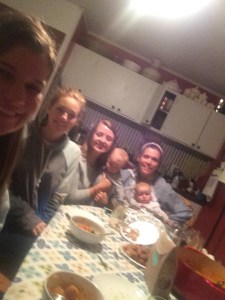
On November 15th, I did my Kentucky Kitchen table assignment. I was very nervous going into it because I had been paired with a girl who I did not know, nor did I know anyone attending the dinner. However, I can say that I was nervous for no reason because the dinner went amazingly. When I arrived at the street the house was on, I had issues finding it. Luckily the girl who I was paired up with, Lily, arrived soon after me and we found the house together. Lily and I had texted a little bit but this was the first time we had met each other. As we were looking for the house we shared some basic information about ourselves and got to know each other a little bit. We were having dinner at a family friend of Lily’s. Lily’s friend, Paige welcomed us in. Paige has a baby named Bo who is less than a year old. She explained to us how her and her friend Jessie were staying at this house, although they did not live there. Paige and Jessie are missionaries; they are planning on moving to Turkey in several months to pass along their faith. Their husbands were currently on a ten-day trip to Turkey for a missionary expedition so they were staying in the house until their husbands returned on Saturday.

Paige sat us down at the table and laid out plates for us. She was extremely polite and friendly. We shared basic information about our lives such as where we were from, members of our family, what we are studying, etc. Paige cooked meatball soup and cornbread which smelled amazing. She joked around saying she was not a very good cook and apologized if it was not good. Paige served us food and we talked a little long. Her soup and cornbread tasted amazing.  As we were eating Jessie walked in the door. She wasn’t back yet because she had made lasagna for one of her friends and was delivering it to her. Jessie was very similar to Paige in regards to kindness and generosity. Lily and I introduced ourselves to Jessie and we talked a little bit. Jessie also has a young baby who she brought out to us. Both babies were adorable. Jessie’s baby is a girl, so the two joked around saying that their babies were destined to get married. The two women are in their mid-twenties and they both attended WKU. We talked a little about the changes WKU has made since they have been there. They were also curious to hear about my sorority, since neither of them or Lily had been in sororities at WKU.

Jessie and Paige are very devoted Christians. When they asked me about my faith I told them I was Catholic. They were both happy to hear that I have a relationship with God. However, I would not say that I am anywhere near as a good follower as they are. It was very interesting to hear them talk about their faith. They both shared how they believe that God has a plan for them so no matter what happens they trust Him. They shared examples of when they have put their life into Gods hands which amazed me. Although I have a strong faith, hearing them talk about their devotion made me realize just how faithful they are. When we asked what citizenship meant to them, they both thought about it for a while. Jessie answered first explaining how she doesn’t think about citizenship much because she is moving to Turkey in a few months. However, she also added that she is very thankful for the rights that she has living in the US. She explained to us that she felt like she had no place to complain about her right’s because women or people in other countries have nowhere near the rights that we do. Paige agreed with this. Both women shared that they were thankful that God had them born into the US. However, they both stated that although their live on earth is important to them, the real place that they are citizens in is Heaven. Even though I come from a Catholic background I am often not around people who share their faith in a way that Jessie and Paige do. Although I do believe in Heaven and life after death, I focus on my life on earth quite more. This differed from Jessie and Paige who focus more on afterlife. It was very interesting hearing their side of the way they live. They also told us about their plans to move to Turkey. This was extremely interesting to me because I could not imagine moving that far away. Jessie explained that the first three years of their time in Turkey would be spent learning the native language so they could better communicate with the citizens. When we got on the topic of holidays they explained how they planned to have a big Thanksgiving and Christmas since it would be one of their last holidays with their families. After dinner Paige offered us dessert. The women have friends over almost every night of the week so they had a surplus of left over desserts.

From these two women I learned what is was truly like to live your live caring for other people. They live their whole lives trying to better the lives of others. They were both very thankful for the democracy that the United States has to offer. As I mentioned early they both felt no need to complain because the US has given them so much. This was a real eye opener to me because I often hear of people complaining about their rights as a US citizen. Although I do feel that there are some issues with the democracy in the US, and can honestly say that we have it way better than many other countries. Jessie and Paige helped make this more clear to me. In our class we often talk about how we can better the lives of people around us. Jessie and Paige better the lives of people around them by sharing their generosity and kindness with everyone. After an hour and a half Jessie and Paige said it was time to put their babies to bed. However, before Lily and I left Jessie and Paige made sure sure to let us know that we were welcome back at any time. I’m very glad that I had the chance to meet these two wonderful young women and I feel that I would never forget this experience.

image-1

Strangers Aren’t So Strange After All

By Abbi

When this project was first assigned, I was somewhat hesitant to jump right in. The idea of having dinner with a bunch of strangers was somewhat daunting to me because it usually takes me a little while to warm up to people before I’m comfortable enough to have a more serious conversation with them. However, this project was not nearly as awful as I thought it would be.

My Kentucky Kitchen Table group consisted of me (Abbi), Scott, Wil, Ellery, and Nancy.

kentucky-kitchen-table

A little bit about our group:

  • I am an Accounting major from Lexington. I am the second oldest of four children, and I am a member of the Alpha Gamma Delta sorority here at WKU.
  • Ellery is a Biology major from Danville. She has an older sister and a younger brother, and grew up surrounded by her family and neighbors. She is also a member of the Alpha Delta Pi sorority.
  • Scott is a Biology major from Louisville. Scott is from a more rural area in Louisville, where he grew up with his younger brother, and enjoys activities such as hunting, working out, and spending time with friends. He belongs to the Sigma Phi Epsilon fraternity.
  • Wil is a Biology major from Bowling Green. He has a younger sister and a younger brother, and he is a member of Phi Gamma Delta (FIJI) here at WKU.
  • Nancy is a Biology professor here at WKU. Nancy has two children and lives here in Bowling Green, where she also grew up and attended college as an undergraduate. Nancy was a member of Alpha Omicron Pi when she attended WKU. She has a Ph.D. and attended medical school in both Tennessee and Missouri (I don’t remember exactly), where she met her husband.

Obviously, our group was a little bit skewed in terms of majors, but we were diverse in other ways. For example, except for Nancy, and Wil, we are not from Bowling Green and are still not very familiar with the area. Also, Ellery and Scott grew up in more rural areas as well. Although everyone in the group participates in Greek life, no one belongs to the same organization. It was very interesting to see how our similarities and differences both contributed to our conversation.

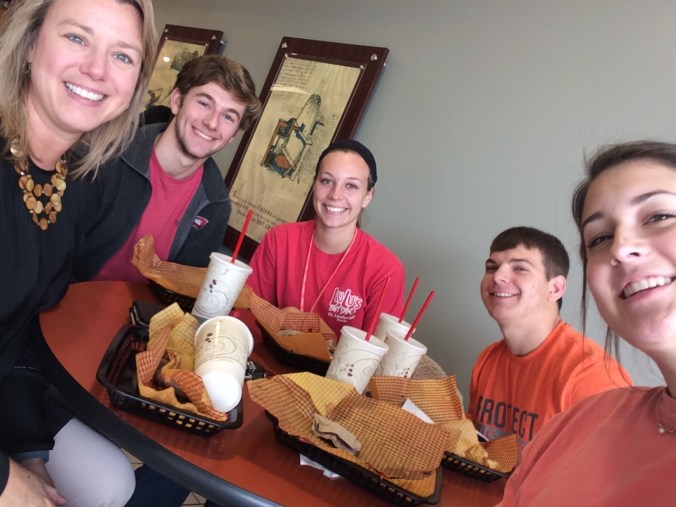
The original plan was for our group to meet at Nancy’s house and have dinner with her and her family, however there were a few scheduling and logistical conflicts, so we adjusted our plan. We ended up meeting in DaVinci’s on the first floor of Snell Hall here on campus, and we all enjoyed our choice of pizza from the restaurant. At first the conversation was a little bit awkward and just a lot of small-talk, but after we got into it, things started to flow more smoothly.

We started off with the required question: “Beyond voting, paying taxes, and following laws, what does citizenship mean to you?” Nancy explained that to her, citizenship requires personal responsibility from everyone. Everyone really just has to do their part in contributing to the overall good and benefit of the community. This requires a lot of understanding and communication, which are topics we have been learning a great deal about in our class this semester.

We also talked about what we thought were the best aspects of our world today. Nancy said that technology has been very beneficial in terms of communication and having access to a multitude of information from around the world. Again, this benefits the way people collaborate and communicate with each other, and I think that technological advances will only increase in the future. However, we also discussed the downsides of technology, such as how everything is becoming the same in terms of language and format, which lessens diversity in communities.

A third topic that we discussed is the concept of neighbors. Ellery, Wil, and I mentioned that we all grew up being very close to our neighbors, and it has always been a very prevalent aspect of our lives. Scott added that he does not have much experience with neighbors because he is from a more rural area in Louisville and did not live in a neighborhood. Nancy told us that her family does have neighbors where they live in downtown Bowling Green, and that the kids are similar in age, however they don’t always hang out together.

Acting in a neighborly way with consideration for others is a significant part of being a good citizen. For example, Nancy mentioned that her family decided to install a fence in their backyard because her family has chickens, but they were somewhat of a nuisance to her neighbors. Because Nancy and her family valued their relationship with their neighbors more than letting the chickens roam free, they put up a fence to keep things peaceful.

We then got to talking about what kind of people we want to be and we want our children to be, and through this, there was a heavy focus on service. Nancy’s parents raised her in a way that emphasized service to others and to the community, and this is what she is teaching her children now. My parents instilled the same values in me and I had many opportunities in high school to serve my community. I also have the same opportunities to work in my community in college through my sorority, and I know Ellery, Scott, and Wil have similar opportunities as well.

Overall, the Kentucky Kitchen Table experience was very enriching and not at all awful. I realized that even though I could see obvious differences among our group, the conversation revealed many similarities that connected us in ways that we wouldn’t ordinarily realize. Although we may have different backgrounds and beliefs, the members of my group we able to find common ground and agreed on many simple ideas about community. I think that this realization is a key part of living in a community and acting as a good citizen towards others. This project has emphasized the class themes of how we can live better together and what it means to be a good citizen in today’s world. We can do this by taking responsibility and contributing to the overall good of society through acts of service, consideration for others, and communication and understanding.

Don’t take things for granted

by Scott

One thing I looked for in a group for this project was diversity.  Our table consisted of five people representing Louisville, Lexington, Bowling Green, and Danville.  Present at the table was Abbi, Ellery, Nancy, Scott, and Wil.  Abbi is an accounting major, that’s very goal oriented.  She is an extrovert and loves to volunteer in the community.  Ellery is a biology major and identifies as a Republican.  She is an extrovert, who spends most of her free time reading.  She loves politics and would do anything for her community.  Nancy has a PhD and is currently teaching Biology at Western.  She identifies as a Democrat and devotes all of her free time to serving the needs of Bowling Green.  I, Scott, am majoring in Biology as well with the hopes of becoming a doctor one day.  I identify as a Republican and spend most of my free time at the Preston Center.  Wil is majoring in Biology, and is a very studious person.  He is more of an introvert and identifies as a Republican.

We focused on what citizenship meant outside of voting, paying taxes, and following laws.  Nancy was quick to point out that this was a loaded question but provided a clear cut answer.  She said that the most important thing one can do as a citizen is to serve his/her community.  Nancy believes that a community is only as strong as its weakest link which requires unified communication.  She said that it can be very difficult to communicate with others who are much different at times but it’s a great skill in life to have.  She also said that things don’t always go as planned so you must be flexible.  For example, some neighbors might promise to help with a neighborhood improvement project and then not show up.  When I was listening to her talk, I was making connections to our class.  For example, just by deliberating in class this semester I have come to embrace how different people think.  You can pick things up and learn to value different perspectives by talking to others who are different than you.

We asked Nancy the question, “What advice would you give to people running for office in our country?”  She was quite hesitant to answer at first because politics is such a hot topic.  She eventually offered up the idea that we should treat one another as we would want to be treated.  While that may sound elementary, it’s the biggest weakness our country currently possesses.  During the presidential debates, the candidates focused more on insulting one another rather than their policies they would like to implement.  This caused the citizens to get nasty with each other and the country has become split.  John Dickinson once said, “united we stand, divided we fall.”  This semester I have learned that productive deliberation is a good thing, but once a decision has been reached, the group should come together to support it.  We are not always going to get what we want which is why it’s important to learn how to make the best out of every situation.


We then asked Nancy the question, “how do you think your job relates to your role as a citizen?”  She laughed, and went on to say if we had told her she was going to be teaching college kids one day she would have laughed in our faces.  She went to medical school and received her PhD but felt that she could make a stronger impact teaching the upcoming generation.  Nancy also said she wanted to make a difference in research.  She wanted me to emphasize one thing when sharing our project with the class and that was don’t pick a job based on money.  She could be making double what she is now but she feels as if this is her calling and will benefit her community more than anything.  I could relate this to the class because we have talked about sacrificing ourselves sometimes for the greater good.  Nancy is a perfect example of this and she isn’t struggling by any means.  We asked Nancy if she had ever had a conversation with someone from a really different background.  She stated that she hadn’t until she attended Western Kentucky University.  Nancy told us not to take the diversity on this campus for granted because you can learn so much from others that you never would have gotten the opportunity to have before.  Western truly does have international reach and the opportunity to understand what other’s lives are like in places other than the United States is quite unique.  We take things for granted in our everyday lives that are major concerns in other countries.  Sometimes we need to be brought back down to earth.

We asked Nancy, “What kind of person do you want to be?” She responded, “The person I am today.” When asked to clarify, she offered up examples of what her family does during the holiday season every year.  Nancy’s family delivers food to families in the Bowling Green community for Thanksgiving as well as buy presents for children whose families can’t afford them.  For one of her kids birthdays, they celebrated by doing a service project as a family.  This says a lot because I don’t know too many kids who would choose to serve others on their birthday.  Nancy’s giving attitude has rubbed off on others making Bowling Green a better place.

In conclusion, this project made me realize a lot about myself.  I now realize that I could be donating more of my time and talent to the community instead of being selfish.  I also see how the Bowling Green Community is much different than the Louisville Community.  While the people in these cities may be two hours apart, they’re still Americans that should be coming together for the common good.  After talking to Nancy, I got to see how we (citizens) can sometimes struggle working together to solve problems in the community.  Nancy showed that with enough work, progress can be made.  I will carry the lessons I’ve learned in this class for the rest of my life and will try to crack the codes to the wicked problems we have discussed. kentucky-kitchen-table

Donuts and Democracy

by Taylor

There’s one thing that is certain about my family: we always take the time to eat dinner together. Our family dinners are an integral part of the day for us, and now that I’m away at college, I’ve realized that I took those dinners for granted. I eat dinner with friends, of course, but there’s just something special about gathering around the dinner table with your family and talking about the day’s events.

That being said, the concept of this project really resonated with me. Dinner conversation is the best conversation, in my personal opinion. As soon as the project was assigned, I called my parents and asked them to invite our next door neighbor over for dinner. I came home the next weekend, and our Kentucky Kitchen Table Project commenced.

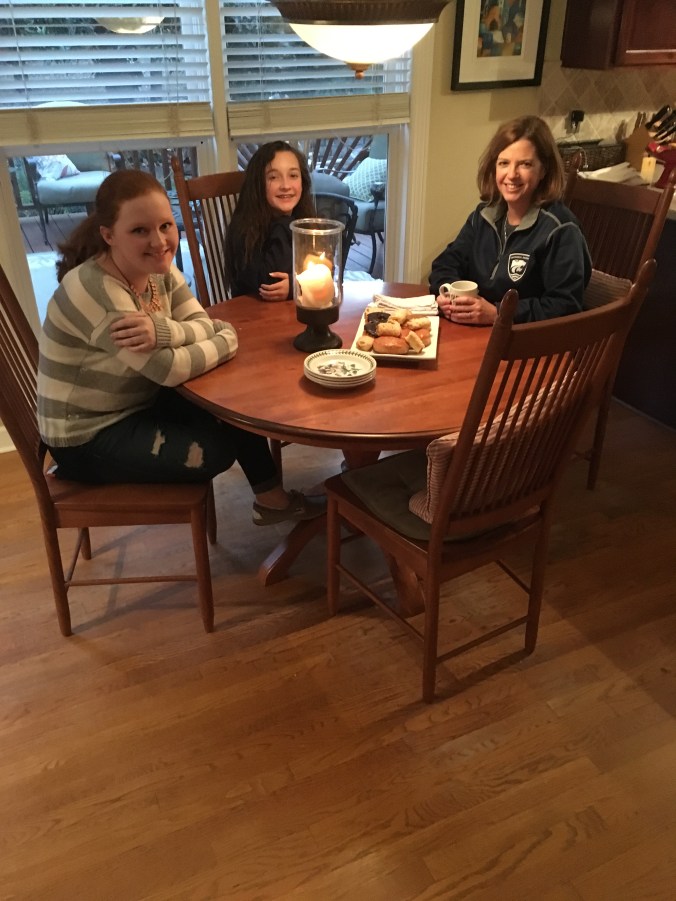
My mom, sister, and I ate a delicious meal with Mrs. Lori, a single mother who lives two houses down from us. My mom, Carolyn, is beautiful, blonde, and bold. Jordyn, my 14 year old sister, though brunette, inherited every ounce of my mother’s spark. The two are firecrackers, compared to my reserved nature, but I love them to death for it. Mrs. Lori, though I didn’t notice at first, has a very kind and comforting smile. Talking to her was easy, and fun. She was quiet at first, like me, but we all quickly became comfortable with one another. I’m so glad that I put myself out of my comfort zone and got to know Mrs. Lori along with the rest of my family.

Our Kentucky Kitchen Table took place the weekend after the election. My family and I were very disheartened by the results of the election, and the beginnings of our conversation were a little somber. I had asked everyone what citizenship meant to them, and we all came to a similar consensus. Being an active citizen not only requires you to vote: it requires you to use any lawful means possible to let your voice to be heard. Mrs. Lori made a fantastic point when I asked her what it meant to be a citizen of the United States. Her exact words were

“Even though where we’re at right now doesn’t seem that great, we still have to put in every effort we can to get where we want to be.”

The week following the election was one of the most emotionally strenuous weeks of my life. I didn’t know what to think, where to turn to, who to talk to. Should I lose hope all together? Should I accept the situation, even though I’m not very happy about it? I asked Mrs. Lori, and the rest of the people at our table, what their thoughts were about the election. We had all just finished eating my mother’s manicotti, and we were starting to nibble on the donuts Mrs. Lori brought for desert. My sister, as eloquent as ever, said

“It kind of sucks.”

I told her to elaborate.

“Well,” she said, “It’s pretty bad for minority groups. And—,” she paused.

It is hard for me to describe the amount of sadness I saw in her young eyes.

“There’s just so much hate.”

We continued to talk about our thoughts, and we were all less than hopeful about the future. To brighten up the conversation, I asked everyone what they thought were the best things about our world.

I mentioned the wondrous availability of knowledge thanks to technology. This, I said, was especially important to college students.

“I think it’s great that our world is so different,” said my mom. “I mean, culturally, our world is so rich and interesting.”

Mrs. Lori nodded. “And even though we’re all so different, the great thing is that we really all want the same things: love, food, safety, a better life for our kids and families.”

She was absolutely right.

We continued to talk about our connection with others around the world well into the night. The donuts disappeared. The coffee became cold. Well after my sister, my mom, and I, wished Mrs. Lori a good night, I thought about what my neighbor said. With tensions continuing to rise in our country, especially among minority groups, it felt good to hear Mrs. Lori’s words.

I learned quite a bit that night. We really aren’t all that different, are we? America is a diverse, melting pot, and I’ve noticed that WKU certainly represents this. Our campus’s diversity is continuously shown to me during my morning walks from Minton to Cherry Hall: so many different races, cultures, religions. I think it’s wonderful.

It’s safe to say, though, that many of us can get wrapped up in how different we are from others. Human nature dictates that we divide, section, and organize people into their respective categories. It allows us to make sense of the world around us. But when does that become harmful?

My Kentucky Kitchen Table conversation made me realize just how alike we all really are. Our country is struggling right now. However, most of us want similar things, if we look past the aspects of society that want to divide us, such as religion, sexuality, gender, skin color, political affiliation, etc. We want a better world. We want to be happy, we want to feel safe, and we want what’s best for our families. As a kid, my mom and dad taught me to look for the good in everyone. Citizen and Self has taught me to not only be kind and respectful towards others’ opinions; it has also taught me to be empathetic. To see from others’ perspectives.

In these dark times, with hatred and fear bleeding through the news and onto the streets, our nation needs some kindness. Compassion. Understanding. And Mrs. Lori, my mom, and my sister, made me see this. We’re all citizens of the United States; that hasn’t changed. We shouldn’t continue to pin blame on voters who chose a path that others disagreed with. We must come together, accept our differences, and realize our common goals. Thinking about the future is unnerving for me, even now; but I know that I’m not alone, and I know that our country can unite as one. We’ll morph our fears into productivity and hope.

I’m not sure what these next four years will hold, but I’m grateful for the friendship I’ve made, and what it’s taught me. I’ll certainly be finding out where Mrs. Lori got those donuts, because they were quite delicious.

(Not pictured: my mom. She had some trouble with the IPhone Camera.)

img_7310

Kentucky Kitchen Table: Not quite Olive Garden, but close

By Katy

img_9588

For the Kentucky Kitchen Table assignment, Baylee, Katelyn, and I teamed up to host a dinner on Western Kentucky University’s campus for ourselves and other students. Including Baylee, Katelyn, and myself, eight people attended. Each team-member invited guests from various groups. Baylee invited her friend Seth, Katelyn invited Jill and Anne, and I invited Theresa and Tucker. We were also unexpectedly joined by Yujen, who is involved with the Christian Student Fellowship on campus. Although each attendee, aside from Yujen, is currently a freshman at WKU, everyone had very different backgrounds, personalities, and opinions. While most of us were part of the Honors College and live in Minton Hall, very few of us knew the other host’s guests, which lead to interesting and eventful conversation.

For dinner, Katelyn, Baylee, and I made pasta with alfredo and marinara sauce, salad, and bread, which was a fairly difficult menu to execute from within a dorm kitchen. Although we had the menu planned, it was difficult to find a “kitchen table” on campus. Thankfully, the Christian Student Fellowship allowed us to use their basement and tables for the evening. With the help of some nice lighting, a mason jar of fake flowers, and paper plates, the meal all came together, thanks to each host’s efforts and collaboration.

While we ate, we discussed our college experiences, our different backgrounds, and the cities we call home. Everyone agreed college came with its pros and cons, which brought about a lot of laughter and connection within the group. Most of the attendants were from Kentucky, but Baylee and Katelyn reside in Tennessee, which provided a “hometown” connection for them. They were not the only people who call the same place home. Tucker and Anne both live in Frankfort, but had never met, which allowed them to have easy conversation about their hometown.

Although most of the conversation was fairly light-hearted, people’s personalities and interests began to surface as we continued to talk. Every attendant was invested in academics as well as extracurricular activities or organizations. Baylee, for example, is part of a sorority, and devotes a lot of time to her responsibilities within that group. Theresa plays clarinet in WKU’s marching band and invests her time in individual and group practice. Although there were differences in people’s interests, everyone was interested in learning about everyone else, rather than focusing on themselves.

Through conversing with the attendants, I learned a few interesting things. First, talking to strangers isn’t always bad, it can actually introduce you to new ways of thinking and understanding. Second, having a good team makes all of the difference. Without the help of Baylee and Katelyn, this event would have been a complete disaster. They were willing to do their part and were always willing to do more. Third, and finally, I learned that even though people who may be walking the same road, many begin and arrive at very different destinations.

I believe this assignment related to Citizen and Self in multiple ways. One of the main purposes of the class, is to allow students the freedom to express, communicate, and discuss their opinions, ideas, and beliefs, but in a way that is considerate of others. This practice is extremely important in the “real world,” because being able to communicate clearly and gracefully is a rare skill. It also relates to one of the main questions asked in class, “how do we live well together?” Although people have different experiences and backgrounds, it is important to listen to their stories in order to develop your own ideas, opinions, and character. Only focusing on how you can live well, will lead to a sad life, but investing time in learning how other’s live with enhance your quality of life.

I enjoyed this assignment because it forced me to talk to new people and engage in meaningful conversation, which is not something at which I excel. It also took a lot of patience to organize and cook a dinner for eight people within the restrictions of a dorm kitchen. Although it would have been easier to order pizza, I loved being able to cook with Katelyn and Baylee and see people enjoy the food and enjoy each other’s company.