Kentucky Kitchen Table

By Anna

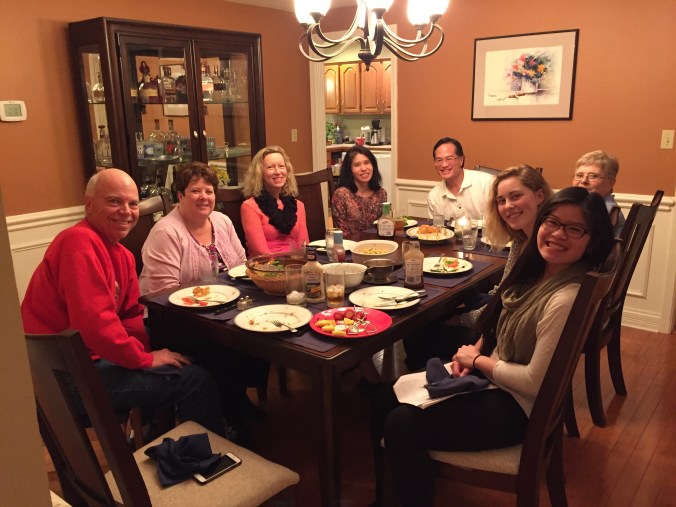
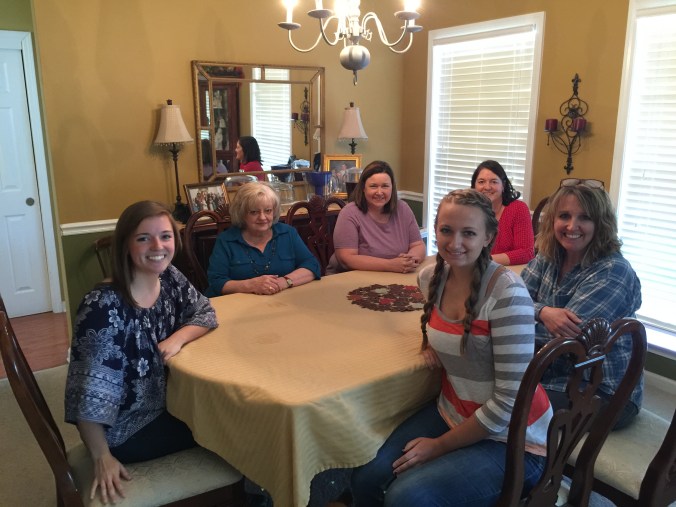
For my Kentucky Kitchen Table project I sat around my dinning room table in Franklin, TN with five other women. Yes I wanted diversity at my table, but I wanted to keep one common variable, gender. Two of my neighbors, Maddie (18) and her mother, Amy (43) came. They are both white, middle class, democrat women who are originally from California and only moved to my hometown five years ago. Maddie is a senior in high school and her mother works in the healthcare business. My next guest was my mother, Beth. She is a 48 years old and a speech pathologist at Vanderbuilt University. She was born and raised in Bowling Green. KY to a well off middle class family. Next was my great aunt Angie (52) who i had never met before but suprisingly happened to be visiting Franklin for the weekend. She is from Owensboro, KY, single mother of two, and she works as a public defender. She is definitely lower on the socioeconomic scale and not as well off as the rest of my guests. My last guest was my grandmother, Helen (75). She was born into a poor family in Minnesota but then married and lived most of her life Nashville, TN and Owensboro, KY. She is a mother of five and has spent her whole life being a stay at home mom. For this dinner my mother insisted on cooking the whole meal so my guests did not bring food.

When we first sat down I thought I would start out with an easy question to get the ball rolling. This question was, “What do you like the most about the community you live in?” Right off the bat Amy started speaking about the neighborhood we live in and of how thankful she is that we live in a community where we can all rely on each other. My mother agreed saying how great of a community we had in Franklin and how there isn’t much she would change. Angie and Helen had different opinions on it though. They both said that growing up (and even now) they never really knew their neighbors or many people in their communities besides relatives and close family friends. They agreed that in their situations reaching out to your neighbors would be an oddity. I then branched off of this asking if they believed we had any obligations to our communities. Overall, there was a group consensus that yes there is. This may not be a very specific obligation, but we all at least have the obligation to keep the peace and unity so our society can function as it should. Going with this we touched on helping people in our community. Amy was very passionate about protecting the powerless. with protecting the powerless we discussed how and what can we do to help the powerless in the long run. Then Maddie made a really good point when she brought up the quote, “Give a man a fish, and he will eat for a day. Teach a man to fish, and he will eat for a lifetime.” As a society we are always giving to organizations and trying to do big things so that we can give back to the people in need in our communities. This is great but we need to take more of the right steps to improve our issues and do more than the ever so popular temporary fix. With the topic of helping people we also touched on the government and how it is actually very hard to make changes since we are just everyday people. I briefly touched on some of the articles we talked about in class such as the shipyard project and the healthcare in Owensboro. They were all encouraged by these because they saw them as examples of everyday people coming together for a cause.

I decided to wrap up our conversation with the most important question, “Beyond voting, paying taxes, and following laws, what does being a citizen mean to you?” Granted at this point we had already generally answered this question many times, but I thought it would be a good chance to simplify and sum up everything we talked about.  Everyone had really good final statements on this but two stuck out to me. The first one was from my mother, Beth. She said, “Bloom where you are planted.”At first I didn’t get how it pertained to my question but then it slowly made more sense. She was saying that no matter the situation you are in, you can always do your best to make the best of it. You can always try your hardest to make your life and the lives of people in your community better. If everyone did this, just imagine the types of communities we would have today. The next statement that really stuck out to me was a little less positive, but it was said by my grandmother, Helen. She said “A house divided always falls.” This seemed a little morbid after my moms supper positive comment, but it is true. She says that citizen ship is working together and people need to realize that if we can’d do that then natural consequences will follow. Unity is the source of citizenship and that is all that really matters.

I learned a lot through doing this project. One being how interesting it is to hear all different opinions on things that people usually don’t take the time to talk about. I would have never known my mothers stance on poverty in America or that my neighbor Amy used to run her homeowner association back in California. I really enjoyed this and so did my guests. Overall I would say it was a very successful experience and something I wouldn’t hesitate to do again!
IMG_1773

By Hannah

I am from Bowling Green, so my family hosted two girls that are friends with my room-mate.  So, at my Kentucky Kitchen Table, the diversity was not apparent at first. Of the three college students present, we were all in a Greek organization, female, Caucasian, and from Kentucky. However, as introductions were made, we realized the diversity at the table. First, my family itself has a lot of diversity to show. My mom was an Army brat turned Army nurse, which has caused her to live all over the world, and she is currently working as a nurse practitioner midwife for medicaid and refugee patients in Bowling Green. Also, my dad is a professor here at WKU, my little sister is very involved with church worship and music, my little brother is ten years old and he knows about every new technological update available. Madelin, my first guest at my table, is from Daviess County and she grew up playing softball and competing in FFA. Miranda, my second guest, is from Todd County, a county with one stop light, and she grew up dancing and competing in FFA.

During dinner, we started with the mandatory question, “Beyond voting, paying taxes, and following laws, what does citizenship mean to you?” Because most people were a little nervous to start the conversation, I said that I believed that part of being a citizen is helping to make your community a better place for people to live. My mom added that she believes a big part of citizenship is making sure that communities are safe and secure for people to live. Both Madelin and Miranda mentioned volunteering and helping those who need it. Miranda worked all summer at a Native American camp in Oklahoma, so she talked about how much the kids would look up to her and how much their spirits would be lifted after she and others helped volunteer at their camp. She thought that this related to citizenship because older people in communities need to set good examples for younger members. My dad, a teacher, agreed, and he talked about how the work that my sister and I do for our youth group at church helps set examples and relationships for the younger students to show, and not just tell, them how to be a young Christian. From there, Madelin and Miranda talked a lot about life in their small towns, and how much bigger Bowling Green seemed. According to them, living in the big city sounds like a night mare. This could not be any more different to what my family feels- we love going to big cities! Miranda and Madelin talked a lot about their farm animals and experiences, and my whole family learned not only what FFA is, but what all they did in that club. Miranda also told us all about agronomy, her major, because she wants to be a seed company representative. My whole family is very suburban, so we knew nothing about that subject, and both Miranda and Madelin laughed at our questions about why there are different kinds of cows.

I think the conversation that we had over dinner demonstrates something that we have talked about in class- the idea that a person’s experiences shapes how they think and feel about certain issues. This shows in our conversation because my mom, who has been around the army all of her life, was worried about security, while my dad, a teacher, was thinking about leading with examples for the next generation.

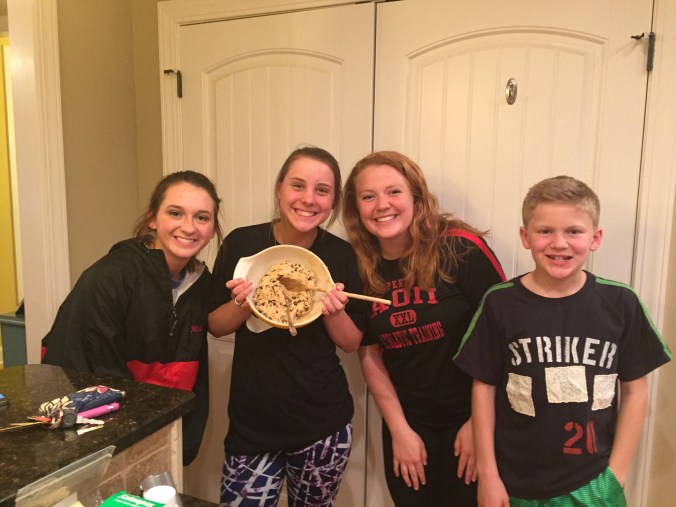
The conversation lasted so long that we forgot to take a picture and went straight to making cookies, so I’m attaching a picture that my mom took of my brother, Madelin, and Miranda with our cookies; my sister and dad didn’t want to be involved because they were doing dishes (lol).

kkt

This project helped me because it helped me to use the skills and ideas that I have learned so far in Honors 251 and apply them to real-life conversations in a realistic setting. I am looking forward to using these skills to continue thought-provoking conversations in my daily life.

A Table in Kentucky

By Rachel

My Kentucky kitchen table was hosted by another student in my class, Tori. I brought my roommate (also named Rachel), and we had dinner with Tori, her boyfriend Ian, and Ian’s friend Justin. We agreed to stick to snack type foods, and enjoyed chips and salsa and pigs in a blanket. Tori is a veterinary science major (and has a very cute cat and dog at her house!). Ian, her boyfriend, decided to go straight into the workforce after college, and had some interesting viewpoints on the differences between higher education and the alternate path that he chose. Rachel–my roommate– is a lesbian, and discussed with us some of her own struggles with her sexuality. Justin grew up in a fairly deprived background, and told us about his experiences with his bipolar disorder and receiving government assistance.

We talked about a lot of things, obviously, including citizenship, drugs, equality, and gender issues. While we all had a vague agreement on what it means to be a citizen–namely, don’t break the law or hurt other people–our varying backgrounds meant that we all had different specific views on how best to serve our community. Ian’s view seemed to be a more active one, in that he felt like you weren’t a good citizen unless you were actively doing good work in your community, while I felt that often citizenship can also be more passive, in the sense of minding your own business and allowing other people to have privacy. It was also interesting to me that the men were the ones who were more eager to bring up gender issues, and while the general consensus was that sexism is obviously an issue, Justin and Ian felt that there are still differences in what women and men are best suited for when looking for jobs and when serving their community. Justin’s background also meant he had much more experience with seeing the effects of drug abuse, so he was able to discuss the impact of these drugs that he’s seen.

I’m from Nebraska originally, so it was interesting to me to see the variety of experiences in Kentucky. The differences between the Midwest and the South came to the forefront when we discussed citizenship, I think. The South tends to be much more gregarious, which I think is why Kentucky people often see citizenship as involving an active engagement with other people. The Midwest is definitely much more closed off, and there’s often an attitude that other people’s lives aren’t really your business; while that sounds kind of bad, I also think that this kind of attitude is what contributed to Iowa, for instance, being one of the first states to legalize gay marriage. There’s a sense of “I don’t like what you’re doing, but it’s also not my place to tell you not to do it.” At the same time, I think this definitely could contribute to some of the passivity that we talked about in class, such as with the little Chinese girl who couldn’t get help.

Both sides have their pros and cons obviously, but it was interesting to me to see how the social attitude of the South contributed to Kentucky people’s views of citizenship. Obviously this relates to our own class’ discussion of citizenship, as there’s been a lot of argument over whether we have an active responsibility to do certain things. I can’t say whether there’s one right or wrong answer, but it was really interesting to see how these people of various backgrounds approached the issue.

16218

Our Home is Your Home

KKT .png

By Imari

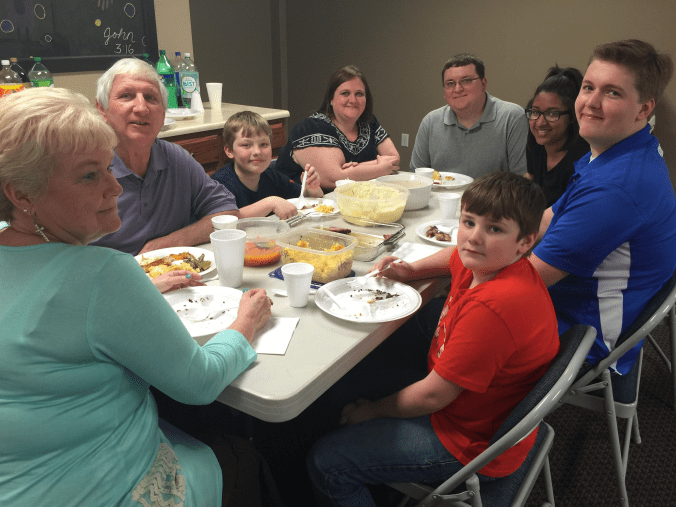
I did my Kentucky Kitchen Table assignment in my hometown of Scottsville with my friend and classmate, Carter. Sitting around the table with these amazing people was such an experience. One, they offered to cook the meal, and when you’re in college, one thing you miss is a good, home cooked meal. Two, the conversation was really interesting. I had the pleasure of getting to know their perspectives on democracy and citizenship. Overall, I learned a lot from every person seated at the table. I couldn’t have imagined doing this project with a different family. It was truly an honor.

The family offered to prepare the meal. It was a really thoughtful, tasty meal. Tenderloin and mac-and- cheese are two of my all-time favorite foods. However, this project wasn’t just about the food, it was about the people around the table and taking time to hear what they have to say about what citizenship truly means to them. So, let me introduce you to these lovely people. On the left is Martha and Clarence. They are an older couple who serve faithfully at my church back home. Hayden, the little boy to the left of Carter, is Martha and Clarence’s grandson. He invited his friend, Jordan, to the meal. They both love school and of course playing video games. They’re young, but they had a little something to say about the topic. The couple to the right of me is Monica and DJ. Monica is one of my mom’s friends and was my Sunday school teacher for several years, but I didn’t get to know her husband until the meal. Her husband, DJ, was the most excited about this project.

Our conversation went on for a while, but I enjoyed every bit of it. We talked about citizenship, what they love about where they live, and the importance of family and a community. The subject of citizenship and democracy is touchy to many people, especially the people of Scottsville, who have gone through so much lately with all the crime going on. One of the questions I enjoyed hearing their answers to was what citizenship meant to them beyond voting, paying taxes, and following laws. They all thought part of citizenship is to stop criticizing one another and start working together to build a more positive community. DJ said, “If every citizen learned to respect one another, we would improve the quality of life tremendously.” It’s not enough to just vote and follow laws; the life of a community should be safe and happy.

Being the older couple of the group, Martha and Clarence had a lot of experience and insight. They loved the fact that they were born into a country where there is freedom and rights. However, they wished we could all go back to the days where people actually care about each other. Monica emphasized that citizenship means being with who you want to be with. It makes America the melting pot. To her, citizenship also meant living in a safe community and not being afraid to sleep at night. The kids didn’t really know what citizenship meant, but after it was explained to them, they agreed that they should be able to live in a safe environment where they can go outside and play and be safe.

What helped this experience be so great for me was the fact that they brought so much diversity to the table. One, they were diverse in age. We had an older couple, a younger couple, and some children. They were also all in different walks of life, faced different things on daily basis, and had different opinions. One thing that stuck in my mind afterwards was they all agreed on what they loved the most about where they lived: family. With all the things going on in the world and in the community and the fact that they all have busy lives running here and there, they always make time for family. They could remember having meals with their family every Sunday after church and everyone would come. Now, they make sure every Friday night, they’re seated around a table giving thanks to God for each other and for the time they have together.

I learned that citizenship is and should be important to essentially everyone. While sitting around the table, I couldn’t help but think of one of the central ideas of this class: the metaphorical bridge. The left represents where we are and the right represents where we want to be. In order to make progress across the bridge, we must take baby steps to move toward the goal. One way to make good progress in crossing the bridge is to practice democracy. This has to do with all the things being a citizen consists of: service, how we talk to each other, what we buy, and how we live.

It was a pleasure sitting around the kitchen table with these wonderful people and getting the chance to talk about topics no one really wants to talk about. Everyone was so welcoming and hospitable. All the conversation and laughing was great, but the best part was hearing them say, “Our home is your home.”

Kentucky Kitchen Table with the Famous Thelma Baker

By Corinne

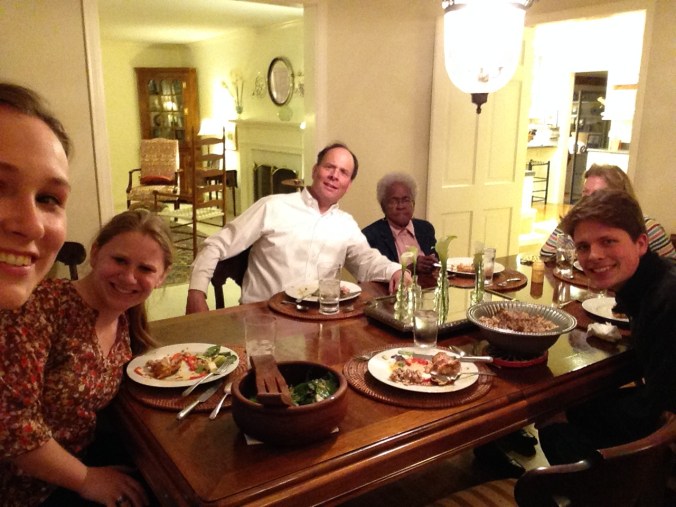
This past Sunday, I had the opportunity to have dinner around a kitchen table with strangers in a local Bowling Green home. Going into the dinner, I was nervous that it would be an uncomfortable experience, but in the end it was so enriching. Rachel and Tanner from our Citizen and Self class attended the dinner. The three of us ate with Reverend Matthew Covington and his wife Anne. Matthew is the preacher at the local Presbyterian Church, and he was very welcoming and helpful. His wife, Anne, was extremely kind hearted. She worked hard as host and was very proud to show us her new Miniature Schnauzer puppy.  Matthew and Anne brought their friend Thelma Baker from the traditionally African American Presbyterian Church in Bowling Green. Thelma was the life of the party; she introduced herself as Hallie Berry and told us about several experiences she has had as an 89-year-old African American woman. The six of us had very interesting conversation, and I think we would all agree that we learned so much from Thelma.

Thelma added the most to our conversation by far. She told us about her child hood living with an abusive step father. After growing up with a drunken step father that would kick her out of the house, she resolved to never drink or smoke. Even after 89 years, she has never touched alcohol. According to Thelma, “if alcohol could turn a sweet man abusive, why would I want to drink?” She also told us about several of her experiences growing up during the civil rights time period, and we saw how her life has come full circle as she was in attendance at Obama’s Inauguration in 2009. Her stories were fascinating and displayed exactly what we have been learning in class about race.

Thelma was a perfect example of all the race issues we have discussed in class. She has lived through racist comments and actions, and been on the other side of nearly every privilege that has existed in her lifetime. She has been a true example of democracy and citizenship. Though she did not specifically define what citizenship meant to her, (I don’t think she totally understood what we were asking) she told us the story of her trip to Washington D.C. to see Obama’s inaugural address. To her, citizenship was taking the opportunity to see a black man sworn into an office that during her lifetime she never thought would be possible for an African American to hold. She exemplified citizenship simply by her dedication and participation in democracy despite all she’s suffered from prejudice.

Matthew and Anne exemplified citizenship through their service to community and being active with their church on thinking outside only Presbyterian viewpoints. They mentioned how their church hosts theological open houses where people can speak and discuss with one another different viewpoints. They also told us about how they hosted an informational service on homosexuals for their church to try and understand different viewpoints. Their willingness to listen to viewpoints that are different from their own exemplifies exactly the kind of community we need in order to promote change and understanding.

Our table was racially, politically, religiously, and generationally diverse, but we were all able to connect and learn from one another. Though my experience as a college-age white female is drastically different than an elderly black woman, I still loved hearing her speak about everything she has been through. It was a realistic example of everything I have learned about civil rights in school. Thelma helped me to understand her viewpoints by sharing her elephant (emotion) through the experiences she has had. We were all different, but we all connected to each others emotions and were able to listen. It was a great practice of the elephant and rider we read about in Citizen and Self. This dinner taught me not only about the people sitting around the table, but it taught me how to use what we have learned about discussing with people different than you. I also learned how citizenship looks from person to person, especially with such a diverse group. It was a wonderful experience, and I am thankful I had the opportunity to participate.


IMG_0767

Good food, Good company

For the Kentucky Kitchen Table Project I was paired with Trevor and a family here hosted us in Bowling Green. At our kitchen table we had Madi, from class, along with her parents, Kim and Tim, and cousin Nick, along with my roommate Allison. I had never met Madi’s cousin Nick, who is nineteen, living on his own, and works in physical labor. Madi’s parents I have met before, and Tim is the manager of one of the local plants and Kim is a caretaker for several older and/or ill people. Madi is political science and paralegal major who has trade experience and wants to become a corporate lawyer. My roommate, Allison, wants to go in a very different direction with her art history major by becoming an art conservationist. Allison is also in a service sorority here on campus, while Trevor is in a fraternity. I myself want to teach eventually after my experience teaching Taekwondo in my hometown.

We talked about several different things, but the current presidential campaign was a subject of particular interest. Everyone had a different political perspective, which added to the debate. Allison is a liberal, Madi and Trevor are libertarians, and I change depending on the issue. Nick doesn’t identify with a party, and Kim and Tim are both conservative. We discussed the benefits and drawbacks of all the candidates, for example how Bernie Sanders has good ideas but they aren’t practical because of the country’s already tremendous national debt and how people are inherently selfish and if the tax rate for the rich was raised they would simply put more effort into hiding their money. Tim also made the point that he worked hard to get where he is, and that he shouldn’t be penalized for his work because some other people didn’t work as hard. Allison then brought up how many people aren’t given the same opportunities and go through their whole life at a disadvantage. Kim mentioned that when she was a child her family had an outhouse, but that she was able to go to college. Tim also told us about how an accident when he was a kid blinded him in one eye but that he adjusted to it and can drive just fine. Allison brought up how she also had to adjust to life long condition when she was diagnosed with Type 1 diabetes her freshman year of high school. This turned the conversation to healthcare because of how expensive diabetic supplies are and how finicky insurance can be about paying the correct share. Madi said that even though insurance is awful, free health care would be worse, and proved her point with the state of Canada. I have a cousin who lives there and she’s told me herself that it really is impossible to see a doctor there and that she tries to do as much as she can medically when she’s here in the US visiting family. Tim also brought up that if healthcare was free he would lose his ability to spend more money to pay for an experimental or expensive treatment than what some other people can afford.

We also discussed life on a college campus, and our different high school experiences. Trevor is from Tennessee and graduated with a class of 243, while Allison and I graduated with a class of about 400. Nick and Madi also graduated with about four hundred, and actually graduated from the same high school as her mother, but she was a part of the third class to ever graduate from the school and then there were only a hundred students. Tim had by far the smallest graduating class at only 24 people. We found that the smaller the class size the larger percentage of people everyone knew in their graduating class, but among Allison, Madi, and I we all knew different amounts of people based on what we did in high school. Allison and Madi were both very involved, taking a wide range of classes and getting involved in different types of after school activities. As a result, they knew easily over half of their graduating classes. Trevor was also very involved, particularly with sports, and he knew or recognized almost all of his graduating class. Nick also recognized most of his class. I was the outlier here because I did most of my extra-curricular activities through Taekwondo, which wasn’t associated with my high school, and as such only knew about a quarter of my graduating class. Kim and Tim both knew the entirety of their graduating classes.

The answer to the required question, “what does citizenship mean to you, beyond voting, taxes, and following the law,” stumped everyone for a few minutes. Tim mentioned how important community involvement is to him but he wasn’t sure how to relate that to citizenship. Madi said political literacy, knowing what you’re voting and advocating for. Trevor also made a really good point, especially considering the individualistic state of the country, that being a citizen doesn’t necessarily mean helping others but that it most certainly means being conscious of how far your rights go and not purposefully impeding another’s rights.

I really enjoyed having a home cooked meal that we all chipped in to pay for but that Madi and her family actually cooked. The discussion was also very interesting and enlightening, hearing from all different sorts of people.IMG_0154

Kentucky Kitchen Table

IMG_20160410_132645112[1]

By Taylor

When I talked to my parents about the Kentucky Kitchen Table assignment, they were all in for hosting the dinner at our own Tennessee home. We talked about inviting over someone from church that we didn’t know well, and my mother was completely willing to provide all the food that we needed. Unfortunately, upon examination of our schedule, we discovered that we didn’t have a single free weekend available to host a family for a meal. After a little bit of brainstorming, Mom suggested that I ask my grandparents if I could attend their Sunday afternoon life group with them, and complete the assignment there. This life group consists of several people that my grandparents go to church and eat lunch with every Sunday, and they have invited my family to join them many times, even though we go to a different church. A phone call was made and I was told to arrive at an address in Hendersonville, TN at 12:30.

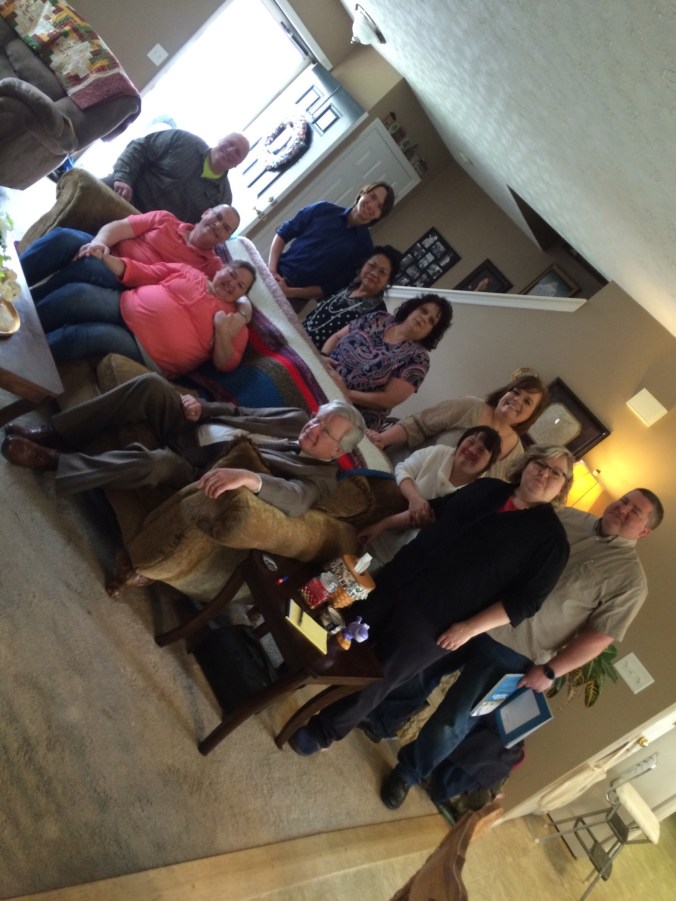
As soon as I walked inside, I was greeted with firm handshakes from some of the men and warm smiles from all. There were around 12 people in the house when I arrived, a couple of which left early, before I got the chance to talk with them. As everyone was spread around the kitchen and living room areas, it took me about 20 minutes just to walk around and talk to everyone. I eventually got the chance to meet everyone there; there was Chris and his wife Sandra, the owners of the house, and Tim, a pleasant man who was very interested in talking about all things college athletics with me. My grandpa, Gary, who currently sells hearing aids and formerly worked on jet engines in the air force was also there, as well as my grandma, Susie, who was born in Taiwan and lived there until she was 20. My aunt Kimberly, who has Down’s Syndrome and is one of the happiest women I know was also in attendance, as well as Paul and his wife Sarah. Paul has lived in Hendersonville all his life, and Sarah has traveled all around the globe in her youth with her father, who was in the military. Most of these people participated in my table conversation in some way, though I personally visited with them all briefly while I was there.

After getting to know everyone, I took a seat at the kitchen table where most of the women were sitting and asked them a little bit about themselves. We had good conversation for a while and everyone was more than welcoming to me, a newcomer to their group. When I finally got around to talking about the required material, I started by asking what citizenship meant to them. Susie was the first to speak, saying at first just how proud she was to be in the US and how important she thought it was to be in community with one’s fellow American. Sarah joined in next, saying how citizenship for her meant “helping your fellow man.” She elaborated by saying that while nobody is entitled to help anyone, being a good neighbor and helping your community members when possible was necessary to being an effective citizen. Sandra had a few words as well, saying how much she enjoyed being in a community where she could rely on her neighbors for anything. The overall feel of the conversation was very positive, with nobody having anything bad to say about citizenship or being involved in one’s community. My experience with the Kentucky Kitchen Table, though difficult in the planning stage, was definitely a success. It was a good opportunity to talk with some of the people that my grandparents see every week, and get their opinions on what citizenship looks like.

(The second image was taken on Chris’s phone and then sent to me, as I needed a photo with myself in it)

4638

Kentucky Kitchen Table

IMG_1479

By Kaitlin

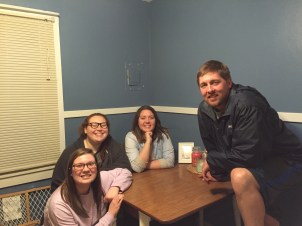
I was fortunate to have dinner with a newly ordained pastor named Nathan, his wife Kelsi, and a graduate from WKU named Katie. Nathan and Kelsi have been married for a few years after being college sweethearts and have an adorable dog named Leland. They named her after Leland, Michigan, because Kelsi’s family vacations in that area. Katie graduated Western after pursuing a major in Interdisciplinary Studies with an education emphasis, and she is currently a pre-school teacher. Nathan grew up in Lexington, and Kelsi and Katie are from northern Kentucky and went to the same church together. We spent the dinner mainly talking about their time in college since I am currently experiencing that time in my life. Nathan was an Education major and about to start his final semester with a teaching position at a school offered to him when he felt a call to go into full-time ministry. As someone working to be a teacher, I definitely appreciated his perspective and advice from his years spent in the educational setting! Kelsi was a Communication major and also pursued learning Spanish, even studying abroad in Ecuador. She told stories about traveling the country and experiencing its culture, including eating guinea pig. Katie shared about her involvement on campus, such as how she was one of the first students to be in WKU’s American Sign Language Organization.

When I asked what citizenship meant to them, Nathan explained that he believed it included going out of his way to help others, such as a neighbor or friend. He said it was our duty to be involved in the community and get to know the people who live in it through activities like volunteering. Everyone else wholeheartedly agreed. Because of his job, I asked about how it related to his role as a citizen. He said that it is easy to see the needs of the community and have a better understanding of how to help through forming relationships with the people he comes into contact with on a daily basis. Katie mentioned that she felt her job allowed her to be a better citizen because she is teaching the future generation of doctors, lawyers, and politicians who will work to shape the community.

Nathan and Kelsi both agreed that they believe their religious identities of being Christians influenced how they see others. Nathan said, “As Christians, we are called to serve a greater purpose by loving others and pointing them to Christ, who is the ultimate definition of love.” They said that they are very purposeful in the relationships they form because they know that lives can be impacted that way. I found it helpful to speak with this group of people since they were at different points in life and offered advice that I can definitely apply to my own life. I learned that having conversations that are more than just asking about the weather or other surface topics are important. We can gain so much wisdom and perspective from other people. I think that relates to the class as we have made it a point to respect others’ opinions and attempt to understand their viewpoints to become more well-rounded individuals. We have had many discussions, such as the most recent one about race, and mentioned how it is good to read about or speak with people whose experiences are different from our own. I think this time was well-spent and offered me an opportunity that I would not have had otherwise.

Kentucky Kitchen Table in Russell Springs

By Bailey

I had the privilege of sharing a dinner around a Kentucky kitchen table around my own hometown in Russell Springs. Being the small town that it embodies, it’s not hard to find somebody that you know. So I felt that the best place to have a good old Kentucky dinner is around the dining table of my girlfriend’s family. It’s a win-win situation for me because not only is there food, but I get to know more about the people that I might have lifelong connections to in the future and I received the opportunity to ask them questions that I wouldn’t get to ask them on any normal day.

Overall, there were six of us around the kitchen table ready to chow down and converse. I’ll introduce them in relation to my girlfriend: so there is Katelyn (my girlfriend), Aaron (Katelyn’s little brother), Edna (Katelyn’s mom), Harold (Katelyn’s dad), and Derrick (Katelyn’s uncle). Katelyn is a junior in high school, and participates a lot with the JROTC program there; in fact, she will be the commanding officer over the whole program during her senior year. Aaron is in 1st grade, and the best way I can describe him is that he has quite the wild imagination. Edna works as a lab technician for a drug testing company in Russell Springs. Harold can’t really work right now, due to him still recovering from his fight with cancer, and he wasn’t able to eat much around the Kitchen Table unfortunately. He has a very interesting past and is one of those people that if you get them talking, you could have a full day’s worth of conversation.  And finally there is Derrick, who usually prefers staying around the house, but he enjoys cars and video games. I am probably the least familiar with Derrick out of everyone else.

Katelyn’s family is not originally from Russell Springs, and have only been a part of the community for around the past 4 years. But I believe they have fit into the small community wonderfully from their move from eastern Kentucky. The whole household is heavily involved in one of the local churches, and have no doubt played an impactful role on some of the other families in Russell Springs. I couldn’t imagine the hole that would have to be filled if they were to leave. But enough with background information, let’s get back to the meal at hand.

I insisted on bringing the entire meal, since I would be the guest of the hour and felt it would be a nice gesture to save Edna a night of cooking. My mom and I decided that chicken and dumplings sounded like a good traditional southern meal to have in a Kentucky home. So we prepared chicken and dumplings as the main entrée, with some mixed veggies, and a few oatmeal raisin cookies as a sweet treat. Edna would provide the silverware and the drinks.

After everyone got some country cooking to eat and settled around the table, I asked a few of the conversation starters. When I asked what it meant to be a citizen, Edna replied, “Being able to go to church whenever we want.” I found this reply interesting in the context of citizenship because religious freedom is a huge deal in the United States. But with recent events, that religious freedom might not be the same for everyone, like those from Islamic countries seeking safety. Katelyn mentioned our freedom to do what you want, and Aaron agreed by shouting across the kitchen table about his freedom to race cars. When I asked what the best thing was about living in Russell Springs, everyone agreed that their most loved thing were the people. Which I agree, since I feel like living in a smaller community makes it easier to know those around you. When I asked what obligations we have to others in our country, Katelyn and Edna both agreed that we should help those if they need it. This question reminded me over our section in class over empathy, and if we really do have an obligation to others. To me, I feel like it’s very situational. We may say we intend to help, but if we are shoved into the situation, what would we really do?

Probably one of the more depressing things I heard was that this was the first time in a while that the kitchen table has been used in Katelyn’s household. They never really had meals around the table growing up. I pondered about my own childhood, and my family really didn’t eat around the table either. It makes me wonder if that’s why I am not really as close to my family as a lot of people are. This was very thought-provoking to me, and made me wonder if the drifting apart of families and citizens as a whole are caused by something as simple as a lack of daily conversation around the kitchen table. This realization isn’t pleasant to think about, but it gives me a greater appreciation for what relationship I do have with my family. Overall, it was heartwarming to just come around a share a meal together; to just enjoy each other’s presence. This is something I would definitely consider doing again.Snapchat-2487715073283703634[1]

Kentucky Kitchen Table in Oldham, Kentucky

By Allison

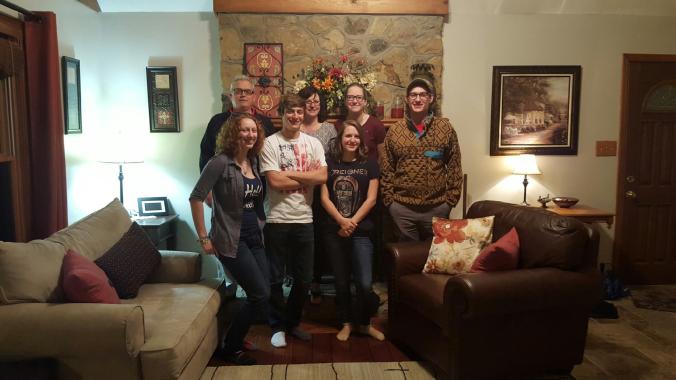
I hosted my own Kentucky Kitchen Table in Oldham County, Kentucky (a suburb of Louisville). On March 26th, our party of nine gathered together in fellowship for a wonderful meal that included Cornflake chicken (family recipe), green beans, salad, fruit (brought by Lisa and Mark), rice (my family’s staple), spätzle (traditional pasta dish from Cologne, Germany brought by Clare and Barbara), apple pie, and brownies with chocolate ganache on top (brought by Cathy).  We had this dinner at my dining room table at my house. It was an amazing meal with lots of conversation. I wanted to pick people for my Kentucky Kitchen Table that had different perceptions on life based on their age.

My mother, Cynthia, attended who is a part time physical therapist, aqua fitness instructor, and worker at GE. She is an adult who has one child at home and who works full time. My father, Eric, is a former pastor and is currently working at Starbucks. He is an adult who has one child at home and three children in college. In addition to my parents, I had my brother Nathaniel who is a Junior in high school. He is 17 and is living life with the freedom of having a car to himself. Both my parents and Nathaniel didn’t want to miss out on me cooking dinner that night. In addition to my family, I invited Clare who is a freshman at St. Louis University. She is studying biology and hoping to go into the medical field. I met Clare the summer before my senior year of high school at the Governor’s Scholars Program. Clare also brought her mom, Barbara, who was my individual who I had not previously met. Her mother Barbara, is a former English teacher. She loves to travel and is currently helping out in the family business. In addition, I also invited the couple Mark and Lisa who attend my home church. They have two kids Andrew and Allison who are both in college so I considered them adults who were “empty nesters.” Mark works in Communications and Marketing at University of Louisville, and was the former news anchor for WLKY. Lisa volunteers at Eastern Area Community Ministry and is actively involved in church. Lastly, I also invited Cathy, who was my past high school Sunday School teacher at my church. She is a retired English teacher. She currently works part time at an elementary school to help kids who need extra help on reading and math. She was the participant who I considered a senior citizen. Each individual that I invited were at different places in their lifetime.

Our conversation was mainly getting to know each other and telling about past adventures. Barbara even worked on a whale watching boat in Maine! All of us, did not originally start in Louisville, Kentucky, but ended up moving and putting roots down in Louisville. Our topics ranged from family, to NASA performing surgeries in space, to the new technology called the transcranial magnetic stimulation that helps alter neurons in the brain to fight depression. This dinner really exemplified that every individual comes from a different background where there are different cultures and traditions. Lisa grew up on a farm in Paducah, Kentucky and my family grew up in Southern California. Everyone had so many stories to tell at the table. There was not one quiet moment. For me, this experience reminded me that I don’t always have to carry the conversation. If you have a talkative bunch, the conversation carries itself. I loved having the opportunity to eat with friends and family who I now often don’t see due to college.

I ended the dinner with the question, “what does citizenship mean to you?” due to the great conversation that immediately started when we sat down at the table. I thought that everyone had amazing answers to this question and it didn’t matter what age one was. Nathaniel stated, “So many of my friends are indifferent on issues. I think indifference is toxic in our society and that everyone should take a stance on controversial issues. By taking a stance, one is able to be be assertive and hopefully educate themselves on what issues affect us today.” Cathy stated that citizenship is being a role model to the younger generation. She thinks influencing others and passing down knowledge is so important. It’s being alert to the needs of our community. Clare said,”being a citizen is having a sense of comfort that you belong to a community.” Other answers included looking beyond oneself, bringing something to the table no matter how big or small, and citizenship is the importance of interconnectedness. I loved being able to tell them that our class dives deeper into wicked problems, empathy versus compassion, and looking at ideas of fixing our world to the perception we want it to be. Overall, it was an amazing dinner. Everyone loved the idea of this project and was more than happy to help. It was a success!IMG_8629