Kentucky Kitchen Table: Owensboro

By Clark


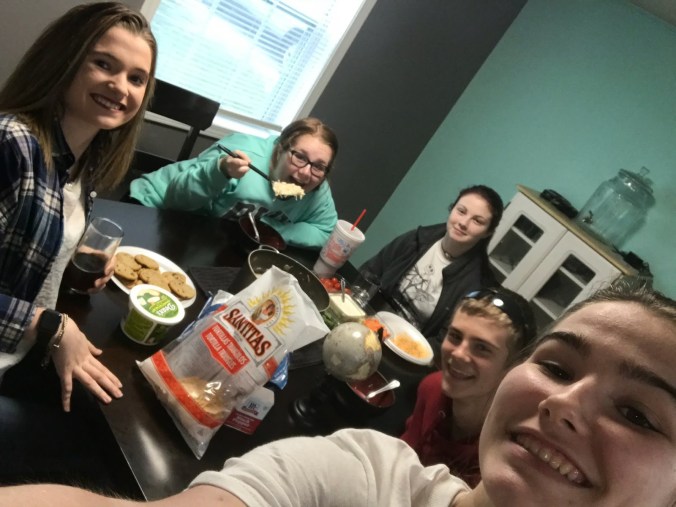
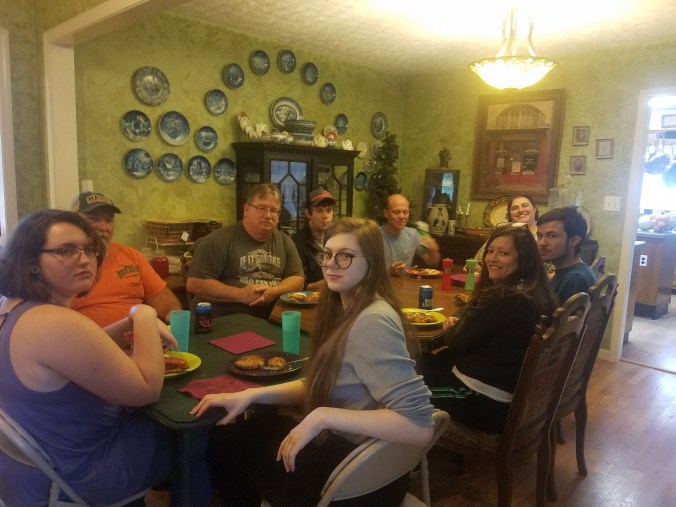
My Kentucky Kitchen Table took place in the city of Owensboro, KY. The city of Owensboro is the 4th largest city in the state of Kentucky with a population just under 60,000. Five people and myself from this city took part in a roundtable discussion after a meal. The participants at the dinner where Katherine, Lisa, Debbie, Jenny, and David. Katherine is a dental student who is living in a bigger city than she is used to, a Baptist, and has conservative leaning views. Lisa is a single parent who works full time, a Baptist, and has conservative leaning views. Debbie is a grandmother, a widow, a Baptist, retired worker, and has conservative values. She also helps take care of her mother. Jenny is a grandmother, retired pharmaceutical worker, a Methodist, and has liberal leaning values. David is a grandfather, a veteran, a retired school administrator, a Methodist, and has liberal leaning values. The members of this group all enjoyed the community of Owensboro and Jenny and David who had moved to Owensboro over twenty years ago also enjoyed the community. The meal took place in the home of Debbie in her dining room, which was used to accommodating a group of people of this size. These where the individuals who participated in my Kentucky Kitchen Table and the setting of where it took place.
After everyone had finished their main meal we started the discussion on what we thought citizenship meant to us besides voting, paying taxes, and following laws. After a few more questions it became apparent that they based their answers on their life experiences and beliefs. For example, many individuals in the group based their answers on their religious beliefs and Christion values. This would go on to affect their answers to later question such as how our religious or spiritual identity relate to how we treat others and how it related to how we see ourselves as citizens. Another reoccurring theme that kept appearing throughout the discussion was past experiences that the individuals had. For example, Jenny and David described their experiences during tail end of the second world war to illustrate how it developed their thought on what citizenship meant to them and how other parts of their life contributed to their role as citizens. Another example of experience was whenever Debbie visited other nations such as China. Her experiences in China would help her develop an understanding of what it means to be a citizen and another theme that will be discussed later, rights. Also, another reoccurring theme was that even though they believed in helping others, a common consensus was that they wouldn’t openly give advice to a neighbor unless directly asked. The reasoning among the older individuals at the table was that there was an age difference between them and their neighbors, which caused a disconnect between them. Although the advice they would give to neighbors and individuals running for office would be just to have common sense and for individuals running for office was to remember the people they represent. A big theme that a majority the participants mentioned during the discussion was rights. To them being a citizen to the United Stated gave them rights that they believed were protected as citizens. The most important right to most of them was the freedom of religion. As stated earlier, Debbie developed the sense of the importance of rights from her mission trip to China. During this trip she noticed the difference between the rights of citizens in America and the rights of citizens in China. This helped me understand and create the theme that a lot of people tie in their religious or spiritual identity into how the see citizenship and how they see themselves as citizens. Another big answer to the questions was the idea of connection. Connection was one of the big things in the world today that many of groups saw as important, but to many it was also a double edge sword. We are living in an age where we have instant access to a large amount of information and individuals, but sometimes we lose the connection to those around us. An example that they gave of this was that they would see people at a table together at a restaurant and they would be on their phones the entire time instead of verbally communicating with each other. This was how connection to them was both the best and worst thing in the world today. These were some of themes that emerged throughout the discussion.
As the discussion continued on as many of the participants began to describe their own communities. The biggest change in community was with Katherine. Katherine had recently moved from Owensboro, a population below sixty thousand, to Louisville, a population over six hundred thousand, and how the communities were different. For her, she mostly only interacted with individuals and the community where she lived. In a similar fashion the others also describe how they only interacted with individuals from their community that shared similar beliefs, ideas, and characteristics. It is much easier to notice this idea of sticking to individuals who are similar to each other, where there are more people like them. This idea relates to a reading in class, Exit West, where one of the main characters wants to live closer and around people from his same background and feels out of place at the current place where they are at. This was how community contributed to how individuals saw themselves as citizen and their role as a citizen.
Many of the individuals at the discussion saw how their jobs related to their role as a citizen. The most obvious individual who saw how his job related to his role as a citizen was David. David, who was a veteran and a retired school administrator, talked about how as a veteran he served his country and other citizens, and as a school administrator gave back and helped shaped the next generation of citizens. The rest of the group also mentioned that their jobs gave back to the community they worked in and provided a good or a service to the rest of the citizens. This was how the individuals saw how their jobs related to their role as a citizen.
From this discussion I learned some things from the answers that were given to the questions. One thing that I took away from the discussion was that individuals tended to base their roles as citizens based on their religious identity, their experiences, and their jobs. I learned that it is sometimes more difficult to connect with neighbors if there is not something that both have in common. The differences that can cause this can be from age, religious identity, and others. This causes neighbors to be reluctant to get to know each other and reluctant to give advice to someone they don’t know that well. Another thing I learned was that people have similarities and generally have similar or close to the same thoughts on topics. These were some of the things that I learned during the discussion.
Also, during the discussion a few things that relate to what we learned in class appeared. One idea from class that the discussion related to was how do we live well together. The discussion related to this main idea from the class because it helped illustrate some factors that can affect how we view this question. An example from earlier can be where they don’t feel comfortable giving advice to a neighbor, unless directly asked for. These factors did not stop them from living well together with their neighbors, but they could have been living better with their neighbors. Another aspect of the discussion that related to class was how individuals developed morality and beliefs. For many in the discussion, their religious or spiritual identity was what created the foundation for what they believed citizenship meant to them. They used their religious or spiritual identity to describe how they should treat others, what should be done in the community, and what their citizenship allows them to do. This was how the discussion related to what we had learned in class.
Overall the discussion for the Kentucky Kitchen Table was very good. It gave me insight into what individuals used to determine what citizenship means to them, how they view their role as a citizen, and what they do as citizens. From this discussion the main influence for individuals in how they viewed citizenship and their role was based on their religious or spiritual identity. Even someone’s experiences can shape how they view and what should be done around the country and the community. From the discussion it was observed how some of the best things in the world can also be the worst. Another aspect derived from the discussion was on how community shaped our roles and views of citizenship. Also, what was discussed provided more insight into what was discussed during the class and gave real life experience to what we discuss in class. This was my Kentucky Kitchen Table discussion.
An Afternoon Around the Kitchen Table

By Taylor

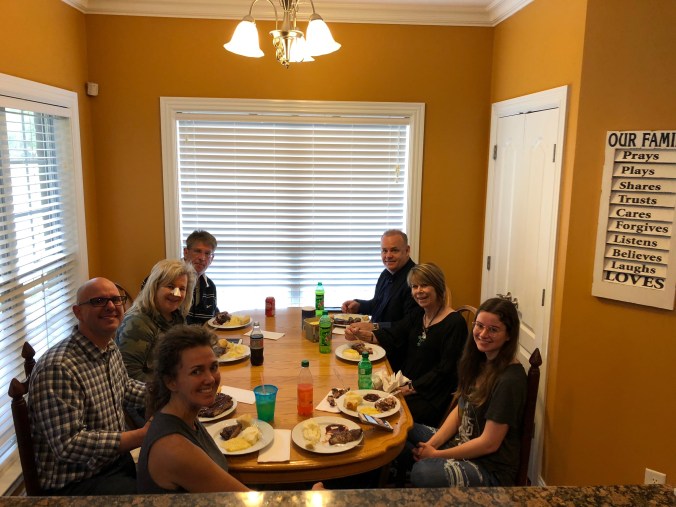
We sat down to eat at my home in Mount Juliet, TN. We’re a family of four, a little unused to accommodating this many people around the kitchen table. With an eclectic mix of chairs, and very little elbow room, the seven of us gathered around the table. (My little brother made a brief appearance to eat before scurrying back upstairs to play video games). My dad made ribs, my mom made mashed potatoes, and I made creamed corn (well, I put the frozen corn in the microwave to heat up). I suggested the idea of a potluck, but my mom preferred for us to cook the meal.

I was a little apprehensive about hosting this dinner. Historically, I haven’t had good experiences with discussing things which people are likely to disagree about in my hometown. I tried to select guests who I felt were open-minded, but I wasn’t optimistic we would all walk away from the conversation with a deeper understanding and appreciation for each other- I thought it was more likely that someone’s feelings would be hurt. The guests at dinner included Frank, Cher, Jane, Hank, Jack, Kate, and myself.

Frank is my father, and he’s in his early forties. He grew up in Chicago and moved to Tennessee in the early 2000s. He was a little quieter during dinner than he would have been if it had just been our family, but when he spoke, it was obviously something he’d been thinking about for a while.

Cher is my mother. She’s a pastor’s kid and grew up bouncing from town to town as my grandfather was reassigned to different churches. It’s given her a unique perspective; Grandpa had a propensity for taking in those who need a place to stay, so my mom has lived with people from all different backgrounds. She isn’t very interested in politics, but she is passionate about helping others.

Jane is my mother’s old coworker, a friend from back when they were in real estate during the early 2000’s. My mom switched career paths, but Jane stayed in the business. Today, she works for a nation-wide real estate company, overseeing half the country. She’s proud of how far she’s come, but several times during lunch she expressed sadness at how often she has to travel for her job. At one point, she told us her situation is representative of the overall modern trend of putting work ahead of family.

Hank is… Jane’s husband. I define him that way only because he didn’t give me anything else to go on. He remained silent for almost the entire lunch, despite several enjoinders to share his opinion. Eventually I relented when I sensed my petitions were being met with increasing annoyance. Overall, I got the sense that he only came because Jane wanted him to.

Jack is the pastor at one of the local churches. He had a lot to say, and there were times I wondered if I should cut him off to give someone else the opportunity to speak. In all fairness, he did have a lot to contribute, and at the very least he kept the table from devolving into an awkward silence.

Kate is his wife. She was also born and raised in Illinois, where she married and had four daughters and later, half a dozen grandchildren. She was a little quieter during lunch- she didn’t volunteer her opinion- but when I asked her about her perspective, she provided me with thoughtful answers. She does a lot of work at the church on behalf of her husband, sort of the “behind the scenes” hero. She’s passionate about helping people, in whatever way she can.

One interesting theme that I observed during our discussion about citizenship is that everyone viewed it as a serious responsibility. They viewed it as not just a responsibility but also a privilege to be a part of a country that is greater than the self. Another generally agreed-upon aspect of citizenship that came up was the obligation to help others within the community. The guests agreed it was an obligation, but they seemed to contradict themselves in regards to enforcement. “Yes, everyone should help others, but they shouldn’t be forced to. Don’t take money out of my taxes for charity- let me give on my own, if I want to.” It reminded me of Jane Addams’s “The Snare of Preparation;” like Jane, they believed that people have an obligation to help others. However, they were adamant that charity should be voluntary- I imagine Jane might be more inclined to require people to give.

Overwhelmingly, the group voiced that the best thing about our world today is freedom. Religious freedom was a big part of this, which was unsurprising since we needed to schedule lunch to be after church that afternoon. However, the guests also freedom of opportunity. A few of the guests grew up at a time when a college education was relatively rare, rather than the default option for most students after high school. They expressed that the wealth of opportunities for people in this country was one of the best things about it.

A major social concern the group echoed was what they termed the “breakdown of the family.” A large portion of the conversation was spent on today’s youth: “They expect everything to be handed to them, they don’t want to work hard…” The group had concerns that young people place less value in familial relationships, and they touched on the idea that young people are less moral than older generations. This reminded me of the David Brooks article, “If it Feels Right” in which he asserts that young people lack the ability to articulate moral reasoning as well as a shared moral framework. However, they were a little more optimistic than Brooks; the group acknowledged that each generation does things differently, which isn’t inherently negative. They even went a step farther to say that if our generation lacks certain skills/values, it’s probably our parent’s fault for not instilling these in us.

This naturally led into a discussion of how several of the guests used to eat with their families around the kitchen table frequently. Most of them expressed nostalgia over those experiences, and a little regret that they didn’t continue the practice. Sitting around the kitchen table and talking with each other gave them a stronger sense of belonging, cohesion, and understanding; they felt much more involved in each other’s lives. Today, most people are too busy to take time to eat together at the table- or it’s not as big of a priority for them as other things. Coming away from the conversation, several of the guests expressed that they might like to be more intentional about eating with their own families around the kitchen table and talking about their lives.

When the conversation turned to what advice they would like to give to politicians or someone running for office, everyone expressed a desire for increased respectful conversation. Instead of demonizing alternate viewpoints, politicians should listen to different perspectives and learn from them. This surprised me a little because of how much it directly relates to what we are learning and practicing in class. We deliberate weekly about different issues and readings, and we are learning to listen and consider the views of others. In a way, this consensus along with the overall meal renewed my faith in the value and practicality of deliberation. Sure, deliberation can work in the classroom when everyone wants to talk so that they get a good participation grade. But if others have a sincere desire to practice these skills in order to solve problems, then maybe deliberation really does have practical applications in the real world; maybe we really can solve problems in this way.

Overall, I was pleasantly surprised by how well the meal went, and that it did not turn into an argument at any point. I think part of the reason this did not happen is that several people in the group did not know each other well, and they were too polite to disagree as they might have with someone whom they were close to. Still, it was nice to hear from different people about their viewpoints while maintaining a respectful atmosphere.

I think if I did another project like this in the future, I would be quicker to intervene and steer the conversation in the right direction when it started to wander. There was a period of ten minutes or so where the group discussed the merits and drawbacks of our current president and the discussion was derailed pretty severely. Still, I learned that it’s important to hear people out; the longer you listen, the more likely you are to find common ground. For example, while I was unsurprised to hear that abortion was one of the social issues the group was most concerned about, I was surprised to hear that some of them thought the best way to combat abortion is to expand medical treatment and contraceptives, as well as increasing programs and services for new mothers. We might disagree on minutiae, but when it comes down to it, as human beings, we have more in common than things that divide us.IMG_8522

Kentucky Kitchen Table

By Zora

Our dinner took place on April 15th, 2018 in Bowling Green, Kentucky. In attendance was Jenny, Caroline, and Madeline, and Zora. Madeline made baked spaghetti with garlic bread, I brought my own food due to dietary restrictions, and Jenny and Caroline provided beverages and dinnerware. They are all college students at Western Kentucky University. Jenny and Caroline are both juniors and roommates. Jenny is studying nursing. While Caroline is studying advertising. Jenny was born in the United Kingdom and moved to the United States in elementary school. I think this is very interesting, because she has an outsiders opinion on several aspects of American culture, and could compare it to that of the United Kingdom. Caroline grew up in the Lexington area, a large city about two hours north of Bowling Green. Madeline is a sophomore, studying organizational leadership. She is from Scottsville, a small town south of Bowling Green. I am a freshman also at Western Kentucky University studying mathematical economics. I have lived in Bowling Green for the past five years, but I have moved several times across the United States due to my parents being social workers. I think having people from both different geographic and familial backgrounds gave our conversation more substance because we were able to bring our experiences from where we grew up to answer the various questions. We were able to use the different places we have all lived to compare the differences and similarities we see in Bowling Green.

Our dinner began with introductions, such as our names, our majors, and where we grew up. But as we got further into the conversation we began to focus on what being a citizen means; as well as, how we as citizens interact in our communities. One interesting point brought up throughout our dinner was how we all said having a greater sense of community would be ideal; however, several of our neighbors were not necessarily people we would want or trust in our houses, and we all have so many responsibilities it is hard to interact with those not in our immediate group of people we are surrounded with. For example, Caroline and Jenny’s’ families had both regularly held family meals around the table. They both remember these dinners very fondly. Caroline described the family dinners as a way for everyone to catch-up with each other. They talked about their days and anything important that was going on in their lives. Madeline and I both do not recall regularly having family meals. Although our experiences were very different, the main reason our families did not have family meals was due to all of us having different schedules. For my family, both of my parents worked at different places and had very irregular hours. I went to school, at some points in my life, an hour away. Our family meals were replaced by long car rides into the city each morning and afternoon, and on top of those rides, I had basketball practice every night. By the time we were all home it was too late to eat dinner. However, both Madeline and I agreed that it would have been nice to have family meals around the table because being able to have the time to catch up with one another could strengthen the familial bonds and create more of an awareness of what is happening in everyone’s lives. Jenny was the only one of us to have meals at neighbor’s houses. She said it was a way for everyone to know each other, and created a greater sense of community. Personally, I would feel uncomfortable having dinner at my neighbor’s house, but I think that this is only because I have never experienced it or had neighbors that I was close to. I think that this highlights the isolation in a lot of communities in the United States. We are very closed off and private. There are seldom neighborhood-wide events or regular interactions beyond waving as you drive by, and the once a year yard sale. Everyone is busy doing their own things, and we never have the time to talk to one another.

One reading that I feel related to a theme of our conversation was the chapters we read from Love Thy Neighbor: A Story of War by Peter Maas. I think this reading relates because it talks about a community that has been destroyed by conflict and civil war. This is a far cry from isolation seen in Bowling Green, but it vaguely relates to the feeling lost connections and being unaware of what is going on around you. I do not have any meaningful contact with my neighbors, and I have no idea what they have going on in their lives even though we only live twenty feet from each other. Along with the lack of interaction, I also realized even though I have never interacted with my neighbors I still have a lack of trust for some them. Which was astounding to me, because how can you judge someone you have never talked to. I think this lack of community creates a sense of unease and misunderstanding, similar to that of the Bosnian war.

The central question I think our theme of the dinner related most to was, “how do we live better, or less terrible, together?” From our conversations, we all had an idea of what we wanted our community to be, but we originally lacked the way to get there. I think every idea we had was hindered by the simple fact the many people would possibly not participate and the conflicting schedules previously mentioned. However, after giving this topic more thought I think that even if some people do not participate, it is a step towards our ideal society. For example, this dinner I would have never voluntarily gone to a dinner at a stranger’s house but I’m glad I did. Through this dinner, I was able to meet and interact with people I would not have otherwise, and I made new connections within my community. With this dinner, I learned more about how I view society and what I want from it. I also learned that isolation can be transformed simply by having a meal with someone new.

Kentucky’s Kitchen Table

By Bryana
For my Kentucky Kitchen Table assignment, I decided to host the dinner in my hometown of Campbellsville, Kentucky. I had the dinner around the kitchen table that is in the house that I grew up in, the same house that my dad grew up in and was built by my grandparents. It was important to me have the dinner around the kitchen table in my family homkkt pice because that house has played a large part in my growing up, life lessons and me becoming a citizen. It just seemed appropriate to do the Kentucky Kitchen Table here because the conversation was mostly about citizenship and hearing people’s view points was another life lesson for me.
The people who were at my dinner were mostly my family members, and my brother and sister each brought someone with them. The person sitting at the head of the table was my dad, Bryan. My dad is an extremely hard worker who has always tried his best to make sure that my family has everything that we need. He always takes it upon his self to take full responsibility for everyone in the family. He is what some might describe an “old school” type of guy and his favorite phrase to tell my siblings and I is “Early to bed, early to rise, makes a man healthy, wealthy and wise,” which are his words to live by. People who know my dad and I often say that we are just alike, between our stubbornness and the way we always have a comeback for anything that is said to us, we are pretty similar. Another important personality trait about my dad is that, though he claims to be anti-social, he has a very strong since of community, is very involved with everybody around where we live, and is always willing to help out neighbors and friends. The next person at my dinner was my mom, Christina. My mom is someone that has always been there for me one hundred percent. Though she’s not perfect and makes mistakes, she is someone who has a huge heart and big love for helping people. She loves being involved in the community and is the type of person who is willing to step and lead people when she needs to. Throughout the years of being a softball mom for me and a cheerleader mom for my sister, she has given up countless hours to fundraising, driving us to practices and standing on the sidelines for my siblings and I. She’s very family orientated and is a major reason that I am so close to everyone in my family. Also, at my Kentucky Kitchen Table was my older sister, Mary Jo. She is the most care-free, bright, hyper and crazy person that I know, and I mean that in the best possible ways. She is the person that I consider my best friend and is someone that is always there for me. Ever since we were little, she’s the person that was always around to keep me playing, and active and trying new, wild things. She loves being around people and trying to get everyone around her to smile and have a good time. The last of my family, but definitely not the least, at my dinner is my older brother, Tyler. My brother is seven years older than me, so he has some perceptive on life that is different than mine and basically grew up in a different generation than me. Tyler is what some people might describe as a guy’s guy. He can make friends with almost anybody and anytime we go to any type of social outing together, nearly everybody in the room knows my brother and is excited to see him show up. People often refer to my sister and I as “Ed’s little sisters,” Ed being his nickname and what everybody in Taylor County calls him, other than the family. My brother is the type of person that other people just enjoy having around, probably because of his fun-loving and friendly nature. Another person at my Kentucky Kitchen Table was my sister’s boyfriend, Patrick. Patrick brings some diversity into the group at my dinner because he grew up outside of my family and our values. Pat is a fun, loud and adventurous guy who loves hanging out with his friends. I think one of the things that makes Patrick so diverse from my family and I is that my family is extremely family orientated and have family dinners all the time, while Pat is less family and religiously oriented than my family, but he still has no trouble fitting in to the family. The person at my Kentucky Kitchen table that I personally do not know very well, was my brother’s girlfriend Kim. My brother and Kim just recently started dating so my family and I have not really gotten a chance to now her very well yet, but this dinner did help us all get to know her better. Kim is a very sweet and intelligent person with big goals in life and she is always very kind and polite to everyone.
When I asked the required question about citizenship, everyone around the table talked a lot about how the most important thing about to them about being citizens in the United States was that they cherished their freedom. It was important to everyone at my dinner that their freedom be not be forgotten by those who are in power in are country and that we as citizens should appreciate the freedoms that we have. We discussed how people have different roles in our community and how it is people’s jobs to help support the people in the community in any way possible. The people at my dinner all seemed to have a strong sense of community and love to be involved with the people that surround them. Most of the people at my dinner knew their neighbors and were friendly with them. My parents talked about the times when they were younger, and how people in the community would get together and have dinners and street parties very regularly. Nearly everybody around would come to things like this, and everybody in the community would be friends. This is very different from today, because the newer generations, like my brother and sister, do not know their most, or hardly any of their neighbors and we today do not get to experience the way that neighbors and community members gather together and get to know everyone, like in past generations. Everyone around the table agreed that it is important to treat the people in our communities well and that getting involved in our communities is important for many reasons, like having friends and people you can rely on, and be relied on by, the people around you. A strong friendly community were everyone is connected and willing to help others is something that the world needs more. Some of the best things we can do to help our community is to just simply be involved and treat the people in it with respect. Another we discussed at my Kentucky Kitchen Table was how it seems the newer generations do not have the same respect for people in our communities that the older generations have. Things like being able to take time out of our day to visit our neighbors and being able to have face to face conversations, and scheduling neighborhood gatherings for everyone to come and simply enjoy each other’s company our things that we seem to have lost value in as the generations have gone by.
I think that the most important thing that I learned over the course of this meal is that to have a strong sense of citizenship it is important for us to be involved in our community. The things that were talked about at my Kentucky Kitchen Table relate to the central idea in this class about how we can live well together. We talked about how it is important to treat our neighbors with respect and being able to have fun community gatherings with our neighbors is important to living well together. The way we discussed about community at my dinner reminds me of the people talked about the way everyone got along in Love Thy Neighbor, before the war. Everyone got along and participated in the community before the war broke out. I just hope that the people from where I’m from have a strong enough sense of community that we could never turn on each other the way the people did in Love Thy Neighbor. I am grateful that I got to do this assignment in my home, around my kitchen table, in my community with people that I trust and respect. The things we talked about at the dinner, things like community and community roles and patriotism have helped to better understand how important it is to always be an active member of the community and to always try to be an involved citizen. I think that my favorite part about the Kentucky Kitchen Table, is that I got to learn what it means to be a citizen and community member by the people whose opinions I respect the most.

Kentucky Kitchen Table

By Chassidy


My Kentucky Kitchen Table took place in my hometown of Adair County, KY on Sunday, April 15th. Including myself, there were five people, along with Faith, Andrea, Krystal, and Jackson. As I do with most of my assignments, I ignored the importance of this assignment and procrastinated it until the last possible minute. On Sunday morning I urgently texted Krystal and asked if I could host a dinner at her house because I needed an actual kitchen table, which my house does not have. Although I knew everyone that attended my dinner, I’m not close with everyone and this dinner allowed me to see them all from a different perspective, get a glimpse into their outlook on life and their opinions on a variety of topics, and just get to know them all better.

Everyone that attended my dinner brought a quality or attribute to the table that nobody else possessed to create diversity within the conversation. Krystal is a mother, a wife, and a freshman academic advisor at the college in my hometown and she was able to bring an immense amount of experience and wisdom that we would not have had otherwise. Faith is someone that I’ve known since I moved to Adair County 6 years ago, but we did not become close friends until about a year ago. Andrea is a junior in high school while Faith and Jackson are both freshman at the college in my town and although they share similar situations because they attend the same school and are in the same atmosphere a majority of the time, they have very different pasts. Everyone at my dinner had very similar religious beliefs which played a huge impact in how we all answered the questions and our outlook on life as a whole, but our variety of past experiences and challenges in life also had large contribution on how we felt about certain topics.

We kept the meal simple by fixing burgers with chips and cookies for dessert with the main focus of the dinner being on the discussion. I did not start the dinner with the intentions of asking and answering all of the conversation starter questions, but I ended up doing that because as I read them I became curious to hear what everyone had to say about each one. In many cases we unanimously agreed on one answer, but in some cases we all had different thoughts and ideas to contribute. Starting with the required question, what citizenship means to us, we agreed that it meant being a community and having the ability to belong to something. No matter what a person’s race, religious beliefs, sexual orientation, etc. they have the ability to belong to something much bigger than that and to be a citizen. When answering questions relating to topics such as: if our religious identities relate to how we treat people, do we have obligations to other people, and what kind of person we want to be we all answered in very similar ways agreeing that our religion is very important to us and that became a huge influence in how we answered these questions. We discussed being selfless and willing to serve and love others regardless of who they are in the same way that God loves us. We also considered the idea that is mentioned repeatedly in the Bible about loving our neighbors as yourself and how that applied to so many of these questions. When we imagined the kind of community we wanted to live in we all listed one words that described that perfect community. Contribution, love, cohesive, and equality were just some of the words we used to express our perfect community.

Although we all had similar answers for a majority of the questions because we all shared similar religious beliefs, we also have a variety of backgrounds and childhood experiences, that helped create a lot of differences in our answers. When we discussed the question on whether or not we ate dinner around a table with our families growing up the answers varied widely. As I mentioned earlier, I did not have a kitchen table to even do this assignment at and Krystal so graciously allowed me to use hers. Growing up my family had a kitchen table but it’s primary function was just a place to lay our keys, jackets, and bags when we got home. So growing up I never ate dinner around a kitchen table on an everyday basis and neither did Faith. Jackson didn’t either growing up, but his family does now. Andrea explained that sometimes her family does but not every single day. On the other hand, Krystal always ate dinner around the kitchen table and continues that tradition with her own family now. We’re always taught that communication is a very important part of any relationship and Krystal further explained how critical it is not only in relationships or friendships, but also with families. I never even imagined what I was missing out on by not eating dinner around a table with my family growing up until I’m around other families who do practice that habit every day. They all share stories about their day or new things that they learned or random thoughts that pop into their head. I never envied people for having a piece of furniture in their house, but the older I get the more I do.

This dinner really opened my eyes to how the smallest differences in people can make such a huge impact on their futures, how they view the world, and how they develop their own opinions on different things. The topics themselves taught me that a lot of people would agree that coming together as one body is a crucial part of being a citizen and forming a community. Throughout American history we’ve struggled with the idea of diversity and accepting everyone regardless of differences, but that diversity that some fear, is what makes our country a community of people. Not only did our actual conversation teach me a lot, but the act of sitting around a table being forced to talk to one another and have an open discussion about what we did that day, answering questions from a sheet of paper, and everything in between showed me a lot. I did not realize that such a simple act like sitting at a table and eating could be such a relieving experience.

Throughout this semester we’ve discussed so many different wicked problems and even though none of them have a right or wrong approach to addressing them, the most important thing is that we talk about them in a respectful way. By talking about different things, we get a variety of opinions that we could not have thought on our own. When we read the “Introduction to Wicked Problems” one of the characteristics to describe a wicked problem is that people have to be willing to change their mindset. People have to start being open to hearing different viewpoints to initiate a change in their mindset. This assignment taught me that everyone has ideas that they wouldn’t normally share unless they were asked. We can’t work towards a solution for these wicked problems unless we bring them up and are willing to ask people for their thoughts on it. I feel that this assignment answered all of our central questions in some way or another. We can live better together by being more accepting of each other regardless of our differences and by not being afraid to talk about subjects that make people uncomfortable. People are afraid to talk about things like gun control or racism because they don’t want to offend anyone or they don’t know how someone will react their opinion, but we won’t see any change use we’re willing to start talking about it. We can solve problems by talking about them, coming to some sort of compromise, and implementing change. This idea of talking to reach a “solution” was discussed heavily in Martin Carcasson’s “Tackling Wicked Problems Through Deliberative Engagement” where he mentions that people have to get through “the groan zone.” A lot of different opinions coming from a lot of different voices can be difficult to handle and take into consideration. However, we have to start somewhere and work from there. Knowing what a wicked problem is and the characteristics used to describe it is a good starting point. Everyone that is addressing wicked problems has a common goal: reaching a mutual solution. Remembering that when discussing anything is quite valuable when you come to the groan zone, but after the groan zone Carcasson bring up a good point that we can’t just talk forever. Some kind of action has to be taken. A mutual consensus has to be made based on the ideas that have been mentioned. At my dinner we obviously were not there to address a problem and come to an agreement, but it made me realize that we need more opportunities to sit and talk about different things in a respectful environment.


Kentucky Kitchen Table: Logan County

My name is Maddie, and my Kentucky Kitchen Table took place in Logan County, KY on Friday, April 13th. The dinner was hosted at my home, and my guests were Haley, Cori, Elizabeth, and Cody. Haley identifies as a moderate, gay, Christian, and half-Canadian. She is a full-time college student studying psychology. Cori is a Republican Christian from a farming family who loves animals and has a full-time job; she does not plan to attend college as she already has her dream job as a dog groomer in our hometown. This is my first time meeting Cori, and she is Haley’s cousin. Elizabeth is a feminist, Christian, conservative college student studying religion, and she wants to be a pastor. Cody is conservative, non-religious, and a high-school student who plans on entering the workforce when he graduates in May. I am a liberal feminist who identifies as agnostic and I am studying theatre as a full-time college student and working a part-time job. Haley and Cori both brought vegetables and dips, Elizabeth brought homemade cookies, Cody brought homemade chicken dip, and I made chicken and dumplings as the main meal. We all took our time discussing our beliefs and values, and how that affects our views of citizenship and our roles in society.

What does it mean to be a citizen? We all agree that citizenship is our responsibility to pay taxes and vote, but in addition to that, we had varying opinions on what else is required of us to be a citizen. According to Haley, a citizen is someone who cares about the country they live in, but that doesn’t mean they have to be overwhelmingly patriotic about it. She also believes citizenship is a willingness to be involved in our country, such as actively speaking out for our views and supporting those around us. Cori believes citizenship lies in connection. She says that we as citizens are all intertwined, and we must embrace the endless connections we have as individuals as being a citizen. She believes that shared experiences also make us citizens because we all find connection within national events and tragedies that we depend on others to get through. Elizabeth believes that being a citizen means you are and active participant in government and everyday life. She believes someone is a citizen when they are making an effort to pursue the “American dream”, which specifically for her means providing for families and trying to better yourself and your community. Cody believes that being a citizen just requires a person to live in the country. If you live most of your life in a single place, you are a citizen in said place. I believe citizenship is about bettering ourselves and our communities and upholding our moral standpoints to bring about change. I think we must be actively pushing to be better than we are the day before, and to do that we must hold fast to our values.

After first discussing ourselves and our ideas of citizenship, I believe every person at the dinner had a better understanding of who they were eating and conversing with. Citizenship is more than voting and being involved in the government, and that varies from person to person. This conversation opened our eyes to how different each of our values are. We sat around the table as friends, family members, and strangers, believing at the beginning we were not very diverse as white teenagers growing up in the same town, but our values were all so varied sometimes it surprised all of us. We discussed our most important social issues, and we could all agree on animal welfare and environmental problems, but the conversation did get a little tenser surrounding women’s and LGBTQ+ rights. One of the best moments of the dinner was at these moments, however. Because these issues were felt so strongly about, there was a lot of discussion on why every person viewed the issue in a different way. I found these conversations to very eye-opening to everyone involved, but especially myself because I often forget that the belief for equal rights is not universal, but those in opposition often have explanations and are willing to openly discuss their views while taking in the views of others. Everyone at the table held their own beliefs, but what might have otherwise been an intense argument was instead a civil deliberation on our values based on religion, gender, and politics.

The main recurring theme of our dinner was of connection. We discussed how connection has brought our country together while simultaneously tearing it apart through divisive ideals and subgroups. We talked about the wonders of technological advances, and Cori’s belief that our ability to connect with anyone, anywhere, at anytime is one of the single good things left in this country because we can reach out others, and we never have to feel alone. We talked about morals and how each of us believe in supporting others and helping those in need, drawing on connections to help ourselves and others survive and succeed. Each of us could agree that the best way to cross bridges is to do it with the help of others. A central idea of our class is to figure out how we live better together, and at the dinner table, it was clear that for us that the most effective way to do that would be through clear communication and meaningful connections with others, no matter how our views line up. There was some discourse about the best way to form those connections – such as when technology should be put away and “real” conversation should occur, and how we should address conflicting ideas like the ones we faced at dinner – but the consensus was that a society thrives when we work together to achieve better things.

The reading that kept standing out to me during this dinner conversation was “How We Talk Matters” by Keith Melville. The main point of that article was that public discourse matters and disagreement is important as long as we are respectful and working towards progress and not division. This assignment proved to me that citizenship is deliberation: we as citizens work to make progress, and deliberation is one of the most effective ways of doing so. At dinner, each person had their own morals that they held higher on a scale of importance. We explained ourselves, and at the end of the evening, we all took away something new. I was amazed at how people who I knew as outspoken or soft-spoken were all willing to share their opinions without fear because of the deliberative setting. We had a meaningful conversation about our role as citizens, our country, and our differences.  In “How We Talk Matters,” the author states that deliberation is occasionally seen as elitist, but as proven at our Kentucky Kitchen Table, deliberation is a strategy of connection and progress that can be used by just about everyone. Deliberation is the way we get from where we are to where we want to be. We do not live in a perfect world, but we do live in a hyperconnected one. We have the ability to reach out to those who disagree with us and understand them. We have the ability to discuss heavy topics with friends and with strangers, and it is possible to come out of those conversations feeling enlightened and willing to make compromises towards solutions to the world’s problems. The article says that we all benefit from deliberative conversation, and that’s exactly what happened at our kitchen table.

This experience has been very eye-opening for everyone involved. We learned a lot about people who we thought we knew well and those we don’t know at all. I learned that everyone can be involved in deliberative conversations, even those who seem more volatile and polarized in their views. Everyone at this table had strong opinions on one topic or another, but there was always some overlap in every person’s opinion. I was surprised by the intensity of the conversation at times, simply because the intensity didn’t mean a fight among guests, but a meaningful discussion that left everyone at the table with something to consider on the way home. We all agreed on connections being so important, and the deliberations and open conversations allowed each of us to have a better understanding of each other, and we created stronger connections between ourselves. The experience of having dinner around a table left me feeling like I could have an open and honest conversation with just about anyone, no matter how different our values were. We discussed some tough issues that were close to my heart, but after understanding that each of us involved at the dinner had as much in common as we did in difference, we would get to the other side of the conversation civilly and successfully. I was very proud to watch people who had little experience with deliberation be so open to the idea of having meaningful conversations about ourselves and the world we live in. It is so exciting to see the diversity in our area become uniting rather than polarizing, which is often how our country seems to be. I feel that even in local settings, we can solve smaller problems by sitting down and listening to one another with the intent of understanding. That is how we begin to live better together and make progress in our lives and communities.IMG_1898

Unexpected Common Ground

By Jessica

My Kentucky Kitchen Table took place in Bowling Green, Kentucky, at my parent’s home. Present were my parents, my three siblings, and a young couple from the community.

My parents are both nurses, studied at a community college, and come from a conservative background. My siblings, Kenneth, Jeffry, and Candice are all in high school. Candice is very social and reads a ridiculous number of books each week; Jeffry loves history and math, he absorbs facts like a sponge; Kenneth is graduating this spring and will be studying chemistry with a minor in biophysics at WKU.

None of my siblings have solidified their viewpoints yet, but they provided an intellectualism and curiosity that drove the conversation forward. Generally, they favored opinions like my parents, but they demonstrated a heightened awareness of certain social issues, like religious discrimination.

The young couple I invited were Andrew and Lin. Andrew is from Baltimore, MD and Lin from Todd County, KY. These two brought a strong line of diversity into the discussion, as they proved to have very different perspectives and political views. Their ideas tended to be more liberal than my parent’s ideals, and they were more aware of social prejudice and activism.

Otherwise, the group was homogenous. My parents and Andrew all had a bachelor’s degree education. I am working towards my bachelors, and my siblings are all working through high school with plans to go to college. All people present identified as Baptist but went to different churches within the denomination.

Finally, there was of course me. I am a freshman in college, pursing a degree in biochemistry. I would rather talk about science than politics or philosophy, and I generally feel very uncomfortable in discussions like these. I straddle the lines between many ideological divides, so my are a tend to be a strange mix of liberal and conservative, old and new. Like many young people, I dislike both the existing powers in our nation, and their opponents. What I want in a society is peace, not extremism. Ultimately though, my values are grounded in my faith, the most important force in my life.

As Lin and Andrew would be coming straight from a previous appointment, it was agreed that my mom and I would make the food for the meal. It was a team effort; I went grocery shopping and made the salad, my mom made barbecue chicken, brownies, and macaroni and cheese. The table was barely large enough to fit everyone, plus the food, but we crowded around.

IMG_20180419_190411

From the bottom left corner, counterclockwise: my dad, my mom, Candice, me, Jeffry, Andrew, and Lin (Kenneth not pictured).

After giving everyone several minutes to get to know one another, I posed the first question: beyond voting, paying taxes, and following laws, what does citizenship mean to you? I didn’t get much of a response other than “wow, that’s a big question,” so I developed the question further. First, I asked how they felt their job related to their role as a citizen. The first unanimous response was that working helped the economy. My mom said that as a nurse, she improves the healthcare of the community. Andrew said he both pays taxes through his work and has relied on financial support in times of unemployment. Thus, he has both relied on and supported society.

“Do you see your job as serving a greater purpose?” I asked. There was a moment of silence, then my dad said, “yes, ultimately.” Everyone else agreed. It did not so much matter what kind of job they worked, was the consensus, it was the fact that they were working, serving, and being served in their various positions.

Next, I asked the group if their religion or spiritual identity relates to how they treat others and act as citizens. Andrew laughed, “would anyone say no to that?” The group seemed to agree that spiritual identity is absolutely fundamental to who we are and how we act. There was a positive bias towards religious identity. One of my siblings briefly mentioned extreme religious beliefs that lead to violence. Thus, religion’s profound influence can also have dangerous effects. Instead of helping us live better, it takes the freedom of others.

The conversation lagged, so I asked, “what are some issues close to your heart?” This provoked some quick and strong responses. Lin immediately said school shootings, and all of the parents in the group chimed in with agreement. My dad brought up drugs and related some of his experiences as a nurse caring for addicts. He was a fierce advocate for harsh penalties, but my mom opposed him. She advocated rehabilitation, citing her experiences with drug abuse within her extended family. Thus, they represented two of the options presented by German Lopez in his article “How to Stop the Deadliest Drug Overdose Crisis in American History.” Finally, they agreed that it is too complicated an issue to solve with either option alone, unknowingly identifying it as a wicked problem.

The conversation turned to racism, and Andrew expressed a desire to live in a diverse society that was a safe space for different identities. The whole group related their various experiences with racism, mostly stories of observed racism. My dad mentioned that much of the racism he heard was not from people being purposefully malevolent. “People just want to be funny,” he said, “and what comes out is unacceptable, whether they realize it or not.”

I asked the group if they had dinners with friends and family when they were young. They all said yes, it had been a common occurrence in their childhood. Lin said it had always been an exciting event, a chance to meet new and interesting people. It made me think of my dad’s stories, that as a child, he would attend farm event dinners with his father and was mind-blown at the many people he experienced. Especially for children, it is incredibly important that people are exposed to new people groups. It is not always an unpleasant experience, as we tend to stereotype it.

As we dug into brownies and ice cream, I posed the final question: “What kind of person do you want to be?” I heard a lot of adjectives: selfless, caring, free, safe. I believe these relate back to the first question, what it means to be a citizen. Being a citizen, at least according to the people gathered at my kitchen table, means striving to be the best version of ourselves and both living in and providing an environment for others to do so as well.

The evening was thought-provoking for me. Looking back over the conversation, I was surprised that there had not been more conflict. From what little I knew of the attendees’ political views, I had expected argument. Instead, they were unified in the face of the problems they discussed, and the held the same basic values. This taught me something new about citizenship. Citizenship is not about politics or even about the social issues that plague us. Citizenship is about relationships, how we are bound with the common goal of being better. It is not a singular effort, but rather the simultaneous effort of everyone in the community.

Within this simultaneous effort, there are hundreds of tiny exchanges that occur every day. My parents, nurses, willingly provide healthcare for the community. In exchange, they expect a salary with which to support their family. Andrew relied briefly on unemployment from the government. He now works, provides a service to the community, and pays taxes. We give police officers power over our community, and in exchange we expect safety. I offer an intimate glimpse into my thoughts and ideas and expect that the reader will respond with thought and at least a minimal level of respect. This social trading is what holds together our society, so it makes sense that when the exchanges become unfair, or unreciprocated, problems arise. Being a citizen then, means making fair and noble exchanges, demanding what we must, and compromising when we can.

In the discussion, Lin mentioned how hard it is to solve problems in America because in our world everyone has vastly different opinions of what must be done. So, in the end, nothing is done. For us to answer the question of how we can solve problems, we must first answer the question of how we can live together better.

The second lesson I learned hails back to the reading “Green Fire, the Still Point, and an Oak Grove.” This reading left an imprint on me because it teaches the importance of knowing the whole story before passing judgement on an issue. I tried to apply this concept in the discussion. Rather than responding immediately to a statement with my own opinion, I attempted to hear the whole story by asking questions and learning the background of the speaker.

This helped shape the discussion and I saw my dad soften towards some of Andrew and Lin’s ideas that I knew he disagreed with. Knowing his life story explained why he felt strongly about representation of minorities.

This was an evening that formed some of my fundamental beliefs about citizenship. I hope to become a better citizen, and I think it begins with dinners like these.

A College Kentucky Kitchen Table

By Elizabeth

For this Kentucky Kitchen Table project, I asked two of my friends, Sarah and Shane, if they could join me for a nice conversation over dinner about some topics they usually do not talk about with friends; they both said they would be happy to join me. Sarah has been one of my best friends since high school and who I am confident will be a friend of mine for the rest of my life. I met Shane last semester but we did not get to know each other well until this semester and now he is one of my best friends as well. I decided to ask them to ask a friend or two of theirs, of which I do not personally know well, and they asked Andrew, Whitley and Caroline to join us at the dinner; they all said they would be there. Andrew is one of Shane’s fraternity brothers and was born and raised in Nashville, he is a construction management major and plans to take over his dad’s business one day. Whitley is from Lexington and is one of Sarah’s sorority sisters, she mentioned that she recently changed her major to Biology with and interest in pre-med. Caroline, who is from Nashville as well, and Sarah have had classes together so they met one another through those. We had the dinner here in Bowling Green at Sarah’s house, which is on College Street. I felt as if it was my obligation to cook for them since they were doing me a favor, and Sarah let us use her house, so I decided to cook the food and made baked chicken pasta. This Kentucky Kitchen Table was a unique experience as none of us are family, nor was any of my family there, and we are all college students here at WKU.

When we sat and stood around the counter island in the kitchen (because there were not enough seats and also no table), and I told them a little more about the project they are helping me with and the Honors 251 course. I mentioned the three main questions of the class: how can we live better together, how can we solve problems, and how can we have more say over our lives. I mentioned to them that it might not be a bad idea to have those questions in the back of their mind while answering the other questions I was going to ask them, as it might make the other questions clearer and easier to answer. I am not sure if telling them this helped them at all, but it did not hurt to try to involve the class a little more.

To begin the conversation, I asked them what citizenship means to them. Shane was the first to respond saying that he thought of citizenship as contributing to the society that we live in. We then continued to talk about what citizenship means and overall everyone agreed with what Shane said about contributing to society. To add to that, everyone agreed with that being a good citizen meant contributing to our society in a positive manner. I then asked them how they thought they contributed to the society we live in. Shane is the only one that was old enough to vote in the past year’s elections, so he mentioned that he has voted in the past and will continue to do so in the future. Sarah works with kids at an elementary school so she feels like that she contributes to our society by providing an example to the future generations to be the best person they can. Andrew then mentioned that he does not feel like he does much as a citizen for the Bowling Green community, but he feels the opposite when he is back home in Nashville. He stated that he works for his dad’s construction business that puts pipes in the ground all around the city so that people have flowing water to and from their residences. He said how much hard work it took, but after sour conversation about citizenship, he felt that his work was worth it because it helped tons of people in the Nashville area.

After Andrew mentioning he is from Nashville, Caroline and Andrew started talking about the city of Nashville: what part of town they live in, where they went to high school, who they know, etc. They mentioned a couple of people that they both knew of, but not well, but they still said they were surprised they did not know one another. That surprised Sarah, Shane and I as we all think of Nashville as a huge city when compared to Bowling Green; they obviously do not see the vastness of the city like we do. To include Whitley in the conversation, I asked her if she feels the same way about Lexington as they do about Nashville; meaning whether she felt like she knew a lot of people or not. She said that she did not feel like she knew a lot of people because she went to a high school that was a lot smaller compared to most of the other ones. After this conversation died down, since we were already on the topic of hometown communities, I decided to ask them what kind of community they want to live in.

As the conversation began, Sarah and Shane both mentioned that they wanted to live in a bigger community than what they do now. On the other hand, Caroline, Andrew and Whitley all mentioned that they wanted to live in a community similar to the one they call home now, which they constitute as a big community. I asked them why they felt like living in a bigger community was better than that of a smaller community and the response I got was the opportunities present in a city. They mentioned that there are more businesses, places to live, and people in bigger communities which often leads to a greater amount of opportunities available to them. I asked them how they felt about the interpersonal relationships they would be able to gain from a business point of view by living in a bigger community, mentioning that I feel as if the relationships I have gained from persons in the Bowling Green community, a smaller community, are on a personal level. Andrew then mentioned that the relationships he has gained from working at his dad’s business have been personal and that he has even grown closer with his dad. Whitley mentioned that she works at a YMCA club during the summers in Lexington and feels like she is able to gain personal relationships with the kids and adults that come to the YMCA. Caroline said she was unable to tell whether the she has gained any personal relationships while working in business because she has only babysat her cousins so those relationships were already on a personal level. Overall, we all agreed that we wanted to live in bigger communities because the opportunities available mean more than the possibility of not having any personal relationships in the business world.

I learned a lot from my friends, the people I had just met, and even myself. I also was able to see how the themes of the class actually play into reality. Even though we are only college kids and still have a lot to learn about ourselves as adults and who we want to be, I think living life by trying to answer the three main questions of the class can do a lot of good for our future selves and future generations. Doing Kentucky Kitchen Table with my college peers really allowed me to see how diverse or similar a small group of people can be when asked small yet difficult to answer questions. It is important, even necessary, for people to have differing opinions in some situations and the same in others. It is also important for people for voice their opinions and ideas because who knows, maybe that idea could change the entire situation. For example, all the deliberations that I attended this week would have been extremely hard to make happen without some light disagreements and practically impossible without people voicing their ideas and opinions on how to solve the problem. Solving problems, especially those that are wicked, can be difficult and sometimes feel impossible; but, with everyone putting in their opinions and ideas about the issue at hand then that can lead to us living better together as a society. I am glad I got to talk to my college peers and ask them personal questions about themselves and the society we live in today. Overall, I am glad I had to do this project because these conversations would have never happened without these guidelines, but after this first time, I feel like these types of conversations are likely to happen again. Kentucky Kitchen Table really opened my eyes and showed me that even though we are young adults, it is still possible to have adult-like conversations around the dinner table (or dinner island in my case).

KKT in Alvaton, KY

20180415_154617 copy

By Maria

I hosted my Kentucky Kitchen Table at my family’s home in Alvaton Kentucky. Alvaton is a small community about 10 miles out of Bowling Green. My home has been the epicenter of family gatherings for the past 9 years and because it is such a comforting place for a lot of people, I decided it was the best place to host a conversation over dinner. My Kentucky Kitchen table happened in our dining room ,instead of our actual kitchen because I needed to be able to sit the 9 people, I invited, around a single table.

The 9 people I invited came from a variety of age groups. The biggest age group consisted of 48-55 year olds. This group provided a perspective of living a majority of there life in a time before I was born. In this group were my parents (Tim and Toni), my Uncle Lloyd, and his girl friend Paula. Tim and Lloyd are brothers who love cars, love their children, and are loved by all animals. My father and uncle also have the unique experience of being raised by my fiery grandma. Toni ( my mother) is a daughter of a world war 2 refugee, a mortgage officer, and a creative, loving person. Paula is my uncle’s girlfriend, she works for better business bureau, and loves her daughters and grand children. The second age group was 29-33 year olds. This age group consisted of my cousin Micheal and his friend DP. My cousin Micheal is 33 years old, an internationally trained chef that currently works in construction. I didn’t know DP well , so when I asked how he liked to be described, he said to just put that he is from Mississippi. The third age group ranged from 16-21. This group included my boyfriend Joseph, my sister Hanna, and Julia, my sisters friend. Joseph is 21 years old, he was born in Arizona, and actively tries to identify with his Mexican heritage. Hanna is 16, loves her dogs, identifies as Asexual, is an insanely fast reader and is probably one of the smartest people I know. Julia is 16, identifies as Queer, speaks fluent German, is the daughter of an Egyptian immigrant, and a German immigrant.
Everyone brought food to this gathering, however I helped my mother prepare the main dish of the night. My mother and I made her mother’s recipe for Weiner Schnitzel and baked tomatoes as well as some vegetarian Schnitzel for me to enjoy. My Uncle Lloyd and Paula brought potato salad. My cousin Micheal brought a tomato and pepper salad. Julia made her mother’s recipe for Baklava. DP made sweet tea and Joseph brought juice.
Once everyone had taken at least one bite, explained the assignment to them. As well as told them not to say anything they didn’t the internet to know such as if they murdered someone in 1995. Then I preceded to ask the first question of what citizenship means to you. The first person to answer was DP and he said “Imprisonment”. I barely understood what he meant by that but luckily the other people at the table had more to say. For the most part people said something along the lines of being a citizen to them meant they had the freedom to be who they wanted and have the opinions and beliefs they wanted. I believe the most impactful thing said about citizenship came from my mother Toni. She explained how sacred and important United States citizenship had been in the creation of her life and why she loves this country despite its issues.

Toni believes she wouldn’t have been alive today if her mother and grandparents hadn’t been granted first entry to the United states then later citizenship. As Toni was telling the story of her mother’s escape from a fascist government to her path to citizenship in a new country, I noticed many parallels between her story and Exit West. For Example, in both stories loved ones had to be left behind in the dangerous country because they were either to old or scared to leave.Another parallel is that both my grandmother and the main characters in Exit West face xenophobia in the countries they found refugee in. I think that what I read in Exit West helped me to understand the struggle immigrants and refugee’s face, while the story of my own family’s experience as a refugees made this understanding so much more personal to me.

My mom’s comment about citizenship, started a discussion about immigration. For the most part almost everyone at the table was pro immigration expect for Paula. Paula believes that muslim immigrants are very dangerous and tried to conscience of it for a whole five minutes. I didn’t try to change the subject even though I heavily disagreed with what she was saying because I felt it was important to hear some one who has a different opinion out. However after Paula made a comment about how Muslims hated god , Hanna had enough and finally spoke up. Hanna gave Paula a education in the progression of the there monotheistic religions. This magically ended the conversation about immigration. However, it magically appeared again later with some other political opinions even when the questions asked had zero to do with politics. I learned a lesson of life that people are going to talk about what they want , even if it has nothing to do with the conversation at hand.

The question I asked next was as “What kind of person do you want to be?”. Interestingly enough some answered this question in way that could be applied to the three questions that frame our class.”How can people live better (or, at the least, less badly) together?
How can we solve problems? How can we have more of a say over our lives – and contribute to others having more of a say over their lives?” For example Micheal said that he just wishes he had more say over his life, so he could be more helpful and happy. Another example is that Paula and Toni both said they just want to help as many people as possible / be everyone’s mother. Actually both Toni and Paula’s career reflects this wish of theirs. Toni assists people in owning a home and even when they can’t get a mortgage she still helps them work towards making the changes necessary to receive one. Paula helps to protect people from bad or hurtful businesses. Julia and Joseph’s answer had less to do with the class’ three central questions and more to do with their current struggle with identity. Joseph described to us how he wishes he knew more about his Mexican father because he feels as fills part of his identity is missing. Julia just wants to be able to balance her multiple identities such as being Queer and a strict Roman Catholic or trying to balance the three cultures(American, Egyptian, German) that are part of her life. However this struggle with their identities fits into to one of the main themes of this class about how we view ourselves and others. Basically they were bringing real world experience of the Self part of the course to light to me.

I also asked the question “ Which social issue was closest to your heart?” Toni expressed that helping immigrants and refugees was closest to her heart. Paula expressed that she just wanted equality for everyone and help anyone no matter their differences. Hanna said at the moment mass shootings in schools, and our education system is the closest to her heart. Julia informed us about why LGBTQ+ rights are so important to her. This actually lead to an interesting moment when Julia explained to the two older age groups what each letter in the acronym meant because they had very little experience with the acronym. Then this led into me saying and realizing how important multi generational, and multi identity conversations are because people’s hearts are usually in the right place they just are not always educated in the current lingo to express their support or beliefs. Also during this discussion, I got this really great advice from Tim and Paula. Basically that even though ,I care about so many social issues, I can’t solve them all without burning myself out. This advice remains due of a class discussion we had about how to know when you have fulfilled your moral responsibility. I remembered in this class discussion that we agreed we should do as much as we can but not where it interferes with our own personal comfort. I believe that is what Tim and Paula’s advice is based in.

The final questions I asked were “Did you know your neighbors growing up and do you know your neighbors now?” I noticed a trend with this question. The oldest age group answered yes to both, whereas the other two age groups answered no to both. When prompted to explain their answer, the oldest group agreed that it was important to know your neighbor so you could have someone to depend on nearby. For things such as, sharing things like sugar and bobcats, having someone to watch or care for your house when your gone. The younger groups expressed a fear that their neighbors could be crazy murders and that is why they choose not to know there neighbors. I thought it was interesting the contrasting views between the generations . The fact that one group find a security is knowing their neighbor and the other felt more secure not knowing their neighbors. The most interesting trend I found was that every single person at the table believed that a sense of community is a very important aspect of humanity. This made me wonder how will my generation and younger form communal bounds if we are to scared to know our neighbors?

Even though my Kentucky kitchen table got a little loud, and everyone had differing opinions, nobody had any anger for anyone else at the table after the conversation was over. That to me was one of the most amazing thing , that a group of people could talk about such serious and deep topics without hurting each other. And I know this is an experience we frequently have in class , but experiencing it in a less controlled setting solidified my hope in community conversations. I will end this blog post with the last thing my uncle Lloyd said on Sunday: “The great thing about the United States, is that people are free to have different ways of being.”


Louisville, Kentucky Kitchen Table

By Haley

At first, when hearing about the Kentucky Kitchen Table project I thought it was dumb. I didn’t understand the point of it, and just saw it as another thing to do on my to-do list. I then googled “Kentucky Kitchen Table” and started reading other people’s experiences, and my interest was piqued. I read all of these stories about people’s family and friends engaging in meaningful conversation about topics that actually matter. I was then excited to host my own Kentucky Kitchen Table.

For my Kentucky Kitchen Table I decided to do it in my hometown, Louisville, Kentucky. I hosted the dinner at my house, with my parents and our neighbors whom I invited to make the table more diverse. My neighbors brought their 14-year-old daughter and 12-year-old son as well, making 7 people around the table. My mom, Jennifer, is a pharmacist who loves to read and go to yoga, and my dad Steve, is the CEO of an insurance company, who loves to go to the gym and play golf. Both of my parents are pretty strong republicans and tend to have very conservative view points. Jim and Nancy my neighbors, come to find out, have very different political views. Jim is a Physician’s Assistant who loves to play games with his kids in his free time, and Nancy is a social worker at a low-income school in Jefferson County who loves to paint. They told me that they tend to lean towards the more democratic side, but would consider themselves more of independents. Their two kids Sophie and Jack, go to Kammerer Middle School and love to play sports and hang out with their friends. Their kids quite frankly were a little young for some of the conversation, but they brought some valuable opinions nonetheless.

When I invited them over they seemed thrilled, and asked if they could bring anything. I told them that I would make the main course, chicken parmesan, if they could bring a vegetable, and they brought asparagus. We had mostly only had small talk with our neighbors at this point, so it was cool to actually sit down and talk to them. When they got there, we introduced ourselves more formally, and actually started to get to know one another. Jim and Nancy were both very sweet people, with very interesting life stories. They are both from Kentucky, born and raised, but other than that common denominator they were as different as they come. This became very interesting as we sat down at the dinner table and began discussing the more pressing topics.

I started the conversation by telling them about our class and the topics of how can we live better together, how can we solve problems, and how can we have more of a say over our lives. I described to them the process of deliberation and how this conversation should stay respectful, and how listening to other opinions could perhaps give each-other a new point of view.

When asked the question, “what does citizenship mean to you”, there was kind of a dead silence and then once everyone got to talking the phrase “being a productive member of society” kept being repeated. When I started to think about that, I thought what does that mean? Sophie surprisingly chimed in on this question and said that citizenship to her meant being kind to everyone and helping people, whereas Steve said that being a citizen means that you do your fair share in the economy, and community. I think that it was interesting especially on this question, how age really affected the answer. Sophie, Jack, and I seemed to think that citizenship is something that is so simple, and that we as citizens, overcomplicate it. Whereas the older people at the table, Steve, Jennifer, Jim, and Nancy thought that citizenship was more of a job that included more dutiful tasks and work. This question got the ball rolling but there was not much disagreement, or diversity in the conversation. One question that I thought was very interesting was, “do you see your job as serving a greater purpose?” When asked this question Nancy started telling stories of her children that she works with in the schools. She feels like sometimes she is the only one who can make an impact on these children in low-income schools. She believes that her greater purpose is to be a light in these schools, and uses her faith to drive her in that. We then began talking about how it is so important to have mentors as a child, who push you to be a better person. The question then arose, is it these kid’s faults that they end up in drug circles, and gangs, when the only thing that they have ever grown up around is drug circles and gangs. It was interesting when Sophie and Jack began to talk about how they feel like they can make an impact on kids in their schools from what their parents are teaching them at home. How can we as citizens make sure that we are doing all we can to lessen the amount of poverty and crime in these low-income communities? This made me realize you don’t have to be in a position of power, status, or wealth to be able to positively impact someone. My mom, Jennifer then brought to the table how she didn’t think that you had to have a direct role, to make an impact. This brought some controversy, as myself and Nancy disagreed pretty heavily with her. We had the mindset that in order to do something, about anything, not just with at-risk children, you have to take initiative and play a direct role, which is something that as citizens who have the means to do so, should do.

When talking about what our responsibilities are, and who we want to be I think it was a general consensus that we all want to be “good people”. The disagreement came when discussing how we could achieve that. I think for different people being a good person, means different things. For Sophie and Jack, that could mean sitting with someone who is sitting alone in the cafeteria, but for Jennifer or Jim that could mean, helping a co-worker who is struggling, or donating to a charity. At the end of this discussion, I thought to myself maybe this is why it is so hard as a collective group of citizens, to decide on how to fix a problem, or even live well together, because we all have different ways of contributing to society. Maybe, instead of scrutinizing people because they don’t bring what we do to the table, or they bring something different to the table, if we commended them and opened our minds to what they have to bring we would live more harmoniously.

The last thing we talked about is how we had lived next to each other for almost 3 years and haven’t done this sort of thing sooner. This was really interesting to me because it really shows how selfish we are as human beings. We are “too busy” to really invest in our surroundings, which is a huge pitfall of our generation and current time. I think this is a huge reason of why we find it so difficult to live better together, and to solve problems collectively, is that we simply don’t make it a priority. This dinner gave my parents especially, who live there, a great opportunity to get to know the people who they live right next to. I think also it gave them a good opportunity to discuss how neighbors can be better neighbors. One definition of neighbor is a person who shows kindliness or helpfulness toward fellow humans, and I think that this dinner allowed Jim and Nancy and Steve and Jennifer to be able to assess how they can be better neighbors to each other. My parents have since then had dinner with Nancy and Jim several times, and they even all played a round of golf together.

To me this dinner really encompassed the main purpose of this class, I found myself throughout the dinner referring to some of the readings that we did in class, and drawing from that knowledge to form how I thought about the issue. “To Hell With Good Intentions” and “How We Talk Matters” encompass themes that were so prevalent in our conversation, such as how should we help, should we even help at all, and how can we best cater to others. It was through this night that I realized that we have a long way to go in society to become a well-oiled machine, and talking about controversial topics, and having open conversations about them is the first step. I also learned that branching out and learning more about the people that live in your community is so important. Jim and Nancy challenged me to think about things differently, and consider those who had a different childhood than I did, and who have different circumstances than me. Overall, this was a very rewarding experience, and one that I would do again given the chance.