By Zora


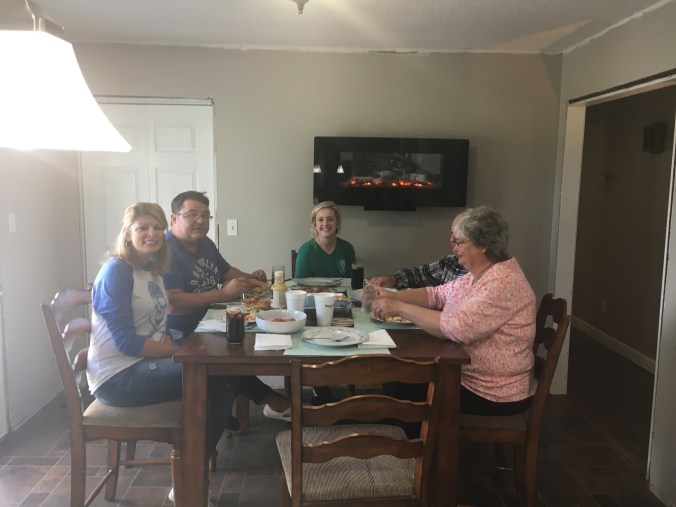
Our dinner took place on April 15th, 2018 in Bowling Green, Kentucky. In attendance was Jenny, Caroline, and Madeline, and Zora. Madeline made baked spaghetti with garlic bread, I brought my own food due to dietary restrictions, and Jenny and Caroline provided beverages and dinnerware. They are all college students at Western Kentucky University. Jenny and Caroline are both juniors and roommates. Jenny is studying nursing. While Caroline is studying advertising. Jenny was born in the United Kingdom and moved to the United States in elementary school. I think this is very interesting, because she has an outsiders opinion on several aspects of American culture, and could compare it to that of the United Kingdom. Caroline grew up in the Lexington area, a large city about two hours north of Bowling Green. Madeline is a sophomore, studying organizational leadership. She is from Scottsville, a small town south of Bowling Green. I am a freshman also at Western Kentucky University studying mathematical economics. I have lived in Bowling Green for the past five years, but I have moved several times across the United States due to my parents being social workers. I think having people from both different geographic and familial backgrounds gave our conversation more substance because we were able to bring our experiences from where we grew up to answer the various questions. We were able to use the different places we have all lived to compare the differences and similarities we see in Bowling Green.
Our dinner began with introductions, such as our names, our majors, and where we grew up. But as we got further into the conversation we began to focus on what being a citizen means; as well as, how we as citizens interact in our communities. One interesting point brought up throughout our dinner was how we all said having a greater sense of community would be ideal; however, several of our neighbors were not necessarily people we would want or trust in our houses, and we all have so many responsibilities it is hard to interact with those not in our immediate group of people we are surrounded with. For example, Caroline and Jenny’s’ families had both regularly held family meals around the table. They both remember these dinners very fondly. Caroline described the family dinners as a way for everyone to catch-up with each other. They talked about their days and anything important that was going on in their lives. Madeline and I both do not recall regularly having family meals. Although our experiences were very different, the main reason our families did not have family meals was due to all of us having different schedules. For my family, both of my parents worked at different places and had very irregular hours. I went to school, at some points in my life, an hour away. Our family meals were replaced by long car rides into the city each morning and afternoon, and on top of those rides, I had basketball practice every night. By the time we were all home it was too late to eat dinner. However, both Madeline and I agreed that it would have been nice to have family meals around the table because being able to have the time to catch up with one another could strengthen the familial bonds and create more of an awareness of what is happening in everyone’s lives. Jenny was the only one of us to have meals at neighbor’s houses. She said it was a way for everyone to know each other, and created a greater sense of community. Personally, I would feel uncomfortable having dinner at my neighbor’s house, but I think that this is only because I have never experienced it or had neighbors that I was close to. I think that this highlights the isolation in a lot of communities in the United States. We are very closed off and private. There are seldom neighborhood-wide events or regular interactions beyond waving as you drive by, and the once a year yard sale. Everyone is busy doing their own things, and we never have the time to talk to one another.
One reading that I feel related to a theme of our conversation was the chapters we read from Love Thy Neighbor: A Story of War by Peter Maas. I think this reading relates because it talks about a community that has been destroyed by conflict and civil war. This is a far cry from isolation seen in Bowling Green, but it vaguely relates to the feeling lost connections and being unaware of what is going on around you. I do not have any meaningful contact with my neighbors, and I have no idea what they have going on in their lives even though we only live twenty feet from each other. Along with the lack of interaction, I also realized even though I have never interacted with my neighbors I still have a lack of trust for some them. Which was astounding to me, because how can you judge someone you have never talked to. I think this lack of community creates a sense of unease and misunderstanding, similar to that of the Bosnian war.
The central question I think our theme of the dinner related most to was, “how do we live better, or less terrible, together?” From our conversations, we all had an idea of what we wanted our community to be, but we originally lacked the way to get there. I think every idea we had was hindered by the simple fact the many people would possibly not participate and the conflicting schedules previously mentioned. However, after giving this topic more thought I think that even if some people do not participate, it is a step towards our ideal society. For example, this dinner I would have never voluntarily gone to a dinner at a stranger’s house but I’m glad I did. Through this dinner, I was able to meet and interact with people I would not have otherwise, and I made new connections within my community. With this dinner, I learned more about how I view society and what I want from it. I also learned that isolation can be transformed simply by having a meal with someone new.
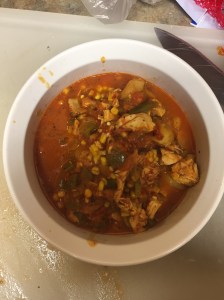
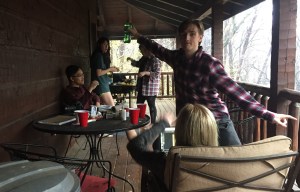
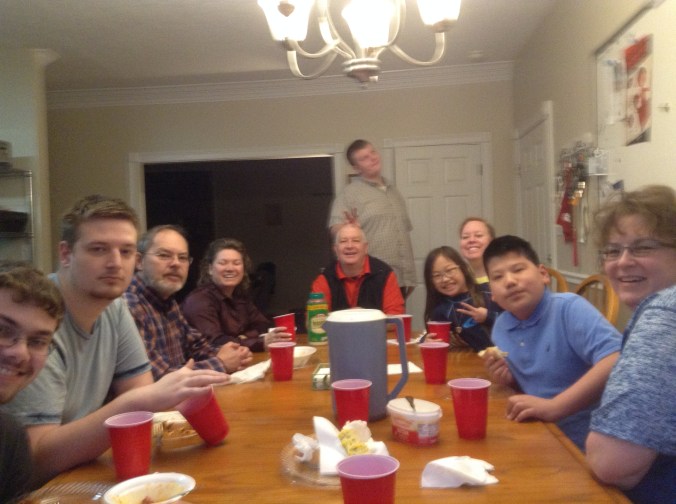
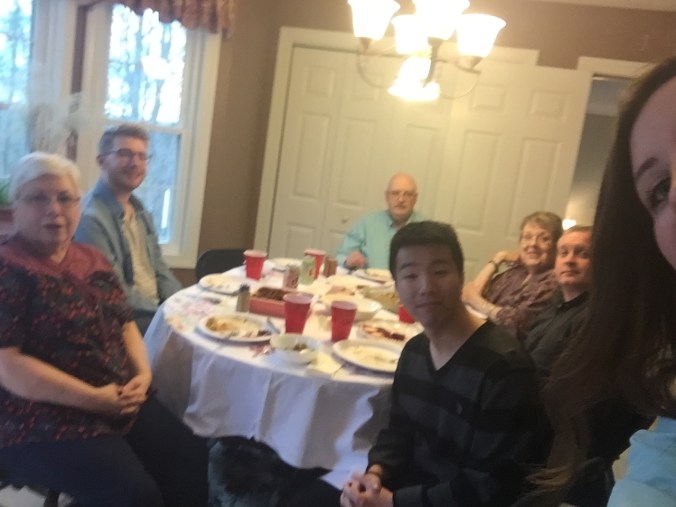 My name is Reuben and I had my Kentucky Kitchen Table in Alvaton, Kentucky. I am grateful for Emma, my wonderful classmate that invited me to be apart of her family’s Easter gathering. I am also grateful for her kind and welcoming family, without them, this script would have never came to be. It was a extraordinary day that gave birth to new mindsets within my brain, new relationships that I dearly treasure, and a chance to befriend a wondrous family whom were so kind, and very much so inspiring.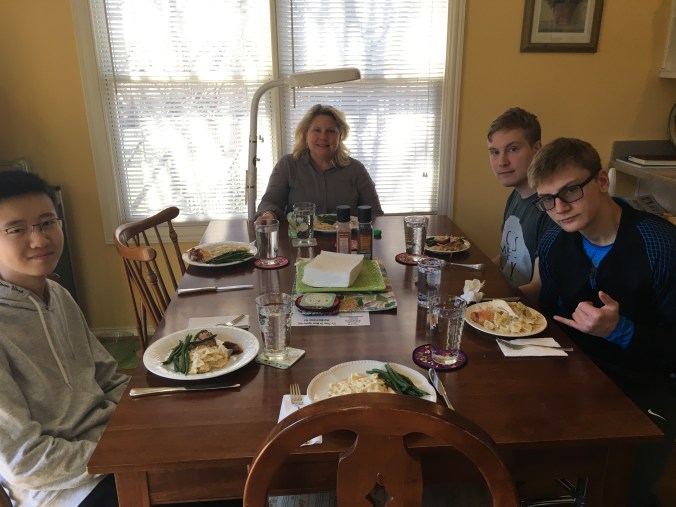

 I think it’s important to note that one of my favorite moments of the afternoon occurred outside of the meal we shared together. My grandparents are antique dealers, and one of the rooms in their home is dedicated to many of their priceless or collectible items including Native American artifacts, tobacco tins, clocks, china, and Civil War artifacts. One of the more special items in their collection is a Civil War rifle that was carried by one of my relatives in the Battle of Antietam. Before our meal, my grandma showed our special guest, Reuben, around the antique room and allowed Reuben to hold the rifle, which is one of the photos I included. After reflecting on the afternoon and looking at the picture of Reuben holding the rifle, I came to an interesting realization. My relative, Joseph Carter, carried that gun into a battle in 1862, and Reuben is a young man descended from Chinese immigrants living in 2018. There seems to be little connecting the two parties, yet the simple invitation of Reuben to my grandparents’ home allowed this wide gap to be bridged tremendously. In our class, we often discuss a bridge that connects how things currently are and how we would ideally want things to be. The bridge holds many diverse ideas and strategies, yet I think the overarching theme of the bridge is effort and respect. It took a small amount of effort to invite Reuben to a family dinner, and we all enjoyed and respected hearing his unfamiliar and diverse stories and ideas. Similarly, if even a small amount of effort and respect is applied to other aspects of life and deliberation, many other wide gaps can be bridged as well.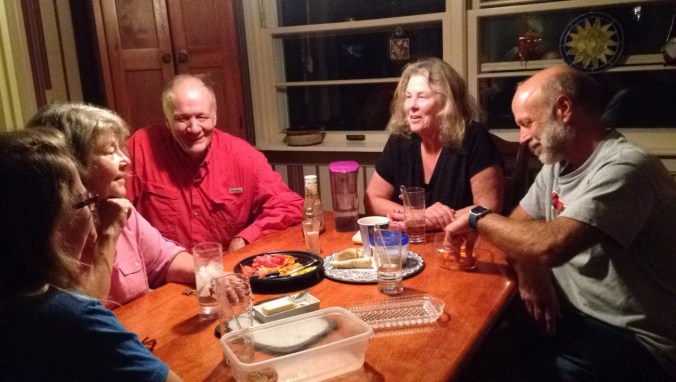
 By Emily
 Kentucky's Kitchen Table