By Taylor
We sat down to eat at my home in Mount Juliet, TN. We’re a family of four, a little unused to accommodating this many people around the kitchen table. With an eclectic mix of chairs, and very little elbow room, the seven of us gathered around the table. (My little brother made a brief appearance to eat before scurrying back upstairs to play video games). My dad made ribs, my mom made mashed potatoes, and I made creamed corn (well, I put the frozen corn in the microwave to heat up). I suggested the idea of a potluck, but my mom preferred for us to cook the meal.
I was a little apprehensive about hosting this dinner. Historically, I haven’t had good experiences with discussing things which people are likely to disagree about in my hometown. I tried to select guests who I felt were open-minded, but I wasn’t optimistic we would all walk away from the conversation with a deeper understanding and appreciation for each other- I thought it was more likely that someone’s feelings would be hurt. The guests at dinner included Frank, Cher, Jane, Hank, Jack, Kate, and myself.
Frank is my father, and he’s in his early forties. He grew up in Chicago and moved to Tennessee in the early 2000s. He was a little quieter during dinner than he would have been if it had just been our family, but when he spoke, it was obviously something he’d been thinking about for a while.
Cher is my mother. She’s a pastor’s kid and grew up bouncing from town to town as my grandfather was reassigned to different churches. It’s given her a unique perspective; Grandpa had a propensity for taking in those who need a place to stay, so my mom has lived with people from all different backgrounds. She isn’t very interested in politics, but she is passionate about helping others.
Jane is my mother’s old coworker, a friend from back when they were in real estate during the early 2000’s. My mom switched career paths, but Jane stayed in the business. Today, she works for a nation-wide real estate company, overseeing half the country. She’s proud of how far she’s come, but several times during lunch she expressed sadness at how often she has to travel for her job. At one point, she told us her situation is representative of the overall modern trend of putting work ahead of family.
Hank is… Jane’s husband. I define him that way only because he didn’t give me anything else to go on. He remained silent for almost the entire lunch, despite several enjoinders to share his opinion. Eventually I relented when I sensed my petitions were being met with increasing annoyance. Overall, I got the sense that he only came because Jane wanted him to.
Jack is the pastor at one of the local churches. He had a lot to say, and there were times I wondered if I should cut him off to give someone else the opportunity to speak. In all fairness, he did have a lot to contribute, and at the very least he kept the table from devolving into an awkward silence.
Kate is his wife. She was also born and raised in Illinois, where she married and had four daughters and later, half a dozen grandchildren. She was a little quieter during lunch- she didn’t volunteer her opinion- but when I asked her about her perspective, she provided me with thoughtful answers. She does a lot of work at the church on behalf of her husband, sort of the “behind the scenes” hero. She’s passionate about helping people, in whatever way she can.
One interesting theme that I observed during our discussion about citizenship is that everyone viewed it as a serious responsibility. They viewed it as not just a responsibility but also a privilege to be a part of a country that is greater than the self. Another generally agreed-upon aspect of citizenship that came up was the obligation to help others within the community. The guests agreed it was an obligation, but they seemed to contradict themselves in regards to enforcement. “Yes, everyone should help others, but they shouldn’t be forced to. Don’t take money out of my taxes for charity- let me give on my own, if I want to.” It reminded me of Jane Addams’s “The Snare of Preparation;” like Jane, they believed that people have an obligation to help others. However, they were adamant that charity should be voluntary- I imagine Jane might be more inclined to require people to give.
Overwhelmingly, the group voiced that the best thing about our world today is freedom. Religious freedom was a big part of this, which was unsurprising since we needed to schedule lunch to be after church that afternoon. However, the guests also freedom of opportunity. A few of the guests grew up at a time when a college education was relatively rare, rather than the default option for most students after high school. They expressed that the wealth of opportunities for people in this country was one of the best things about it.
A major social concern the group echoed was what they termed the “breakdown of the family.” A large portion of the conversation was spent on today’s youth: “They expect everything to be handed to them, they don’t want to work hard…” The group had concerns that young people place less value in familial relationships, and they touched on the idea that young people are less moral than older generations. This reminded me of the David Brooks article, “If it Feels Right” in which he asserts that young people lack the ability to articulate moral reasoning as well as a shared moral framework. However, they were a little more optimistic than Brooks; the group acknowledged that each generation does things differently, which isn’t inherently negative. They even went a step farther to say that if our generation lacks certain skills/values, it’s probably our parent’s fault for not instilling these in us.
This naturally led into a discussion of how several of the guests used to eat with their families around the kitchen table frequently. Most of them expressed nostalgia over those experiences, and a little regret that they didn’t continue the practice. Sitting around the kitchen table and talking with each other gave them a stronger sense of belonging, cohesion, and understanding; they felt much more involved in each other’s lives. Today, most people are too busy to take time to eat together at the table- or it’s not as big of a priority for them as other things. Coming away from the conversation, several of the guests expressed that they might like to be more intentional about eating with their own families around the kitchen table and talking about their lives.
When the conversation turned to what advice they would like to give to politicians or someone running for office, everyone expressed a desire for increased respectful conversation. Instead of demonizing alternate viewpoints, politicians should listen to different perspectives and learn from them. This surprised me a little because of how much it directly relates to what we are learning and practicing in class. We deliberate weekly about different issues and readings, and we are learning to listen and consider the views of others. In a way, this consensus along with the overall meal renewed my faith in the value and practicality of deliberation. Sure, deliberation can work in the classroom when everyone wants to talk so that they get a good participation grade. But if others have a sincere desire to practice these skills in order to solve problems, then maybe deliberation really does have practical applications in the real world; maybe we really can solve problems in this way.
Overall, I was pleasantly surprised by how well the meal went, and that it did not turn into an argument at any point. I think part of the reason this did not happen is that several people in the group did not know each other well, and they were too polite to disagree as they might have with someone whom they were close to. Still, it was nice to hear from different people about their viewpoints while maintaining a respectful atmosphere.
I think if I did another project like this in the future, I would be quicker to intervene and steer the conversation in the right direction when it started to wander. There was a period of ten minutes or so where the group discussed the merits and drawbacks of our current president and the discussion was derailed pretty severely. Still, I learned that it’s important to hear people out; the longer you listen, the more likely you are to find common ground. For example, while I was unsurprised to hear that abortion was one of the social issues the group was most concerned about, I was surprised to hear that some of them thought the best way to combat abortion is to expand medical treatment and contraceptives, as well as increasing programs and services for new mothers. We might disagree on minutiae, but when it comes down to it, as human beings, we have more in common than things that divide us.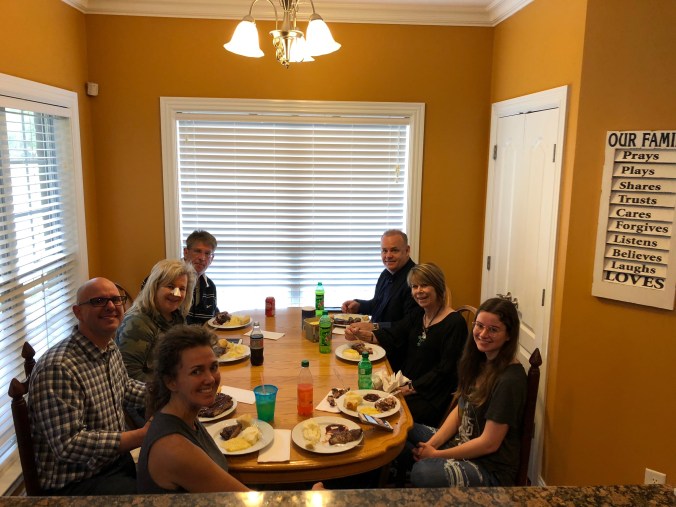


 e because that house has played a large part in my growing up, life lessons and me becoming a citizen. It just seemed appropriate to do the Kentucky Kitchen Table here because the conversation was mostly about citizenship and hearing people’s view points was another life lesson for me.

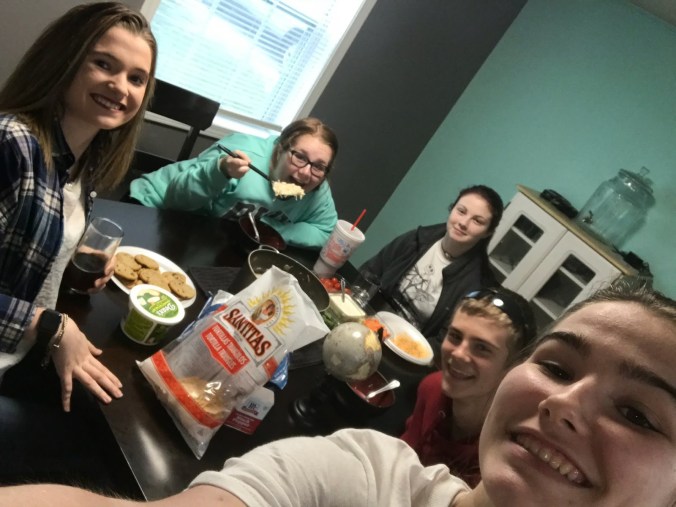


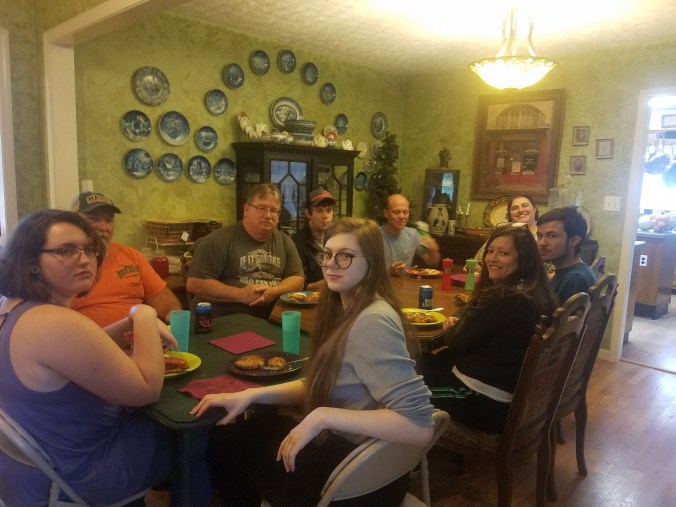
 family had a late Easter dinner on April 14, 2018 which is when I chose to engage in my Kentucky Kitchen Table Project. This took place in Calvary, Kentucky which is the birthplace of both of my great grandparents. At the dinner (my table) was myself, my grandfather, Rickie, great grandmother, Patty, and my other great grandmother, Betty. I chose to have this discussion with people who were older in order to view different generations’ perceptions on citizenship, government, e.g. Both of my great grandmothers are in their early eighties and have lived in Marion County their entire lives, Patty describes herself as wiser due to being the oldest of ten siblings. Both come from agricultural families of middle-class income. Ricky, my grandfather is in his fifties and is more engaged in politics than my grandmothers. I started off this discussion by asking the first question to them “Beyond voting, paying taxes, and following laws, what does citizenship mean to you?” To which the conversation began to center around how America allows people to earn their status based on achievement and hard work, in many cases. Patty stated “I wish I had the opportunities your generation had, I always felt like I was obligated to stay around here and do exactly what all my family did before me.” In some cases, social class can hinder one’s ability to fulfill their dreams, but when bringing this up they all agreed that although college is expensive that it is much more accessible for today’s youth. I found this as an interesting topic because in our class we always talk about how we could live better together and I feel that most people coming to college and fulfilling their dreams have some interest in learning more about others on diverse college campuses. Furthermore, another topic of discussion relating to this question was that citizenship to them means that you should contribute to society and work hard at whatever contribution you make. My grandfather is a very hard-working farmer, which he takes a lot of pride in, and said that having that contribution to society makes him feel like he is a part of something, and gives him purpose rather than focusing on the monetary incentive. This statement motivated me to move into another point of discussion on what types of people they wanted to be, and although my great grandmothers are old in age they had some very refreshing answers. My grandmother, Betty, said that she wants to be more carefree and outspoken; Grandma Betty has always been the quieter of the two, but she claimed that talking to people that she doesn’t know is still something that she forces herself to do on occasion. I found this inspiring because if all of us would go out of our way to talk to strangers and get to know other people in society I feel that could be a small start to understanding and living better together as American citizens. Furthering from her answer, the main theme of their desires was to be a person who was hard-working, religious, and honest. In my opinion, I feel that these are all qualities that I strive for and are very respected in their generation as well as this generation. Also, since they brought up religion I introduced the question of whether religious beliefs shaped how they believed we should treat others. Since they are honest people they did admit that being raised within a period where racism was more prevalent that they were not proud of how they had viewed African Americans at some points in their life, but all three of them said that because of their deep belief in God and his creations that they never treated anyone as different. They also expressed that they consciously tried to be compassionate to others and their situations due to their religious beliefs. Therefore, I believe that religious beliefs do motivate some people to disregard biases they may have been exposed to, to accept people as equal and treat people with respect.
 Kentucky's Kitchen Table