Evan’s Kentucky Kitchen Table

By: Evan

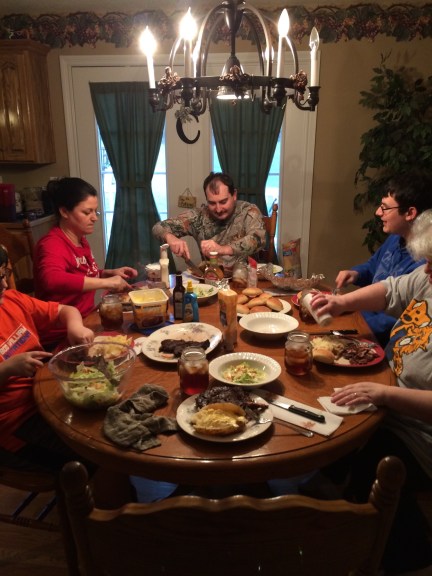
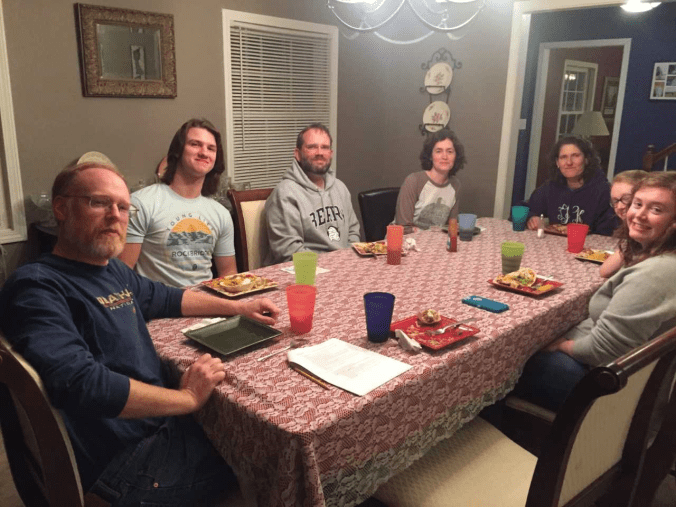
kkt 1kkt 3kkt 4kkt 6My Kentucky Kitchen Table experience took place on Sunday, November 11th, 2018 in my hometown of Russellville, Kentucky. I gathered some of my friends and family at my home to have a meal around our kitchen table. Most of my immediate family was present, including my mom, dad, and two sisters. My mom, Melanie, works at the local board of education and plays the piano at my church. My dad, Chris, renovates and rents out homes to people in the community and is the choir director at my church. My two sisters, Ellie and Madelyn, are both still in school. Madelyn is in high school, while Ellie is in college studying to become an elementary teacher. Outside of my family, the friends I invited included Joe and Kaye and Ethan. Joe and Kaye (who are married) have been my parents’ friends for a long time, but have only recently moved back to Kentucky from Georgia. Joe and Kaye both attend our church, and teach the college age Sunday School class. Joe is a local attorney who ran for district attorney the previous year, and Kaye is a teacher at one of the local elementary schools. Ethan is one of my friends that I have recently met at WKU. Including myself, there were eight people present, three of which I did not know extremely well. When everyone arrived, the supper my mom had prepared was not quite ready yet, so I introduced Ethan to everyone and we sat and talked for a while. Once the tacos, refried beans, rice, and all the taco toppings were ready to eat, we moved to the table. My dad then blessed the food and we began to eat.
We all ate for a while and talked amongst ourselves, not wanting to move into the real assignment at hand. After a few minutes, Ellie prompted me to go ahead and ask the first question to begin discussion. So, I asked the table what citizenship meant to them. Almost immediately, the response was to follow the “golden rule.” Everyone at the table agreed that citizenship was to do your part to make our society better, and the way to do that was to treat others how you yourself want to be treated. Joe particularly added that when he does his job, and he does it right, he fills his role in society, as well as employs other people, allowing them to contribute to society. After this, Kaye and my mom began talking about their experiences as teachers. They believed their jobs to be particularly important parts of citizenship. Their jobs were to take children and to teach them and mold them into good citizens, people who try to better society in whatever position they find themselves in. One of Kaye’s statements that I found to be fitting was, “I build little citizens.” Following this, the table shifted to what the meaning of “good citizenship” was. The discussion of this centered around behavior, patriotism, and responsibility. Once again the golden rule came up, as the table as a whole believed this was a central part of the behavior of a good citizen. The idea was that if people see people in need of help, they should go help, as they would want someone to do the same for them. My dad also brought up the idea of responsibility. He and Joe discussed the importance of people knowing how to care for themselves and their families, and hopefully not having to rely on government or other assistance.
At this point, opioid addiction was brought up in the discussion, as we were talking about reasons people find themselves unable to be responsible citizens. Ethan and I discussed how we had been talking about this in class, and we told some of the stories we had read about. We also commented on the existence of wicked problems and how they relate to the functioning of society. Joe then touched upon another wicked problem in society, mental health. A debate then began about institutionalization, and when people should be institutionalized. This led to talk of what society should do with people who are mentally ill and carry out criminal acts. We began talking about school shooters and when they should be considered “safe.” Since we were already talking about social issues, I asked another guided question, “what social issue is closest to your heart”? The table agreed on one social issue, which was the breakdown of families, and the misunderstanding of marriage. Multiple people at the table had experienced divorce of had a parent leave during childhood, while some people, such as myself, had never experienced this. We all came to a consensus that many social issues all begin with this social issue. Joe then referred to his experiences as an attorney. He had seen a lot of divorce cases, as well as child custody battles, and he explained that, particularly in poor areas, the children almost never make it to a better life when their families are torn apart. He had seen many children who had never lived with their parents, but lived with an uncle, grandparent, or family friend. These children rarely received a sense of stability, and their makeshift guardians often struggled financially with feeding extra mouths.
Since Joe and Kaye had moved back to Logan County only within the last few years, I wondered why they would want to move back, so I asked another guided question, “what is the thing you love most about living where you do”? Everyone, other than Ethan who is from Owensboro, had an answer ready very quickly. We all decided that we liked the small-town feel of our home. We could always count on seeing someone we knew when we went into town, and we saw there was an almost innate generosity in the people of our hometown. Joe and Kaye also loved all the local history that exists around Russellville and Logan County. For example, the Red River Meeting House, the site of the first camp meeting of the Second Great Awakening, is in Adairville (a small Logan County town). Since it was very nearly related to this question, I asked another one of the conversation starters, “what kind of community do you want to live in”? My sister’s response was that she wanted to live somewhere perfect. No one really knew what she meant by this, so I asked her to elaborate. This led to a table wide discussion of our ideal commune. We all focused much more on the people in the society than any physical aspects of a community. We wanted a community full of good citizens that would take care of themselves, as well as helping out others who were struggling. This discussion led right back around to the beginning of the KKT assignment, as we began talking about what it means to be a good citizen, and the “obligations” we should all feel. Joe stated that part of the problem in society today is that people do not seem to have their own moral obligations, and they look to the government to establish moral boundaries for them. This reminded me of one of the articles we read in class by David Brooks. Brooks talked about how the generation I am a part of does not have a real set of morals and does not know what a moral dilemma is, nor have they ever encountered one.
With the discussion coming full circle, I decided it was a good time to wrap it up. Ethan and I thanked everyone for participating, and we thanked my mom and sisters for cooking food. In reflection, the activity was not nearly as unbearable as I imagined it would be. I had envisioned everyone quietly eating while I asked questions and tried to force conversion out. However, the discussion tended to flow very well, and everyone at the table seemed genuinely interested in the topics. I also thought it would be very awkward to have someone there that I barely knew, but Ethan seemed to have a good time. In addition, I enjoyed the activity myself. I had not eaten around a table with my family since the holidays, so it was nice to eat with them and to actually talk about things that are happening in the world and things that matter.
Not only did I enjoy this activity, but I learned a lot from it. I discovered some of my family members views on current issues, as well as a peek into their political views as a whole. It was interesting to see where I personally agree with my family on things and where my views differ slightly. I also gained quite a bit of knowledge from Joe and Kaye on current issues, local history, government institutions, and family life. To add to this, the experience as a whole gave me a new insight into the importance of deliberation. If families were to sit down together every night, or at least once a week, and talk about things that actually matter, as well as talk about their individual views on the issues, I believe it would lead to a much stronger family bond, as well as many more well-informed citizens. Even if friends just got used to talking, and talking respectfully and knowledgeably, about current issues, it could cause a real shift in the political atmosphere. I feel like it would cause people on all parts of the political spectrum to be more understanding of others, as well as more competent in discussing their own views. As with everything, deliberation takes practice, and if people were to practice, I think it would create a much more well-informed, much more participatory, much less polarized citizen. All in all, I get it. I see that practicing deliberation and learning about current issues and wicked problems is important. I see that the things we have practiced in class can help me become a better citizen, and can help all citizens as a whole “take back their job.” As we discussed in class, through the “Professionalized Services” article, citizens do not currently have much of a role in society. Though this is not how it should be, it is how it is and deliberation is one of those steps we must take to get to how we know it should be
Will’s Kentucky Kitchen Table

By Will


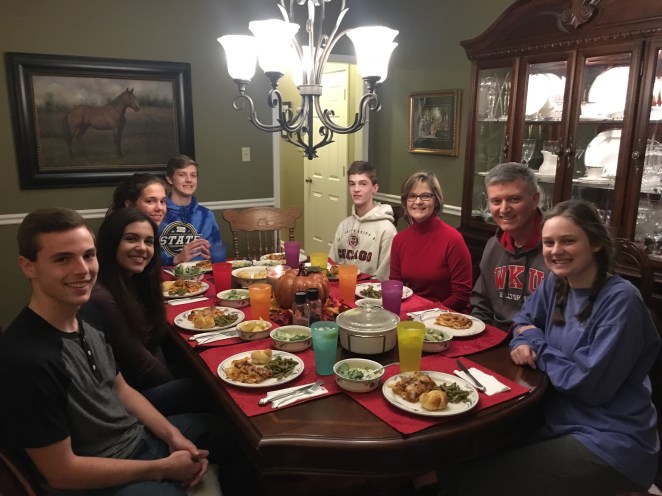
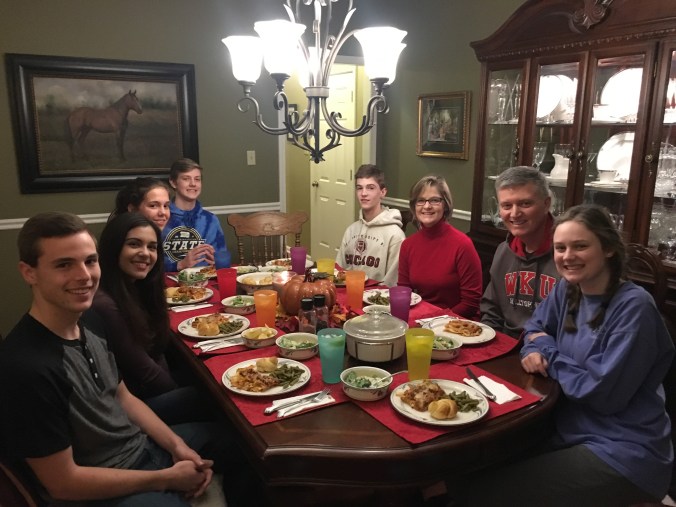
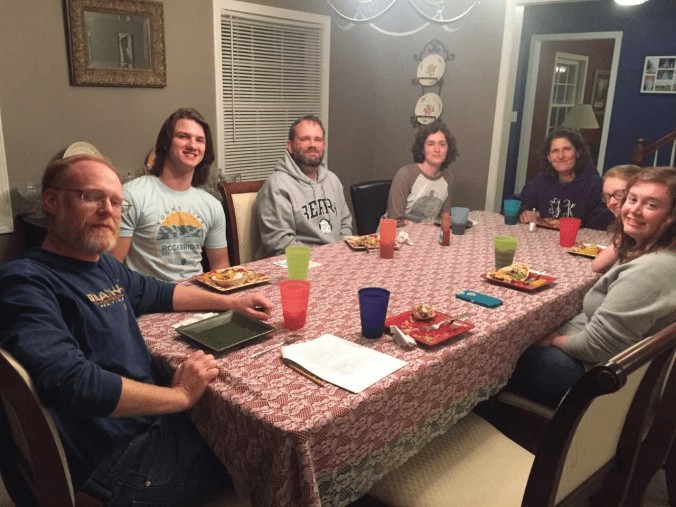
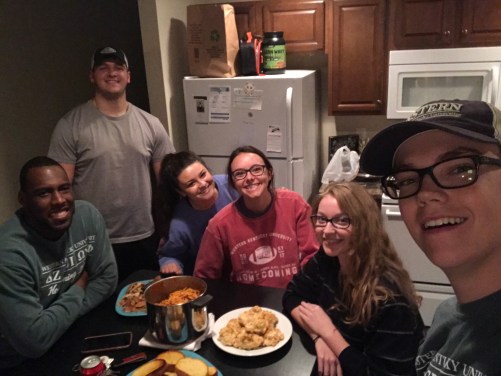
The Kentucky Kitchen Table project was held in Bowling Green, Kentucky at a Participants apartment on Thursday, November 8th. The guests consisted of Austin, T, Taylor, Sarah, Abigail and I (pictured left to right.)

Austin is a 22 year old senior from Louisville, Kentucky who attends Western Kentucky University. Sarah is a 19 year old sophomore from Clementsville, Kentucky. Clementsville is a very small agricultural based town in south-central Kentucky. She is studying speech pathology at Western Kentucky University. She was also hosted the dinner at her apartment. T is an 18 year old freshman also from Clementsville and is the brother of Sarah. He is a double major in architecture and business at Western Kentucky University. Taylor is a 19 year old sophomore attending Western Kentucky University. Abigale is an 18 year old freshman from Elizabethtown, Kentucky majoring in Marketing with a minor in psychology at Western Kentucky University. This group is very diverse in their upbringing and their life experiences and each brought a unique perspective to the table for this dinner.

Just to start out preparing for this dinner was a very stressful process. Preparing ingredients and working with people to fit the dinner into their schedule was a very hectic process, and after all that I faced the task of cooking (something I am far from good at.)  And after all that it ended much earlier than expected, but looking back now I wouldn’t have had it any other way because that has caused me to focus on answers given by participants and ponder my own answers to the questions that did get to get asked.

The dinner started like most Kentucky Kitchen Table dinners do, with the question “Beyond voting, paying taxes, and following laws, what does citizenship mean to you?” There was quite a pause in between the question and an answer which is expected for this very loaded question. Participants eventually took hold of the conversation stating being a good Samaritan and volunteer are very important aspects of being a citizen. These are common values most people hold so I wanted to hear more individual answers from participants so I asked how their upbringing and more importantly where they were raised effected their idea influenced their idea of citizenship. The conversation eventually led onto the idea that citizenship greatly depends on where you’re from. Participants Sarah and Austin couldn’t be from any more different hometown. Louisville and Clementsville are perfect antitheses of each other in almost every aspect. Louisville is the largest city in the commonwealth and Clementsville doesn’t even have a stoplight. Despite these massive differences the people from them drew some very similar parallels. This evolved further into is that your definition of citizenship is extremely reliant on where you live and on your socio-economic standing. Whether you’re in a very small county or a big city your experience of citizenship can change from street to street or neighborhood to neighborhood. Participants spoke on their personal experience of this phenomenon. Neighborhoods in very geographically similar areas divide themself into their own exclusive groups. One area gets the label as the wealthy “affluent” area and others as the poorer less desirable areas. This greatly affects your view of the community and in turn your sense of citizenship. Austin stated that he was looked down upon by the more affluent high schools because he went to a different school but still lived in the same neighborhood of the ones who looked down on him. This almost undoubtedly affected his sense of citizenship and his perceived place in the community.

The next question was “What do you love most about your community?” We made sure the definition of community was very broad including your hometown, Bowling Green and even WKU. Everyone quickly agreed that here in Bowling Green the best thing is that “you get the feel of a small town with the perks of a bigger city.” This answer was basically uniform from all participants despite where they they were raised. “Having a personal sense of community while retaining most perks of living in a larger city is one main reason I attended WKU” I said, and every participant said that is also a large reason of why they are attending Western also. People then went on to speaking about their hometown. Sarah talked about one thing she loved was at a local gas station you can still run a tab. The concept of a tab is largely unheard of for most people of college age since the practice is so rare in our times. “This sense of trust” ,she said “really made the town seem very welcoming and genuine; that there’s a sense of inter-reliance on each other .”

The next question was “What kind of person do you want to be?” Almost everyone wanted characteristics like charisma and reliability. Qualities of being a good friend echoed throughout these responses. After this I  again wanted more personal answers so I broadened the question to “what kind of legacy do you want to leave after you’re gone? What do you want to be remembered as?” Everyone said they wanted to be remembered for making an impact on the world and individuals through service or through some other means. As the conversation advanced Sarah said “The greatest compliment you can receive is a genuine thank you.” this was the single most important quote that has stuck with me from this dinner. She elaborated with saying “A simple thank you from holding the door for someone doesn’t involve this type of thanks but actually making an impact on someone’s life in a positive way and being thanked is the best thing anyone can tell you.”

The next question was “What advice would you give to people running for office?” In today’s day and age this can be a very loaded and potentially dangerous question especially with people with different views and opinions are discussing. Despite this the answers people gave seemed to be very similar. All responses led me to believe that people feel a disconnect between their representatives and their constituents. Participants all agreed that the officials need to have a deep understanding of the area they are representing and most importantly the people they are representing. I stated the most important thing for me was integrity. Even above policy I think integrity is the most important quality and elected official can have and the participants seemed to agree. The main theme I took away is that despite our differing views of policies that we all want very similar qualities in the people who represent us.

This dinner has made me reflect on ideas of citizenship we have discussed in-class throughout our semester. The response about the greatest compliment being “thank you” has really resonated with me for the past days while writing this post. Many of the greatest servants such as Nelson Mandela and Jane Addams must have received immeasurable amounts of praise and thanks from countless people and this undoubtedly had to have been a great motivator for them. This has made me see the responsibility we have to not only to serve and be thanked but to make sure we thank those who have impacted our lives positively. Giving thanks can be a great motivator for someone to want to help others in the way they helped you. The other main idea I’ve taken away from this dinner is everyone’s sense of citizenship and community is a an extremely personal idea and is completely unique  to all people. Numerous experiences impact our ideas of citizenship, and these experiences are not the same in any two people. Most of these experiences are out of our control or anyone’s control for that matter. The article “How We Speak Matters” was brought to mind. When discussing the question “What advice would you give to people running for office?” I was worried that this could lead down a slippery slope of an argument, but participants were very polite and despite their personal views. Most surprisingly about this is that every participant agreed on qualities that public servants should have. This is a very valuable thing to remember when discussing candidates for an election; that most people want a representative with the same qualities that you do despite your different views on policy. Remembering this could be vital to maintaining a productive tone for discussions.

This small dinner has been a very valuable experience for me and hopefully all participants that attended. It has helped redefine my personal definition of citizenship and appreciation for the community I am currently a part of. Hearing new comprehensive ideas on multiple topics has broadened my idea of citizenship and what I need to do to encourage and more importantly contribute to my community. Seeing discussions like these seem to be a very rare occurrence and fortunately I was able to partake in one in the form of this dinner. I hope that I can take what I learned in these discussions and apply it into my own personal life.Image-2

Cy’s Kentucky Kitchen Table

By Cy

IMG_6537

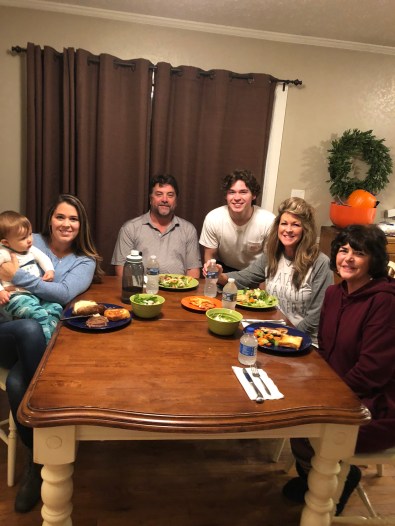
For my Kentucky Kitchen Table Project, I decided to make a trip back home to Muhlenberg County, Kentucky last weekend to have my dinner on the night of November 11th. In Muhlenberg County, the 2 “big” cities are known as Central City and Greenville. I was born and raised in Greenville, Kentucky, which happens to be where majority of my family is from. For the dinner, I decided to invite my mom, Candra, my sister, Catey, my grandmother, Jean, whom we call “Gigi”, and our neighbor, Grant. On the very left is Catey (holding Jhett), with Grant in the center, myself next to him, my mom, and then Gigi on the very right. My niece, Jameson, stood on a chair to take the photo.

Mom is a third-grade teacher in Muhlenberg County. She was born and raised in this county, and has decided to spend her life here. She attended Western Kentucky University, where she met my late dad, and they returned to Muhlenberg county after graduating. They later started their family. Mom is conservative and many of her beliefs come directly from the bible, which sometimes causes us to butt heads. However, she doesn’t quite lean entirely left, and she often has insightful opinions on very controversial issues. Mom is very simple in that it does not take much for her to be happy and content. She carries a uniqueness that I think has always distinguished her from other adults that I’ve encountered throughout my life. She is very wise, having been through loss multiple times and dealing with many things that some people never experience. She’s very loving, genuinely herself, kind, supportive, and passionate about her faith and being a friend to others.

Catey is my 24-year old sister, who is a teacher aide in one of the local schools in Greenville, Kentucky. Much like my mom, she decided to pursue education and spend her life working in the school system. Catey attended Madisonville Community College and never left Muhlenberg County. Shortly after finishing her education, she got married to her high school sweetheart and started her family relatively early. She is a mother to 2 kids, named Jameson and Jhett. Jhett is present in the picture but Jameson was our lovely photographer. Catey is very liberal, differing from my mom in many aspects, especially regarding their stances on tattoos, which Catey loves. Catey is extremely passionate about people. She has a huge heart and has been through much in her short 24 years. I deeply admire her willingness to forgive and love others, and I have always thought of her as one of my very best friends.

Gigi is mother to my mom. Surprise, surprise, she was also born and raised in Muhlenberg County. Gigi married young to my late grandfather whom everyone called “Pig.” He passed when mom went to college, well before I was even thought of. Gigi owns a store on Main Street in Greenville, known as Merle Norman Cosmetics. She’s been a business owner for longer than I’ve been alive. She works 7 days a week, constantly working hard to make her business flourish, and it shows. Gigi is around 70, but you could never tell by the way that she works and handles herself. Gigi comes from a very different generation, one in which hard work is valued above most things, marriage was typical at a young age, and much of today’s technology would never have been imagined in her youth. She is very set in her ways, yet I’ve always loved her willingness to be open-minded. She’s very passionate about her family, her business, her faith, and being a good person. Gigi and I are very similar and I genuinely believe that we have the same “old soul”, so I’ve always valued her company and the conversations that we have when it’s just the two of us.

Grant is one of our neighbors whom we’ve always known, but never known very well, so I decided that he would be the perfect addition to our dinner table. From what I’ve gathered, Grant is very much a family man, and he values most of the same things that our family does. Like the rest of us, he was born and raised in Muhlenberg County, but in the more rural parts. He owns a trucking business that he inherited from his late father, and he runs it with his mother, sister, and brother. He’s a very hard worker, often putting in long hours to keep his business running optimally. Grant also owns a lot of property in other parts of Muhlenberg County, so he spends a lot of time tending to his land and cattle. He is a proud conservative, and he is passionate about working hard and being a good person.


To kick off the discussion, I asked the big question: beyond voting, paying taxes, and following laws, what does citizenship mean to you? At first, I didn’t really receive the kind of input I expected. Everyone at the table was a little confused, so I had to rephrase. Gradually, I received some answers. Grant bravely answered first, saying that citizenship was about not taking our freedom for granted, and being involved in the happenings of your community. Mom described what citizenship means to her as the way she explains citizenship to her third graders, that citizenship is following the rules so that our society can function most efficiently. She also agreed with Grant in that citizenship means being actively involved in the community. Catey said that citizenship to her means that we should help our fellow neighbor and our community, and that we should be involved and be a decent person. Gigi also agreed with Catey, but simply said that citizenship means helping our fellow man.


In order to keep the conversation flowing, I decided to ask them what kind of advice they would give to people running for office. The answers I received for this question were much more passionate and I was impressed at what each person had to say. Catey was the first to speak up, speaking very quickly and with conviction. She said that leaders should go to church and listen to the “little people”, meaning that politicians should have some sort of faith and make efforts to genuinely listen to those that they representing. Mom agreed and added that future leaders should be aware of the different cultures and groups of people that they are representing, making an effort to understand that while we are all Americans, we have different values that should be recognized and addressed. Grant answered differently. He brought up a valid point, saying that politicians should do what they say they’re going to do and avoid making empty promises. He also said that they should do things that benefit everyone, not just themselves or specific groups of people. Gigi more or less reiterated what everyone else said, yet she did so with enthusiasm.


After I felt that we had exhausted conversation about advice that we would give to people running for office, I asked everyone if they thought that they had an obligation to people in our community/country. There was a consensus in that everyone at the dinner table thought that yes, they do have an obligation to others. Mom and Catey agreed as per part of their jobs. They’re legally obligated to keep an eye on the kids in their classroom and ascertain the well-being of each child. Gigi and Grant agreed regarding taking care of their fellow neighbor when they are in need. Grant also mentioned that we are obligated to be functioning members of society and in doing so everyone benefits. I thought that this question was somewhat related to the question “Do you see your job as serving a greater purpose?” so I asked when the timing was right. This question was received very well because each person at the dinner table had a direct relation to serving others in their careers. Mom and Catey strive to educate and provide care for the children that they serve every day, thus shaping them into better people year after year. Gigi and Grant, both being business owners, provide jobs for their employees and provide beneficial services to their customers, thus serving other people in various ways. In these ways, each member of the dinner table felt that their job was much bigger than themselves.


Wrapping up our dinner, I asked what kind of person everyone wanted to be. Their answers were very similar, each one being someone who is kind, loving, wise and respected, humble, and encouraging. Through our dinner conversations, I learned that Mom, Gigi, Catey and Grant all value mostly the same things, yet they are each very unique individuals. I learned that they care deeply for those around them, and each of them has some sort of ingrained duty to serve those who are in need. I learned that they’re all passionate about their careers for the common reason of serving and building others up. Through the question about advice to those running for office, I learned that they respected the needs of everyone, not just themselves.


In class, the question that has really stuck with me throughout the semester is “How do we live better together?” I felt that this question really came to mind over and over throughout my conversations at the dinner table. Upon explaining to them the nature of what this assignment and what it was for, I mentioned the 3 central questions that our course has been founded upon. From their various opinions and answers to the questions that were asked, it seemed to me that everyone at the dinner table believed that we live better together by being active in our communities, tending to our fellow neighbor, and working as hard as possible in our careers, especially those that are tied directly to serving others. Their answers reminded me of the “Professionalized Service” reading, in which we learned about how the abundance of professionalized services can dampen our sense of self-efficacy and the power that we hold as individuals. Their input showed me that through caring for our neighbors and our community, we effectively provide the love and personal care that professionals cannot accomplish, and we promote a stronger sense of self-efficacy. As a result, we can help one another live better together.

Trey’s Kentucky Kitchen Table

By Trey

For my Kentucky Kitchen Table, I had the meal at my home in Bowling Green, Kentucky. I was excited to host this meal because I enjoy learning about new things, hearing new perspectives, and seeing what others believe in. The meal took place after church on November 11, 2018. Including myself, there were six people at the meal. I was joined by my mom, Amanda, my dad, Robert, my brother, Chase, and Ricky and Debbie, a couple a couple that we met at our church. I invited Ricky and Debbie because, other than sitting next to them at church, I know very little about them. I thought that they could bring a different perspective since they are older and from a different part of town. I figured that they would bring wise ideas to the conversation. They are also very funny and great at telling stories. For dinner, my dad grilled steaks, and my mom made baked potatoes, rolls, and a salad. We had sweet tea and lemonade to drink. Debbie also brought a banana pudding and a blackberry cobbler for dessert.  

Before I describe some of the conversations that took place over dinner, I will describe the others that I ate with. To begin, my mom, Amanda, is a perfect example of the stereotypes surrounding moms. She is an amazing cook. She cleans up the physical and mental messes of everyone. She is ruthless when it comes to protecting me and my brother. She works very hard at everything she does. Her favorite hobbies are reading and watching Hallmark movies. Next, I will describe my dad, Robert. Where my mom tends to be more intense and involved, he is usually more light-hearted around us. He is not a person that expresses his opinions on controversial topics very often. Although, he is very passionate about driving his race car. My brother, Chase, is like almost any other fifteen year old. He spends about 90% of his time on Youtube and Fortnite. He is very fiery and intense, especially when people disagree with him. Ricky and Debbie are people that I did not know very much about. However, they are very intriguing. They are both in their early sixties and retired. They will be married 45 years next July. They wanted me to point out that they grew up in a very different time. They are from Bowling Green, as is everyone else at the table. Ricky’s favorite activities are hunting and fishing. Debbie’s favorite activities are talking on the phone and working on word searches. Their favorite thing to do together is spend time with their grandkids. Everyone at this table is capable of bringing something unique to the discussions.   

I began the conversation by asking, “Beyond voting, paying taxes, and following laws, what does citizenship mean to you?”. I’m not really sure how I expected everyone to answer, but I was mildly surprised at the wide range of answers from the table. Ricky gave the most simple answer by saying that citizenship is just living in America. Debbie took it a small step further by saying that all citizens should support and be proud of America. Amanda said that good citizens should have active roles in their communities. Instead of doing the minimum to get through the day, they should take it to the next level. When I asked what she thought the next level was, she said that it was standing up for your beliefs in a public way. Robert and Chase both felt that they were not sure how to answer the question. I’m not sure what belief that I agree with. In a way, I can see the simplistic stance that Ricky and Debbie have, but I also feel that it is important to be active in the community.

Moving on, the next topic that came up in our discussion was about the change of neighborhoods over time. For me and Chase, we have never known very much about our neighbors. I always thought that this was because most of the houses in our neighborhood are separated by large fields and wooded areas. However, when listening to Ricky and Debbie talk about each of their neighbors, most of which live farther away than our neighbors do to us, i realized that this was deeper than distance. Ricky and Debbie could write biographies about the people that live near them. It almost made me feel bad for not knowing more about my neighbors. Although, as Robert pointed out, interaction is a two-way street. He said that if people are not willing to open up to you, there was nothing you could do to build a relationship with them. Debbie said that she thought that if younger people would be as friendly to each other as they have been to their neighbors for nearly forty years in the same area, divisiveness may decrease in our country. To me, this discussion fit in with one of the three essential questions in our class. ‘How can we live better together?’ is very important when it comes to living in neighborhoods and communities. I think that it knowing your neighbors is something that is often overlooked, but can be very beneficial when it comes to building goodwill and morale between people.

Debbie’s statement led us to our next major conversation point. This point was about divisiveness in America. Everyone at the table agreed that political parties play a major role. Amanda also placed emphasis on how the ways people talk. Chase agreed that for people to progress together, they can not resort to name calling every time that they have a disagreement. I brought up the point that some of this could have to deal with politics and the media. If all of the public role models that we see on television or online are screaming at each other and calling each other names, regular people are more inclined to take that approach when they have disagreements. Amanda said that she felt that people have to take their own prerogative to treat each other with kindness. I thought that these statements were relatable to many of the things that we discuss in class. When we have discussions, they are always more productive when everyone is heard, and no one is tearing down others. This is a sharp contrast to what we all see in many debates today, especially recently with all of the election hoopla.  

When we were talking about neighborhoods and knowing our neighbors, I couldn’t help but think back to the three chapters that we read from Love Thy Neighbor by Peter Maass. Would things be different in the Bosnian Civil War if the Serb population and the Muslim population could find commonalities instead of differences? After reading the disturbing account from Maass, a journalist who covered the war firsthand, the concept of community always stood out to me. How could neighbors kill each other ruthlessly in their own homes and streets? A possible explanation for these events could have something to do with a disconnect between different groups of neighbors. While it is mostly unlikely that an event of these proportions could occur in America today, it is very concerning to read accounts like the ones present in Love Thy Neighbor. It gives me an initiative to be more active in building lasting relationships with my neighbors. It is truly devastating to see people die over racial and ethnic differences that may have been able to be worked out with dialogue between people.

Another reading that came to mind for me during the dinner conversation was the “How We Talk Matters” reading from week three of our class. A major emphasis of this article was on deliberation and how it can prove beneficial. The overarching argument of the author is that when people get together to have positive and constructive conversations, problems become easier to solve. I found it interesting that everyone at the table was able to recognize the ultimate importance of communication when it comes to solving problems. I know this importance due to multiple discussions and deliberations in our class, but only one other person that was at the table with me had a college degree. Nearly every point that someone made at our dinner could relate back to communication. This is similar to how many points that are brought up in our class discussions fall back to the same topic.

To sum up, I felt that my Kentucky Kitchen Table meal was very productive. I was not quite sure what to expect when this all came together. I did not know what my own family members would bring to the conversation, and the addition of two people that I do not know very well added to my intrigue. However, it was a pleasant surprise that everyone contributed so well to our shared dialogue. The biggest thing that I am going to take away from this project was that people have different upbringings, lifestyles, and beliefs, but their are some things that people shared. While six people is a small sample size, I feel that the shared emphasis on communication is a trend that may apply to the rest of the world. Beginning this conversation gave me a lot of the same feelings that I had when I walked into Honors 251 for the first class. I was not quite sure what to make of the situation, but there were plenty of positives to take away once it got going. Overall, I thoroughly enjoyed my Kentucky Kitchen Table, and it is something that I would like to do again with another group of people.

IMG_2128

Elizabeth’s Kentucky Kitchen Table

By Elizabeth

My Kentucky Kitchen Table was hosted in Bowling Green on November 7th with attendees Kate, Tatum, Bailey, Olivia, Maggie, Elizabeth (myself) and Lauren. Kate is a sophomore, who is a religious studies major and political science minor. She is from Erlanger, a small city in northern Kentucky. Tatum is also a sophomore who is a biochemistry major, and she is from Todd County, from a very small rural town in southern Kentucky. Maggie is a high school student who is also from Erlanger in Northern Kentucky. Lauren is a sophomore from urban Lexington. Bailey, Olivia, and I hosted this dinner together. This group of women is diverse in their age, backgrounds, and hometowns, each bringing a unique perspective to the topic of citizenship because of these differences.

The first question we discussed was “Beyond voting, paying taxes, and following laws, what does citizenship mean to you?”. Tatum voiced that activism is a large part of citizenship, specifically taking action in causes that are important to you rather than being stagnant or passive and merely reaping the benefits from society. She also discussed being a good person in general, embracing what it means to possess human decency. She also mentioned that while she personally values her faith, that even outside of religion, being a good citizen means treating each other with love and kindness despite our differences. Kate also mentioned the implications religion has on her view of citizenship, bringing up the point that she considers herself to have dual citizenship, being a citizen of Heaven but also on Earth of America. She discussed how her allegiance is first to God and furthering His will and then to her country and supporting its ideals. Maggie had an interesting take on this question because she is a minor and can’t yet vote. However, she still believes she can be an active citizen in other ways, such as being active in her school and community and using her voice to fight for those who can’t. Overall, their consensus on what citizenship means differed between them but held the common ideal of action. Whether that was through a letter-writing campaign at a high school or using religion to love fellow citizens and fight for their protection, each member seemed to value activism as an important aspect of citizenship.

We next posed the question “What social issue is closest to your heart and why?”. Kate had many issues she is passionate about, especially since she is studying political science. A few she mentioned were abortion, political polarization, and being an informed citizen who votes in local elections. Racial reconciliation sparked an interest with all members of the dinner, and we spent a substantial amount of time discussion this issue, which is discussed later. Maggie discussed how her experience of going on a mission trip to Guatemala gave her a passion for international poverty, and she wants to work towards aiding other countries in addressing the issues poverty causes. Lauren discussed her heart for homelessness, specifically the large issue this is in urban areas as she has witnessed growing up in Lexington. Each member had a different issue they were passionate about due to their upbringing or an experience that caused them to see the severity of a problem and be inspired to take action.

Another question members discussed is “Have you ever had a conversation with someone from a really different background than yourself?”. Tatum discussed that there are a lot of Amish where she is from and how she has had many interactions with them. She noted how interesting it is that they outwardly express their religion and interpret the commandment to be “in the world but not of it” as abstaining from modern technologies. Kate discussed her conversation with a CSF staff member named Conny who is the daughter of illegal immigrants who are trying to gain citizenship and how radically different Conny’s upbringing and perspective are due to this battle her family has been facing her whole life. Kate is also a member of a local church called Christ Fellowship, which has members from multiple other countries, and the church sings worship songs in Swahili. Lauren shared a similar experience through her church, Journey, which is an international church where she has many interactions with diverse people from other countries. Specifically, she interacts with many people from the Congo and their services have Bible verses in multiple languages on the screen so that members who can’t read English can follow along. These experiences gave each person a unique look into other people’s lives who may differ on aspects such as language, ethnicity, upbringing, etc.

We also discussed the question “Does your religious or spiritual identity relate to how you think we should treat other people? Does it relate to how you see yourself as a citizen?” which I mentioned earlier. The group in general said religion compels you to treat every citizen with love and kindness, as Christianity’s belief is that Jesus died for every person and followers should then love everyone as He did. We discussed how the church is often misrepresented and portrayed as vengeful or condemning; however, this is the opposite of Christianity’s true message which is to love and forgive everyone because we are all sinners.  Since Jesus also fought for the oppressed and those who were being treated unfairly, as Tatum mentioned, activism is also an important aspect of religion for Christians.

Along with these specific questions, our kitchen table discussion also highlighted a theme. One popular topic was the social issue of racial reconciliation. Kate brought up the need for racial reconciliation specifically in the church, as she pointed out that “white” and “black” churches still exist. Olivia added to this point that true reconciliation would be all nations worshiping together. Another aspect to this theme was the discussion of interracial marriage. Kate discussed the prejudices still held in society that create a taboo around this, even discussing how she would feel nervous bringing a black person home. One of their friends named Bailey, who wasn’t a technical part of this dinner but did add points to our conversation, discussed the difficulties she faced when dating a black man. She spoke about the blatant public hatred when her and her boyfriend would go out in public, mainly in the form of judgmental looks and occasional comments, mostly given by white women. This is just one example of the broader issue of discrimination that overflows into many aspects of politics even today when this is technically “illegal.”

Through this project, I learned the importance of face-to-face communication and the inspiration that comes from collaborating with others. Personally, a large part of my life is consumed by either a busy schedule or technology. This dinner was an opportunity to put both of those things aside and have a real discussion with active community members. I also learned through the diverse perspectives about each topic how different individuals perceive citizenship. Yet even among the differing viewpoints, each member was respectful of others’ opinions and could peaceably disagree. Overall, the dinner taught me that no matter your political stance, personal background, or individual interests, you can still be an active citizen by engaging in your passions and treating others with human decency. Though each member of the dinner valued different things, we could all agree on certain aspects of citizenship and the activism that should be associated with it.

The concepts discussed during the dinner reinforced the ideas present in our class discussion that intelligent people can reasonably disagree. The conversation around the table mirrored in many ways the discussions we have in class. Similar to how each person in class comes into every discussion with a unique background and perspective, each member of the dinner approached the conversation with a specific viewpoint due to their life experiences. This also means, both in class and at our dinner, that people will inevitable disagree due to their differing perspectives. But disagreement is not inherently bad as we have discovered in class and deliberating on these differing opinions is actually healthy and necessary for social change. Our dinner discussions also relate to the reading “How We Talk Matters.” The article discusses the importance of and need for conversation, even casual conversation with our neighbors. It also reinforces my previous point regarding disagreement, stating “Disagreement lives at the heart of good decision-making and democracy because both processes depend on diversity”. The article explains why discussions like the one at our kitchen table, with everyday citizens coming together despite their differences and talking about issues happening today, are so important to democracy and public action. Our kitchen table discussion also highlighted the wicked problem of racial reconciliation. This problem could be considered wicked first because it is dynamic, policies and public perception regarding race have changed over time, is complicated, many people must change their minds to disregard the deeply rooted racism that affects many aspects of politics and everyday life, and is value-laden, with people who are both open and accepting as well as blatantly racist and discriminatory. Our kitchen table reinforced concepts discussed in class such as the importance of peaceable disagreement and the discussion of wicked problems.

Overall, my Kentucky Kitchen Table was an enriching learning experience that provided a unique opportunity to hear from community members about issues important to them. We discussed many topics including the meaning of citizenship, social issues members were passionate about, interacting with people different from you, the impact religion has on citizenship, and racial reconciliation. These ideas reinforced themes present in class as well as the reading “How We Talk Matters” by emphasizing the importance of civil communication and disagreement to progress democracy.

Hope’s Kentucky Kitchen Table


IMG_3702.JPG

By: Hope

On Saturday, November 10th I got together with Madeleine’s family at their home in Bowling Green, Kentucky to experience intellectual conversation and diversity amongst a group of people I’d mostly never met before over dinner. They cooked an amazing meal of lasagna with green beans, garlic knots, and the best desert I have ever had, no exaggeration, a Mud Pie.  Having a home cooked meal after being away from my home so long was extremely satisfying and heart warming.

Madeleine and Scott from our class were in attendance.  I know both of them pretty well, but we had not had any deep discussions about the topics from Honors 251 outside of class until this project. Madeleine is from Bowling Green so she had inside perspective on the community as a teenager.  We have a lot in common, actually. We both enjoy listening to Musical Theatre and like Disney. She is high energy and so much fun to be around. Madeleine is also good at keeping the conversation going, which came in handy sometimes at the dinner in between topics. Scott is from Vine Grove, Kentucky, and is new to the area, like me.  It was interesting to see perspective from a community I’ve never even visited. Scott is quieter than Madeleine, but very insightful.

As far as the new people I met go, Ron and Jennifer, Madeleine’s parents, hosted the dinner at their home.  They were very kind, supportive people, and I would even argue that they are a power couple. They both work for Western Kentucky University and seem to be very upstanding citizens.  Jennifer works for the library at WKU and is originally from Nebraska. Ron works to fundraise for the school and is originally from Logan County, Kentucky. They seem to be very happy living in Bowling Green and talked highly of the community in general.  

The other three people at the table were Luke, Abby, and Jason.  They all attend Greenwood High School here in Bowling Green as sophomores.  Luke is Madeleine’s brother and the son of Ron and Jennifer. Abby and Jason are the friends he brought to join us.  They were quieter than the rest of us and seemed to have the same ideas and agree with each other more. Luke and Jason were much more low energy compared to Abby who was hyper and eager to discuss.  They all seem to be very involved in their school. Luke swims, Abby performs in the theatre department, and Jason is involved academically, even talking about considering applying for Gatton Academy.  From my perspective, their school seems like their own condensed community, which I pointed out in the conversation.

After getting to know each other a little bit, we introduced the purpose of the dinner and talked a bit about what Honors 251 is.  We told them our three central questions and some of the interesting readings we have done for class. Madeleine and I also invited them to our upcoming deliberation for “Trust in the Media” and told them about some of our options.  They agreed that there has been a significant decline in the trust in media over recent years because of reasons we touched on in our deliberation such as The President naming the media the public enemy or fake news becoming trendy and hard to recognize.  We asked Luke, Abby, and Jason about their experiences with the news on social media and whether they checked the facts through other sources or just read and continued on with their days. The common answer was that they asked their parents what was true and what wasn’t, which is interesting because a lot of students said the same thing in our deliberation, as well.  

When asked “Beyond voting, paying taxes, and following laws, what does citizenship mean to you?”, the table had very synonymous answers.  Overall, people thought that citizenship was about being kind to others in the community, helping them out when needed. To the younger people at the table, that meant maybe volunteering when needed or participating in community events.  To the adults, Madeleine’s mom and dad who are working members of the community, it meant maybe helping through the jobs they already do on a daily basis. Something I thought was particularly interesting is that Jennifer helped run her friend’s political campaign in her spare time.  Her friend’s name is Jeanie Smith and she was running for Senate. Jennifer helped by going to different neighborhoods and rallies and talking to people to spread Jeanie’s message. Although her friend did lose, she mentioned she thought she still did great things for the community sharing her enlightening and positive message and doing her best to make a strong impact on the state for the better.  In my opinion, Jennifer’s sacrifice of her time and energy for the betterment of the community and to help her friend make a difference is an excellent example of citizenship. For me, citizenship encompasses a wide variety of aspects in which community members are overall invested in what is going on in their area and wants to contribute to it in any way they can. I think things like voting, paying taxes, and following the law are just the minimum requirements for even truly being a citizen and it is clear that Jennifer goes above and beyond, exceeding the expectations of citizenship in this instance.  

Because Jennifer and Ron talked so highly of Bowling Green, we wanted to ask them what they love most about living here.  Ron began to say that he would absolutely recommend living in a college town for several reasons. First off, the spirit that Bowling Green has because of Western Kentucky University is enlightening.  The community has a mutual support and love for the school and even I can see that after being here for only a few months. I believe Western encourages people to be good citizens, as well, because they see college kids needing assistance whether it be in study or extra food, and they provide opportunities for those in need.  They rally behind the school and attend their events faithfully and donate to the causes they deem important, which Ron sees on a daily basis as he works in fundraising. Economically, the city is also pretty well-developed, too, with lots of restaurants and shops for citizens and students to partake in. Bowling Green in particular, though is not a big city.  It is not necessarily too small or too big, which is very appealing to Ron and Jennifer. That’s also one aspect of Bowling Green I really appreciate. A college town offers a variety of jobs opportunities for all ages and really rounds out citizens and encourages contribution and involvement in the society in a positive way.

This topic made us consider maybe where we, the students at the table, might want to live someday.  Obviously, it’s impossible to truly say where we might end up because anything could happen, but pondering what we wanted in a community was interesting.  For Luke, Abby, and Jason, they all agreed that they would like to like in a city of some sort like Chicago or New York City. They wanted the busyness and excitement of the streets, and not only that, but they wanted the diversity in culture, too.  They wanted to be around people different from the spectrum they see in Bowling Green and they wanted the enormous amount of opportunity for exploration a big city like that offers. For me, I feel like I would survive and enjoy the city or the suburb life, so it’s hard to say until my career path is final; however, I do enjoy the excitement, yet simplicity that a town in the medium offers.  All I know is that I want to have pride for where I live. I want to be proud to call my town my home because of its upstanding, kind, developed community.

Before we ended dinner, I wanted to mention one of my favorite readings from class to gather their opinions or insight on it and see if they’d ever heard of it before.  The reading was about the elephant and the rider and how typically people make decisions with their emotions and then justify their actions with logic. I wanted to know if they thought this rule applied to them and everyone agreed that they see themselves make decisions with their emotions more often than not, even if they don’t realize it at first.  Even so, we all try to make the right decisions the best we can.

Overall, it seemed when addressing the central ideas such as “How can we live better together?”,  the general consensus was that caring about your community and trying to contribute to it is important.  Beyond voting and other civil duties, being kind and helping people when you can is what makes you stand out as an exemplary citizen.  I really enjoyed the project and had a great time at dinner. I loved learning more about Bowling Green, the high school here, and different jobs at the University and the role they play.  It made me appreciate the town and the school more and I am so glad to be where I am.


Scott’s Kentucky Kitchen Table

By Scott

The meal for my Kentucky Kitchen Table project took place on the evening of Saturday, November 10th, 2018. I wanted to be able to host the dinner in my own home, but I live over an hour away and here on campus I just live in a dorm. Thankfully, my classmate Madeleine was nice enough to let me join her and another classmate at her home here in Bowling Green. Although I wish I had gotten to do the Kentucky Kitchen Table project in my own hometown with my own family, I still had a great time at the table surrounded by mostly strangers. I haven’t had a home cooked meal in weeks so the dinner was a much-needed break from all the processed fast food here on campus.

The meal took place around Madeleine’s dining table which seated two of my classmates Madeleine and Hope, as well as Madeleine’s parents Ron and Jennifer, her brother Luke and his friends Abby and Jason. The meal was prepared entirely by Ron and Jennifer and included homemade lasagna, garlic knots, fresh green beans, and a side salad. Not to mention that for dessert we had “Mud Pie”, which I had never even heard of before but was pleasantly surprised by. Despite the lack of physical diversity (as everyone gathered around the table was white and the age gap wasn’t terribly significant), we all brought something unique to the mix. For the most part, we all grew up living different lives and thus brought a wide variety of thoughts and opinions into the dinner.

Madeleine is one of my fellow classmates in Honors 251. Up until a few weeks prior to the meal, I had never spoken to her directly. Currently, she isn’t sure what direction to take in college with her major. She has a very high energy and contagious personality. When things would get stale at the table, Madeleine would always throw in humor and bring up the next topic to keep things running smoothly. She has grown up in this area so she knows the community well. It was interesting to hear about the community I will be calling home for the next couple years spoken about by someone my own age. Hope is also from my Honors 251 class. She is a Musical Theatre major from McCracken County. Like myself, Hope is also new to the area so it was nice to not be the only outsider at this dinner. She is incredibly good at formulating her complex thoughts into words that everyone at the table could understand and draw relation to. Ron, Madeleine’s dad, is a 53-year-old white male from Logan County, KY. He works with Western Kentucky University as a fundraiser for the Health Departments. He was a very well spoken man who put a lot of articulate thought and decision into every word he spoke. His comments were typically very thorough and resulted in others diving deeper into the conversation. Jennifer, Madeleine’s mom, is a 51-year-old white woman from Nebraska. She was very sweet and compassionate with all of her opinions and input. It was a rather interesting dynamic to watch a couple who had been together for years offer their different outlooks on matters. Often times, their given responses were similar. However on occasion, blatant differences in their thoughts sparked conversation between the two and in turn, the rest of the table. Luke and his friends Jason and Abby were quite similar for the most part. All three of them are Sophomores at Greenwood high school here in Bowling Green and are very knowledgeable of the real world for their age. Their younger age brought a different view on citizenship than the rest of us could bring to the table simply due to their differences in exposure to the surrounding environment.

IMG_3702

Before we started eating our meal, we explained what we had been learning a bout in the class and how it all relates to aspects of life we could experience daily. Madeleine, Hope, and I all shared information about our own group social issue project and asked each member at the table for their thoughts and inputs on the matter to improve our understanding of the topics even further. The overall consensus on Hope and Madeleine’s issue of “Trust in the Media” was that with the current relationship between the United States Government and the national media, it is safe to say that trust in the media has definitely been spiraling downwards. My issue of “Criminal Justice Reform” was rather complex and no final conclusions could really be drawn off the topic.
Once the eating commenced, we began by asking everyone at the table the question of “Beyond voting, paying taxes, and following laws, what does citizenship mean to you?” Everyone at the table generally agreed that being a “citizen” just meant to be active in the running of the world around you. To Luke, Jason and Abby, this meant being active in their school which is reflected by their participation in programs such as swim, theatre and academics. For the adults and college students at the table, citizenship involved taking part in the outside world through their established roles in society. Madeline, Hope and I are act as citizens through our participation in group meetings and education towards a greater purpose. Ron and Jennifer go about this action through a much more direct route. Jennifer told us of how she aided in the campaign of a local Senator by traveling around the area and spreading a good word.

What really stood out to me in the responses to this question was that a good portion of the answer depended on the community one was involved in. For Madeleine and Hope, social interaction and active participation as a citizen seemed to be much easier than it would be for myself or someone growing up where Madeleine’s parents did. The house that dinner was held in was in a neighborhood so getting involved with neighbors and pushing each other to be engaged in civil duties seems more feasible. However since I live on a farm, I have more cows within a 5 mile radius than neighbors. This means that going out and being active in local government and community is as an effort that many would not make. Such a geographical difference also skewed the answers to the many of the questions relating to neighbors as I do not have many. One would think that being a citizen would involve the same efforts and choices no matter the circumstances but our conversation really proved otherwise.

We also talked about how much power an individual can truly have in making social change. One of the strongest tools an individual can have in making change is simply education. So much of our lives are based solely on our own knowledge of our surroundings, leaving a considerably large emptiness created by a lack of knowledge about the rest of the world around us. This ignorance oftentimes leads to the complete dismissal of social issues to a large part of the population. Here, Ron used his white suburban family as an example. He claimed that due to their ignorance of the life of an inner-city kid’s life in somewhere like Chicago, his family could never fully comprehend the social injustices and life struggles that the child would undergo. For me, this really emphasized the importance of education on these social issues. We mentioned how due to the naturally busy lifestyles of most of us, especially college students, we oftentimes struggle to be truly aware of the issues outside of our educational bubble. The widespread lack of student voting in the recent state election was brought up as an example here. We all discussed how scarce the information about voting and registration was for college students to find. Not many people we knew were ever taught how to file for an absentee ballot so most students (myself included) went without voting. This general ignorance and lack of awareness seems to be what holds back a majority of society from being contributing citizens.

Overall, the dinner brought a wide variety of viewpoints and opinions to the table that I hadn’t looked at before. I think it displayed that being a citizen is much more than being someone who can check boxes during an election. A citizen is someone who makes connections with the world around them and make steps to better said world. But also that being a good citizen is not as easy as it seems. Being a good citizen is very dependent upon geography and education. The emphasis on education really reminded me of the “Oak Grove” reading in which the college students rallied to save an “oak grove” which was actually a man-made garden. Without the proper education on citizenship and the world around us, people can’t be expected to behave as proper citizens. Thus answering the central theme question of “How can people live better together?” The answer is to simply educate themselves so a fundamental basis of knowledge is established through everyone and we can all start to work together as citizens to better the world.

Olivia’s Kentucky Kitchen Table

By Olivia

On the night of November 5th, 2018, more than six ladies and I cozied up in a campus apartment in Bowling Green, Kentucky, over a homemade dinner. Over chicken casserole, apple pie, garlic bread, and more, we discussed the broad topic of citizenship and social issues, and all of the things in this world that impassion us the most. To begin, let’s meet all of our attendees.

Kate is a sophomore at Western Kentucky University and is a Religious Studies major. This dinner was hosted at her apartment, along with her roommates Tatum and Lauren, and little sister, Maggie. Kate is from Erlanger, Kentucky, which is approximately 15-20 minutes outside of Cincinnati. This gives Kate experience with not only smaller town culture, but also the culture of urban areas. With being a Religious Studies major, Kate is very active in her faith. She leads a community group at WKU’s Christian Student Fellowship and has a deep curiosity for different cultures and religions of the world. She has a fiery passion for the human race and is excited by getting to know others deeply.

Tatum is her roommate and also her co-community group leader and sophomore at WKU. Tatum is originally from Todd County, Kentucky, “…an extremely rural area near Hopkinsville,” she described it. She is very quirky for a biochemistry major and was actually recently accepted to Samford University’s Pharmacy School. Despite her small town background, Tatum has come in contact with a variety of different cultures since coming to WKU and also in her hometown, most notably the Amish community in her area. She is very lighthearted and loves loving on other people. Her mission in life is to just bring joy and laughter to the world.

Lauren is the roommate of Tatum and Kate, and is a sophomore at WKU. She did not disclose what she is studying here at WKU, but she hails from Lexington, KY, giving her an extremely diverse perspective. As a result of growing up in a quite urban city, Lauren has had many interactions with people of different races, cultures, religious backgrounds, etc., especially those who are impoverished. She is also very active within Christian Student Fellowship at WKU and at her church, where she ministers to local refugees. She describes herself as full of curiosity and her favorite thing to do is traveling and seeing new things.

Maggie is the little sister of Kate, and attended the dinner because she had a college visit at WKU that day, and decided to stay with her sister. Maggie is a high school student from Erlanger, KY, giving us again an urban and small town perspective. Her age difference brings a different outlook to the conversations as well. She has a huge heart for serving others, stemming from her experiences of witnessing international poverty in Guatemala.

We began the night by asking the question, “Beyond voting, paying taxes, and following laws, what does citizenship mean to you?” We received a variety of different answers, but a common theme of taking action for the causes you are passionate about. Kate and Tatum both were adamant about being an informed citizen, especially with voting. To give some background, the midterm elections were the next day, so the topic and the opinions were very fresh. With being an informed citizen and participating in elections, it means you are taking action in one of its most impactful forms. You are voting towards someone with the chance to change the way things are, and that chance would not have been possible without ordinary people working to make a change. Maggie, who is only 17 years old, had a strong opinion on this topic, stating how she encourages those who can vote to hit the polls to help ensure a good future for the ones who can’t vote. She made it clear it is much better to vote and take action, instead of being stagnant. Not only can you vote, but you can have the ability to change the world and join movements you deem worth fighting for. This means raising awareness, doing marches, and everything that can cause a shift in culture and society.

Everyone at the table came to the conclusion that despite one’s beliefs, everyone should treat everyone with kindness and love. The world is so deprived of the love and simple everyday kindness that could easily make a huge impact on the way our society functions. The root of so many problems in our world is people believing they don’t need to treat others with kindness is a norm. All of the attendees stated their spiritual background has totally changed the way and is the reason why they interact with people with reckless love and kindness. They expressed their religion as a bond to bring humanity together, not a tool of division. Regardless of faith, every human should make the effort to treat everyone around them with kindness and respect.

The topic of courteous love and kindness also brought up political polarization, and how people need to respect others despite of differing beliefs. Politics should not be something that tears friendships or relationships apart; it should be embraced and celebrated as something that makes us different, which is something vital to all of humanity. Differences in beliefs bring multiple approaches to solving a problem, and is a principle that often gets lost amidst the heat of politics. As a society, we should still remain civil despite our political differences, because we are all human and deserved to be treated with love and respect. The bottom line is that you need to be a decent, kind human being in order to contribute to the greater good and solve the problems that keep eating away at our society.  

These group of ladies are very passionate about a variety of different social issues, ranging from international poverty to racism within America. Maggie expressed her compassion for international poverty, after participating in a mission trip to Guatemala and how it widened her global perspective and her heart for service. With her urban background, the issue of homelessness has a special place in Lauren’s heart, and she explained her heartbreaking experiences with homeless and impoverished people. Kate raised the issue of racial reconciliation, which easily became the hot topic of the night; so hot the neighbors who casually entered the apartment quickly became involved in the discussion as well. The topic was first brought up as a social issue Kate is extremely passionate about and became a quite fiery conversation. Racism and broken relations between not only African-Americans and whites, but all racial minorities, is something deeply embedded into our country, that will only heal with more time. It is a difficult fact to confront that as a white person at least, the first thing we see is skin color when seeing a new person. People are so easily labeled and described as “that black guy” or “that asian girl” in situations where race or ethnicity is not an influential factor. Races and ethnicities should definitely maintain their cultural traditions and communities while residing in America, but that can be an excuse to divide the American society if we don’t choose to see each other as equals or fellow Americans at the same time.

The conversation of racism soon bled into interracial relationships and everyone sharing their experiences and scenarios of being involved in an interracial relationship. The idea made us discuss what our families would think if we were involved in an interracial relationship and how unfortunate it is that some family members of older generations, still firmly disagree with the idea of interracial relationships. Bailey, a neighbor who had joined the conversation, shared her experience of dating someone of a different race, and how it was perceived by her and her partner’s family. She enlightened the group on how getting involved in an interracial relationship was an immediate obstacle for her and her partner, and how differently their families accepted their partner.

I contributed to the conversations a healthy amount, but I tried my best to soak up all the knowledge I could on different worldly and spiritual perspectives, and how to casually discuss social issues. With hearing how different people look at the world, it has broadened and perhaps adjusted the way I view certain issues in the world and human nature as a whole. I learned how religion can play a role in how you treat others and that regardless of religion, everyone should strive to be a loving human being and respectful of each other. Political and social issues have never been my strong suit; they have always been topics I have avoided due to my negative connotation to them. This dinner helped me learn how to casually discuss social issues without the fear of being ridiculed and taught me that discussing social issues doesn’t always have to be in a hostile manner.  They can be discussed in a positive light and in a way that we should work together to change the issue, instead of arguing on whose solution is right or wrong.

The conversations of this dinner reminded me of a few different topics we have learned in class and different readings we have read. As far as taking political action and refusing to be stagnant, I was easily reminded of the essay written by the woman who experienced chronic paralyzation. Although she was reduced to utter powerlessness, she still used every ounce of strength she could muster to continue on. She emphasized the importance of putting everything you can into a cause, or nothing at all. Going hand in hand with putting all your efforts into a cause, the discussions reminded me of the continuing idea in class of small acts making a difference. In numerous of the readings and discussions we’ve had in class, we have managed to come back to the idea of impactful small acts that could easily change social issue efforts and the way society works. For example, Rosa Parks had so many years of advocating and getting involved in the Civil Right Movement and the NAACP, building up her courage piece by piece, eventually becoming why she is so admired today. She also had countless ordinary people working with her and although those peoples’ names may not be known, they created one of the biggest movements in history. The environmental discussion relates to this idea as well, in articles and essays discussing the impact little efforts can make on saving our environment; this can be acts as little as reducing your showers by a minute, switching to reusable water bottles, and so forth. Treating others with love and kindness is a simple everyday act, that can go a long way in someone’s life, therefore inclining them to spread the kindness to someone else. It is the idea that a million small acts can make the world of difference and as far as kindness goes, if everyone would be kind and respectful to one another, we could change the whole energy of our society.

To conclude, I will treasure this Kentucky Kitchen Table in my college and life experience. I learned that social issues don’t have to be controversial or tear relationships apart. In fact, they should be discussed civilly, with the common purpose among everyone to solve the problem. Regardless of faith, race, gender, ethnicity, or overall background, society should be held to a standard of being kind to one another, and doing everything in your power to create a world filled to the brim with love.

Emily’s Kentucky Kitchen Table

Image.png

By: Emily Lancaster

Cast List:

  • Kelsey: Psychology Major at Western Kentucky University
    • Originally from Bowling Green, Kentucky.
  • Shayla: Biology and Dance Double Major at Western Kentucky University
    • Originally from Lafollette, Tennessee.
  • Eliza: Psychological Sciences Major at Western Kentucky University
    • Originally from Duncombe, Iowa
  • Emily: English Literature and Spanish Double Major at Western Kentucky University
    • Originally from Evansville, Indiana.
  • Brian: Kelsey’s father who is an accountant at Western Kentucky University
  • Laura: Kelsey’s mother: a school psychologist in Bowling Green, KY.

Setting:

  • Kelsey’s parents’ house in Bowling Green, KY.

Date of Event:

  • November 5, 2018 at 6 p.m.

Delicious Food:

  • Chicken and Dumplings, Mashed Potatoes, Green Beans, Dinner Rolls, Apple Pie, and Tea Cookies.

ACT I:

Kelsey and her parents were kind enough to open their home to us three students—Eliza, Shayla, and myself—for a home cooked meal that involved both wonderful food and a friendly conversation about citizenship and the society that we are currently living in. It is quite difficult to jump into such a large and complex topic such as citizenship with new people so we spent the first few minutes just chatting about current events on campus and each person’s occupation or major. This was really helpful especially for breaking the ice with Kelsey’s parents because talking about simple things such as our roommates, favorite hobbies, and our classes really allowed everyone to warm up and understand that this was a fun and safe space with a diverse and interesting group of people.

Beyond voting, paying taxes, and following laws, what does citizenship mean to you? This question began our discussion about citizenship and society. Laura was the first person to speak up about how things such as religion, politics, status, and other beliefs have effected how humans as a whole treat each other as she believes that citizenship means being kind and loving both to those close to you, but also others. This proved to be the post popular opinion around the table and it spurred others on to speak as well. I loved what Laura was talking about so I jumped in following her comment as I have seen first hand how religion and politics can divide friendships and families. Collectively we all discussed how each human being has different opinions on practically every topic and while something so trivial such as a favorite color would most likely never break up a family, the fight between Democrats and Republicans or Catholicism and being agnostic wins out over the love that people have for each other. Eliza accompanied these comments with a story about how the community that she lived in was so small that these topics would still affect families and friendships, but ultimately she saw that more often that not, people wanted to simply be there for each other during times of need and during those times these prejudices and controversial opinions were put aside. We all shared the thought that that is the kind of care and love that news agencies and social medias portrayed as it shows that there is still a sliver of humanity left in a world swirling with hatred and separation.

Empathy. While we were discussing kindness and how people talk and interact with each other, the topic of empathy came up. We started discussing how kindness was almost directly proportional to empathy and how we can not only treat others well, but do our best to put ourselves in the shoe’s of another person. It was here that I reference one of my favorite readings from the semester: The Empathy Exams and Devil’s Bait by Leslie Jamison. Each excerpt of this reading was really interesting for me as each part discussed different ways that she experienced empathy. The Empathy Exams was how she viewed empathy on one end of the spectrum as a person who wanted empathy and was struggling to receive it both in as a medical trauma actor and in her real live with her boyfriend. Discussing this reading at the dinner table was well received as it added to an already important conversation about kindness and its relationship with being a citizen, but also opened up a safe space for experiences to be shared. Eliza told us a really inspiring story about how her family was willing and ready to open their home to one of Eliza’s best friends when her house had no heat due to unpaid bills. Eliza detailed how this was a turning point both for her and her family, but also some of her community. People began aware of her friend’s situation and after learning more about her and her story, so many families were willing to provide anything from a peanut butter and jelly sandwich to a bed to sleep in for a few nights; Eliza said seeing how everyone came together helped her see some light in a often dark world. This one story led to Laura, Shayla, and myself all sharing stories about how we have seen empathy within our own lives in a hard situation or within the lives of others. As a table we discussed how much the love and help of others really impacted how we felt about the world and how seeing life through someone else’s eyes can be really inspiring.

INTERMISSION

At some point during this discussion, Eliza began talking about how her and her roommate Amy had run out of pretzels to eat with their large bowl of hummus. As we had been on the topic of citizenship and kindness, Laura got up from the table, went to the pantry, grabbed an unopened back of pretzels, and gave it to Eliza as a gift. She said she simply wanted to help Eliza and save her some money as a student and, though this was a simple action, it displayed kindness.

ACT II
Following a few funny, interesting stories and each of us grabbing a dessert of choice, we got back to a deeper level of conversation. We ended up continuing our discussion about empathy as the question “how do we think our jobs/majors relate to our role as a citizen?” was proposed. Kelsey and Eliza, who are both on similar tracks here at WKU had different answers from each other as well as Laura’s whose job as a school psychologist, still corresponded with both Kelsey and Eliza’s majors. Laura, in as much detail as she could, discussed how her job as a school psychologist as helped many children and families, but also helped open her eyes as well. She talked to us about how she sees children from all ways of life and with all kinds of struggles and hardships and what her and her coworkers have to do in order to help them the best way that they can. They work closely with teachers and parents to help the child get the best education under the circumstances possible. Laura was very clearly in love with her job and wanted to see other people succeed even if it meant a few challenges here and there. Kelsey and Eliza both elaborated on what they want to do with their majors and how they want to use their education to help those suffering as well in the future. They each believe that mental health needs to be addressed more than it is and wants to use their experiences and talents to help. Shayla is a dance and biology major and wants to pursue her passions and have a job that she loves, but also having a backup plan that allows her to help people as well. As for me, I have always known I wanted to inspire people while also having a job that I adore so I have decided to become an English literature teacher. I chose this as my English teachers have done so much for me and inspired me both with their teaching and passion, but also with their kindness and compassion. As all of us at this dinner were really passionate about our chosen careers paths and choices, this conversation went super well and it was both entertaining, heartfelt, and fun. Following this conversation, Shayla brought up how this conversation matched with the previous one were very aligned with the three central questions of the class. She related each of these conversations to how we are helping ourselves live the life that we want and making decisions that are great for us while also using our knowledge and abilities to help others live well and to the best of their abilities. It was also noted that by each person being different in their own ways, it helps us as a society live and love better together and work on multiple problems. This was justified by discussing how we all would be similar and nothing would be unique if we all had the same passions and gifts as these are what make us special and make the world hold some beauty even during the darkest of times.

Kentucky Kitchen Table 2018

Natalie Duggins

My Kentucky Kitchen Table dinner was held in Bowling Green, Kentucky, on November 5, 2018. We had a spaghetti dinner with mac and cheese and green beans. The participants of this dinner included me, Kelsie, Lily, Caitie, Carlie, Bonzo, and KBram. Caitie is a freshman from Louisville who is majoring in social studies with a teacher concentration in secondary education, identifies as Catholic, and does not identify politically, but has conservative parents. Carlie is a sophomore from Georgetown, Kentucky who is majoring in photojournalism and identifies as a Baptist and Democrat. Bonzo is a senior from Lebanon, Kentucky majoring in broadcast journalism and identifies as Catholic and Republican. KBram is a senior from Nashville who is majoring in hospitality management and identifies as Methodist and Republican. Kelsie, Caitie, Carlie, Bonzo, and KBram are all members of Alpha Omicron Pi and I am a member of Chi Omega.

The topics that we discussed throughout the dinner were: citizenship and the advancements of society, family dinners, the correlation of religious identification and the treatment of others and our obligations to society, homelessness, what kind of people we want to be when we grow up, careers, advice for people running for office and politics, racism within different generations, and the Catholic church.

Citizenship & Advancement in Society

The discussion opened to what citizenship means to us, besides the basics, such as voting, paying taxes, and following laws. Overall, we agreed that it means to contribute economically and socially as citizens continue to build the community, such as volunteering and contributing to the common good of everyone. We further discussed the best advancements in society today, one of which is communication via mass portals, such as the internet. It is amazing how we are able to reach someone across the world, which is something we have not been able to do in the past. Although the media may create problems, it also solves many problems, especially miscommunication, and allows a greater increase in knowledge of ourselves and other cultures.

Family Dinners

A familiar pastime for American families is a gathered family dinner. However, every family is different. Growing up, my mother cooked dinner for my family every night, until high school, those family dinners faded as extracurricular activities increased. Caitie explained how her family ate dinner together every Sunday night at her own house, or her grandparent’s house, with her sister, parents, grandparents, and aunt and uncle and their kids. KBram explained her weekly tradition of getting sushi with her friends and family every Sunday or eating dinner with her neighbors on a random week night. Carlie said that besides Thanksgiving and Christmas, she only had family dinners during the season of the television show, “The Voice,” because her mother and neighbor were best friends and adored the series. They would all dress in their pajamas, cook breakfast for dinner, and watch the voice together. Bonzo’s mother always cooked because they had such a large family, and they never ate out unless she had a volleyball game. Overall, the tradition of family dinners varies with each family. Sadly, they seem to be less and less prevalent with each generation.

Correlation of Religious Identification and the Treatment of Others and Obligations to Society

Overall, there was a consensus that religious affiliation corresponds to how we treat people in society. Carlie explains that without Catholicism, she would not be as conscience about her actions towards others, and she wants to lead her life as someone who acts on those conscience actions. Bonzo was raised on Christianity, and she believes the basis of Christianity is kindness; Therefore, if you do not treat others with kindness, you are not living your life to your best Christian self.

Furthermore, we agreed that as a society, we have an obligation to everybody, or the common good itself, and we should continue to help those around us. Carlie believes that today, everything connects, and it allows for society to be wholly dependent on each other and their actions. She thinks there is no way she could be entirely self-sufficient on her own. She states that no matter what, we contribute to other people through our obligations, actions, and even through our careers. Bonzo believes that on the basis of helping people, it is a moral or ethical obligation. Although you are not required to help others, if you did not contribute, you would ultimately feel guilty. Morals indefinitely reflect your personality and if you were raised on selfish grounds, your morals would lack.

Homelessness

In our discussion, we spoke of homelessness, and how it connected to the overriding idea in Honors 251 of a wicked problem within today’s society. It is a growing problem, especially in places such as Louisville (where Caitie and I are from) and Cincinnati (where Lily’s family is from). However, as citizens, we can transform homelessness and how we approach the impoverished. KBram explained that every day in the summer on the way to her internship, she would pass the same homeless man. She admitted to being scared of him, until she found out that he was a relative of her coworker. After she found this out, she began giving him small things, such as food, to help him out. Caitie presented the idea­–one she learned in high school religion class–of keeping small snacks in her car to hand out to the homeless she would pass on Breckenridge Lane in Louisville. Kelsie presented another idea in which she would give gift cards to the homeless. Overall, it is sad that there is the lingering distrust among citizens and the impoverished. We fear giving them money because as a society, we think they will just use it on drugs or alcohol. KBram mentioned how she gave money to the impoverished who were passing out newspaper, but she does not know what they spent the money on. Carlie furthers the discussion by admitting that as citizens continue to give the impoverished money, we are enabling them to purchase drugs or alcohol. There are numerous homeless shelters available with the viable resources to survive, yet some homeless people choose to not seek out those opportunities.

Who We Want to be When We Grow Up

Further into the dinner, we talked about our futures and who we want to be when we grow up. The majority of responses were a mom, wife, and eventually, a grandma. However, I said I wanted to be self-sufficient so if I am ever in a bind, I can rely on myself. This brought up the topic of divorce and the idea that in this day and age, women want to be solely independent. However, many women are trapped in marriages due to monetary troubles. Carlie mentioned that as she grew up, her mother told her to never rely on anyone else for money but yourself, because you will find yourself in a bind relying on others. Kelsie simply wants to be happy, live in the moment, and always see the positive things in life; 10 years from now, she does not want to look back and regret the decisions she made. This connects to the story in The Impossible Will Take a Little While called, “Mountain Music.” The son gets angry at his father for continually being pessimistic about the world around him and claims, “You’re so worried about the fate of the Earth, you can’t enjoy anything.” The connects to Kelsie’s goal of living in the moment, especially with an optimistic attitude. Ultimately, we never want to look back and realize we lived an unhappy life.

Careers

When considering who we wanted to be when we grow up, we dove into the conversation about our future careers. I want to be a nurse practitioner, Lily wants to be a nurse, Kelsie wants to be a news anchor, Carlie wants to work with photojournalism, but also as a graphic designer for advertising, Bonzo wants to work in broadcast journalism, and KBram wants to work in hospitality management. The conversation really sparked when KBram stated that she is going to live a more comfortable life compared to luxurious in the hospitality management field, especially for the first couple years. Kelsie stated she is going into broadcast journalism, so it will take about five years for her career to take off, and Carlie mentioned how she is going to have to do freelance work for photojournalism. The discussion really took off when Caitie discussed her plans to be a teacher and spoke about teacher salaries. Overall, we agreed that teachers are underpaid for what they do, and the profession as a whole makes barely 90 million a year. Caitie made a good point that teachers are the creators of the future; Without teachers, you would not have doctors or the professions making a great deal of money.

Advice for People Running for Office and Politics

Honors 251 is a course heavily built on politics, so it is no surprise that politics were discussed throughout our dinner. In this generation, we have control over who we want to lead us, and if we get the right person in office, they can do a lot of good. However, the wrong person in office can be detrimental to society. Sadly, a lot of this generation is misinformed or underinformed about politics. At the dinner, we asked, “What advice would you give to people running for office?” All in all, we agreed that if a politician is going to build their campaign on a specific idea, they must stick to the goals of that idea if elected. If they run a campaign and say they are going to do something, they must do it if elected. In other words, we just want politicians to hold integrity, remain authentic, and stick with their initial word.

Racism with Different Generations, the Catholic Church, and the Acceptance of Others

With the increasing conversation, we discussed racism and the Catholic Church. With each generation, there is a certain degree of racism and the acceptance of gay rights. We discussed how our generation is more accepting of all races and sexual identities with the advancement in society. However, we agreed that most of our grandparents tended to be slightly homophobic and racist. Overall, the degree of race and gay right acceptance comes with each generation, and sadly, the older generations we know tend to have little to no acceptance. It is also problematic that the Catholic Church does not accept gay marriage. Furthermore, the Episcopal church just declared their support of gay marriage. Even though this process took a long time, it shows that change is not easy, and it takes time and effort. With the Episcopal church’s acceptance of gay marriage, they were able to open the minds of their numerous followers. This small change created a domino effect by allowing more and more people to accept gay marriage.

Before this dinner, I hardly knew some of the girls sitting at the table. Now, I am confident that I can refer to all these women as a friend, and even a role model. Through KKT, I learned that it is so easy to get to know someone over a shared meal. Not only did I learn their majors, hometowns, and religious and political identifications, I also learned about their morals, beliefs, and got to know each and every one of them personally. In society today, it is difficult to have a sit-down dinner, especially with people you do not know. However, I want to make it my goal to have more intimate conversations with my friends over dinner. Kentucky Kitchen Table taught me the power of a shared meal and engaging in good conversation, and I realized that mealtime is a time to get to know the people you share it with. Ultimately, I am confident that in the future, I will continue to develop connections with others over a shared meal and will continue to learn about those around me.