Kentucky Kitchen Table

By Peyton

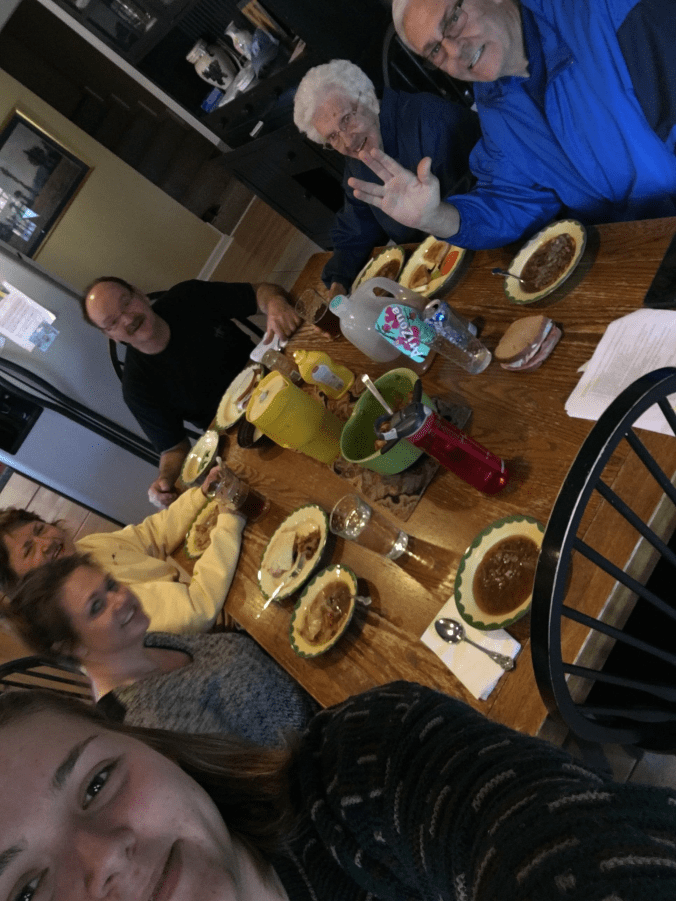
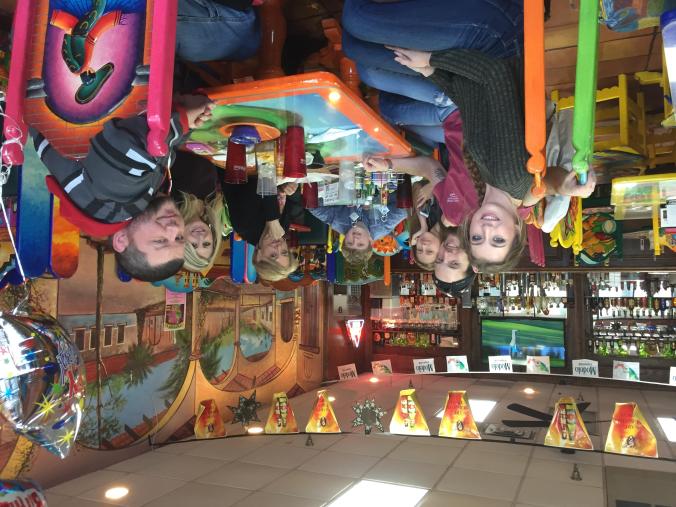
This Kentucky Kitchen Table was a very new and interesting learning experience. It took place in Somerset, Kentucky at a local Mexican restaurant. The dinner consisted of a variety of people, all of which brought great insight to the project and conversation as a whole. My step dad, Wes, was there. He is a local photographer who loves working with and around other people. He was also the reason we were all gathered together, it was his 40th birthday. My mother, Chrissa, was there as well. She is 38 years old and a CPA who also works in the stock market; she is very much a “numbers” person and enjoys figuring out patterns and probelms. My grandmother, Rita, was also present at the dinner. She has recently turned 65 and although I very rarely get to see her, I greatly admire the fact that she is a jack-of-all-trades. She has been hired to do several jobs such as work at the courthouse, law offices, insurance agencies, and many more things. My boyfriend Randy was there as well. Randy is 19 years old and is majoring in construction management. He is also one of the easiest people to get along with and enjoyed engaging this conversation. My little sister, Maddie, also joined us. Maddie is 13, however if you ask her she will make it very clear that she is 13 and three quarters. She’s a very sweet girl who doesn’t know what she wants to do when she grows up, but she wants to try and help as many people as possible. And last, but not least, my younger brother, Blake, was there as well. He is 15 and tends to keep to himself, but he loves technology and hopes to learn how to build computers.

Through out this dinner, we talked about a wide variety of things. We started out by having everyone answer the required question of “Beyond voting, paying taxes, and following laws, what does citizenship mean to you?” Some of the answers I got for this question were incredibly inspiring. Maddie told me that she believed citizenship meant doing the right thing and helping people in your community when you can. Blake told me that it was being nice to everyone. He stated, “When you have citizenship, you are part of a community. So you need to care about and be nice to the people close to you. Everyone needs each other, so just be nice.” Randy said that he believed citizenship was “working together to build not only a better future, but a better today as well.” However, Rita’s answer was probably the most entertaining. She said that “citizenship is when you’re surrounded by people you love. You don’t have to like them, but it makes life a whole lot easier if you at least love them.”

Some other aspects of our conversation included things such as broad questions about the world we live in as a whole and then much more personalized questions such as which social aspects we all care about as individuals. It was also very interesting to see the differences in the types of communities everyone wanted to live in. It seemed as if there is a major generation gap with the answers to this question. For example, Rita wanted a very close nit community, one in which everyone knows each other very well and on a deep, personal level. However, my mother and step dad wanted much more privacy. They did not care whether or not they knew everyone in their community; they just wanted to keep to themselves. But Blake, Maddie, and Randy’s answers all provided a wide variety of options. Blake wanted some anonymity, but still wanted to know at least some people in his town, such as his neighbors. However, Maddie and Randy wanted much more deep and personal connections with the people they lived near. They wanted a much more personal sense of community in which everyone was very involved and caring towards each other. I thought it was very interesting to see how the oldest generation present wanted no anonymity, the middle generation wanted all of it, and the youngest generation seemed to have a split between the two. These differences added to the diversity of the conversation and everyone seemed very happy to hear how the others felt about it.

Another component of the conversation that I think is worth mentioning is the different types of ways that people answered the question “what kind of person do you want to be?” Everyone seemed to be on the same page of “I want to be a good person.” But after hearing this generic response we all dove into what being a “good person” meant for each person that was present. After much discussion, we came to the conclusion that being a good person is a very broadly defined concept and almost everyone changed his or her answers after this conversation. They were changed to things such as “I want to be a more understanding person,” “I want to be a kind person,” and “I want to be a trustworthy person.” These are all things that everyone thought a good person and a good citizen should be in order to be better help serve and take part in the community as a whole as well as improve their own personal lives.

An important aspect of the KKT was when the question “is there anything you can think to do that might make things better for you or your neighbors where you live?” everyone seemed to displayed different thought processes and responses to this question, but it is very important to note that everyone did want to do something to help better the community around them. Some people at the table seemed to go towards a more personalized approach, such as going around and doing nice things for each of their neighbors one at a time such as raking their yards or offering to help them with individual tasks. While others wanted a more broad approach, such as starting a community garden or starting a neighborhood watch program. However, everyone seemed to focus on what they could do to help others, instead of themselves, and I thought this was very aw-inspiring.

What I learned from this was that everyone has their own ways of viewing not only the world, but the community around them as well. The diversity in generations, genders, and where and how people were raised seemed to play a factor in how they perceived citizenship. However, there were some similarities that I think helped bring everyone together such as the over all theme of “be a good person/citizen” and “help others.” But I also think it is very important to not only recognize, but celebrate the differences that we all have as well. Everyone seemed to place emphasis on different aspects of the conversation; for example Maddie had a lot to say about what social issue she cared about (bullying) while Rita really cared about advice she would give to people running for office. I believe that this diversity helped to further the conversation and help enrich not only this conversation, but the entirety of our lives as well.

I believe that this relates to our class in a variety of ways. For example, this conversation reminded me of our weekly deliberations very much so. In our class deliberations, typically everyone participates and contributes to the conversation. We also are presented with several different views on the same subject material. Also, our deliberations take place in a “safe place” where people could freely express their opinions on different subjects. This is very similar to how my KKT went. Everyone that was present took place and added several different, but valuable contributions to the discussion and shared the way they truly felt. The deliberation type style helps to contribute to how smoothly the conversation went and I also think that this setting helped everyone feel as if they could freely say how they felt about each issue.

This also relates to the honors 251 course because both our class and this KKT shared the commonality that it covered citizenship and individualism. In both of these contexts, a bridge was discussed as well. We often talk about where we are and how we will get to where we want to be. By improving our individual selves and working together as a community, we will be able to get across the bridge and not only improve our citizenship skills but improved the world in which we live at the same time.

I am very appreciative of this experience. It was a wonderful way to get to see how people in my community felt about different issues that impact their daily lives. It was incredibly eye opening and helped me become more open minded, this is also something that this course as a whole has done for me. I am pleased to say that this KKT went very well and I am happy that it was a requirement for this course.
IMG_6259

(I am very sorry my photograph is upside down, I do not know how to fix this.)
Diversity Forms a Community

By Melanie

17821697_10213089944669562_789485082_n

On March 11, I hosted a Kentucky Kitchen Table in my hometown of Radcliff, Kentucky. My family was an immense help in inviting friends of theirs to this dinner who contributed to the diversity and discussions we had.

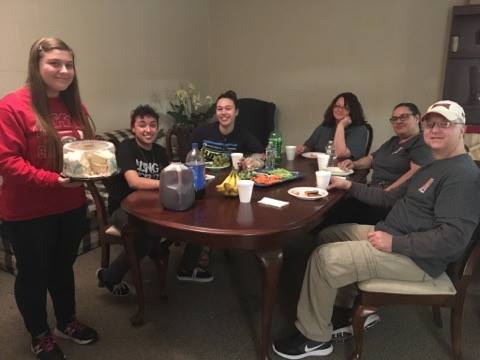
There were seven people who attended this dinner. First was Drew, who lives in Fort Knox, KY but is from Virginia. He is a sophomore in high school who will be attending the Gatton Academy in the fall, planning to study engineering or music. Next is Morgan, who lives in Elizabethtown, KY and has family roots from Panama and New Zealand. She is a sophomore and is thinking of studying music as well. Then there’s Heather, who lives in Elizabethtown and grew up on a small farm in Russellville, KY. She is a high school Spanish teacher. Then there’s Mike, who lives and was born in Elizabethtown, KY, and is a factory worker. Next is Maria, my wonderful mother who graciously prepared the dinner. Growing up with Italian roots, traditions and family time became a necessity at home. My mom wanted to cook an authentic Italian meal and show her culture and diversity to the dinner. This allowed me to learn more about her, my culture, and my ethnicity as well. She lives in Radcliff, KY, but was born in Brooklyn, NY and works as a para-educator in an elementary school. Next is my oldest sister Stephanie who also lives in Radcliff and was born in Brooklyn. She is a third-grade teacher in an elementary school. Lastly, there’s myself. I live in Radcliff but am from Brooklyn as well. I am a freshman studying music education, and I plan to obtain my master’s degree in music therapy.

The dinner went much smoothly than I imagined. Although I didn’t know the other members of the table, everyone was comfortable with each other and were impressed with the grandiose display of food that my mom prepared. This led to my asking of the first question, “did you ever have meals around the table with your family or neighbors growing up, and did you enjoy it?” The answer from everyone was unanimous as we talked about our experiences and appreciation for eating dinner daily around a table because we could relax and talk about our days with our loved ones. My mom elaborated on this question by referencing her childhood. She grew up in a primarily Italian Catholic community, so she could learn about other people’s cultures and backgrounds. She mentioned her father and how he was heavily involved in the soccer club in Brooklyn, so she learned about his friends and their backgrounds as well. Mike, who is also Italian, explained a personal story as well. This allows us to communicate better with each other and our neighbors, which is a central idea of my Honors 251 course.

The next question I asked was: “Beyond voting, paying taxes, and following laws, what does citizenship mean to you?” Everyone had insightful answers, but the main points that stood out to me from the dinner were needing a sense of community and working together to better the world we live in. Stephanie briefly discussed patriotism, freedom, and having a sense of community and order, which are all necessary in a stable society. Heather elaborated by expressing our need to love fellow-men and participating in fellow affairs with intelligence and heart, which are extremely essential in working together today. Morgan mentioned needing to be an active member in the community, helping to make the environment a better place and provide equal rights for all, and striving to better the world around us. I continued the discussion while referencing climate change readings we have discussed in class and how that is one of the many wicked problems that are alive. A large topic that stemmed from this question was the necessity of communication to solve problems. From this, I referenced Keith Melville’s “How We Talk Matters” and how important it is to listen to one another, especially towards the opposing side of an argument, so we can respect and learn from each other. Talking effectively is equal to communication, and communication is a necessity in being able to work together to solve problems, which is one of the central questions of our HON 251 class. It is better to talk maturely and listen to other people’s opinions rather than just yell and disregard one’s outlook on a topic. This allows conflicts to be resolved rationally and promote action.

While discussing citizenship, we talked about President Trump’s recent actions of cutting funding for arts and humanities programs and the passing of a new law for charter schools. Heather, Stephanie, and my mom, all working with children in schools for a living, were strongly affected by this issue. This led to my asking of what social issue is closest to everyone’s heart and why. Everyone has a different social issue that affected them personally, but most people at my dinner were highly concerned with the newly passed charter school law and anything regarding education. They all fear that it will put many educators out of work and children out of a good education. Talking about social issues led to talking about other problematic topics that occur in our world today. I elaborated and told them about other wicked problems we have discussed in class, as social issues are types of and examples of the wickedness that we see daily.

The last topic of the night ended our discussion with a lighter tone. I asked, “What do you think are the best things about our world today?” Everyone, myself included, spoke highly of the forward steps we are taking and the efforts people are making for the equality of all people and for everyone to live in a fair world. Drew elaborates by explaining that this is his favorite thing to see in the world because it shows that we, as a group of people, are slowly learning to respect everyone, regardless of beliefs and appearances. We are thankful to be living in a free nation that has rights, choices, diversity, and different ways to be educated about different people and lifestyles. Drew also appreciates that we are constantly thinking outside of the box and are full of ideas that will lead to change. This will change and shape the upcoming society and generations for years to come as we find ourselves and our values. We are slowly reinventing the world, and it shows that it will lead to a better society, but this will only be successful if we work together and communicate.

I have learned a lot by participating in this project. I drew the conclusion that although people come from different backgrounds, we are more alike than we think. We as members of a democracy have differing opinions, but we have common cares for our neighbors and the world. Having discussions about these types of topics allow us to work well together and familiarize ourselves with different groups and types of people. I learned about my own culture and heritage, in addition to different cultures and walks of life by talking to different people. This has made me a better individual personally and as a member of society. Talking to other people proves that there are plenty of good people in this world, and if we want to make a change, we need to act and work together to deliberate effectively. Hosting this dinner forced me to make connections between my HON 251 course and real-life situations. I saw all three central questions we focused on in the class come to life when talking with everyone. I was hesitant going into this dinner, but I am happy with the outcome of my discussion and how much I have learned in this course that will be useful in the future.


Kentucky Kitchen Table

By Kaylynn

Saying I am from Louisville is technically accurate, but it is not that simple. I am from Valley Station, a neighborhood in the South End. We are part of Louisville Metro because of the city-county merger, but our little neighborhood has nothing on the vibrancy of downtown Louisville.

Our Kentucky Kitchen Table was held in Valley Station, at my family home. Donna – my mother – hosted the dinner. She is very particular about hosting, so she insisted the two of us preparing all the food. She is in her 50s, and she was raised Southern Baptist. When she married my dad, she converted to Catholicism, and now she works at their church. My dad, Michael, was at the dinner as well. He is a meteorologist at the National Weather Service. Susan is a childhood friend of my mom, but since she has a very busy schedule and lives on the other side of the city, I have only met her a couple of times. She is a single woman, quite affluent, and she is a Church of Christ member. Dianne and Joe are members of my parents’ Catholic Church. Dianne described herself as, “30, blonde, and skinny,” then laughed and added, “I have one kid, and I’m an accountant.” To round out the table, I am a 19-year-old Biology student at WKU.

First we talked about what citizenship meant. The consensus seemed to be that it was a sense of belonging. Being a citizen is something that brings Americans together, even if we were born in different places or have different cultures. Citizenship is an intention. We intend to make America better, but we all have different ideas on what “better” is. This is why the more instrumental parts of citizenship like voting are so important. They are the methods by which we bring our ideas of “better” together and work to get there.

Everyone at the table was from a different part of Louisville: my family is from Valley Station, Susan is from Middletown, and Dianne and Joe are from Pleasure Ridge Park. So everyone had a unique perspective on the good things about living in Louisville. Dad – who wants to live in the country someday – huffed and said he liked that the crazy weather means there is plenty of job security for meteorologists. Mom mentioned that Louisville is central: “You can get to other places around the country in a reasonable amount of time.” There was some dissonance in the group here, because the other people around the table thought more positively about Louisville. Dianne works downtown, so she appreciates that they get “big city benefits” while closer to home there is more of a “small town feel.” That is, people generally seem friendlier than those in other large cities. I tied this dissonance a little to one of the class’s main questions: “How can we have more of a say over our own lives?” The people who liked the city felt more of a control over their own lives. They lived where they wanted to. However, those who were more “settling” for Louisville and would rather live elsewhere felt less of a control over their lives. Where we live changes how we feel about life as a whole.

When we discussed the things we like about the world today, the generation gap showed itself. They talked for a long time about how much more accessible information is these days. It was observed that because kids have access to the Internet, they know so much more about the world and current events than kids of earlier generations ever did. This was an uncomfortable thought for them because the Internet is so new. There are no tried and true guidelines for how to expose kids to the Internet, so you must make the rules up as you go along and hope for the best. As a member of the generation of kids they were talking about, this was eye-opening. That was a challenge of parenting I had never thought about before. Dianne came back to the question for a final thought: “To me, the best thing about living now is love. When my parents were young, you couldn’t love someone who’s another race. But now you can, and I’m proud of the present for that.”

We talked a lot about neighbors: what it meant to be a neighbor, who could be considered a neighbor, how we feel about our neighbors. Dianne had a lot to say about this. “I’ve met my neighbors and I see them around sometimes. But I wouldn’t get a cup of sugar from them. And I’m ashamed of that. I would like to have more of a relationship with them, but I never have.” Joe, on the other hand, said that instead of only being friends with people living close by, now people separate more according to interests. Susan suggested that people you consider your neighbors may not be “next-door neighbors,” and the people you are closest with may not be the people who are nearest to you. She referenced how she and my mom have remained friends for decades despite my family living in Missouri and Florida for a while before coming back to Kentucky. No one at the table was close to their neighbors because they had friends from work or from church who they felt they had more in common with. However, my dad mentioned how during the ice storm in 2009, people walked around the neighborhood more, and interacted more with each other. Then, when the house across the street caught fire a few years ago, people in the area came running to help. Even if we are not as close to our neighbors as we were before, we will still help out if we can.

The conversation about neighbors reminded me of our deliberation on police, specifically the option that involved community policing and neighborhood watch groups. One of the difficulties of putting such a program in action would be the problem highlighted by the people at the dinner: people do not interact with their next-door neighbors. If a crime were to happen, would someone in my neighborhood be outside to witness it? Would they do anything about it? In my neighborhood, I think a watch would be beneficial and not too different from life as it is now. When the weather is nice, there is usually somebody out on a walk. Just like when the woman’s house caught on fire, I think people still have the compassion to help during bad times. But what about better times? I feel the important question now is how we can bring neighborhoods together. I think there are many options that would serve dual purposes. Take community gardens. They are ways of promoting healthier eating, and they are also good for the environment. But they also require cooperation, so neighbors learn how to interact better. Growing something together creates pride in the community and respect for those around you.

The last thing we talked about was the social issues most important to us. Everyone’s answers were vastly different, and this speaks to the fact that our experiences shape our opinions and values. Dianne was most concerned about LGBT rights because of her daughter, who is an actor with many LGBT friends. There was conflict between the Catholic Church’s teachings and her daughter’s more accepting attitude. Her struggle reminded me a bit of the empathy readings, particularly “Devil’s Bait.” I think, to her, being LGBT is an experience so alien that it is almost like it is not even real (sort of like Morgellons to a non-sufferer). She struggled with whether or not she should accept LGBT people, because what if it is a choice? But her conclusion seemed to be that she will never know what the best thing to do is, and so she tries to be supportive. Listening to her talk about this was difficult, as I never had to struggle to accept LGBT people. Because of the Internet, I knew that people could be LGBT much earlier than Dianne’s generation did, and I listened to people’s stories about coming out and whether they were accepted or rejected by those they told. My culture in that way is so much different from Dianne’s and I can respect where she is coming from.

In doing this project, I learned a lot about how people’s experiences shape the way they think and what they do. My parents have not had very good experiences with living in cities, and so their view of Louisville is more negative than others’. For everyone else at the table besides me, the Internet was still relatively new, so they were much more skeptical of it. My mom’s and Susan’s experiences as long-distance friends made them believe that distance is not what decides who is your neighbor. And Dianne’s Catholic background caused her to struggle over LGBT people. These are all experiences I have not had, but listening to them talk helped me be on the same level as them. We do not have to agree with everything, but if we listen to others’ stories, we can live better together.

kkt

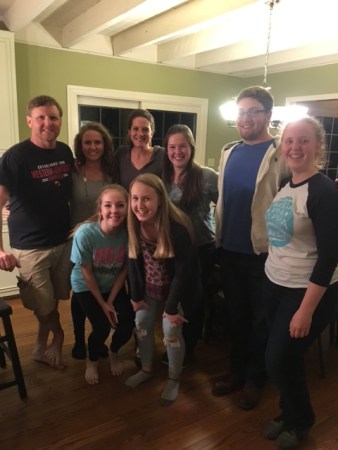
From left: Michael, Donna, Susan, Dianne, Joe (photo taken by Kaylynn)

KKT: Epic FAIL

KKT picBy Alexis

On March 16 I hosted a Kentucky Kitchen Table discussion in my home in Frankfort, KY. My mom, dad, and I provided the group with soup and sandwiches. The participants included me, my mom, dad, Fred, his mother Ruth, and his sister Lilly. [Some names changed.] My parents are both agnostic, white, 45+ years old, Republicans who voted for Trump, but they have pretty moderate views; they don’t hate gays, and they’re actually pretty accepting of a lot of the progressive ideas of our generation. My mother has completed 6+ years of college, and is an elementary school teacher. My father is a construction worker, ex-Army, and always very set in his beliefs and ways—he believes never wrong. Fred is the exact opposite of his sister Lilly. For starters, they’re the opposite gender, Lilly is a strong liberal whereas Fred is a strong conservative,Lilly is very selfless and Fred, it seems to me that Fred could be seen as selfish. Fred is widowed, and Lilly is divorced as of the 1970s; she’s almost always been on her own, and Fred always had a woman to take care of him. But they both have full college degrees; Fred got his masters in chemistry, and ran his own business for most of his adult life. Whereas Lilly got her degree in accounting and held jobs at banks and the sorts until she retired. As for their mother, Ruth, she is 90-ish years old—she’s unsure because she has Alzheimer’s. Sadly, she didn’t contribute much to my discussion because of her bad memory loss. I was hoping this discussion wouldn’t get too political, but you’ll soon come to see that this was completely impossible.

The only question I had time to ask was the required question “Beyond voting, paying taxes, and following laws, what does citizenship mean to you?”Lilly started the conversation with her opinion. She essentially explained that she sees us as citizens of the world and that we should do everything we can to help others and all get along better. This, surprisingly, related back to one of our main questions in the class; “How can we live better together?” Eventually her brother, Fred, interrupted her with the dictionary definition of “citizen”, which is “a legally recognized subject or national of a state or commonwealth.” After this definition was given Fred and my parents completely took over the discussion by telling Lilly she was wrong and stupid to think that we are citizens of the world. Fred and my father agreed that a citizen only needs to vote, pay taxes, and obey the laws. Fred, who appears to me to be rather selfish who boarders being libertarian, even shared that you only should take care of yourself. My father and mother both decided they believe you should only have to take care of “your own”—basically your immediate family. Any time after this that Lilly attempted to explain her side in a calm way Fred would interrupt her with his dictionary definition of a citizen. My dad got annoyed and said that “Honors 251 sounds like a very liberal class, and I don’t like it.” At some point Lilly and Fred were screaming at each other, and Lilly eventually said “I feel completely ostracized in a room full of people against me.” And she left crying. I listened quietly as the remaining participants bashed and laughed at her after she left, and eventually Fred and Ruth left as well.

I actually learned a lot from this complete disaster of a discussion. The main thing I took away was a good general statement for conservatives and liberals. It seems to me that conservatives have a more “at home” way of looking at things, whereas liberals have a “bigger picture” outlook on issues. For instance, Lilly sees us as citizens of the world and thinks we should do all we can to make the world better for everyone to live together cohesively and happily. Fred and my father believed more that we should take care of our; whether it be our family, friends, community, or social class. Also, liberals often have a view that we should help those all over our nation with things like food stamps and Obamacare, whereas conservatives are usually against things like this. This is probably because conservatives commonly have the opinion that “everyone should work for what they have.” This is obviously more of an overarching statement because this might not always be the case.

The most important thing I learned from this discussion is that people from older generations have not been taught how to deliberate, essentially. For instance, when Lilly was sharing her opinion the others sat quietly and “listened” until they had heard enough and gotten mad. Then, when she tried to explain herself and give a rebuttal to their arguments, she was cut off and ostracized. The same thing happened when she had enough of them sharing their opinions, which contrasted hers completely. The older generations don’t care to scream and make fools of themselves if this means defending their beliefs and making their point be “more heard.” “How We Talk Matters” by Keith Melville talks about how important it is to listen to others when in the middle of conflict. I’m honestly so glad that we have talked about this in class. Throughout high school I learned a lot about how to debate and share my opinions, but we never talked about how to listen. That’s one of the main things I’ve taken away from this class; listen and calmly respond. It seems a lot of people in the world don’t really know how to listen to people when arguing and debating. This could probably be the cause for all of the unresolved conflict and problems in the world and government.

I’m honestly really disappointed with the outcome of my Kentucky Kitchen Table discussion. I only got to ask the one main question, but it honestly gave me a sad reality. The men and women in charge of us, our children, and our governments are roughly the same age as Fred, Lilly, and my father. They usually have about the same levels of education; Fred has his masters, Lilly her undergraduate, and my father had basic college level schooling while he was in the army. If the 3 of them couldn’t even discuss their differences in a casual and calm setting how can we expect the men and women in charge to do the same? That’s why I’m extremely grateful to be learning such important, useful cooperative skills through the readings and discussions in our class.

Kentucky Kitchen Table Blog Post

By Blake20170406_200326

As I was the host of my group’s Kentucky Kitchen Table assignment, our meeting took place in the city of Bowling Green. There were five people involved – Andrew, Hannah, Hannah’s friend Camille, my mother Stacy, and myself. I included my mother in the meal because I wanted someone who grew up in a different generation to provide additional insights into concepts that college students might not have. Plus, she makes a great macaroni and cheese dish! My mother is a nurse practitioner that works at Logan Aluminum in Russellville, Kentucky, providing health care to the factory workers and their families. She grew up on a farm, was the first in her family to attend college, and now has attained her doctorate degree as of last year.

Camille is an engineering student. She was interested in pre-med, but recently has changed her desire to engage in a career in civil engineering. Hannah also transitioned from a pre-med background to the field of social psychology.  Andrew, a former Gatton student, expressed interest in becoming a professor, as he takes a great interest in mathematics. Then, there was me, the lone film student in a room full of math and science careers.

Both Camille and Hannah grew up in Christian households, as did I. My mother is a religious woman as well, having grown up in a strictly religious household. My household was quite strict on religious beliefs; however, Andrew and I both now hold agnostic/atheist viewpoints on religion.

Each of us brought our own dish. My mother made macaroni and cheese, as I expressed earlier, while I brought an apple pie. Hannah also brought a dessert, a chocolate cake, but hers had been eaten much more than my dish by the end. Camille brought a bowl of baked beans, and Andrew brought a plate of friend chicken. We had a nice home-cooked Southern meal!

We discussed many topics throughout the meal, but I will only elaborate on the most important parts of the night for time’s sake. First, we started off deliberating on what citizenship means to each of us. As the conversation went around the table, most of us agreed that a quality of a good citizen is being engaged in the community that you are a part of, not just being stagnant and watching events in the town pass you by. In order to be a productive member of society and fully be a part of a community, one must make an effort to shape the town in a way that will change it for the better. Often, members of a city or town will complain about various aspects of the community, but will do nothing to solve the problem. Without ever taking action, the town as well as one’s role as a citizen will grow stale and empty.

Additionally, we discussed the question of whether we knew our neighbors or not. My mother and I replied, saying that when we used to live in the small town of Munfordville, Kentucky, we knew everyone on our street as well as the next street over. However, when we moved to Bowling Green, even after twelve years of being a part of our neighborhood, we know very few people. Our family knows people sporadically throughout the subdivision, but we have difficulty remembering the names of the people who live on the right side of our house, even despite the close vicinity of the houses in our subdivision. Hannah and Camille expressed similar sentiment, while Andrew related to the table his neighborhood experience as a child. He told us that his neighborhood was mostly filled with elderly couples, leaving him no children to play with as he grew up. Additionally, we all noted the rapid decline of neighbors spending time outside in recent years. Before the cell phone technology boom, kids and adults would spend more time in their yards during the warm summer periods, barbequing, playing sports, and riding bicycles. In the present day, however, we have all noticed a greater number of families staying inside, keeping their attention on their various screens, and not requiring their children to engage in physical activity.

Next, we related memories of times in which we have engaged with people of considerably different backgrounds than our own. Andrew told the group that he feels a problem he faces is not having enough diversity in his friend group. He has acquaintances and has met people from different backgrounds, but could not say he had ever had a close friendship with someone whose history was much different than his. Hannah told us stories of her foreign exchange student friend, with whom she still keeps in touch, despite the long distance. She described his incredible sense of humor, but, conversely, I also shared a story of a German exchange student that lived with a friend of mine in high school. From what I experienced of the German exchange students that I came in contact with, they acted more serious and hesitant when it came to humorous subjects.

My mother brought up a story I had forgotten mostly about. She talked about when my brother brought a friend whose background was from the Middle East to our Christmas holiday dinner. His country had been barred off due to wartime, so he had no contact with his family and could no longer afford his schooling. He was studying to become a translator because he already knew six different languages. My brother, who worked at the Baptist Campus Ministry, offered his friend a job in exchange for a room at the building. My mother remembered an aspect of his personality that I had failed to notice. She recalled that every time an adult male entered the room, the young man would immediately rise and shake the adult male’s hand. It seemed to be an automatic response for him, which struck us as odd. We would not expect American college students to greet patriarchal figures in such a manner every time they entered a room.

After that, Andrew brought up the topic of college education and the high cost of tuition. Hannah, Andrew, and I identified the wickedness of the problem, while I explained to my mother the definition of what a wicked problem. As we discussed possible solutions to the problem, we realized the many different ways of treating it and the increasing complications as the conversation endured. However, after a minute, my mother commented, expressing her feeling that we need to first identify why there is a problem before attempting to solve it. Although none of us knew exactly why college tuition has become increasingly more difficult to pay for students, we all thought this was an important point.

Switching topics, we decided to deliberate on our obligations to others in our community as well as our country. We each agreed that we all have obligations to the individuals around us. If everyone isolated themselves inside of their own bubble, a community can suffer. As the topic went around the table, I asked the question “Does distance affect the willingness you have to help an individual?” I related the question back to the exercise in which we participated in class, where we decided whether or not we would send money to a family whom we had stayed with on a study abroad trip. Andrew expressed his morals, sharing that he felt distance should not matter when someone was in trouble. The rest of the table agreed, arguing that the only aspect that should matter is your personal relationship to the individual in question.

Lastly, we discussed whether each of us ever ate meals at the table with our families growing up. Andrew expressed regret, realizing that most of his meals as a child were spent on the couch, watching television alone. He wishes his parents had forced him to sit down and eat, as he felt this would have helped them to form closer relationships in the future. Hannah and Camille both related how they would frequently eat as a family, but sometimes schedules would conflict and family dinnertime would have to be sacrificed. Similarly, in my family, my parents would always force us to eat at the table for dinner. However, as my siblings and I grew up, we had to give up family time in order for my parents to transport all of us to our extracurricular activities after school. Now, my family has realized that many of our family meals now occur at restaurants, as my older brother and I are in college. Our parents realized the effective way of planning family time — by promising free food. On the other hand, my mother described a different experience from when she grew up. She recalled being forced to eat at the dinner table every day, at the same time every day. They also rarely ever went out to eat to restaurants for food because eating out was deemed too expensive. Because of these strict dinnertime rules, my mother always wanted her kids to share similar experiences around the dinner table with their family.

After the meal ended, my mother and I cleaned the plates, and the group sliced into the desserts. Camille, Hannah, and Andrew respectfully thanked us for offering up our house for the project, and we each commented on how easily the conversation went after it got going. I believe our group’s Kentucky Kitchen Table was a success!

By Ryan P.

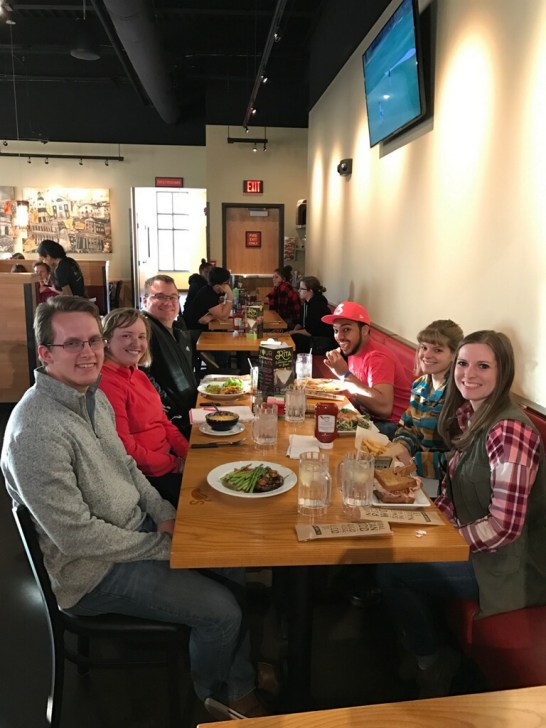
On Friday, April 7, 2017, I along with five others attended our Kentuckys Kitchen Table assignment. Our group had dinner at WKU’s campus Chili’s in Bowling Green, Kentucky. The people in our group included Anne and her friend Jill. Anne is an environmental health sciences and philosophy double major from Frankfurt Kentucky. She wants to work with water quality in the future. Jill is a recreation administration major from Louisville, Kentucky, who plans on working for the national park system. Hannah invited her friend Thomas to join her for the dinner. Hannah is a chemistry and biology double major from Madisonville, KY. She plans on going to dental school. Thomas is from Brandenburg, KY. He is majoring in exercise science and plans on becoming a clinical exercise physiologist. Mahesan, who is the friend I brought with me, is a biology major and chemistry minor. His parents both work in the healthcare profession, which has had an impact on him wanting to become a doctor. I am a senior accounting major and I plan on becoming a CPA for a public accounting firm. My family lives in Owensboro, KY, but we are originally from St. Louis, MO. While each of us at the table was a member of the Honor’s College we all had diverse backgrounds that helped to make a memorable conversation.

Our conversation started with us introducing ourselves and speaking a little bit about ourselves. At around this time the server came to the table and we learned that Anne is vegetarian and Jill is vegan. We then had an interesting and informative conversation on dietary choices and lifestyles, how people should work with dietary restrictions, and even other dietary choices and food allergies. After speaking about dietary choices, we talked about the required question of what citizenship means to us. One of the main themes in our conversation was that citizenship is about our personal choices to help those around us and working daily to be an individual who is concerned about what is happening around them. The point was made that most people have a desire to think of themselves, but also a need to connect with others. This could help make a case for deliberation and town hall forums. These settings are a more personal form of being involved in citizenship than say voting. They have the potential to allow others of differing viewpoints to connect and learn from each other. If we can put a face to a cause or viewpoint we can sometimes bring our walls down to see from other perspectives. I brought up that I believed most people are naturally good or have good intentions. One rebuttal to this was that humans are very self-interested and as an infant our minds are naturally a blank slate that is written upon by our upbringing and experiences. This makes the case that people’s good intentions may vary greatly depending on their experiences.

The next question we asked was what we think are the best things in the world, or what is good in the world today. I mentioned that in my economics class we had been viewing overall rates of poverty worldwide and per these statistics recently the global standard of living has been on the rise with less people in poverty. The rebuttal to this was how do we truly know that the statistics are accurate and that globally there have been many social justice and human rights violations. These human rights violations can be evidenced by Syrian chemical weapons attacks or many country’s oppressive treatment of women and persecution of the LGBT communities. This theme relates closely to the wicked problems readings, which consisted of the wicked problems handout and Carcasson’s article on dealing with wicked problems through deliberative engagement. We talked about how these human rights violations are wicked problems since they are difficult to end, but we can seek to minimize them to the best of our abilities. Like the bridge metaphor, the shape of the world (our side of the bridge) is rather dangerous. We do not want to be here with the atrocities happening worldwide. We want to be on the other side of the bridge where people’s human rights are protected and the world is a safer place. One way is for countries to openly talk about these issues and work together to help alleviate them. Not only should representatives of countries deliberate, but it is important for people to deliberate and help alleviate these problems locally. Working together on both fronts may help drive the metaphorical car (us) across the bridge.

A key social justice and human rights issue we talked about was sex trafficking and the prevalence of sex trafficking in Bowling Green. We talked about the factors that go into this complex problem. Due to Bowling Green’s large number of refugee populations, its location near a busy interstate, and lack of resources to fight this issue it has become more prevalent. We discussed how there are organizations that are seeking to help people escape and recover from sex trafficking experiences.

Another key theme we discussed was the role of rapidly advancing technology in the wicked problems of society and our lack of deliberative engagement. We talked about how it was normal in previous generations for families to eat together for dinner daily. We were a more familial and less individualistic society and would discuss life with each other. It seems that nowadays we are always on the move. Our smartphones, tablets, wireless headsets and other mobile technology have enabled us to just grab a quick bite to eat then to spend time to enjoy our meals. Even when people enjoy meals together they are tempted to have their cell phone’s out on the table. It’s almost as if we need to be prepared for when someone may text or call, instead of just enjoying the company of a friend or peer. Humans are social beings, but we are turning to text based, online, and even online video technology to fill these needs. This reliance on technology is not necessarily a negative thing, as technological advances have also benefited society. For the purposes of this class we agreed that text-based and other communications cannot fully substitute face-to-face deliberative engagement. For example, there is still an awkwardness factor on skype conference calls. It is also easier to misinterpret textual communication, especially when trying to express multiple viewpoints. In this situation, face-to-face communication allows for necessary social ques, tones of voice, and inflections. There is also a personal sense of being in the presence of others in face-to-face communication. These factors contribute to effective deliberations.

Related to the rapid evolution of technology and individualism is the treatment of the elderly in society. Thomas shared some of his experiences of working with the elderly. He mentioned that oftentimes those in elderly living communities are put into these care facilities after having just lost a spouse or loved one. Many are also placed into care because they are becoming unable to take care of themselves.  What they need most during these times is the love and support of family members. Many times, though, these elderly individuals rarely receive family visitors. We discussed the emotional and physical toll that loneliness and stress has on the elderly. While it is heartbreaking to hear of the neglect that the elderly often experience, there are countries and programs that seek to help the elderly stay connected. One such program in Finland seeks to offer young adults reduced rent at a senior home. In this way, the younger generation can spend time with the older generation. The experience of an elderly individual spending time with a younger person alleviates their loneliness. It also allows the younger generation to draw on the knowledge of the previous generations.

I learned many important things from our Kentucky Kitchen Table. I learned the importance of seeing the world in a human perspective. I am very used to viewing the world in my limited knowledge through statistical trends. When many people are involved I tend to think in a way that distances myself from the situation. I learned that whether the world is less in poverty than years ago, there are still large amounts of human rights violations occurring worldwide. Many countries are still struggling and dealing with wicked problems. Often countries or foreign aid go into a country, but do not reach their intended destination and attempts to help other countries can end in worse results socially and economically. I started to realize the prevalence of wicked problems in our world. The point we had made in class and the readings about wicked problems being caused by those who intend to remedy them started to resonate with me. Oftentimes a new politician comes along and vows to remedy America’s problems, but does not realize the unintended policy consequences that worsen the issue. In these types of situations if our representatives could reason through deliberation instead of polarization, we could come up with better plans to help alleviate societies problems.

I also learned from our conversation of the treatment of the elderly. It never occurred to me the stress that many elderly in elderly living homes are going through even before they come into the facilities. I learned to empathize with their situation and put myself in their shoes. Thomas brought up the point of how people would feel if they were 90, recently lost their spouses, and were put into a home where there is a chance their familys will not visit them often or at all. In the class and readings on empathy we had talked about having the correct balance of empathy to understand that each other’s points of view are valid without making someone’s situation our own. I feel like empathy is useful when deliberating, because deliberation requires listening to opposing viewpoints. Listening to opposing viewpoints often requires empathy.

To sum up our conversation themes, we first touched on dietary choices, lifestyles, and food allergies and being empathetic in regards to that topic. We then talked about citizenship as the individual ways we seek to help the world around us and how deliberation seeks to solve local and global problems and help the world around us. Relating deliberation to citizenship is an important aspect of the class. The next topic we touched on was the state of the world as it relates to wicked problems of human rights violations. One such human rights issue is sex trafficking, which is a more local issue than many are aware. There was some debate on if human beings are naturally good and the rapid advancement of technology was discussed. We ended with a discussion on elderly people being neglected by family and the importance of empathy and sympathy for them at that stage of their lives. To sum up what I learned from the dinner, I learned about the prevalence of wicked problems in our society and the difficulty there is due to polarization to talk about these problems. I also learned the importance of empathy in the context of wicked problems and the need for it to truly listen when deliberating. Overall, I enjoyed our Kentucky Kitchen Table meal. I found it energizing to have a meaningful discussion around the dinner table and realized that I should try to have memorable meals with my loved ones and friends more often.

KKT Chilis


Kentucky Kitchen Table

KKT pic

By Gage

On March 28th, I went to a lovely dinner at a family’s home in Bowling Green hosted by Chris and Leah. I did not know this family before the dinner, however, we all got to know each other during our meal. It made me feel like I was at home having dinner with my family. The family was a unique family in that both Leah and Chris had two daughters each and they were the same ages. They both have a daughter that is a senior in high school and a daughter that is a freshman in high school. Chris’s daughter’s, MacKenna and Riley, were present for the dinner, and one of Leah’s daughter, Katie, was also in attendance. Leah’s oldest daughter was, unfortunately, unable to make it though.

Chris, Leah’s fiancé, works for a construction company out of Nashville. He was originally from Michigan but moved to Bowling Green to pursue work. He contributed to the diversity of the group because of the many different types of people that work for him. His experiences working with them and hearing their perspectives on many different social issues allowed him to provide us with different perspectives in our discussions. His oldest daughter, MacKenna, is a senior at Bowling Green High School. She plans to attend Western Kentucky University in the fall with a major in something in the medical field. MacKenna’s boyfriend Cole was also present at the dinner with us. He, too, is a senior at Bowling Green High School, however, he did not plan on attending college. He is an outdoorsman who spends a lot of his time in the outdoors hunting and fishing. Chris’s younger daughter, Riley, is a freshman who also attends Bowling Green High. She plays soccer for her school.

Leah works on Western Kentucky University’s campus at the Social Center for Citizenship and Justice so she has a pretty good understanding of the social issues in our community as well as around the world. At her job, she is involved in many things trying to help the citizens of Bowling Green. When asked about her opinion on the biggest social problem here in Bowling Green, she talked about the refusal of many immigrants to seek healthcare, among other things. This was ironic for me because health care is the focus of my group paper and the local immigrant populations refusal to go to the free clinics are a major problem.There is a high immigrant population in our community, and many of those immigrants are afraid to seek medical care because they do not have proper identification. Leah’s daughter, Katie, was the only one of her two daughters able to make it to the dinner. Katie is also a freshman at Bowling Green High School. She is a cheerleader for the school as well.

Throughout the wonderful taco dinner, we talked about many things, from citizenship to the community to the city of Bowling Green. The first question we asked was about citizenship. We asked, “Beyond voting, paying taxes, and following laws, what does citizenship mean to you?” The two younger daughters answered first, saying that being a citizen, to them, meant reaching out to other citizens and participating in marches on protests to share what you feel is right. Leah said that the biggest ways to get involved as a citizen in her opinion is by doing things such as attending a city council meeting or writing a letter to the local newspaper editor. Leah also commented that this is the most active American citizens have been that she can remember. The women’s marches and civil rights movements throughout the United States are very prevalent, and they are an easy way to get involved as a citizen. We asked if they thought they had an obligation to their community, Katie responded by saying that some people do not have the same opportunities as us and that it is our duty to help them. She also said, “it’s the right thing to do”. This relates to the class because it shows a sense of wanting everyone to live well together. She admits that the best way for her to help these homeless people, immigrants, starving children, etc. is by doing all that she can to make their lives better and that is an example of trying to live well together. It exemplifies her caring for others and wanting to improve their lives, not just her own.

One of the students also present at the meal, Victoria, talked about her experiences at Western. Victoria is a member of the Honors College at Western. She says that the campus makes her feel at home, similar to Bowling Green as a whole. It is a very welcoming community that makes individuals feel less like a statistic and more like a person. She loves that Bowling Green is a refugee resettlement city. It shows how accepting it truly is and how our community wants to help people, whether you are from another country half way around the world or have lived here your whole life. Grace, the other student at the meal, is also an Honors college student and her major is photo-journalism.

During the dinner, I was able to learn more about the residents of the city and some of its biggest social issues. Leah, having worked at the Social Center for Citizenship and Justice, has seen many of the hardships that have happened throughout the community as well the positive impacts it has had on lives. She talks about rights towards people who are different from others in the community and it makes you wonder how truly accepting Bowling Green is. She has seen many cases of homosexuality causing disruptions at workplaces. One of the worst scenarios she has to deal with, an openly homosexual member of a primarily Christian workforce was asked to resign because of his sexuality. That is one of the areas where she believes Bowling Green could better accept members of the community.

Talking with their family helped me to understand the city’s residents much better. Being from a small town, Bowling Green has always seemed like a big city to me. After I moved up here though, I realized that some of its residents are ready to move away as quick as they can. MacKenna’s boyfriend, Cole, said he had lived here his whole life and when we asked what he liked most about Bowling Green, he couldn’t think of anything. He was ready to move away to somewhere small like where I’m from and live out in the country away from cities.

We also had a very interesting conversation on favorite types of food. Everyone at the table had a different favorite food, however, about half of the people there’s favorite foods were some kind of foreign food, whether it be Mexican, Japanese, Chinese, or Thai. I think everyone being able to have a variety of different foreign foods speaks to the diversity of Bowling Green.

The dinner table was comprised of a very diverse group. That diversity being comprised by different experiences, generations, and geographical identity. Chris, being from Michigan, has been influenced by the people in Michigan. Me, being from an extremely small town, was able to recognize different positive aspects of Bowling Green that they might not have noticed since many have lived here or in a similar town their whole lives. Chris and Leah were able to add another different perspective to our discussions due to generational difference.

The dinner was very relatable to the class. The most relatable reading to our dinner is Paul Bloom’s “The Baby in the Well”. This is because of how much empathy the whole family showed in regard to world hunger, homelessness, and even social issues here in Bowling Green. When problems live starving children in Africa, their moral intuition immediately kicked in. They said they wanted to help them, which is the right thing to do, but most of the time we tend to ignore wicked problems such as those that seem to be never ending. Like the Sandy Hook incident, our society tends to focus on social issues that are new or more televised such as the women’s marches rather than something that’s always there but never really noticed like world hunger.

My experience with their family allowed me to understand more about them, and the citizens of Bowling Green. I learned about their diverse beliefs in regard to many things, such as citizenship, social issues, and the city of Bowling Green. I learned of new social issues in Bowling Green such as the sexuality discrimination in some workforces. I learned about some things that people could dislike about living here in Bowling Green while also, hopefully, shedding new light on the many positives that come with living here. This assignment allowed me to experience a family meal, which as a college student away from home does not happen much. It was a very enjoyable experience, they were very gracious hosts and this assignment allowed me to learn more about my community as well as the people in it.


Democracy as Empathetic Citizenship

IMG_2034[1]By Anne

On April 7, 2017, our group had our Kentucky Kitchen Table in Bowling Green, Kentucky. We visited the local Chili’s, with a group of 6 diverse students. While enjoying our food, we talked about everything from the situation in Syria to vegans. While our conversation over dinner may have seemed random, it provided insight into the way that many people view their role as citizens, and how we can make small changes in our lives to make a lasting impact on the wicked problems surrounding us.

The names of the participants were Ryan, Anne, Mahesan, Jill, Thomas, and Hannah. Of the group, all of us were students but there were a variety of ages. Additionally, we talked a lot about our hometowns from around the Kentucky and Tennessee area, and even learned that one of the group members, Thomas, never had a true hometown because he grew up with a military family who constantly moved around. Ryan is from Owensboro, Kentucky, but was born in St. Louis. He is an accounting major working on his CPA. He brought along Mahesan, who is a Biology major and Chemistry minor. Mahesan wants to become a doctor. Hannah is from Madisonville, Kentucky, and is also majoring in Chemistry with a double major in Biology. She plans on going to dental school. She brought along Thomas, who is from Brandenburg. He is an exercise science major who plans on becoming a clinical exercise physiologist. I am from Frankfort, the capital of Kentucky, and I am double majoring in Philosophy and Environmental Health Science. I plan on working with water quality. I brought along Jill, who is majoring in Recreation Administration and plans on working for the National Parks. Our group was truly diverse, and hails from a variety of different backgrounds.

The first question that we asked to get our conversation was, “Beyond voting, paying taxes, and following laws, what does citizenship mean to you?” While it was difficult for us all to think of the answers, some people talked about how much it means to them to be empathetic toward other people in order to truly be a good citizen. To do this, some people suggested that we treat others like we care about them, while others suggested that you simply “be a good person.” Additionally, we talked about how there is an importance to building a community where people care about one another, notably a community in which neighbors would work together to solve a common problem.

Finally, we talked about the importance of communication with others. Technology was deemed as one of the main obstacles against effective communication, whether it be from miscommunications online or the lack of communication face-to-face. However, someone did mention that, while communicating online, we tend to disclose more about ourselves, and in that sense, we form closer relationships with other people. I, and others, agreed with this notion. Regardless, we decided that people seem to be naturally good and will be as good of citizens as they can be with the resources they have, regardless of their natural communication or social skills.

The second question brought up during the dinner was, “What do you think are the best things about our world today?” Immediately, everyone began thinking of the worst things in our world today, and noting the exceptions to the worst things as some “good things” about our world. Ryan talked about how the overall standard of living, economically, has gone up in the United States over the past few years. However, Jill mentioned that just because the technical standard of living has increased doesn’t mean that people are any happier. People in our society can be pretty lonely and unhappy, although compared to some other countries in the world we are quite fortunate.

We also brought this idea into thinking about the situation in war-torn countries such as Syria. As a country, Syria has more problems than the US in terms of basic human rights and standards of living. When considering this, we talked about the wicked problem of fixing these conditions for the inhabitants of Syria, as well as the wicked problem of whether it would be better to focus on raising the standard of living, and in that way impact human rights, or whether the country should focus on getting its citizens basic human rights which would than impact the standard of living. Many people in the group expressed that they felt hopeless and helpless in being able to solve this wicked problem. As a problem, it seems too big for any one person to put a dent in. However, we talked about how making small changes in your own community to be more accepting of refugees and people in general can make a large impact if everyone does it. This invokes the thought of the “Why Bother” reading which we read in class, which talks about the large impacts a community can make if they band together.

An example of this was brought up by Ryan. He talked about how one of the big issues in Bowling Green is the sex trafficking rings which have been found here. These organizations often prey on the abnormally large refugee population which Bowling Green houses. These refugees sometimes have little choice in what they do to survive, and are vulnerable to these types of organizations. To combat this wicked problem, a faculty member named Dr. Thrasher helps out at a local organization named Hotel, Inc., as well as providing a place for sex trafficking victims of Bowling Green and the surrounding area to recover and find a place in the world. This is a great example of one person doing their part to help remedy the issues that they care most about.

Another example of an issue brought up was the overall treatment of elderly people in our society. These people are often ignored and forcibly put into nursing homes, where they sometimes subjected to unfair treatment and an environment which is not conducive to creativity. Thomas talked in depth about how if we all treated elderly people with more respect it would be a better world. Personally, Thomas volunteers at a nursing home, and tries to do his part in keeping the local elderly people company and helping them to, in turn, have good end-of-life care. He did mention, though, that his efforts do not help with the systematic bias that happens in the nursing home system. More affluent people will always get better care.

From this conversation, there were several themes: that doing your small part can make a difference, that having empathy for your fellow citizen can make the world a better place, and that while the world may seem like a hopeless place filled with wicked problems, we can all make a difference in our own ways. These relate heavily to some of the things we have talked about in class.

The first reading I would like to talk about is the empathy reading. We talked a lot about empathy as a route to being an impactful citizen. Empathy, as discussed in the reading, involves knowing that you know nothing about another person’s struggles and accepting that they are struggling, even if you don’t believe them. Relating to empathy, we talked about how it is important to be empathetic to your neighbors and peers as a good citizen. In doing this, we said, society as a whole will be better. While empathy seems to be a small thing to do, it can make a large impact when we all validate each other’s feelings by empathizing.

Another reading which related to our conversation was the reading, “Why Bother?” In this reading, the author talks about how if everyone approached the environmental wicked problem by making small personal changes that we can all solve the issue together. In our conversation, we related this concept to the wicked problem of the war in Syria and the surrounding areas. By doing small things such as calling Congress about accepting refugees into the US and by donating some money to the cause, we can do our small part to solving the issue. Wicked problems such as this do not have one cause or one solution, and so it is important to keep trying to contribute to the solution, even when you might sometimes feel hopeless.

Overall, I learned a lot about the different ways we all try to be good citizens. While we all have different ways of getting over the “bridge” of solving the problems in our world, we all try to cross it by using our own talents to do good. While Thomas volunteers at nursing homes and Dr. Thrasher works with sexual assault victims, I will be right here in my corner of the world, working on purifying the world’s water supply.

While we all approach citizenship in different ways, there is no one “right” way to be a good citizen. While our efforts may sometimes seem fruitless in the complicated problems our world faces, when citizens band together as a community we can make a noticeable difference.  

Table Talk for Togetherness

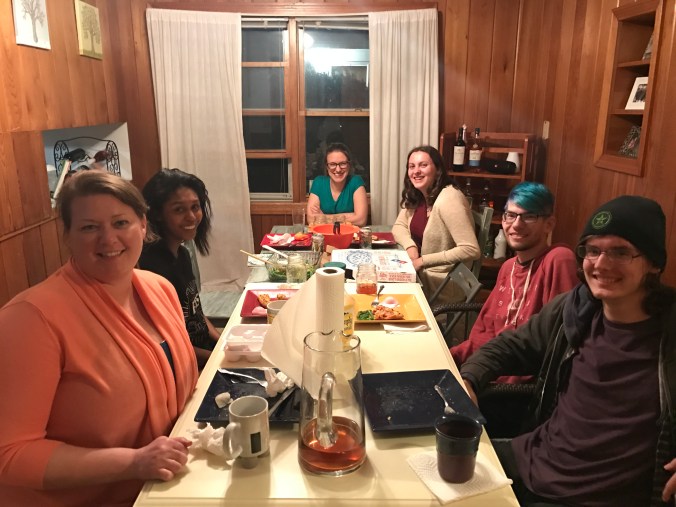
IMG_8023

By Sabrina

On a rainy Thursday evening, I trekked the 15 minute walk into unknown territory for a dinner. Nervous, but excited, I knocked on the door, cookies in hand, to meet our gracious host, McKenzie.

The apartment was decorated with Western Kentucky University paraphernalia, and an eager dog, Johnny greeted me.

Our dinner in Bowling Green, Kentucky was very relaxed with plentiful helpings of macaroni and cheese and chicken nuggets. We gathered around on the couches and kitchen counters,  discussing majors, hometowns, and traveling.

McKenzie, our host, is a graduate student at Western Kentucky University. She is from a rural area outside of Louisville. Johnny, her dog, remained close to her side, and she shared with us her love for senior dogs. Mckenzie is the oldest of five in her family.

Hannah, another student in Honors 251, is studying to become a nurse anesthesiologist. Hannah is the youngest in her family, and both her older sister and brother also attended Western Kentucky University. Outgoing and friendly, Hannah talked about her cat she misses at home and her tight-knit group of friends she has made her at Western.

As we ate our meal, we discussed how our semester was going. McKenzie and I, both having communication in our degrees, discussed our favorite professors in the field. Mckenzie studied abroad in England at Harlaxton, saying she would love to live in England. After living in Kentucky for 23 years, she is ready to travel and go someplace new, but it will still be a few years, as she finishes school in 2019. Hannah and I both asked her many questions about study abroad, as I plan on studying abroad the Spring of 2018 in England at East Anglia University in Norwich. Hannah would like to go on some trips, but specifically a trip to Bolivia, where nursing students get the opportunity to help people with various medical needs.

When asked, “what does citizenship mean to you?” McKenzie pondered the thought for a while before responding. She concluded that it means helping each other out, as we are all here on this Earth, we might as well make it easier for each other. We get so wrapped into our own lives, but kindness and being helpful is a small thing that can make a huge difference. Hannah and I agreed. Hannah added that we all need to be kind to each other because we don’t know what is going on in people’s lives, and the harmony it gives can bring us all together. I added that citizenship is about community, and working to live well with people around us.

Jokingly, McKenzie asked “what does citizenship mean to you, Johnny?” Johnny, wagging his tail, stared up at Mckenzie, his eyes begging for food and attention. Throughout the dinner, he strutted around, eyeing plates of food, and even being adventurous enough to climb the couch and almost reach over to my plate on the table, but he proved to be slightly too short. “Is it about getting chicken nuggets?” she asked, feeding one to the now elated dog.

We asked each other how we liked living in Bowling Green, and we all agreed it is a nice place to live with low crime rates and things to do. Being from Nashville, I do get bored from time to time, and McKenzie agreed that she would like to live somewhere else eventually.

We discovered at the dinner that Hannah’s older sister and McKenzie knew each other beforehand, as Mckenzie has her Resident Assistant. Hannah was able to update Mckenzie on how her older sister was going, and they talked about an amazing trip her sister took to South Africa, full of helping people and animals, and petting wildlife.

From there, McKenzie talked about Johnny’s story. Johnny, her 10 year-old dog, was a fairly recent addition to her family, as her previous dog had passed away. Johnny was rescued from a Wal-Mart parking lot, where his previous owners had left him. The shelter took him in, and after being there for two months, Mckenzie decided to adopt him.

She asked us “Do either of you guys have dogs or pets at home?” to which i replied with my extensive story about our history of animals in the house, from cats to lizards. Both Mckenzie’s mom and my mom are not huge animal-lovers, so it was hard convincing our parents to let us have pets growing up.

Hannah has a cat, named Chunks, that was a birthday present a few years back. Her sister came across a litter of kittens, and was able to take some to care for, and Hannah fell in love with them.

While our conversations seemed relatively basic in writing, I found it interesting how our lives tied together in certain ways, and how easily conversation flowed among us. It truly demonstrated to me that people of various ages, majors, backgrounds, can sit down and still have a peaceful and enjoyable dinner. We helped each other throughout the dinner as well, by sharing our thoughts, giving tips about certain classes and professors, and showing enthusiasm for opportunities others had.

By doing this, we demonstrated our own sense of citizenship by being kind to each other. We each brought food for the others, provided each other transportation, and our host graciously opened up her house to the community.

I think doing events like this reminds us that we are a community and we work best when we get along with each other and take others’ lives into account. Hannah could have chosen not to give me a ride to the dinner, McKenzie could have chosen not to open up her home, each of us could have chosen not to bring food. All of these things are small things that didn’t take much effort, but show kindness and is simply a mannerly way of living in society. Community involves looking out for each other and putting aside differences and ultimately understanding other perspectives to better our relationships with other people in our community who may be different from us.

Our whole dinner and this assignment relates to one of our central questions in class, “How do we live well (or at least somewhat better) together?” Individually, each person has their own array of gifts and talents, as well as their own backgrounds and cultures. By working together, communities can strengthen each other and make the atmosphere we all live in more harmonious.

The Kentucky Kitchen Table dinner reminded me of one of our readings we did near the beginning of the semester by Keith Melville, called “How We Talk Matters.” Melville discusses how we shouldn’t be against each other, as we all live in this world together, which related to how our table views citizenship. It is not an “us versus them” mentality that we should have. We discussed issues rationally, and genuinely listened to each other’s thoughts and ideas, and built off of each other. Not only is this a more productive approach to talking about issues within our community, but it was a more sincere and thoughtful conversation, and demonstrated warmth and care for each other.
I was nervous going into the assignment, and part of me was dreaded it as I didn’t know the people I would be having dinner with, and I am generally shy around new people. However, the conversation seemed to run smoothly and while we have different interests and beliefs, we managed to find common-ground and had an enjoyable evening full of food and good conversation.  

Alissa’s Kentucky Kitchen Table

By Alissa

For my Kentucky Kitchen Table assignment, Dr. Youngblood and Dr. Watkins kindly offered their kitchen table in Bowling Green to Margee and I. Going around the table, those in attendance were Dr. Youngblood, Dr. Watkins, Emily, Margee, Dimitri, AJ, and I. All of us have a connection to WKU, either attending the university as a freshman student or as faculty. Dimitri, Margee, and I found out that we are all originally from Louisville, Kentucky. AJ is from Hopkinsville, Kentucky and Emily is from Glasgow, Kentucky. Margee is a girl with a rather bubbly personality and is a psychological science major. She is in the Kappa Delta sorority on campus, in fact she holds an office position in her sorority, and is very passionate about working in the community for their service projects. Dimitri is a gay, nonbinary person who prefers the pronouns they/them. They are very passionate about social issues, especially with regards to the LGBT+ community, and about mental health issues. They are also a psychological science major and found out that they share a class with Margee. AJ is a rather quiet person who enjoyed entertaining Dr. Youngblood’s dog, Hazel. He is a psychology major here at WKU. Emily is an African-American girl who loves Korean pop music and is an English major. Dr. Youngblood is a professor in the English department and is also the moderator of the KPCC- the Korean pop culture club here on campus. Dr. Watkins teaches another section of Honors 251 in the Honors College. Last but not least, I am a chemistry major with a criminology minor. I have a twin sister who I share a dorm room with, and I am also an aromantic asexual, meaning I don’t experience either romantic or sexual attraction.

During the dinner we talked about a variety of things, including what citizenship meant to all of us. Most of us responded by discussing how feeling like a part of a group is necessary to citizenship and how being willing to be a citizen and act is also necessary. Other things that we talked about centered around traveling and comparing customs from other countries to the ones we have here in the United States. We also discussed our high school experiences, since all of us graduated about a year ago. Dimitri and I both attended private, single-gendered high schools while Margee attended a public high school in the same city. We talked about the positives and negatives of attending single-gender high schools versus attending public high schools, and how we thought our respective high schools prepared us for college. Dimitri expressed how they wished they could have attended one of the all female schools instead of an all male high school because everything turned into a masculinity contest. I brought up how it seemed that the girls who attended an all female school would speak up more in class, especially if there were more males enrolled in the class. Margee and Dr. Watkins both agreed with my observation, saying that they had noticed that as well.

I learned that while it was slightly awkward to discuss things like citizenship with people I don’t know all that well, doing it over dinner made it easier. I also learned that while people can be very diverse, you can find similarities and connect with just about anyone if you are willing. All of us arrived at the dinner not knowing much about one another, but we managed to connect through our discovery of shared hometowns, desire to travel/past travelling experiences, and music tastes to name a few.

To me this assignment really connected to the reading, “Giving Employers What They Don’t Really Want” not only because a large part of our conversation discussed education, but because one of the things that the article discussed was how employers want to hire people with good communication skills. We all had to talk to each other, face-to-face, and effectively communicate the point that we were trying to make to people who weren’t necessarily the same as us. That, in turn, fits with the first central question to the class: How can we live well together? A major factor affecting how we live together is whether we can communicate effectively with people who are similar to us as well as with people who are different.


IMG_0133