Aja’s Kentucky Kitchen Table

By Aja

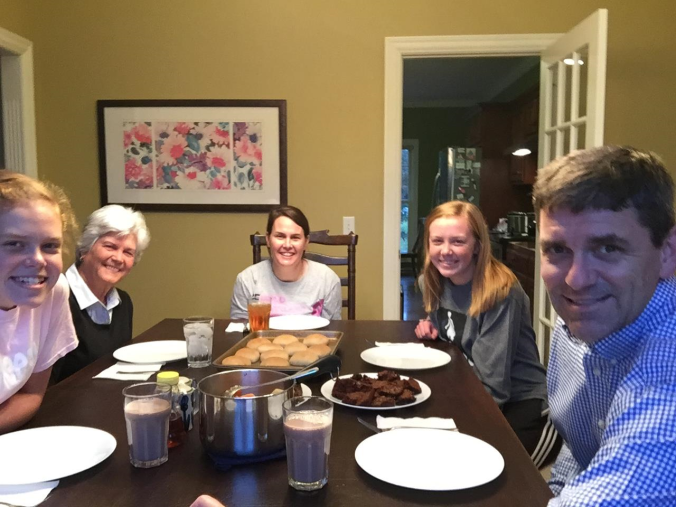
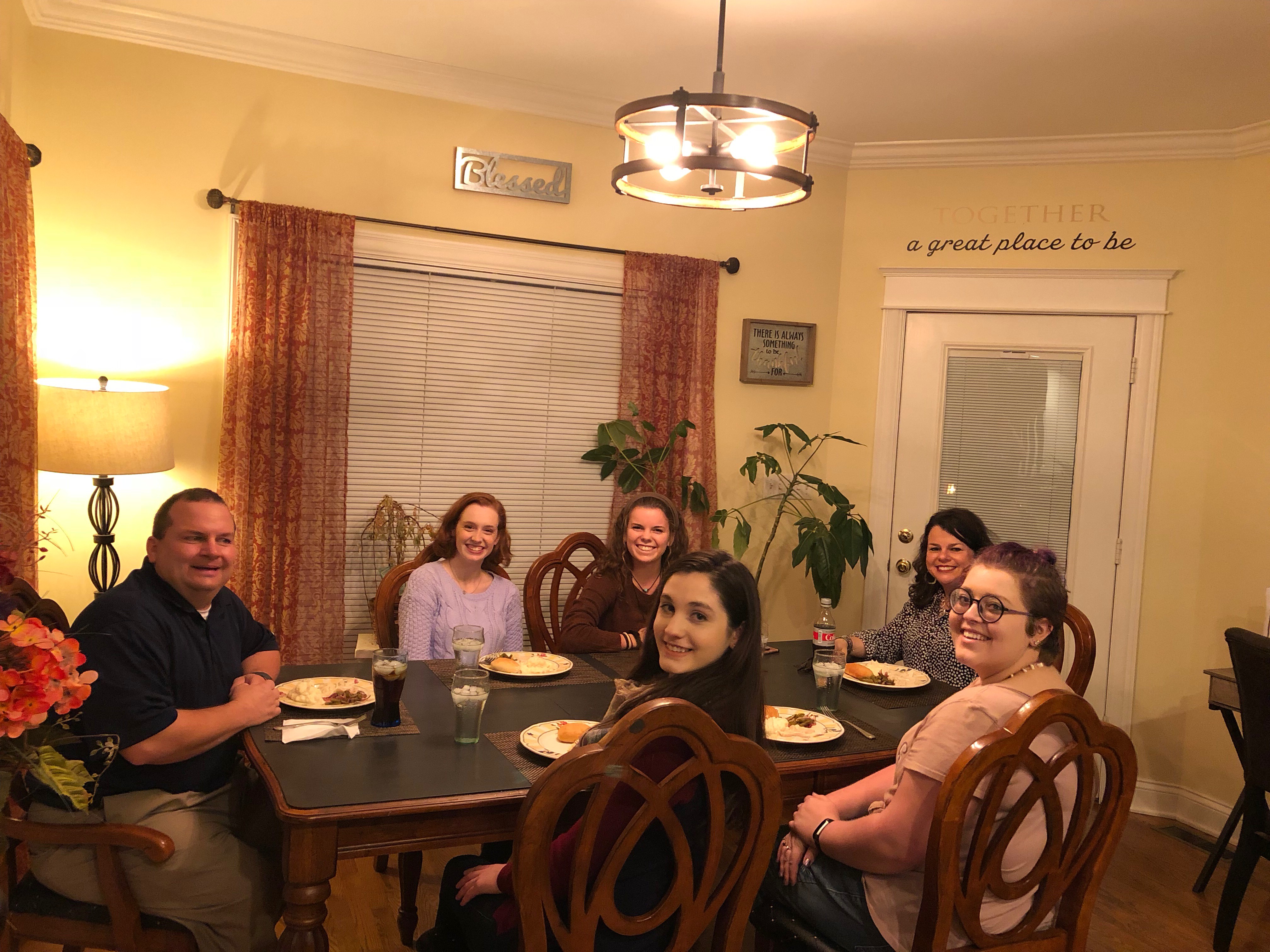
My Kentucky Kitchen Table took place on November 11, 2018 in a town just outside Louisville, KY. There were six people in attendance: my mother Jenny, my father Jim, my brother Alex, our neighbors Ed and Kristina, and me (Aja). I specifically asked these people to attend my KKT because they were diverse in political and religious identities, geographical identity, and age.

Jenny is a white, middle-class female who identifies as a libertarian. She is a Christian and believes that this influences many of her political opinions. She is a social worker and is currently employed as a social worker by a mental health facility. 

Jim is a white, middle-class male who identifies as a republican. He is a Christian and believes that this influences many of his political opinions and day-to-day life. He works as a financial advisor.

Alex is a white middle-class male who has a moderate position on political issues. He is a senior at Western Kentucky University and is studying Human Resource Management. He believes that being a college student influences many of his political opinions.

Ed is a white, middle-class male who is also a veteran. He identifies as a democrat, but considers himself fairly moderate. He does not consider himself religious in any way. Ed is also a professor in the speed school engineering program at the University of Louisville. 

Kristina (who is married to Ed) is a white, middle-class female who is a democrat. She is involved in local political issues and avidly campaigns for liberal candidates. She considers herself conservative on military issues. She does not consider herself religious in any way. Ed and Kristina recently moved from southern California to Louisville. Kristina was a local shop owner in California. 

I am a female college student who does not identify with a political party. I am studying nursing and hope to work as a Certified Nurse Midwife in a developing nation after graduation. I am a non-denominational Christian and believe that this influences many of my political opinions. 

After getting to know each other a little better, we gathered around my dining room table to share a meal and deliberate current issues. We had a vegetable salad, grilled chicken and steak, green beans from our garden, mashed potatoes, and red wine for those who were over 21 😉 

I started our conversation with the question, “Beyond voting, paying taxes, and following laws, what does citizenship mean to you?” The conversation organically flowed from there. 

Kristina brought up the idea that we have a greater responsibility as citizens of the U.S. than just voting (“which many people still do not do”), paying taxes, and following laws. She said that she holds herself to the standard of donating to charities, caring about education, and recognizing firemen/police officers. When she was an owner of a small boutique in California, she only bought American-made clothing to sell in her shop. I especially loved one thing that she said: “Being an American is being part of a team; finding unity in tragedy. Being neighbors—and not being partisan.”

Too often Americans try to identify themselves with one political party. But being a citizen is so much more than adhering to a certain political party. Ed added, “Republicans and Democrats can usually agree that an issue is an issue. Where they disagree is how to get to a solution.” Jenny and Jim agreed with Ed and Kristina on this. Jim claimed, “We are Americans first. And Republicans and Democrats second.” 

Ed said that duty and honor are important to him. He works in education because he can positively influence the younger generation. He could make a lot more money with his experience in engineering, but chooses to work at UofL because he is passionate about being intentional with students. 

Alex spoke of geographical norms in regards to citizenship. He said, “In the South, knowing your neighbors and being kind to your neighbors is important. Being an active member in society, in your local government, and on a community level is important to be a citizen of America.” Kristina claimed that more people need to travel and experience life outside of America to become active citizens. Traveling to other countries gives you a greater global perspective.

I followed up with this question: “Do you think that Americans have an obligation to less privileged people?” I asked this question because it closely relates to our class question, “How do we live better together?” Do we have a responsibility to others, human-to-human?

Jim and Jenny said that their Christian faith reflects their responsibility to less fortunate people. They give and sacrifice and love because Jesus first gave to them. Ed said that he had a friend in the mormon church who suddenly became very poor and did not have enough money to pay his mandatory church tithes, so he was suspended from the church. Ed didn’t see how religion dictates how people live their lives generously. It seems more like rules and regulations to him. It’s strange because I’m finding that many people who claim they are “nonreligious” are not agnostic, but atheist. Religion and faith often plays a role in one’s life whether they know it or not. 

We then discussed the issue of voting in the United States. Ed brought up the idea that the younger generation (ages 18-26) marches and protests—but doesn’t show up on election day. I also have experience with this; many of my friends march and post on social media for gun control after mass shootings, yet they lack a in-depth understanding of the complexity of the issue. I summarized the article “Green Fire, the Still Point, and an Oak Grove,” where people protested an issue without being informed about it. The adults claimed that millennials just want to be emotional and dramatic about a cause they know nothing about. I claimed that adults know about the severity of issues and yet don’t do anything about them. Which is worse?

This led to a discussion about generational differences. The adults claimed that millennials and gen y/z have lousy work ethics. I told them stories of my friend that works two jobs and is a full-time student and is a member of a service sorority and is pursuing a pre-med degree. 

I told them about how I finished all my high school coursework in 3 years so that I could graduate early. I told them about how I moved to South Asia for 4 months at 18 years old to work with orphanages and human trafficking ministries. I told them my dreams for my life: to spend 4+ intensive years obtaining a medical degree just to voluntarily live in poverty for the rest of my life. I want to do this because I believe that the power of Jesus and simple medicine can transform every tribe and tongue.

Alex told them that he spent nine weeks of his life biking from coast to coast—all the way from California to Virginia—to raise $50,000 for Alzheimer’s research. He did this because he believes in medical research and because he cares deeply for those affected by Alzheimers.

Do these sound like young, aimless people who have lousy work ethics? To me, these stories reflect people who think philosophically—people who are pressing into a deeper meaning of life. 

I told them that our generation perhaps doesn’t understand the value of manual labor. Perhaps we spend too much money on simple things and don’t know how to manage a saving’s account. Maybe we depend too much on the tiny screen in our pocket. Sometimes we are emotional and impulsive and think more with our hearts than with our heads. I see the flaws in our generation, I do. 

But I am also sick of older people telling us that we are a lost cause. The truth is that our generation is brave and innovative and compassionate and daring. We risk and push the boundaries of knowledge. Some of the greatest discoveries have been made by our generation, and some of the greatest people alive were born in our generation. So we don’t need adults telling us that we can’t do anything. What we need is a generation of parents instilling courage and confidence into their kids. 

After I said all this, they backtracked and acknowledged that not all millennials are lazy or entitled, but that is just what our generation is know for. I told them that we are known for being lazy and entitled because that is what has been spoken over our lives since the time we were born. The adults I admire the most don’t chastise me; they inspire me. They don’t point out all the things I am doing wrong; they encourage and believe in me.

To wrap up the conversation, I asked them, “What kind of person do you want to be?”

Jim said that he wants to be a man of integrity, a leader, and compassionate. 

Jenny said she wants to be kind, hospitable, and reliable. 

Alex wants to be a person who thinks philosophically and deeply. 

Ed wants to be a person of influence.

Kristina wants to be strong and confident in what she believes in. 

As for me, I want to be a girl who embodies warmth and conviction and sacrifice. 

Over the course of this discussion, I learned that it’s okay to disagree with someone. I learned that how and where you grew up, your race/ethnicity/nationality, your background and experience, your gender, your religious views, and your political stance all affect the type of life you live. I learned that religion is can be someone’s whole world and also the root of another person’s bitterness. More than anything, though, I learned that people who are aware of issues can be sold out for a cause. There was no “right” or “wrong” comments made at this dinner. There were just six people trying to live better together. 

It is my hope that a group of people walked away from a dinner more informed and more passionate than when they came. 

*Quotes were closely paraphrased*

(Alex is not pictured because he came late to dinner!)
Lily’s Kentucky Kitchen Table

Kentucky Kitchen Table Photo

By Lily

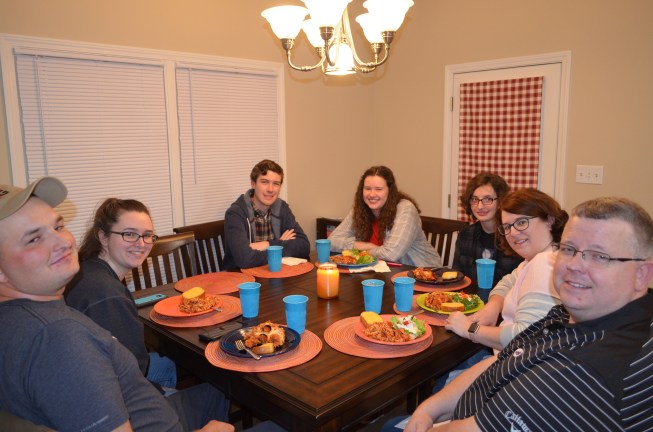
My Kentucky Kitchen Table took place at my parent’s house in Bowling Green, Kentucky. We had salad, pizza casserole, Texas toast, Snicker’s apple salad, and brownies for dinner. We had a conversation unlike any discussion that has occurred in in Honors 251.

When first posed with the question “Beyond voting, paying taxes, and following laws, what does citizenship mean to you?”, the table was silent. Citizenship is hard to define without those three things. Answering the question was very dependent on the person and their place in life. Scott, Shaune, Travis, Sam, Murphey, Lorelai, and I were sitting at the table thinking about an answer.

Scott and Shaune, who is my second cousin, have been married for sixteen years. Scott is currently unemployed but worked for PPG for about twenty years. Shaune is a nurse at the Medical Center in Bowling Green. They have an eleven-year-old daughter who is a sixth grader at Plano Elementary School. They go to a Baptist church here in town. Shaune is from Campbellsville, Kentucky. Scott is from Bowling Green, Kentucky. Both went to college at the University of Kentucky.

Travis and Sam are also a married couple. Travis works at Lawn Doctor of Bowling Green. Sam is currently back in college. Travis served in the military after high school. He did two semesters in college but never got a degree. Sam is the daughter of the chemical stockroom manager and the stepdaughter of one of the chemistry professors at Western Kentucky University. Travis and Sam have been together for about ten years, and they got married a year ago. They bought a house recently.

Murphey is an electrical engineering major here at WKU. He is the member of the Big Red Marching Band and jazz band. Murphey is from Bowling Green, Kentucky, where he went attended Greenwood High School. Murphey is a new friend of mine.

Lorelai is a junior at South Warren High School, where she plays the baritone in the concert band at her school. Lorelai is the daughter of one of the engineering professors at WKU. I became friends with Lorelai while in high school.

I am journalism major at WKU. I am from Bowling Green, Kentucky, where I attended South Warren High School. I am a member of the BRMB and attend Christian Student Fellowship events on campus. I go to a Baptist church with my family.

Now, this does not look like the most diverse group at first glance, but it is more diverse than it sounds. Everyone has lived different lives and approaches things differently. Each person’s interests and values make us drastically different from the person next to us. Each of us have learned how to go about life, and its many struggles, in a different way. Scott and Shaune were inclined to give more practical, traditional advice. Travis and Sam gave answers like people who are young and just trying to make a place for themselves in this world. Murphey and I spent most of the time wide-eyed and clueless, uncertain that we really knew anything. Lorelai stared at her plate, feeling that she knew nothing about citizenship because she is only sixteen. The diversity of our group was our differences. So, while it was not a traditionally diverse group, it was diverse.

Once the beginning question was asked, it became clear that no really knew how to answer without including taxes, laws, or voting. Everyone seemed to agree that those three things were a large part of being a citizen, so I decided to ask about what it meant to be a citizen in less of a legal way and in more of a community way. This meant thinking about what we were obligated to do as citizen for our community. Did this mean being involved? Did it mean helping those in need? Did this mean shopping local? What did it mean to be a community citizen?

Shaune said something about how it was about giving back to the community, economically and voluntarily. To be a good community citizen, one needs to be involved in the church they go to, the school their children attend, and the groups that they want to help. It meant staying in Bowling Green and working to make it better. There is a need for the older generation to share information with the younger generation. Everyone seemed to agree that this was a generally good summary of what it meant to be a good community citizen, which felt like a good start.

As previously mentioned, Travis served in the military after high school. I asked what citizenship meant to him, because he was involved one of the most patriotic parts of being an American. Travis knew that this question was coming.

For him, it was not about everyone needing to serve the country. As a matter of fact, he thinks that only the people that really, truly want to serve should and that people who feel like they should serve just because they are able and not because they want to should not serve at all. He did not want to play the “Angry Vet Card” about this. He knew he wanted to join the military, not go to college, when he was a high school sophomore.

This led me to ask about the draft, because, as I learned in elementary school, it is the responsibility of all young men to sign up for the draft when they turn eighteen. I really wanted to know how Murphey felt about this. He really did not want to serve the military; it was not that he was opposed to it, but he did not really feel it was for him. Travis was quick to say that he was very understanding of this and seemed appreciative of the fact.

This led to a quick lesson in the workings of the draft. Essentially, you can sign up for the draft and not even have a chance of being picked. Travis said that men with families and women go to the bottom. Men with kids go below men with wives, and the people with the highest chances are young, single men. I do not think any of us really knew that there is an order to the draft, or, at least, I did not know any of this.

After continuing in this topic for a bit, I decided to ask Lorelai for her opinion. She is the youngest, and she had not said anything at all. I asked her if she felt like she could be a good citizen, or be a citizen at all, since she is not an adult. Her answer was no, she does not really feel like she could right now because so much of being a citizen is wrapped up in life after you turn eighteen.

At this point, I did not really feel like a citizen or an adult even though I am eighteen. Yes, I do go vote, I follow the law, and I pay what taxes come into my life. However, I do not really feel like a citizen when I do these things. Murphey agreed, he did not feel like a citizen or an adult either. How could we really? What were we supposed to do to make ourselves more citizen-like? We did what we could, but did we really do anything special?

This turned to conversation away from traditional citizenship to what it means to be an adult. There were so many questions that seemed to float through the air. What does it mean to be an adult? When do you feel like an adult? Is age eighteen really all that magical? Are we doing everything we can to be an adult? Is the trick getting married? Is it buying a house? Is it having kids? Do you become an adult when you have a real career job?

According to Sam, there is no magical adult moment. She and Travis struggled to feel like adults in their twenties, and they had just bought a house. They knew people older than them that didn’t feel like adults sometimes. There is no one thing that makes “adulting” happen.

This turn the conversation to a myriad of things that most people would consider very adult: lines of credit, good debt, mortgages, jobs, and paperwork. It was an all-out advice session to Murphey, Lorelai, and me on how to be an adult. There were so many things we could do about money that I thought that numbers were going to fly off the beige walls of my parent’s kitchen. There was also some contradicting advice that reflected how each person was raised and how each person had started their adult life. There was a consensus that everyone needed established credit, but how to go about it was a different story. In this moment, I knew that we were not in the same train of thought as any class discussion.

Scott and Shaune thought that it was best to get a store card of some kind and use it a little when you shop there. Then, when the bill comes, just pay it all off. Travis and Sam had an entirely different approach based on the advice they had been given during their house search. Sam had absolutely no credit when she and Travis got married, so they were just trying to make a number appear next to her name when someone checked her credit score. They said charge something to a card that you could pay off, and then pay the minimum every time the bill came to keep that debt there for a while. One day, pay it off. I’ve since been turned away from their advice. However, I feel like it is important to point out that where Sam and Travis have been in life has led them to this point, so they are taking whatever advice they get that fits into their lives right now.

Another thing we discussed was careers, jobs, and staying in the community. We talked about trade school and the university track that Murphey, Lorelai, and I had been set on. I never felt like trade school was an option for me due to a variety of reasons. Murphey said that there had been a time when he thought maybe he could go to trade school and become an electrician. However, he also felt pushed, and pulled, toward college by the world around him, which included school counselors, cultural norms, societal perceptions, and personal decisions. Lorelai admitted to not really knowing what she wanted to, maybe engineering. She also agreed that schools did not really encourage people to go to trade schools unless they were considered not fit for college. Then we talked about job availability and staying in the community. It came back to what it meant to be a good citizen without all the legal stuff.

The idea here was to go where the job is and be a good citizen where you are. Do what you can where you end up and do your best. Maybe citizenship and adulthood are closely related, but that does not mean that you start of as being a citizen and an adult with some magical eighteenth birthday. Citizenship just happens.

Through this dinner, I learned that there is no one easy way to define being a citizen or an adult. However, this information does not pertain to any article, discussion, or theme from class. I do think that what was discussed is important and may come up sometime, but it has not come up in class yet.

Sydney’s Kentucky Kitchen Table

By: Sydney

I traveled home to Muhlenberg County, Kentucky, on Friday, November 9th.  I held my Kentucky Kitchen Table the following Sunday, the 11thin my little hometown, Beechmont. Attending my Kentucky Kitchen Table included my mother (Dana), my father (Scott) aka the photographer, my little sister (Maddie), my great aunt (Dee), and my neighbor (Billy).  In a small town, like mine, you don’t really have potlucks…everyone just comes over and helps you cook!  At this dinner, or should I say feast, we had a massive amount of food cooked by great aunt, mother, and father. We had roast followed with mashed potatoes with my great aunt’s homemade gravy, my granddaddy’s garden green beans, the kind of rolls you could eat a hundred of, and of course fresh brewed sweet tea.  I contributed by baking brownies for dessert.  I envied my sister who ended up being our official taste tester.  And you can bet every time we cook this much my dad will comment “We have enough food to feed an army!”

My great aunt, Dee, is from Santa Rosa Beach, Florida.  She just so happened to be in Kentucky for a visit.  She is a retired teacher from Paducah, Kentucky, who moved to Florida to escape the cold Kentucky winters. She also wanted to move closer to one of her two daughters and granddaughter. Her and her husband, whom we all call Big Daddy, loves living in a small subdivision in Santa Rosa Beach.  Dee is an older lady with a younger spirit than my own.  She is fun, quirky, and loves to joke.  She is a devout Catholic and democrat.  I consider her more of a grandparent than a great aunt who lives many hours from me.  She even tried to get me to live with her and attend Florida State!

My neighbor has lived across the street for my house for around ten years.  Even though I live in a small town I have never gotten to know this neighbor beyond occasional small talk.  He is a retired, single (divorced) senior citizen who loves golf, Nascar racing, and hanging with his buddies at their hunting cabin.

My sister, Maddie, is a thirteen year old who attends Muhlenberg South Middle School.  We butt heads like normal siblings would, but we do have a goofy relationship.  Then again, our whole family is full of comedians.  We joke with each other, laugh at the simplest things, and keep the best inside jokes.  She is a spit-fire from the day she was born.  She is very care-free but has a huge heart.

My father, Scott, grew up in Muhlenberg county.  We now live only 3 minutes from his childhood home, where my grandparents still live.  He was in the army during the time of Desert Storm and is now a veteran.  After his time in the military, he attended a technical college in Bowling Green.  He worked at Logan Aluminum, and then got a job closer to home at Tennessee Valley Authority (Paradise Plant).  Due to TVA changing to gas plant instead of a coal plant, my father is now moving all around different plants in the southern states, such as Alabama and Tennessee.  He is currently in Memphis, Tennessee which makes anytime together special.

My mother, Dana, also grew up in Muhlenberg County.  After high school, she attended Western Kentucky University for elementary education. She was first a kindergarten teacher, then a first-grade teacher, and recently she is Muhlenberg South Middle School’s librarian.  She loves her family, wiener dogs, and anywhere with a beach.  She is the most empowering woman that I know.  She would do anything for anyone in a heartbeat, and I aspire to be more like her every single day.

As everyone begins to fix their plates and settle at the dining room table, I didn’t want to bombard them with the questions right off the bat.  I did tell them beforehand I would ask a few questions for a class but nothing too extensive.  So, the typical conversations begin to strike up.  Of course, they ask me about college.  I explain my classes and how I am doing.  I also talk about the fun I have with friends, such as taking midnight trips to GADs.  Scott tells Dee and Billy (who don’t hear about his travels often) about the sketchy hotel he has to stay in for work.  I wish I could tell it the way my dad does.  He is the best of painting stories to their brightest color and has the ability to make anyone giggle.  Dee tells about the recent weather that has been happening in Florida.  She had to board up all of her windows and doors due to the hurricane!  I ask Billy about his recent trips to the Sapp Farm hunting cabin.  He tells me all about huge potluck that was throw by his friend, Tim.  He said they had steak grilled to perfection and baked potatoes the size of my head.  And of course, Maddie stays on her phone afraid she’ll miss a text from a friend, you know the middle school phase.

After casual small talk and updating everyone on each other’s daily lives, I began to ask the questions. So, I asked the required question first, “beyond voting, paying taxes, and following laws, what does citizenship mean to you?”  Everyone seemed a little stumped and sat to think for a minute.  Maddie chimes in first being in that middle school phase she says she doesn’t even know what citizenship is (which is a lie).  I can see my mom get frustrated and tells her that she does.  Dee cuts in saying that citizenship is doing whatever you can to helps others. Anything from picking up trash to helping hurricane victims.  Scott agrees by saying everyone needs to contribute for the greater good.  He added that he thinks it means protecting our freedoms which Billy says that is what he was thinking.  He thinks that citizenship is about us being free and being able to go wherever he wants to go when he wants.  Dana adds that she thinks it means being a part of a big, good community.

Other than the required question I asked a few more that were included in the packet.  I thought I would include the best conversations and answers.  When I asked what they thought were the best things about our world today, Dana and Dee were quick to say the kind-hearted people.  Which really reflects on the type of person they are because they are most kind-hearted people I know.  I also asked what they loved the most about where they lived.  I said that I loved being with my family.  I am blessed to be able to go home to my mom, dad, and sister whenever I need to.  Billy agreed with me.  He said he is so glad to be close to his granddaughters.  He loves to visit them frequently.  Dee chimed in that she loved being in the sun and sand.  I asked how they thought their job related to their role as a citizen and how it serves a greater purpose.  My mom had the best answer saying she is glad she is able to help shape young minds and mold them into productive people.  When I asked what kind of person they wanted to be, the answers got a little goofy as I said earlier my family is full of comedians. Scott is quick to say he wants to be a rock star.  However, he did get a little more serious after the laughs died down.  He said that he wants to better person to help his kids and to help his family.  I also asked if anyone had a conversation with someone very different from their own background.  Scott talked about when he was in the army and he had to travel especially during Desert Storm.  He said he has talked to people from Saudi Arabia, Spain, and Israel. The best comment of night came from my sister.  I asked what advice would you give your neighbors.  She said something along the lines of that she didn’t know what kind of advice because our neighbors are older than her, and they should give her advice instead.  Coming from my sister this received many, many laughs.  As you can see, small town dinners can go on forever!

As I am writing this post, I am thinking how our conversations related to our class.  I kept coming back to our empathy week.  My mom, sister, and great-aunt mentioned that they wanted to be kind and have a caring soul.  However, oblivious to their own selves they are the most kind and the most caring people I know.  Growing up with them I have learned the importance of a big heart.  During our empathy week, I didn’t really see myself as empathic, but I would think about my mother.  She would give the clothes off her back to a stranger, and I am proud to be her daughter.   She feels for everyone and cares too much.  However, the reading “The Baby in the Well” says we must yield empathy in order to have a better future.  I believe those with an empathetic heart, like my mother, make the world a little sweeter.  On another note, my conversations also related to the class’s central question “How can we live life better (or less baldy) together?”  Looking back upon the dinner I realized that with my family and neighbors behind me I have more support than I’ll ever need.  I also saw the importance of kindness to everyone.  This allows me to have hope and look forward to my future. I learned that staying close to the ones you love and getting to know those you don’t very well are the best ways to go through our world today.  Connections are the way we can live our lives the best way possible.

And by this photo, you can tell none of us are very “photo-ready” individuals.  However, sometimes the photographer can be quick to take the picture, but at least his photo is decent, right?

From left to right: Maddie (my little sister), Dee (my great aunt), Billy (my neighbor), Dana (my mother), & Sydney (me)

Second picture: Scott (my father & photographer)

Lauren’s Kentucky Kitchen Table


KKT
By Lauren

I completed my Kentucky Kitchen Table on November 11, 2018 in my hometown of Bardstown, Kentucky. It felt very good to be home with my family for this experience because I have missed eating homecooked meals with them every night less than a year ago. For dinner, we had roast with dinner rolls and for dessert, we enjoyed delicious brownies along with milk. The aspect that made this group diverse was the ages of everyone ranging from 12 to 69. Something that we all have in common is the religion we practice, Christianity. In attendance were my dad, mom, grandma, sister, and me. My dad, Sean, is a 45-year-old and a father of 3. His job title is a Chief Administrative Officer at his work. He is a follower of Christ who is very optimistic in all situations. He graduated from Eastern Kentucky University with his bachelor’s degree. My mom, Margaret, is a 42-year-old and a wonderful mother of 3. She works at the Bardstown City Schools system as a teacher. She graduated from the University of Kentucky with her bachelor’s degree as well. My grandma, Mary, is 69 and a wonderful wife, mother, and grandmother. She is a former chemist and a former teacher. She enjoys reading, learning, quilting and gardening. My sister, Ainsley is 12 years old in middle school and is the youngest of 3 sisters. Ainsley can be described as a musician and a runner. I, on the other hand, am an 18-year-old attending Western Kentucky University and am in the process of pursuing a doctorate degree in Physical Therapy. I am also a musician, runner, and a very driven individual. Our middle sister wished she could have been there but was not able due to a prior commitment.

To begin the discussion, I asked the question, “Beyond voting, paying taxes, and following laws, what does citizenship mean to you?” This was a very thought provoking question and my family responded with strong, thorough answers. Margaret was the first to answer and she saw citizenship as taking care of your community, as well as treating others the way you want to be treated. She stressed the importance of looking out for one another. An example of this that she used would be helping your elderly neighbors complete tasks that may be difficult for them (something that she does herself). Sean also answered the question with an emphasis on being an active community member. In addition, he discussed citizenship as having pride in where you’re coming from and having patriotism. Mary brought a different point to the table that freedom and democracy was what citizenship meant to her. She introduced the idea that when immigrants gain their citizenship here in America, it is very important to them to share with others and on documents that they are legal. Her point that she was trying to make was that America is a country that many people want to be a part of because of its democracy, freedom, and opportunities that it offers. Ainsley talked about how the free country in which we live offers many opportunities for everyone. She mentioned being able to get a job without the issues of race or religion arising. Overall, this question was important to begin with because it opened many doors of conversation regarding the other questions listed.

            I continued the conversation with asking the question, “What do you think are the best things about our world today?” This question allowed for various ideas to be shared. Mary believed that medical advances were a huge advantage to our world today. She explained that had she been born earlier than she was, she probably wouldn’t have been alive. She said that she had an appendicitis when she was younger, and the doctors had just figured out a cure for it before she was diagnosed. Another health issue that she faced was a high-risk pregnancy with my uncles. She really expressed how thankful she was for the medical advances through the sharing of her experiences. Sean appreciates the advances that technology has made. Even though he said he does give social media a lot of grief sometime, he realizes the importance in that it gives everyone the chance to stay connected.

            We then moved on to our next topic of “What is the thing you love most about where you live?” The consensus of the group was that they all chose to live in Bardstown because of the close-knit community that exists, the location, and the family we are here with. Mary has lived in many different places, one of them being Lebanon. She spoke about how the people there were very “clannish” and rude to her and her family. Margaret added in that she loves the location and is able to travel to a larger city within 40 minutes. Sean liked that the majority of our family lives here and that we have roots here. My dad was fortunate to grow up in Bardstown and still have his parents live here. This brought us to our next topic of eating together around the table with family growing up. I have grown up having dinners around the table every night with my family, for which I am very thankful. I do, however, realize that many individuals do not have the opportunity to experience this tradition. Everyone in my family also had the privilege of eating as a family every night. Margaret mentioned that if one of her dad’s friends popped in at dinnertime, they were always welcome to stay for dinner. Mary enjoyed cooking for her husband’s friends as well because she said there were no expectations for the dinner if they just stopped by.

            Another question that we discussed was “Do you think we have any obligations to other people in our country? In our community?” This question wasn’t answered directly, but the complex issue of welfare did arise. We discussed how there are people who become dependent on welfare and how there is no incentive to break the cycle. The church, however, can help you build relationships with those who need God the most. That is why we concluded that we should rely on the church and followers of Christ to help these people out of their hard times. Margaret stated that if we are a Christian, we have obligations to help our community. This statement is something that was very important to us and something that we all agreed upon.

            A question that brought up many points for conversation was, “Have you ever had a conversation with someone from a really different background than yourself?” Mary talked about her experiences with those from different countries in the labs in which she has worked, and these people would tell her, “Americans don’t know how easy they have it.” Margaret was an ESL teacher, so she came into contact with a lot of people from different backgrounds. They respected our religion and our way of life. She also brought up the mission trip that we both attended for two summers in the poorest parts of Eastern Kentucky. The families had opportunities to leave, but they never did because they wanted to keep their land… even with the awful conditions. She reminded me of how when we took the kids that attended our bible school back to their home, they wouldn’t even acknowledge their parents and would hop right on their bikes and leave. This was a very different way of life and it was sad to witness. Ainsley spoke about her classmates that are of different backgrounds and how that there are language barriers at time, but they do get along with everyone. Sean chose to share his encounters with someone from Ghana who attends our church. The man who Sean was talking about is highly educated and his Biblical knowledge is amazing. Coming from a country like Ghana, you can tell that he is very grateful for everything that he has.

            All in all, this discussion accompanying the dinner was very beneficial in that it helped me learn the views of my family for specific topics regarding citizenship. Some major points I could take away from this discussion were the true importance of being accepting to all backgrounds and leaving a footprint in your community. Citizenship means something deeper than just voting, paying taxes, and following laws. I loved the openness of the discussion and hearing stories of my family from when they were younger because it is something that I have not had as many opportunities to listen to. The sharing of everyone’s experiences reminded me of what was discussed in class – testimonies being epistemologically significant. This project was a prime example of how much our experiences really do contribute to the knowledge we encompass. A reading that the Kentucky Kitchen Table reminded me of was “The Intuitive Dog and Its Rational Tail.” Not only did I realize the true importance of testimonies, but also sharing stories with emotion. This is because you’re speaking to the person’s elephant that is controlling the emotions. Speaking to someone’s emotions will get you further in deliberations and solving issues, so it is something that should be utilized in complex discussions. I am grateful for this opportunity and I look forward to learning more about my family along with their views.

Kylee’s Kentucky Kitchen Table

By Kylee

My Kentucky Kitchen Table project took place on November 11 in Bowling Green, Kentucky at one of my close friend’s house like 10 minutes away from campus. Her mom was nice enough to host us for a home-cooked meal. The meal was chicken puffs (crescents with chicken in them), mashed potatoes, peas, corn, and for dessert we had vanilla milkshakes. The people at my dinner were: Maria, Izzy, Ally, Halle, and Cory. Maria, Ally, and Halle are all in the same sorority however, all come from varying backgrounds. Ally is from Louisville and went to a large public school. She is the oldest of two siblings and came to Western to major in public relations. Maria, Izzy, and Halle are all from Bowling Green but all went to different high schools and have diverse family backgrounds. Maria is the youngest of two girls and went to one of the public schools here in Bowling Green. Maria is currently undecided at Western. Izzy is one of 4 siblings and her parents are separated. She went to a different public school from Maria in Bowling Green. Izzy is majoring in accounting. Halle is an only child and went to the same school Izzy went to. She is planning to either be a nurse or elementary education teacher. Cory is the father of Halle, who I got the pleasure to meet the night of my dinner. Cory has lived in various places of Kentucky throughout his life and often travels a lot for his job as an insurance office director. I had even learned that he frequently traveled to St. Louis, where I am from, for business.

To begin the meal, we talked about our day and general get to know each other type of questions. This allowed everyone around the table to better know one another and create a more comfortable environment to deliberate. To dive into the Kentucky Kitchen Table experience I began by asking the big question: Beyond voting, paying taxes, and following laws, what does citizenship mean to you? The conversation took a little time to begin as they noted that to them citizenship typically means voting, paying taxes and following laws. Having the meal closely after the election brought up a lot of points about voting and being able to voice one’s opinion to be a citizen. However, when we dug into the question more, the conversation truly began. Izzy was the first one to note something. She said that citizenship can mean to preserve the country in which one is a citizen. Many were curious as to what this was meant to say and asked for examples as to how we, as citizens, can preserve our country. Cory brought up the idea of climate change and how in order to care for and preserve our country we need to be concerned with global warming and its effects on the people. This was a unique idea to all of us because it is literally preserving the physical country in which you are a citizen rather than the governmental infrastructure. They said that we can choose to do little things in order to potentially create a big change as a community. Such little things as recycling and population control were noted to benefit our community, therefore, making one a better citizen. This was intriguing to me because in class we read different articles about what we can and cannot to for climate change. I thought about the article, “Why Bother?” in which it noted that we are too late to make a change when it comes to climate. I brought up the point saying that we could potentially be too far gone that out small actions wouldn’t even make an impact. Many were astonished by this idea but understand the concern of how things may be too far gone. The agreement and disagreement were done in a very mature manner as we discussed climate change and how this could impact citizens. Understanding the idea that an individual’s actions may not specifically make a big enough impact to cause change many argued that a whole community could create it. They simply said being a better citizen starts at a community level. This became a common theme throughout the topic of conversation. They noted the idea that if a whole community made a change due to the way they handle the climate, then it could potentially have a greater impact. Taking the conversation away from climate control, many said that one needs to better the community in order to fully live out the rights of a citizen. This could mean educating the community. For example, having community workshops where people are taught the basic ideas of our government. They could be able to better understand what is being said on the news about things happening in the government and how our laws have impacted decisions over time. Becoming more educated on America and how the system works could help many in the community feel as if they are achieving the standards of being a citizen. Ally even noted a valid point saying that if all communities were to take a small step into educating and informing their people, America would benefit in the end. America would be filled with citizens informed and ready to fulfill their duties as they see fit. In conclusion, citizenship meant to be educated and to make change happen in one’s community so that could impact greater things.

I continued the conversation by asking what is good in the world today and what is bad. It was astonishing to see the number of bad things people thought of before anything else. It was so easy to come up with bad things happening today- war, racism, sexism, mass shooting, etc. Yet, there were very little ideas of good things happening. Many thoughts about things in their own lives that they could say was good, nothing related to the whole world or the country as a whole. I asked what could be changed to reduce the bad in the country and many brought up the idea of gun control and how that could limit the mass shootings. Izzy and Ally jumped on the idea of gun control right away noting that this social issue was the most prevalent in today’s society of being an American citizen. They noted how they feel that there needs to be reform when it comes to gun control and this change needs to happen at the national level. They brought up the idea that being a citizen is expressing their ideas gun control was an important concept that they wanted to see change brought to. Communities can try to implement ideas but ultimately it would be the national government making the change. Others around the table agreed with their opinion saying a modification is necessary with the amount of mass shooting occurring in the nation. As citizens, they are wanting the best for the nation as a whole. However, they still feel as it would need to be more than their individual self to have a big enough voice to change the governmental view as a whole. We still came back to the idea that communities and bigger groups need to come together to find a change rather than a single individual.

I found this whole process of the Kentucky Kitchen Table to be eye-opening. Being able to hear many different ideas about issues and get to know people better all around a traditional table and meal was fascinating. I feel like in the society we live in we are always busy and doing something, there is rarely time to sit down, have a meal, and good conversation. When the meal was all done, the people around the table felt like they had opened their eyes to new ideas and found new perspectives on what being a citizen truly meant. They all thanked me for the unique opportunity, even Cory who I had just met. He had felt like it was educational for everyone involved. I was happy with the outcome of the dinner and the conversation. There was no real place in which the conversation lacked, everyone always had something to add or say to contribute.

Throughout this project, I got to experience a new way to deliberate. Rather than the typical classroom setting and the same people each time, it was very different. It seemed more casual all around a kitchen table while we ate. Each person was still very considerate of one another and respected each other’s viewpoints and ideas. No one was completely against someone else’s viewpoints, they each understood every angle that was mentioned. Despite the questions and ideals, we talked about to be “wicked problems” with no clear answer, we continued to think or ideas or ways to better some problems with society and the ideal of citizenship. They truly wanted society as a whole to be able to work, and live, and solve problems better. Even though people have varying opinions of issues if we can agree to disagree and acknowledge everyone’s right to an opinion maybe everyone could live better together.


Ethan’s Dinner with the Hughes’

By Ethan

Last Sunday, November 11, 2018, I was invited to Evan Hughes’ home to eat dinner with him and his family. There was eight people in total at this dinner, all with varying ages. Evan and I are both eighteen. Evan’s youngest sister, Ellie, is fourteen and his oldest sister, Maddie, is twenty-one. Evan’s parents, Chris Hughes and Melanie Hughes are both in their fifties and so are Joe Hendricks and Kaye Hendricks, who are longtime friends of Evan’s family. So, at this dinner, there is a freshman in high school, two college freshmen, a young adult just out of college and four financially stable adults, each with kids.

            When Evan and I first arrived at his home, dinner was not yet ready, but the whole house smelt like a nice, home-cooked meal from the moment we stepped through the door. All the women were busy helping making dinner, which, honestly, was surprising to me because my mother has always been the only woman in my house,so she always cooked by herself for the entire family. Anyways, I was introduced to the Evan’s mom and sisters, then entered the living room to meet his dad and the family cats and wait for dinner to be ready.

            Shortly after, a call from the kitchen announced that dinner was ready and oh man was I hungry. Before me was an excellent spread of burritos, taco bowls, and any taco topping you can think of. Chris Hughes said a short prayer over the meal and the night and then his family insisted that I get my plate first because I was their guest, which I hated. It felt so weird to go before the women; growing up, my mom always hammered manners into my head, so it is second nature at this point. Evan followed me to get his plate and I got a glass of water then followed him to the kitchen table. Maddie asked if we would like some music to go along with the meal and everybody replied positively so she pulled out her iPhone, logged onto Spotify and soon authentic mariachi music was playing in the beautiful, Russellville home.

            We all started eating and engaged in small-talk with each other and since I hadn’t met any of these people until thirty minutes before, I think this really helped me settle in and just get a little bit more comfortable with my surroundings because I had been very cautious to keep from doing anything that could be seen as even remotely rude up to this point. Soon enough though, Evan and I had both cleaned our plates and Melanie noticed as soon as I took my last bite and immediately insisted that I get more. So, we went back into the kitchen, got our second helping and headed back to the table. Shortly after our return, one of the girls said, “So are we going to start the thing now?” I looked at Evan and we both just shrugged our shoulders and basically agreed it was time to begin.

            The first question was “Beyond voting, paying taxes and following laws, what does citizenship mean to you?” I couldn’t think of an answer off the top of my head, but the adults were quick to speak. Chris talked about carrying your own weight and doing your part for the community while Kaye and Melanie both hit on being respectful and helping neighbors. The golden rule was also brought up which came from them being teachers. Kaye is currently an elementary school teacher, Melanie used to be a teacher and now works for the Board of Education and even Maddie is going to school to become a teacher so there was plenty of teachers at the table. They all agreed about treating others the way you want to be treated and thought that it is an essential part of citizenship.

            After that we moved on to “What kind of community do you want to live in?” and I believe everyone would say just a nice, safe community where everybody is friendly and everyone else at the table said the same thing, but the adults took it a bit further. They discussed how community means that people work together for the good of the community and build up each other so that the everybody can live as well together as possible, which really reminded me of one of the key questions of our class “How do people live well together?” I think we all really agreed that when people come together in order to better the community and better understand others, that is when community is at its best and everyone feels content with the community, and all of that kind of ties into the next question we asked about “What is your favorite part of the community you live in?” I didn’t have much to say about this question because I am not very involved with my neighborhood and haven’t ever talked to either of my neighbors even though I have lived in my current house for almost four years, but Evan’s parents both really enjoy how safe their neighborhood is and are very close with their neighbors. They explained that Logan County has more of a family atmosphere than other places, so the community seems much closer because everybody is just so friendly and relatable and welcoming. Chris also loves the history of the area and how it has had a mix of agriculture and industry for a long time.

            “Do you see your job as serving a greater purpose?” brought us to our next topic. Kaye and Melanie, having been elementary school teachers, both felt passionately about this. They talked about how being responsible for teaching young children includes making sure they develop into good citizens by instilling good character traits such as respect, humility, and determination. Kaye said it best by saying she is building “little citizens.” I had never really seen it like that and I feel that most elementary school teachers probably don’t get a lot of respect because many people don’t see them as responsible for developing the character of kids, just teaching them how to read and write. With my job as a cook at a local pizza restaurant in my hometown, obviously I toss pizza dough and make pizzas, but I’m not just making people food. With an open kitchen, I often talk to the guests and got to know many regulars during my time there and I just wanted to help people have a good time and enjoy their meal. A simple interaction with somebody can always brighten their day and I never know what a person is going through so that’s why I always felt the need to be polite to everyone.

            We then moved onto “Do you think we have any obligations to other people in our country?” I would say everybody at the table agreed that if you are in position to help others, then you should always try to help. And this doesn’t mean you need to be financially wealthy and writing big checks to charity. You can help in so many ways, such as volunteering at a local non-profit, giving some spare change to a homeless person, or even just giving a pedestrian a ride on a cold, winter day. Often times, we are too caught up in our lives and make ourselves so busy that we feel we are too busy to ever take some time to help others and the truth is that in a community, people help each other because they care for each other.

            The last question that Evan and I asked was “What social issue is closest to your heart and why?” and after a quick joke from Chris about how healthcare is closest to his heart because it’s what takes care of his heart, we quickly got into the biggest discussion of the night, with family and marriage dominating the conversation. Joe talked about how having kids before marriage puts the children at a much higher chance of living in poverty and developing certain psychological problems, as well as picking up bad habits like smoking and drinking. Chris brought up that people leaving their families is more common now and it stems from the childhood of those who leave their families and typically, they experienced divorce between their parents, so they do not have that strong tie to a family. The adults also believed that marriage had changed from a sacred bond to just a government contract and because of the government’s part in marriage, people now have a skewed idea of it and do not take it as seriously as they should.  This led us into discussing something known as the “sexual revolution” which I had never heard of before, which kind of reminded me of the reading about how young people are losing their sense of morality. I understood what the adults were getting at, but my parents both have had multiple divorces and I still intend on making sure I have the right person in my life before starting a family and when I finally do start that family, I’m going to be totally confident that it is going to last.

I’ve always hated when adults assume things about young people but at the same time, I understand where they come from, even more so now that I was able to listen to Chris, Melanie, Joe and Kaye talk about their concerns for the direction that people are heading. I also hate when young people complain about how their parents or those of authority attempt to steer them in the right direction because kids my age or younger haven’t experienced the things that our parents have and that’s why they tell us these things. We want to succeed in our lives and perhaps our parents want us to succeed even more.

This was a fun assignment and I certainly enjoyed the home-cooked meal which are certainly a luxury now that I’m in college. This assignment taught me about how to play a part in your community, helping others, and the sexual revolution and it really is crazy how much I see “wicked problems” in our daily lives and how hard it is to really talk about these problems, let alone solve them.

Emma’s Kentucky Kitchen Table Experience

By: Emma

I hosted a Kentucky Kitchen Table in Louisville, Kentucky on November 9, 2018. I felt like I had a pretty diverse group of people, because I covered a variety of different generations and financial backgrounds. My grandma, Michele, is one of the people who attended my KKT. She is 76 years old, has 5 kids, has been married for more than 50 years, and has a strong faith in Catholicism. Her friend, Ann, also attended the brunch. This was someone I did not know well, so having her at the table was going to bring in some abstract thinking I hadn’t heard from my own family. She is 75 years old and also defines herself as a Catholic. She has an active role in her family and treasures her grandchildren. Michele and Ann cover one generation’s perspective of the world. The next generation consisted of my mom, Rhonda, and her friend, Jennifer. Rhonda is about to be 54 years old and I am her only child. She has been married for 22 years and loves her career of being a flight attendant. Her friend, Jennifer, is someone I do not know very well. I learned that she is 47 years old, has had a nasty divorce in the past, has 2 children, and has been in an 8 year relationship with her boyfriend. She used to be a social worker, then a teacher, and is now working in an office for a construction company her boyfriend owns. The last person to attend my KKT was myself. I am 18 years old and am considering a career as an orthodontist. My views on the world tend to differ slightly from those in my immediate family, so I was very excited to learn about the views of the people I did not know very well. The brunch (which was going to be a dinner until I had to return to Bowling Green early because of the mold in Minton) started with small talk about Panera and the bagels my mom and I had brought from there. Everyone contributed something to the brunch so we also had yogurt, fruit, coffee, and milk. We slowly died down on the subject so I decided to ask the one required question. I asked, “Beyond voting, paying taxes, and following laws, what does citizenship mean to you?” At first everyone was a little quiet, but once conversation started rolling it carried on for a long time. My grandma, Michele started by saying that citizenship to her meant building a community with the people who shared the same common goals and values as yourself and then working together to improve the status of the United States. Everyone else at the table nodded and agreed with her response. On top of this, another common theme in the talking was that citizenship was showing love for the United States and not taking for granted where we live. We are given so many freedoms and blessings by being citizens of the U.S. which is an important thing to remember in your daily life. Since the theme of community was brought up, I decided to ask, “Do you know your neighbor? Why or why not?” Immediately, Michele shared that she had a very close relationship with all of the people on her street. They would have dinners and festivities on their street where they could all spend time together. Michele said that if she ever needed anything she knows her neighbors would be there to take care of her always. Ann shared a very similar statement by saying she also was very close with her neighbors. She said that even though they may not all have the chance to get together very much, she knows they’re always there for her. Jennifer, however, had a very different response. She chose who she did and did not have a relationship with in her neighborhood. Going through a divorce in a small town and small neighborhood made for a lot of gossip with her neighbors which gave her reason for not trusting all the relationships she could’ve formed with them. She usually sticks to herself and will smile or wave to neighbors when seeing them, but no true conversations are ever really had. Rhonda shared a very similar response as Jennifer in that she is cordially with her neighbors but doesn’t truly know them all that well. It was easy to see that there was a difference in how generations live now a days through this conversation. Slowly, interactions with the people living around you are dwindling and many people in my generation couldn’t tell you the names of their neighbors. This topic led into the question of if they had meals with their families or neighbors growing up. All of the people at the table had an overwhelming answer of “yes” to this question. All of them reminisced about sitting down at dinner every night with family and inviting neighbors, and there wasn’t a day they skipped this or ever really went out to eat instead. They always set time aside to spend face-to-face quality time with the people they cared about, and they think that nowadays there is a huge lack of focus on family time and building a community. This is something all of them tended to be disappointed in and the blame tended to go on kids’ year-round sports, jobs becoming more accessible for women, longer work hours, the need for a larger income, and technology. All of these things in society have taken precedent over knowing your neighbors and spending time with family, and this changed has caused a lot of people to misunderstand each other. After all of these questions addressing community, I decided to bring up a tougher question. Since they said citizenship was having a sense of community and using common values to make a change in the U.S., I wanted to address the bad things happening with in the United States. I asked, “What social issue is closest to your heart?” My grandma always gets the conversation started, and she said her social issue was abortion. She is pro-life except in the cases where the mothers’ life is in danger. Her religious background plays a huge part in this. Michele believes in taking care and loving all living things, and that even surprises can bring some of the greatest joys. The next social issue brought up was from my mother, Rhonda, and she talked about immigration. She believes that our immigration laws need to be followed by all people who want to become U.S. citizens, because she found it unfair that some people skip through the whole process while others do it correctly and wait a long time to come to the United States. Rhonda feels that if immigrants want to become U.S. citizens than they need to begin following our laws from the beginning. This led to talk about refugees and into Ann’s social issue of pure hatred. Close to Ann’s hard was the lack of compassion and understanding for people in the world. She can’t understand how you can look at someone and choose to be hateful towards them. This was something everyone at the table could agree with. And lastly, Jennifer’s social issue was within the welfare system. She thinks it needs to be revised, because she has seen first-hand through her job in social work that the system is failing the people that need it the most. She witnessed too many people cheat the system and have an abundance of kids in order to obtain more money from the system. I saw a common theme throughout all of these social issues. While we might not all have related to each other’s social issues or had the same view of them, we all had a deep need for the protection, safety, and love of those around us. This common ground was an important thing to keep in mind, because it shows that no matter what side of the political spectrum you’re on, you can relate to someone completely different from yourself. All humans tend to have an innate compassion for those within their circle, and this is what could save our world from many evils today. I learned a lot from realizing this commonality between us at the table and also that it is possible to have a calm discussion about topics that are too easy to get heated about. At the end of our brunch, we all talked for a while how more people should do things like this rather than screaming at each other, because no true understanding of others can be formed. I also learned that it is okay to have differing views from my parents, even when it might be hard at first. This Kentucky Kitchen Table provided me a safe and controlled space to talk about my views without feeling the slightest bit threatened. My KKT also reminded me of the article “The Intuitive Dog and Its Rational Tail” by Jonathan Haidt. Talking through our beliefs about community, complex social issues, and citizenship during this brunch made me see how accurate Haidt was in saying that we must appeal to people’s elephants or emotions. This is how we made progress in our conversations during the KKT, because hearing stories and personal experiences helped us relate to their views so much more rather than spitting facts that support a side. Our class runs, usually, by speaking to each other’s elephants as well so it was nice being able to carry this outside of the classroom for better, civil conversations. What was supposed to be a brunch with unfamiliar people turned into such easy conversations and newly formed relationships that lasted around 3 hours. Once we started talking about topics that are usually not brought up, people realized they had many feelings about it and were glad to open up even to strangers about it. I at first dreaded doing my KKT, but at the end it was one of the most meaningful experiences I’ve had around such complex topics. I hope I have the opportunity to do this again next time I go home.

Kelsey’s Kentucky Kitchen Table

Image.png

My Kentucky Kitchen Table was very successful. It was held at my house in Bowling Green on Monday, November 5th and consisted of myself, my parents: Laura and Brain, and three other honors 251 students: Emily, Eliza, and Shayla. My mom, Laura, is a school psychologist for two elementary schools here in Bowling Green, Natcher and Lost River Elementary. She’s a very caring person who loves helping those in need like her kids at work. She mentioned at the dinner about her love for finding a cure for families who have kids they can’t yet find solutions for in their behaviors. These kids become a huge impact on her life and the way she chooses to go about her job everyday. My dad, Brian, is an accountant at WKU. He is such a happy person; he looks at life very realistically but yet still continues to have a smile on his face. He is always there to reassure me that everything isn’t as bad as it is put out to be, and then puts a smile on my face by showing me his happy and laughable nature. Emily is a student at WKU majoring in English with the hopes of becoming an English teacher in a high school or college. She has become one of my really good friends who is very optimistic about life and loves to see the best in people. During the dinner she loved to tell stories while relating them back to whatever we were discussing which allowed for each topic to reach a more personal level. Eliza is also a WKU student who is majoring in Psychological Sciences with the dream of becoming a profiler for criminals in prison. She is very laid back and loved to talk about her home life during the dinner. Shayla is a WKU student who is majoring in dance and biology with the hopes of becoming a dancer but has a fall back plan of going to medical school.

At the dinner we discussed many questions. The question that stood out to me the most was our first question: “Beyond voting, paying taxes, and following laws, what does citizenship mean to you?” I believe this question was very memorable because the answers reflected each one of us so different, but yet we all came to the same theme and conclusion that being a better person can ultimately lead to a better community. I answered by saying that we as people should be accountable for each other; when someone is in need they should feel that the community they are apart of will be able to help them throughout the situation. Being a citizen starts with putting others before yourself because selflessness and kindness can bring a community and even a country more together. My mom had a very good response as well; she described a part of being a citizen as recognizing that we as people are all different and diverse with our own views and beliefs especially in Bowling Green with it being a refugee city. She said that being able to recognize one another’s beliefs would hopefully enable more acceptance in a country that has some people who only see their perspective as the correct view or belief. Shayla brought into the discussion the idea that all three of our central theme questions for the class can all play a role in how one displays citizenship. For example, the question, “How do we address shared problems?”, can go back to what my mom was saying with how we should always be aware that we will not always share the same opinion; therefore, we must not jump to the conclusion that our views are correct. We should take time and listen to the other side before making a decision. This idea is similar to what we talked about in class with the elephant and the rider; the rider being the thing that requires you to rethink or consider other opinions.

Another question that we discussed that we talked about for most of our time was: “What do you think are the best things about our world today?”  The answers to this question to me were honestly really eye-opening; it proved to me that our world isn’t always as hateful and negative as the media brings it out to be. For example, Eliza answered this question by describing the kindness that she witnessed daily in her hometown, and the fact that it’s not something that is really ever discussed in the news today. She talked about how even though we might like to think the world is always out to get us with the overwhelming negativity, there seems to always be people there to help you with whatever you’re struggling with. Even if this is mostly seen in towns like Bowling Green or the small town of Iowa where Eliza is from, it’s not an abandoned idea or concept in bigger cities like New York. There will always be people who see the bigger picture, hold empathy for one another, and even put others before themselves; to me that’s just human nature. We all have a conscience that enables us to depict morally right from wrong or good from evil, and I think that’s what makes us human. People’s good works and kindness towards others isn’t necessarily mentioned in media or the news because sadly that doesn’t grab many people’s attention. The more awful occurrences and tragedies attract viewers which then allows it to spread, and from there the negativity continues to grow larger and louder. People only really see the hurting and the broken throughout the world, and those who are trying to help the world through selflessness and humility are missed from the creation of continuous negative media.

An additional idea we discussed with the question of what we find best in our world was the concept of empathy. This idea follows the same concepts as Eliza’s but I thought it had lots of power behind the message. Both my mom and I talked about how empathy can play a very important role in one’s life. I found that empathy was a truly amazing thing in our world today whether it be used or not; the ability to understand and share the feelings one is going through allows for a person to connect and develop strong relationships with each other. It’s such a strong and amazing tool because not only can it allow one to connect with people on a deeper level, it makes one view other people’s perspectives. For example, the reading we did in class about the girl who played a role in pretending to be a sick patient for the trainees in medical school displayed very strong traits of empathy throughout the girl’s life. During her time with this role she found herself enjoying the empathy students expressed for her pretend sickness because she felt as if she wasn’t being shown empathy in her real life. This pretend life is where she felt as if she was really being cared for, and honestly when you really begin to think about it, it is very sad. She felt as if nobody really cared or understood her circumstances, so she took that emptiness and filled it through these role plays. In our life we have to opportunity to display empathy towards others, and I believe we should never take that for granted because you never truly know how much someone might need that sense of knowing that someone else understands. That’s why I believe that empathy can be so powerful in our world today; it can truly change people’s perspectives about their own lives and the community that they live in. It can give people a hope of knowing that their not alone in a world that might seem so large yet so empty at the same time. It’s a tool that enables people to form bonds, create relationships, and heal brokeness. Empathy, I believe, can ultimately turn a life around.

Overall, our Kentucky Kitchen Table went wonderfully. I think that each one of us took away something very powerful or insightful that we hadn’t really thought of before. We were able to hear perspectives from each other on different questions that brought out every personality sitting at the table. I was honestly a little skeptical at first, but in the end I was very glad that we had the opportunity to intake on this really great experience. I was able to hear opinions from both of my parents that I had never heard before which made me look at them more as adults rather than just my parents. I was able to learn new things about each honors student, Emily, Eliza, and Shayla, and now I feel as if I know lots of their backgrounds just from the many childhood stories told throughout the dinner. The Kentucky Kitchen Table was a lot of fun, and I honestly would do another one if I was given the chance.


Megan’s (not so) Kentucky Kitchen Table

By: Megan Hesse

My Kentucky Kitchen Table took place Sunday afternoon on November 11th in my hometown of Madison Indiana. My aunt was coming down to spend the day with my mom. My aunt Julie is 33 and lives in northern Kentucky, she offered to bring a lovely salad to the lunch. We invited my neighbors who moved into the neighborhood a few months ago to the dinner as well. Will and his daughter Laura were able to come, they brought homemade rolls that were honestly delicious. My younger sister and mom were both at the meal as well. In the group of people, there was still diversity. We had many different religions at the table, my mom sister and I are all Catholic, but my aunt just joined a nondenominational modern Christian church and my neighbors are both Mormons. There are also different age groups represented at the table, my sister Kelly and Laura are both in high school, my aunt is in her early 30’s, and my mom and neighbor Will are in their 40’s and 50’s. My aunt also had a different sexual orientation than the other members at the table.

The first question that I asked was what being a citizen is to them to them, besides the basic an. All of the answers were surprisingly very similar. They all agreed that being a citizen means that to be elevate the area in which they live. This could simply mean to be nice and kind to the people around them or volunteering for different service organizations. It was also mentioned to participate in different activities going on in the area and communication and connecting with the people living in your area as well. They believed that connecting with people around them is important to citizenship. They all believed that the most important aspect of citizenship was just being a good person to the people around them.

I then asked each of them what they personally do or how their jobs allow them to be a better citizen. At my mom’s work, they have a service group that she has previously been the president that raised money for different causes around Madison. My aunt Julie is very involved in her church and service project that they do as well. She also talked about a race deliberation group that talks about how different races are treated in the area and a possible solution to problems. Even though no real actions have come about through it, she still feels like she is becoming more aware of situations going on around her, making her a better citizen. Adam was the next to answer, he has spent many years going on service trips and felt that it was making him a better person. He also works a good job so he was money to support his family and have enough to donate to other service organizations that he cares about. Kelly and Laura both really didn’t know what they do particularly to be a citizen. They both aren’t old enough to vote. They still both do some service work and they feel like that helping them be better citizens. They also are both in government classes at school, and Will pointed out that learning about our government and how it works helps us to be more informed and aware of what is going on around us and will allow us to be better citizens. I then asked them they felt like they have an obligation to help the other people in their communities. The whole group also agreed that we should help the less fortunate in the community.

When asked what type of community they wanted to live in their answers were also very similar. They wanted to live in a place where all people were treated with respect and people are kind to others. They wanted communities to have different things where the people can be involved and feel a part of it. Julie stressed the importance of accepting and respecting all people. She said that regardless of race, sexual orientation, or anything else that may set people apart from others, everyone needs to be treated with respect. Everyone else agreed that acceptance for all was an important factor for all successful communities. My mom likes that in her community she knows many people and people still say hi even if they don’t know each other. I then asked everyone else about how knowing the people around you make you feel part of the community. Most people agreed that knowing people always make you feel more involved and have a sense of belonging. My family makes it a point to know our neighbor and my whole neighborhood is friendly and kind towards each other which makes it feel like a little community. My mom also talked and becomes friends with almost everyone she comes into contact with in her daily life.My aunt doesn’t feel that knowing people makes for feel involved in the community. Some people may prefer to stay to themselves more, but still be a member as much as everyone else. Julie doesn’t quite know her neighbors as well. She doesn’t mind it though because she is more reserved and doesn’t need close connections with the people around her. She doesn’t have any children and feel like that is something that brings people together when parents interact, and kids become good neighbor friends. Will and his family have gotten to know many of the people in the neighborhoods since their move a few months ago and agree that once they knew the neighbors better they felt like they were more of the community.

The conversation then turned to talk about their childhoods and growing up. My mom and aunts were surprisingly different. My mom had 2 sisters that were very close to her in age. She grew up with a big family feeling. Her family all ate sit down dinner together, her parents were married, and they did many things together as a family. When she was in high school her little sister Julie was born. Julie still grew up having sisters, but they were older and not in her life every day. Her family didn’t sit down for dinner together every night anymore. She said she would have really enjoyed getting to sit down and talk with her family every day. My mom still makes sure that my family sits down to eat dinner every day. We aren’t even allowed to have phones at the table because my parents think that is rude, but also because it takes away from just enjoying being in the presences of one another. My sister said that she really enjoys our daily dinners. It’s a good time to really sit down and talk to your family members. Many of her friends and their families don’t sit down and have sit-down dinners like our family does. They will sit in front of the TV together and watch their favorite show, or they will just have dinner sitting out and the kids can come by and grab it whenever they feel like it. My sister thinks that there is a connection between people’s relationships with their parents and sit-down dinners. All of my siblings, including myself, are pretty close to our parents, and she sees that her friends that don’t sit down to dinner are don’t talk to their parents as much.  It’s too easy for siblings and parents to never really have in-depth conversations and sitting down to dinner is an easy way for that not to happen. Will and his family also sit down to eat dinner together every night, and he loves knowing what is going on in his kids’ lives all the time.

There are a lot of things from the conversations that I had that can be applied to our class. Being a citizen and our duties is a central topic for discussion in class and that is what we discussed for a long amount of time. We also discussed how being involved in your communities can make you a better citizen and the different ways that they make the world around them a better place. When talking about sitting around at family dinner tables I felt connected to the class a lot. We talk about how many people (especially our age) aren’t thinking about deep issues or taking time to have in-depth discussions at all. Laura even commented that she doesn’t usually talk about these types of things with people. I was surprised, but pleased, to see that my aunt is involved in a deliberation group and participates in these types of discussions in her everyday life. When I told my parents about this project they didn’t seem too excited about it.  They thought it was a strange project to require us to do. After we sat down and started discussing my mom seemed to be really interested in the discussion. She saw the value of us sitting down to discuss these topics. I was surprised that so many of the answers were so similar for the group of people that were at the table. There were different ages and religions, but everyone seemed to place value on the same things.

Logan’s Kentucky Kitchen Table


Starting from left clockwise: Betty, Joe, Vannah, Sheila, Logan, Nate (he was not apart of my KKT but he wanted in the picture), Gabe, and Larry

By Logan

My Kentucky Kitchen Table meal took place on Friday, November 9, 2018. I hosted the dinner at my own house in Williamsburg, Kentucky. Williamsburg is a small city in southeastern Kentucky. I hosted a dinner of seven guests. My first attendee was Betty. She was a member of my local church, Mountain Ash Baptist Church, who has lived most of her life in Williamsburg. She is the mother of three boys and was employed in food services at Pleasant View Elementary School before she was injured and had to retire. She now lives less than a mile from my house where she enjoys talking on the phone and cooking for her husband. Her husband, Joe, is actually my second guest. Joe was a maintenance supervisor for Roper Corporation for over 25 years while also being the father of three boys. Joe served in the United States Army for four years. Joe has long been retired and now enjoys his free time fishing and working on his farm, raising cattle. Joe is the oldest guest at my dinner and has had the most life experiences. He, as well as his wife Betty, have lived throughout many important political, cultural, and economic differences in American history.  My third guest was Vannah. Vannah is a pharmacy technician at Windham Drug, a local pharmacy. Vannah is in her twenties and has lived her entire life in Williamsburg. She enjoys traveling and had recently returned to Williamsburg from a trip to Las Vegas. Next on my guest list was my own mother, Sheila. Sheila is not from Williamsburg. She was born and raised in London, Kentucky. She grew up on a small tobacco farm and received her undergraduate degree at Somerset Community College. She worked 14 years as a registered nurse until she re-enrolled at Eastern Kentucky University and became a certified family nurse practitioner. She is the mother of two and feels very proud of her family. My next attendee was Gabe. Gabe is the son of my mother’s co-worker. He is the youngest of all the guests being sixteen and attends the same high school I went to last year. Gabe really enjoys cars and wants to be a mechanic who creates custom body jobs for vehicles. Being so young, I felt like Gabe would bring a younger perspective to my dinner. My final guest was my father Larry. Larry has lived most of his life in Williamsburg and attended the University of the Cumberlands where he received a bachelor’s degree in accounting. He is a financial advisor for Booth Energy. He also owns a cattle farm where he spends most of his free time. I, Logan, was the last attendee. I am freshman Biology major at Western Kentucky University.

The diversity around my table was easily visible. First of all, the generation gap could be seen with my guest’s age ranging from sixteen to almost eighty. Age is not just a number, instead, it comes with experiences. The world around us is constantly changing and people who are older have lived through those changes. Joe and Betty have experienced a world that no one else at this table will experience, even when the rest of the guests and I reach their age. From these different experiences, I expected diverse responses to my questions. However most if not all of my guests attended church and held close to the same political views. Despite these similarities, their responses were generally more different than I expected.

I began with the only required question: “Beyond voting, paying taxes, and following laws, what does citizenship mean to you?” Vannah responded first with, “community.” She went on to explain how being community-based is very important and how helping others is at the top of her priority list. To my surprise, Gabe was quick to join in agreeing with Vannah. He compared citizenship to a football team. I asked for him to further explain and he talked about how a football team is composed of eleven players, each one having their own job. When all the players work together, the team wins. This really made me think about how something as complicated as citizenship, with so many different ideas, could be so easily comparable to a team sport. Each person having their own “job” or ideas, but all working towards victory. Larry also provided his input on the question with a more individualized approach. He said that citizenship is the ability to have the “American dream.” A place where a citizen can work hard, better his or herself and provide for his or her family. However, he also said helping others is just as important. My father did not believe in handouts of giving people money, but instead, he helps out the community with opportunities. Many times, he has offered jobs as farmhands to local citizens. Joe was very quiet and did not speak much throughout the entire dinner. His wife, Betty, offered most of the responses, which Joe would agree with. Betty agreed with Larry and really emphasized helping others. Sheila also contributed to the conversation with the idea of helping others. She had just recently participated in a suicide prevention walk in our local hometown in order to help educate others of local resources that are available for those that are suffering with depression or suicidal ideations. This established within my dinner table that no matter the age, we all agreed that helping others in our community was a very important part of being a citizen.

After learning this information about my guests, we discussed work and how each of the guests viewed his or her self as serving a bigger role in the community. Sheila was the first to respond. As an obstetrics nurse, she assisted in delivering babies at our local hospital for ten years and explained how she helped bring new life into the world. Now that she is a nurse practitioner, she often sees the families and children she helped deliver. Sheila feels like she is a part of that person’s life journey to keep them healthy to grow into new citizens of the community. Vannah was also quick to agree because she works in the medical field as well. As a pharmacy technician, she helps the citizens stay healthy by providing them the certain medications they need. Larry also pitched in and talked about how he provided energy to homes across Kentucky and was very proud of doing so. Being retired, Joe and Betty didn’t see their jobs as serving a greater purpose, but we all agreed that providing any good or service helps the community. Gabe being sixteen did not have a job yet, but he said that by being a mechanic he could help people by fixing their cars, so they could get to work. After hearing all this I made a connection that everyone’s job can be connected. It goes back to the idea of a team we discussed earlier. Each person provides a good or service to another citizen who can further go on to provide more services. It’s like a cycle.

The last thought that was established during my dinner was brought up on accident. I did not ask a question, but rather Sheila was talking to Larry about how a woman’s idea of a future has changed over time. It really sparked a conversation throughout my guests. It was the idea that a culture changed had happened throughout generations and how women did not have the same ideas in the past. For example, Betty explained that when she was younger that she was taught by her mother that she needed to “find a good man who would provide for the family.” So instead of being influenced by her mother to go to college and get a degree, she was taught how to do certain household chores like cooking, cleaning, laundry, and taking care of the children. Sheila explained that she was also taught those things but was taught the importance of education as well. Sheila was raised to be more independent, in order to provide for herself. Sheila has also implemented those same values into her daughter, that is now employed as a registered nurse, owns her own home at the age of twenty-three, and lives independently. Vannah also agreed that she has never felt like she should have to depend on a significant other to provide for her. She was taught by her mother to always work hard and be able to work independently, even though her mother was raised with the same values as my guest Betty. The men at the table didn’t have much input but Larry agreed that people, no matter the sex, should be able to work hard and provide for his or herself and not be dependent on others.

When I first read the requirements of the Kentucky Kitchen Table, I was not looking forward to it; however, after completing it, I was very happy with the outcome. First of all, when you are in college, you do not get the opportunity to sit down and have a nice dinner very often. Furthermore, this dinner allowed me to not only gain knowledge on how people around my community think but also how my own parents feel about certain topics and citizenship. One thing I learned that Betty brought to my awareness was the dying age of male chivalry in today’s younger generation. She grew up in an age where men were expected to open doors or give up his seat to a lady. After pondering this thought, I feel that through the evolution of women’s independence, some women view these gestures as a sign of weakness and would prefer to open the door themselves. It’s very obvious that generations have changed over the years and will continue to change.

This dinner relates to what I learned in our class by learning about living together better and how we have more say over our lives. During the beginning of the dinner, my guests and I discussed how we can help our community by being good citizens which goes hand in hand with living together better. Something that was interesting was when Sheila brought up the culture change and how women are taught to become more independent. This goes with our class’s third question: “How can we have more of a say over our lives – and contribute to others to having more of a say over their lives?” By having more control over one’s life, you can choose to become more independent. One thing I noticed from the observation is how people answered based on moral aspects of being raised in a southern Christian community. A reading that goes along with this “The Irrational Dog and Its Intuitive Tail” by Jonathan Haidt. He explains how moral judgment is a cognitive process and usually peoples’ first responses to certain questions or actions. He further explains how a person’s reasoning justifies their moral or emotional response.

The Kentucky Kitchen Table has taught me that no matter how small a community is, that there is diversity within it. With this diversity, you can learn a whole new perspective or ideas through simple conversations. You may learn something new if you just take the time to ask and listen.