Liv’s Kentucky Kitchen Table

By Liv:

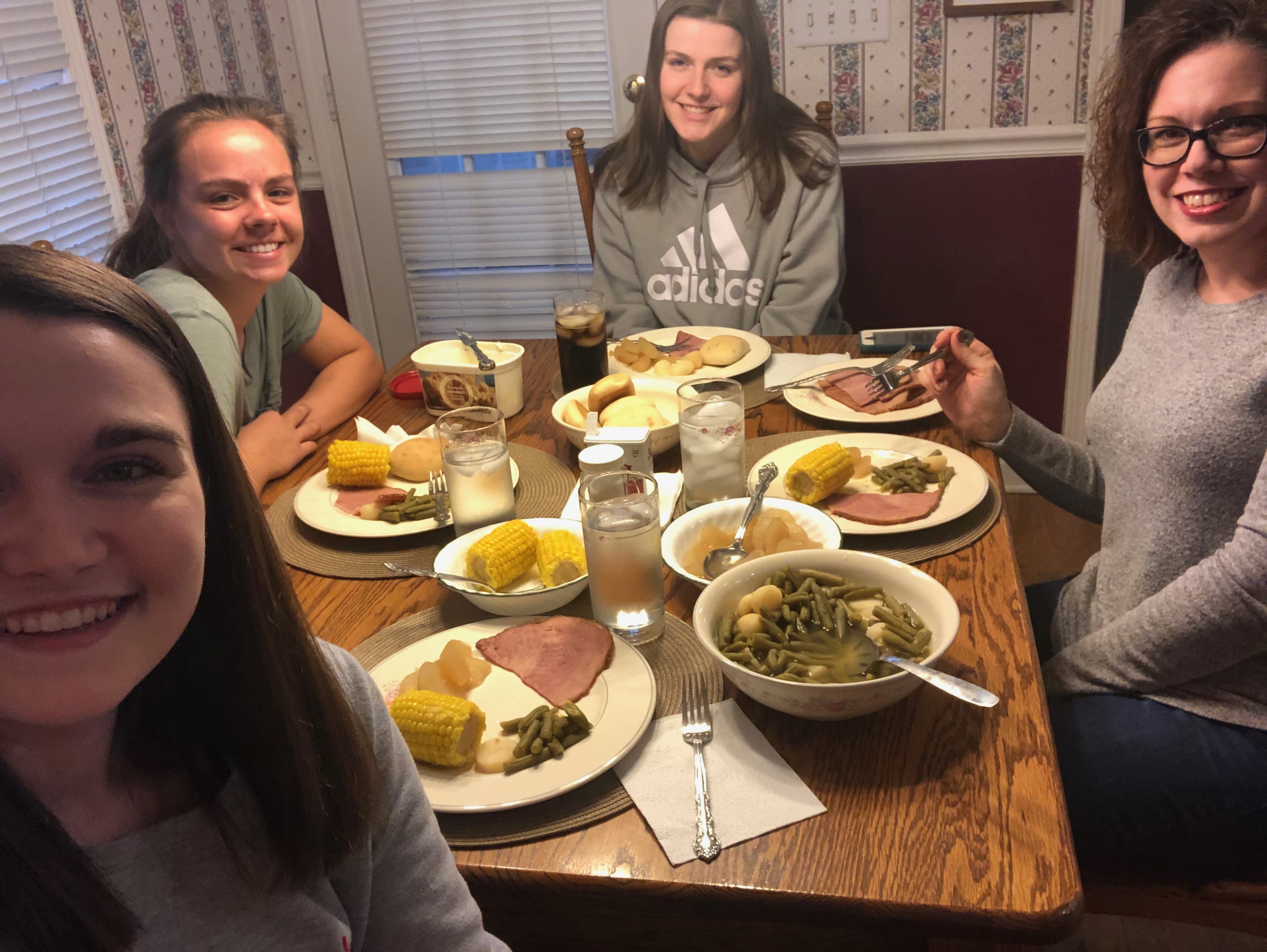
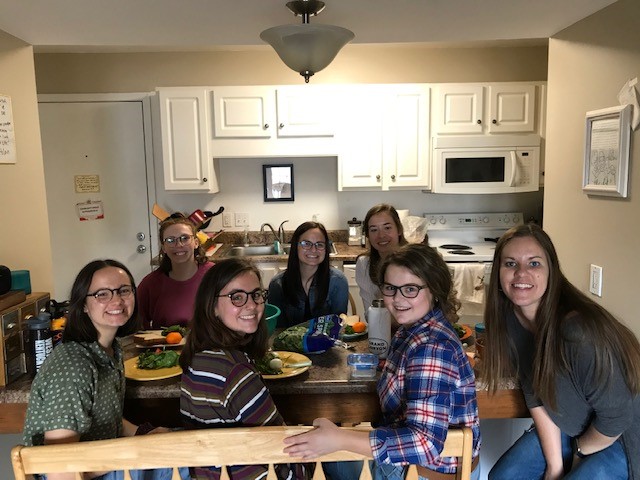
On the night of April 6th, 2019, three ladies and I cozied up in a campus apartment in Bowling Green, Kentucky, over a homemade dinner. After fixing one of my mom’s homemade baked ham and cheese sandwiches, in addition to some chips and fruit, we sat down around the table and discussed the broad topic of citizenship, social issues, our lives in Bowling Green, and all of the things in this world that we care about the most. My attendees included Emily, Ellie, and Katie—or KJ as she’s known to everyone else.

Emily is a Junior at Western Kentucky University and is a Public Relations major. This dinner was hosted at her apartment, along with her friend KJ, whom she invited. Emily is from London, Kentucky, which is approximately two hours and thirty minutes east of Bowling Green. This gives Emily experience with not only smaller town culture, but also the culture of urban areas. I met Emily through our sorority—Omega Phi Alpha—as Emily is my big’s big, or my grandbig! KJ is Emily’s friend and is also a junior here at WKU. KJ is a far distance from home as she grew up in Stillwater, Minnesota. Although I had only briefly met KJ once, I got to learn a lot about her at the dinner table. She is a very quirky Biology major with a Pre-PA concentration and plans on applying to schools this summer to be a Physician Assistant. Even with her busy schedule, KJ is very active in her faith. She leads a bible study group at her apartment every Sunday night and has a deep curiosity for others’ beliefs and religious ways. Ellie is a member of the Alpha Delta Pi sorority and is a freshman at WKU. She is from Louisville, KY, just like myself, but we did not come to know each other until living here in Minton together at WKU. Ellie grew up going to an all-girls Catholic school in Louisville, but she has since expanded herself beyond things she was accustomed to in school. Ellie is a Dental Hygiene major and plans to one day pursue a career in that field.

We are a very diverse group, as we are all pursuing different majors, we all come from different locations and different backgrounds and are involved in different programs on campus, but we have some qualities in common. Each of us is a member of the Mahurin Honor’s college here at Western. In addition, none of us call Bowling Green our home, so we are connected by the fact that we have had to adapt to a new community and make it our own. We all ate for a while and talked amongst ourselves, not wanting to move into the real assignment at hand. After a few minutes, I wanted to get the conversation started with a “lite” question to get us kicked off.

Did you ever have meals around the table with your family or neighbors growing up?

We began the night by talking about the meal I prepared: I wanted to ask the girls about their experiences growing up, and today, at the dinner table. Each of us went around and discussed our typical dinner traditions growing up, and, in some way, shape, or form, whether it was at a table, at the counter, or in the living room, a meal was shared in some sort of fashion. For many of us, once we all reached a certain age, typically high school, time at the dinner became scarce as demanding schedules became to interfere with mealtime. Ellie and I agreed that being away from campus, it can be hard to have that “family dinner” you are so accustomed to at home, which is why Ellie, myself, and some of our other friends created a dinner group where we eat together every night at Fresh. The consistency of the meal each night is what creates such a comforting routine away from home. Aside from its original purpose, this idea of a consistent mealtime can prove valuable to the growth of our personal ideals. Dinner is a time to share beliefs, experiences, concerns about today’s social challenges, etc., which leads to a conversation in search of new perspectives and paths forward individually and collectively. This is how we grow as individuals and collaborate and solve problems with each other.

What is the thing you love about living where you do?  

Being away from our homes, we have all come to enjoy certain characteristics of Bowling Green. A lot of us mentioned that we enjoyed downtown Bowling Green and the square and what it has to offer. We all noticed that, in comparison to Louisville and other cities, we can tell that WKU is immersed in the “Bible Belt” and that is a big part of the atmosphere on campus. There was also a general consensus that we all appreciate the safeness of Western’s campus and how the campus has a safe community ranking. This conversation about campus protection got us to talking about firearms and other social issues that connect to us.

What social issue is closest to your heart and why?

            I have found that this group of ladies are very passionate about a variety of different social issues. One social that really involved and connected all of us was the topic of Women’s Rights. Each of us agreed that the meaning behind the movement itself has been altered over time from what it should truly stand for. For example, some of our worries that, obviously right now women are being discriminated against, but if we continue the way we are currently proceeding then at some point we are going to start discriminating against men. Although we may not admit it, times have changed, And now, from the male perspective, some are afraid to “flirt” or approach women as it can be interpreted by women as an uncomfortable, inappropriate, or dangerous activity. This society and the Women’s Rights movement has become too sensitive to certain behaviors. This idea of the lives of women today also coincided with our discussion on means of protection. It should be safe on this Earth, for men AND women. Living on a college campus can prove to be very dangerous. It is comforting to know that when we are away from home—at the dorms, the Registry, Kentucky St. apartments—WKU has a safe campus reputation and none of us have ever felt unsafe during our time here on campus, as it should be for all women.

Do you think we have any obligations to other people in our country? In our community?

            Immediately, KJ answered this off the bat and had a true passion for this question. She said that as a country we should owe each other certain things such as respect, protection, and assistance. I learned from this question—specifically regarding giving assistance to others—that if someone were to need help, that means that individual trusts you enough to ask for help, as this generation we live in despises asking for help or support. We don’t have a legal obligation to each other, but we should be morally obligated to give our fruits of labor

Beyond voting, paying taxes, and following laws, what does citizenship mean to you?

At first, I didn’t really receive the kind of input I expected. Everyone at the table was a little confused, so I had to rephrase. Gradually, I received some answers. Ellie bravely answered first, saying that citizenship was another way to categorize yourself, and another identifier for society. For my other guests, we took the idea of citizenship to mean that you represent a certain stereotype. For example, if you claim yourself as a citizen of the United States, that can come back with negative viewpoints from people of other countries. Ignorance, obesity, and freedom are somewhat positive/negative identifiers that people associate with the U.S. Being a citizen is representing the stereotypes that other people give you and your country, but then acting on those things to change the societal norms.

In the end, I will treasure this Kentucky Kitchen Table in my college and life experience. I learned that social issues don’t have to be controversial or tear relationships apart. In fact, they should be discussed civilly, with the common purpose among everyone to solve the problem, because that is the only way we are going to make progress in society. Regardless of our backgrounds, society should be held to a standard of being kind to one another and doing everything in your power to create a world filled to the brim with love. I believe that is what citizenship is and what our obligation to each other should be.
Jessica’s Kentucky Kitchen Table

By: Jessica Cox

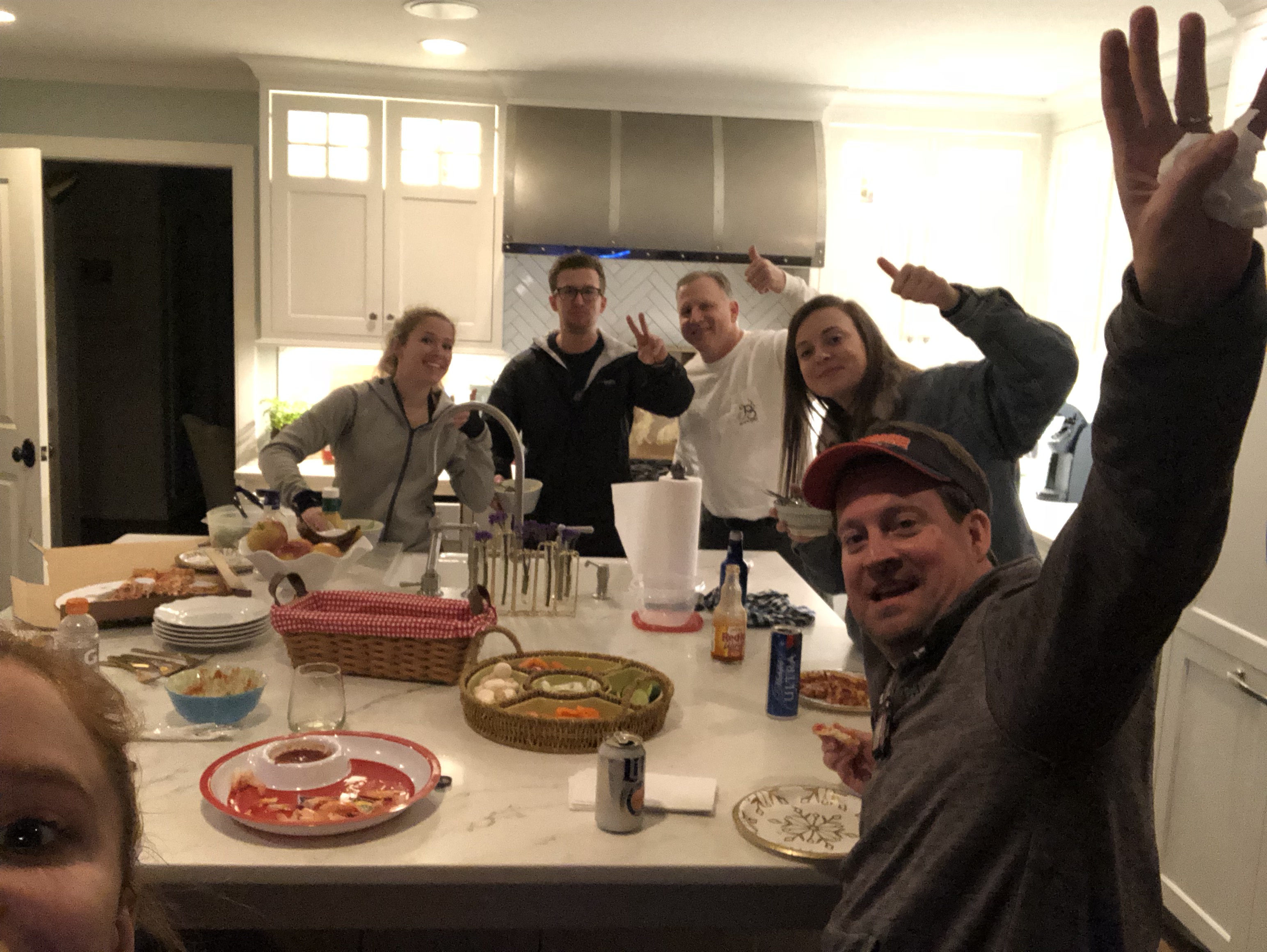
My Kentucky Kitchen Table Project took place on April 5th, 2019 at my home in Whitley City, KY. For our dinner, we ate tacos made by my mother herself with rice and refried beans. Attending the dinner would be my mom, my dad and an old friend of mine from high school. My mom is what one might define as a “true southern woman” that works hard as a nurse to support me and my brother. My dad is quite similar as he works at the county road department and believes in working for what you earn and standing up for what you believe in. My friend, Shawn, is currently studying Physical Therapy at the University of Kentucky, he is more on the moderate spectrum of things with his views and beliefs of the world but still contributed heavily to the conversation without being overpowered by the conservative aspects within.

None of the people whom I ate dinner with this night have ever taken the Citizen and Self course, so this entire project was new to them. I began the conversation by asking “beyond voting, paying taxes, and following laws, what does citizenship mean to you?” The first response came from my dad, who said that citizenship to him meant giving back to our community and doing our duties as Americans. Next, Shawn said that to him, citizenship meant being a humble member of society and also giving back whether that meant through your career or through your personal daily activities. Both my mom and myself were able to agree with these statements before shifting the conversation to the next question.

“What do you think are the best things about our world today?” was our next question which actually brought up some controversy. Shawn immediately counteracted the question by asking what is actually good in the world today. From there, we briefly discussed some important current events that have either had too much attention in the media or not enough. One idea we talked about was the idea that the media covers a lot of bad things are happening and only focuses on some occurrences. My dad brought up the ever-controversial, long running gun control debate. He mentioned the fact that people don’t see the positive sides of our second amendment but rather they focus solely on the bad that comes with firearms. My dad talked about how having guns has given him the opportunity to put food on our table since long before I was born, how owning a gun has been a form of protection for our family for years, and then finished by arguing that if we banned guns then it would only give criminals an advantage because if someone really wanted to use a gun to harm someone, then they would do that if they were legal or not. Although we seemed to go off on a tangent, my sweet little mom ended that portion of the conversation by saying that we should be blessed to have the things that we have and not take anything for granted.

We discussed other questions throughout the meal such as “what is the thing you love most about living where you do,” “do you know your neighbors? Why or why not,” and “what kind of person do you want to be?” However, one question that stood out to me the most was “do you think your job relates to your role as a citizen?” Both my parents’ career and Shawn’s career path are directly providing services to the public as Shawn and my mom are in the health field while my dad works at the county road department fixing whatever issues that the public may present to them. Their answers to this were pretty obvious and straightforward, but that led us into our final question of “do you see your job as serving a greater purpose?’ The response which was the most meaningful to me came from my mom. “Being a nurse wasn’t something that I absolutely wanted to do because I knew that it didn’t have the best pay grade, I knew it would be hard to lose patients, especially those who you’ve made connections with, but I did it because I felt compelled to do so. I know the world needs nurses to help and serve our community and I wanted to step up and do that. So yes, I do see my job as serving a much greater purpose to our world and community.”

I do believe this conversation had a very common theme of determination. From the beginning, my dad and Shawn were both pretty determined that our world was not in the greatest shape that it could possibly be in. They both debated the media and occurrences not shown to us by the media, especially the topic of gun control. However, although they are fed up with how our society is continuing to evolve, they are not giving up hope. Alongside that, my mother’s answer to our final question proved just what a determined and hard-working woman she truly is in only a few short sentences. Not only that, but when discussing each person’s career, it showed our determination. The health field is quite unpleasant when you are just the helping hands rather than an actual doctor. The county road department is definitely not unpleasant because you are doing manual labor for sometimes ridiculous tasks that the public asks of you for a very low pay grade. And then myself, I am going into education and we all know how underappreciated and underpaid teachers are. However, I am going into that field because I believe in being a role model and making an impact on children’s lives and that kind of compassion and determination has been cultivated by those around me whether they are my family or just old friends.

This conversation ties into the theme of our class because one of our questions, “how do we live well together?” has many aspects to it that require determination. We must have those important people in each community who are willing to make sacrifices, big or small, in order to live well together.

Kylee’s Kentucky Kitchen Table

By Kylee 

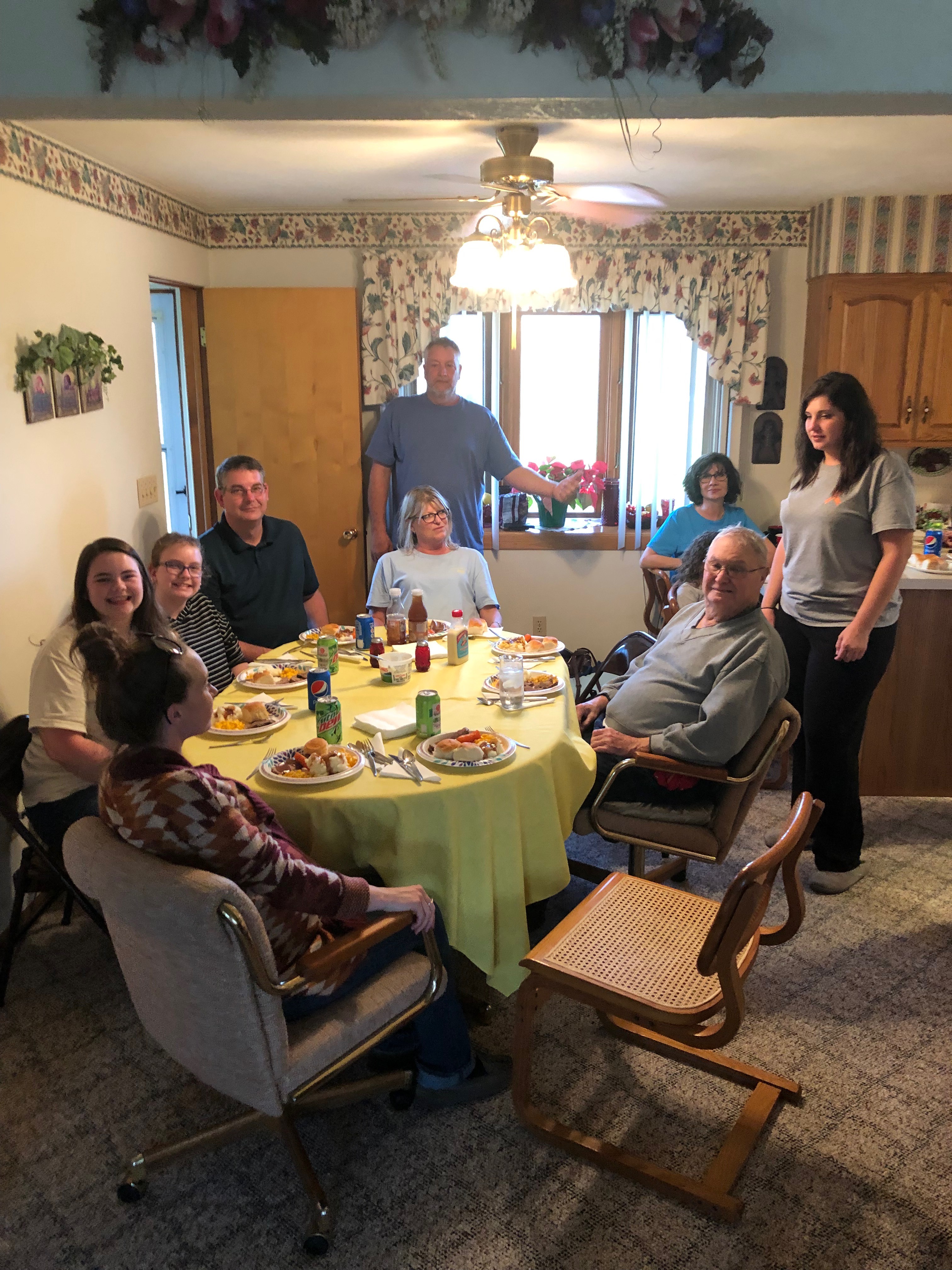
On April 6, 2019, I completed the Kentucky Kitchen Table (KKT) Project in hometown of Bowling Green, KY with eight people. Of these eight, there was one that I did not know well. Four of the others were family members that I had not seen in five years, contributing to the diversity and differing of opinions during the dinner. Together, we all sat around the kitchen table and shared a well-developed conversation about citizenship and democracy. 

The names of the people at my KKT were Arika, Chad, Melanie, Scott, Bonita, Katherine, Ed, and Emily. Arika is my younger sister. She is active in art club, dance, and choir at her elementary school as well as youth group at our church. My father Chad works at a company that produces self-check-out lanes for major corporations like Wal-Mart and enjoys debating political topics with me. My aunt Melanie, whom I had not seen in a couple of years, works as the district manager of a major gas company; she is extremely dedicated to providing for her three children and her grandson. My uncle Scott is from a rural area and spends most of his time providing household services and spending time with his granddaughters. My aunt Bonita, whom is married to Scott, works at the local Shaker village and enjoys the family get-togethers we have since she does not see the family very often. Katherine, the daughter of Bonita and Scott, is my eldest cousin whom I relate to most and share many beliefs; she is dedicated to providing a family-oriented household with her longtime boyfriend and daughter. My great grandfather Ed is from Illinois and has been a major parental influence on my father and his siblings after their parents divorced. He is very strict in his beliefs of the Catholic church. Finally, Emily is the girlfriend of my cousin and longtime family friend of Melanie. Through this dinner, I learned more about her perspective on democracy as this was the first time I had a stimulating conversation with her. 

To begin the dinner, Ed said a prayer and blessed the meal. We started with casual conversation to catch up with the family members we had not seen in a couple of years. They asked me about my experience in college; thus, transitioning the conversation to the nature of the dinner and the project of KKT. 

What does citizenship mean to you? 

Before I asked this question, I knew it would bring about some controversy and debate to the table, which is the foundation for intellectually-stimulating conversations. Arika answered first by saying that citizenship is being a citizen in the country that you live in. She had recently studied what it meant to be a United States citizen in her social studies class. I further inquired about other qualities of citizenship that are important to each of us at the table. Ed explained that he thought citizenship meant being patriotic and dedicated to serving your country whether that be through the military or community service. Many of us around the table agreed that being dedicated to the country is an important aspect of citizenship. Scott agreed with this as well and related it to his time serving as a marine. Despite this agreement, the differing of opinions lied in at what point are you a citizen if you were not born into the country. After many back-and-forth statements, we decided to shift the topic of conversation to the type of community we want to live in instead of focusing on the negative press of citizenship. 

What kind of community do you want to live in? 

At this point in the dinner, the race track near the house became active. Melanie joked that she wanted to live in a community where there was not a race track nearby so that she could have some peace and quiet. This lightened the mood from the previous indifference and got all the members reengaged in the conversation. Emily inserted that she wanted to live in a safe community that she wouldn’t have to worry about the safety of her kids when they played outside. She explained that the area of Bowling Green in which she grew up made her mother uncomfortable, and she was not allowed to go outside by herself during the afternoons. Katherine then stated that she loved the area in which she lives because it is secluded, so she does not have to worry too much about her daughter going outside to play in the back yard. Chad jumped in and said that living in complete isolation wouldn’t be so bad since there is so much corruption and crime in the world. I could see that the conversation was starting to focus more on the negatives and what we don’t want rather than the positives, so I asked everyone about their favorite part of living in the area they do now. 

What is the thing you love most about living where you do? 

Bonita answered this question first. Growing up in a rural area, she always lived next door to her family members. As her daughters grew up and started having families of their own, they kept this mentality as they moved out of the house. All of her kids live within walking distance of her home, so she loves that most. She explained that she loved the area because of the family atmosphere it provided with other families as well as her own. Arika said that she loves being able to go outside and play with the neighbors. Chad agreed with Arika and said that he really loves the neighborhood because everyone helps one another out. He explained that last week Arika saw an unknown vehicle parked near the house and was worried about getting into the house safely. He called the neighbors immediately to the left, and they picked her up off the bus and let her stay at their house until he got home. In times of need, the neighbors are always there to help.  

Reflection 

Growing up, family dinners were an important part of my weekends especially when out-of-town family members came to Bowling Green. Each night, my family sits around the kitchen table with no electronics, and we discuss our day and important things. However, this project allowed me to have intellectual conversation and learn more about my family’s and friends’ beliefs in depth. The KKT project is a great example of the essential question of this course about how we can live better together. Initiating conversation like this one can create a better understanding of differing perspectives that will allow for consensus and progress in society and the community. This experience also relates to the reading of tackling wicked problems through deliberative engagement because although this dinner was not a true deliberation, it is a step to normalizing those types of discussions. My experience with the KKT was one that I will value forever and hope to continue in the future with more diverse people. 

Sophie’s Kentucky Kitchen Table

By Sophie

Introductions

For my Kentucky Kitchen Table, I went to Mallory’s house in Bowling Green on March 29th. There were four attendees, which included myself, Mallory, Mallory’s younger sister Lindsey, and their mother Sherry. Mallory and I are both freshman at Western Kentucky University. I’m an exercise science major and enjoy playing soccer in my free time. Mallory is officially a biology major but she is still exploring her options. She loves to do yoga in her free time. I met Mallory last semester through a mutual friend and have had two classes with her, Citizen and Self and a biology class. I met Lindsey and Sherry very briefly last semester but haven’t spent a lot of time with any of them. Lindsey is homeschooled and a junior in high school who loves to dance and is even considering teaching it one day. Sherry works from home transcribing medical records and is very involved with the youth groups at her church.

To begin the evening, the four of us sat around the table and got to know a bit more about each other. Sherry asked some questions about my major, hometown, and what I wanted to do for a career, and she told me a bit about her job. She said she really enjoyed it because she is able to do it from home and it gives her more time to be with her family and be involved with her church.

What does citizenship mean to you?

Sherry said a prayer to begin our meal. “Beyond voting, paying taxes, and following laws, what does citizenship mean to you?” was the first question we tackled. Sherry started us off and explained that she thought being a citizen meant you felt like you belonged. Beyond just living in the US, she has a sense that the country is a place she is welcome and belongs. I agreed with that and also said that I thought being a citizen meant you really cared about the country and its people, want it to be a better place, and have opinions about issues within the country. The four of us all seemed to agree on both this and what Sherry initially shared.

What do you think are the best things in our world today?

Next, Mallory asked what we thought were the best things in the world today. She began by saying that one of the best things is how we can communicate so easily with people around the world. We all agreed because it makes it easier to keep in touch with friends and family that don’t live close by. The closest extended family I have to home is in North Carolina, so technology has been extremely beneficial in maintaining our relationships.

Do you know your neighbors?

Next, we talked about whether or not we know our neighbors. Sherry, Mallory, and Lindsey laughed as they told me about a few of their neighbors. They told me that they knew the neighbors on their immediate left and right, and Sherry told me about one strange interaction she had with another neighbor that lives across the street. They talked about the man that lives by himself next door to them, and Mallory and Lindsey shared that they often cat-sit for him when he goes out of town for the holidays. I currently live in PFT, and said that I do know the majority of the girls on my floor. I then explained that I only really know and have a relationship with one of my neighbors at my home in Richmond. They are an older couple that lives immediately to the right of us. Our neighbors on the other side just recently moved in, and I shared that I had met them and we’re friendly with one another, but I don’t know a lot about them.

Does your job serve a greater purpose?

We moved on to talk about whether or not we believed our jobs served a greater purpose. I am a sports writer for the Herald here at WKU, and while I would like to think my job does serve a greater purpose, I couldn’t really think of any reasons that it did. However, Sherry, Mallory, and Lindsey all said that they felt their jobs served a greater purpose. Mallory works at a local school in its after-school program and Lindsey works at a local dance studio.

Do you think we have obligations to other people in or country and community?

Finally, we discussed what our obligations are to people within our community. Sherry talked a bit about how it was hard to find a balance with our obligations to others, bringing up how it isn’t always safe to help people, with a specific example being people out in public asking for help and money. That’s when Mallory brought up the video we watched in class of the girl in China who was repeatedly hit by a vehicle while bystanders failed to do anything to help her. We talked about how some people may have walked by out of fear that it was a scam, but I mentioned that if you are afraid for your own safety, you can always call authorities to come help. We all agreed that if you don’t feel safe inserting yourself in the situation, you don’t necessarily have an obligation to do so. However, we all felt that there’s always something you can do, like calling the police to help, and are obligated to at least do that.

Reflecting

While I did grow up having dinner every night around the table with my family, we didn’t always have the deeper conversations that this meal consisted of. Through our conversation, I felt like I got to know Mallory a bit better and on a different level than I had before. I also feel like I learned some things that will help going into the deliberation, as we had to prod a bit at the beginning to really get the conversation flowing. Two of the central questions of this course ask how we can live better together and how we can solve problems. I felt that the KKT experience related to both of these questions because in order to live better together, we must have a better understanding of each other. I felt that the conversation I had with Mallory, Sherry, and Lindsey certainly gave me a better understanding of them. Additionally, I think that understanding and engaging with each other builds a better base for us to solve problems, so that multiple perspectives are brought into play. Overall, my KKT was a positive experience that I was glad to share with Mallory, Sherry, and Lindsey.


Julia’s Kentucky Kitchen Table

By Julia

My Kentucky Kitchen Table took place on March 31th, 2019 at my house in Louisville, Kentucky. Our discussion was held while enjoying our freshly made dinner of grilled chicken, broccoli casserole, diced potatoes, salad, and best of all, brownies with ice cream. Although it definitely did not go as planned, we were still able to enjoy our time discussing topics that never come up at our standard family dinners. The participants in my discussion included myself along with my mom, dad, brother, grandma, and my grandma’s husband. 

Our discussion was well-rounded because it included perspectives from three different generations. Because of this, we discovered some differing core values from our upbringings that brought an aspect of variance into the conversation. My mother, Laura, graduated from WKU with a degree in Healthcare Administration and now works at Jewish Hospital Shelbyville as the Manager of Patient Access. My father, Rick, enjoys fixing and building basically anything and holds very old school ideas. He recently switched jobs from an industrial engineer to a countertop installer because he wanted to start doing a job that allowed him to do hands on work. My brother, Donnie, is a Junior at WKU and is majoring in Sports Management and Marketing. He is also on the Cross Country and Track team and spends most of his time watching whatever sports he can find on TV. My grandma, Ella, used to work as a comapany secretary, but now she and her husband, Joe, spend most of their time running the church they attend. Joe immigrated to the U.S. from Munich, Germany when he was four and later fought in the Vietnam War. Everyone at the table was raised Lutheran and had very conservative views, so I had an idea of what their take on many of the topics would be. 

To begin the conversation, I decided to ask everyone at the table to define the term “citizen” in their own words to see if their immediate response jumped to paying taxes and abiding by the law. This question initially resulted in some perplexed looks, but after they understood that I wasn’t looking for a perfect answer, my dad was the first one to budge in and say, “it means you are responsible for following laws and paying taxes.” I gave them a few more seconds of silence to see if anyone would add to this definition, but the only other response I got was from my grandma who said, “it means you’re native to a particular country just like I am a citizen of the United States.” I of course knew that this was not the response that I was looking for and decided I needed to go ahead and ask the question, “Beyond voting, paying taxes, and following laws, what does citizenship mean to you?” After several introspective thoughts and a few bites of food later, my dad decided to delve deeper into his previous response and say that citizenship is also about providing for your community. He went on to say that we are not only responsible for our actions toward one another but also toward our country and our planet. We all began to collectively come up with some ways as to how we should use our position as citizens to be active in our community. To us citizenship means asking others if they need help, listening to one another’s opinions, volunteering in the community, and overall using our rights as citizens in a meaningful manner. We were all able to agree that citizenship is about acknowledgement by the individual that the community is bigger than themselves. Therefore, we have a responsibility to our community to be educated on social problems and make sensible actions.

This conversation then led me into asking the next question, “Do you think we have any obligations to other people in our country or community?” This question resulted in a few differing ideas which I believe made our conversation much richer in sincerity. My grandma was the first to shockingly voice her opinion through almost perfectly quoting the bible verse Romans 13:8: “Owe no one anything, except to love each other, for the one who loves another has fulfilled the law.” However, she and Joe also believe that we have no obligation to help those that do not show any desire to help themselves. My mom had a small disagreement with this and instead said it should automatically be our moral response to help others even if they do or do not truly deserve our empathy. To bring their differing opinions to surface, I gave everyone the scenario that they are walking to a mandatory event and notice a man lying on the side of the street, visibly dying, surrounded by alcohol and indications of drug use. I then asked them whether or not it was their obligation to help the man. This is when things got more interesting. While my mom and dad said yes, “it is not only your obligation but also your responsibility,” my grandma and Joe said that this man’s problems were brought upon by himself. They believe that there are other people who are paid to help individuals in these types of situations. Although this resulted in a few moments of awkward silence, we were all eventually able to vaguely agree that there should not need to be any sort of greater responsibility like a religious belief because helping others is simply the morally correct thing to do.

After this relatively controversial topic, I decided to go into a less opinionated question and ask, “What kind of community do you want to live in?” and “What do you love most about where you live?” Although we live just 25 minutes away from downtown Louisville, our house is situated deep in the woods on a road shared by only 6 other log homes. My brother and I discussed how we have spent our whole lives knowing our neighbors and treating them like family because that’s how we thought all neighbors treated one another. We’ve never felt unwelcome by anyone on our street because it’s our own little community. My parents added how they prefer where we live now over the typical urban lifestyle because we are able to live at a slower pace. Both of my parents grew up in rural communities in which everyone helped each other out, but they were not as close to their neighbors as we are now. My grandma and Joe spent their childhood living on farms, but they have now moved into a customary neighborhood in which they both agree is not nearly as hospitable as they had hoped it would be. My grandma began to reflect upon the time that she was able to go to her neighbors to borrow eggs, but now after living in this new community for 2 years, she still doesn’t even know her neighbor’s names. This goes to show how much times have changed. Everyone’s answers reminded me of the reading “Love Thy Neighbor” because it held similar themes of how we should engage ourselves with those around us. It’s easy to say, “Well it’s not my family, so why should I concern myself with them?”, but this kind of thinking is what extends social problems for years and years to come. We need to come together as a community and take action now rather than push responsibility on to someone else. My brother and I were lucky to have been raised in a place that allows us to connect with our neighbors through delivering Christmas cookies to their doorstep or helping cut up some fallen trees after a storm. The only thing that we would change about where we live now is the powerline location. To no surprise, while we were wrapping up this question, the storm outside caused a tree to fall and knock out our neighborhoods power once again.

Since we are so used to this happening now, my dad ran to grab a battery powered lantern, and we decided to quickly wrap up our discussion by talking about what social issue we all hold closest to our hearts. In my family we never talk about current social issues and our core beliefs because they just don’t come up in our casual conversations about how our day has been. This was my first time hearing my family’s voices on topics like Medicaid, gun control, and immigration so I quickly became caught up in the conversation and forgot that we were actually sitting in almost complete darkness. I believe that discussions like that of my Kentucky Kitchen Table need to become more common. I have learned that they allow you to connect to people with different backgrounds on a deeper level. Through our conversation, we came to a final agreement that as citizens, whether young or old, we need to be accountable for our actions and understand that we are a part of something greater than ourselves. It all boils down to wanting to be better. A better citizen, a better community, a better country.

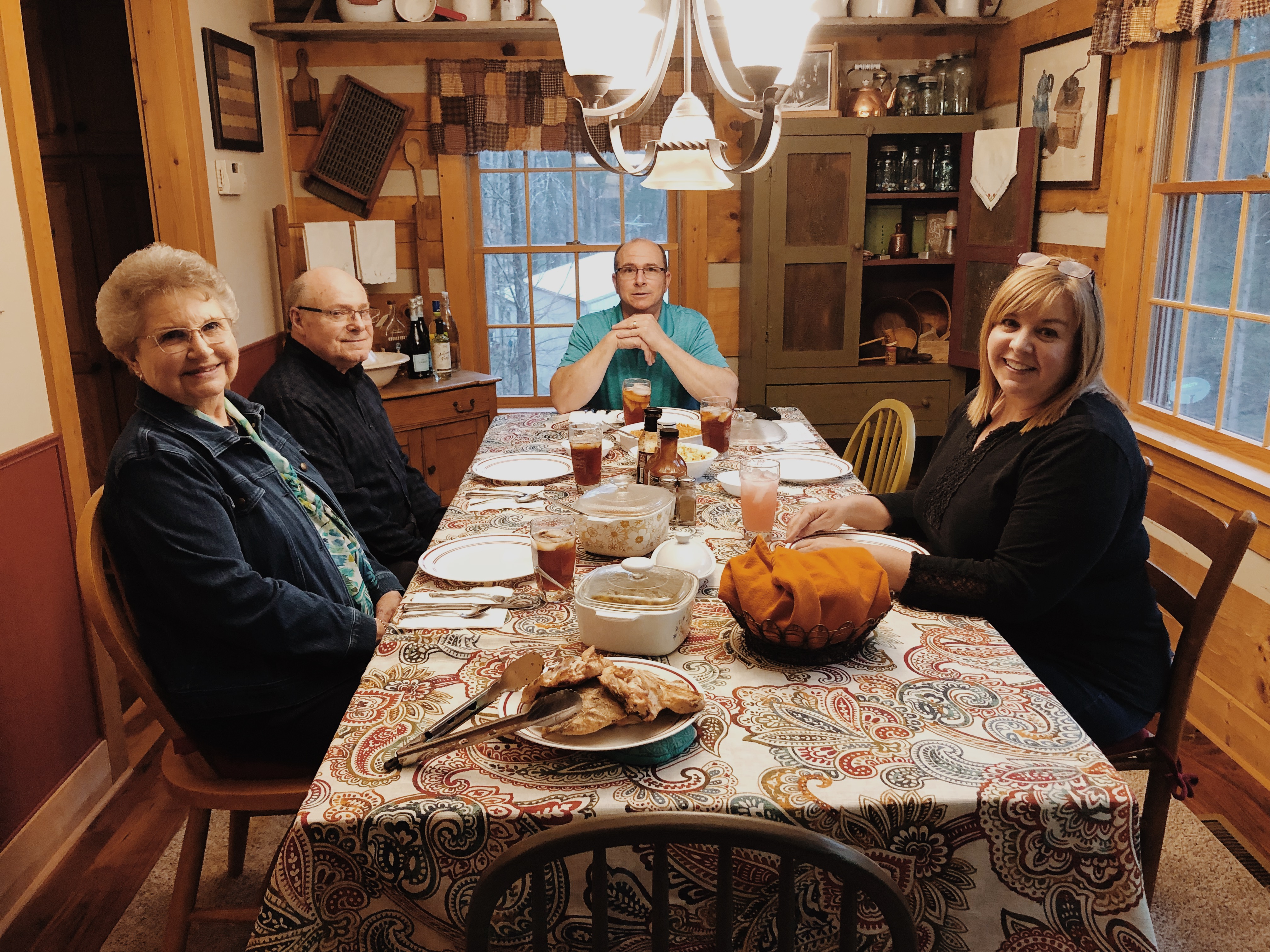
Ella, Joe, Rick, Donnie (not pictured), and Laura before the power went out
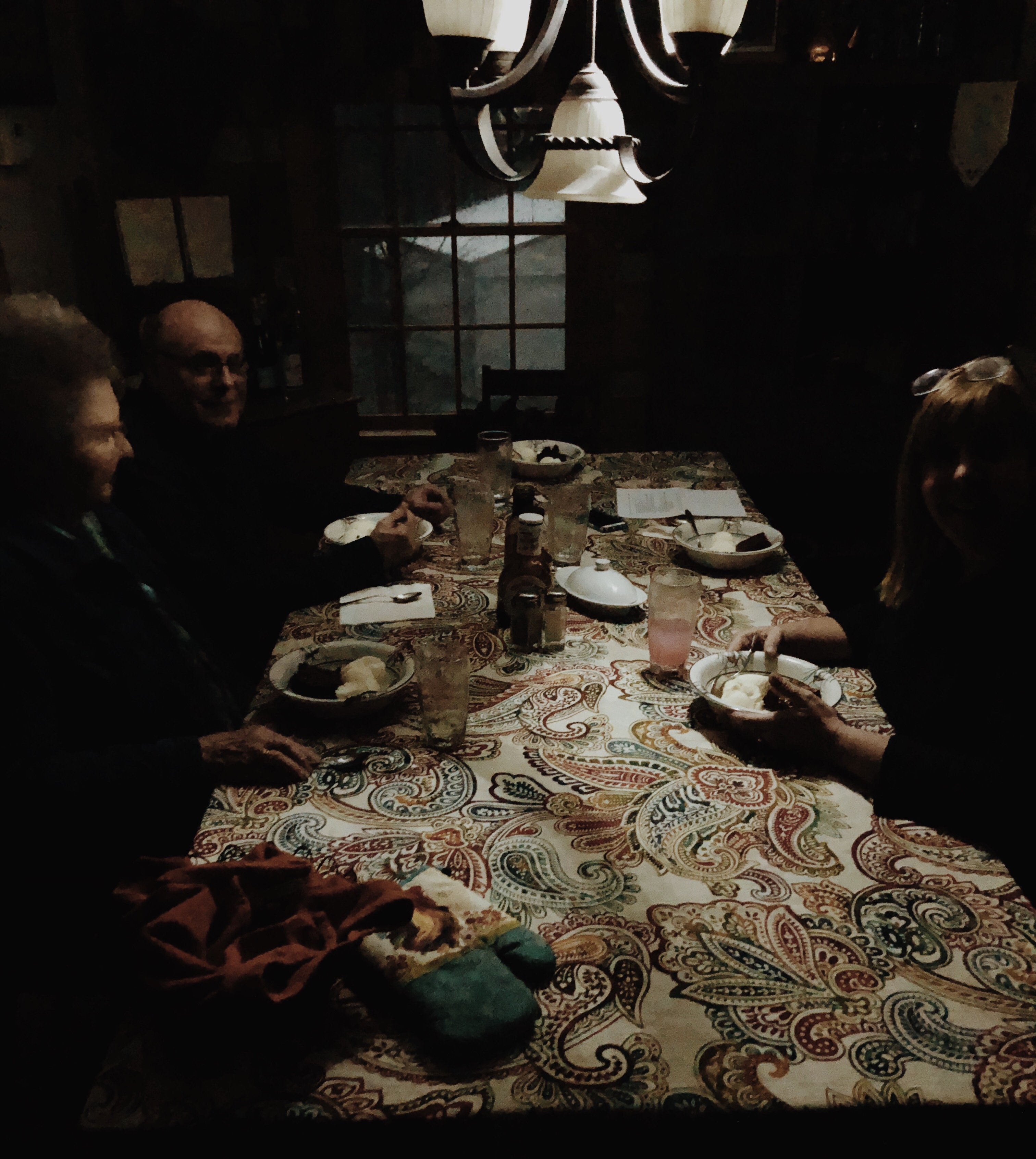
…and after the power went out.

Mallory’s Kentucky Kitchen Table

By Mallory

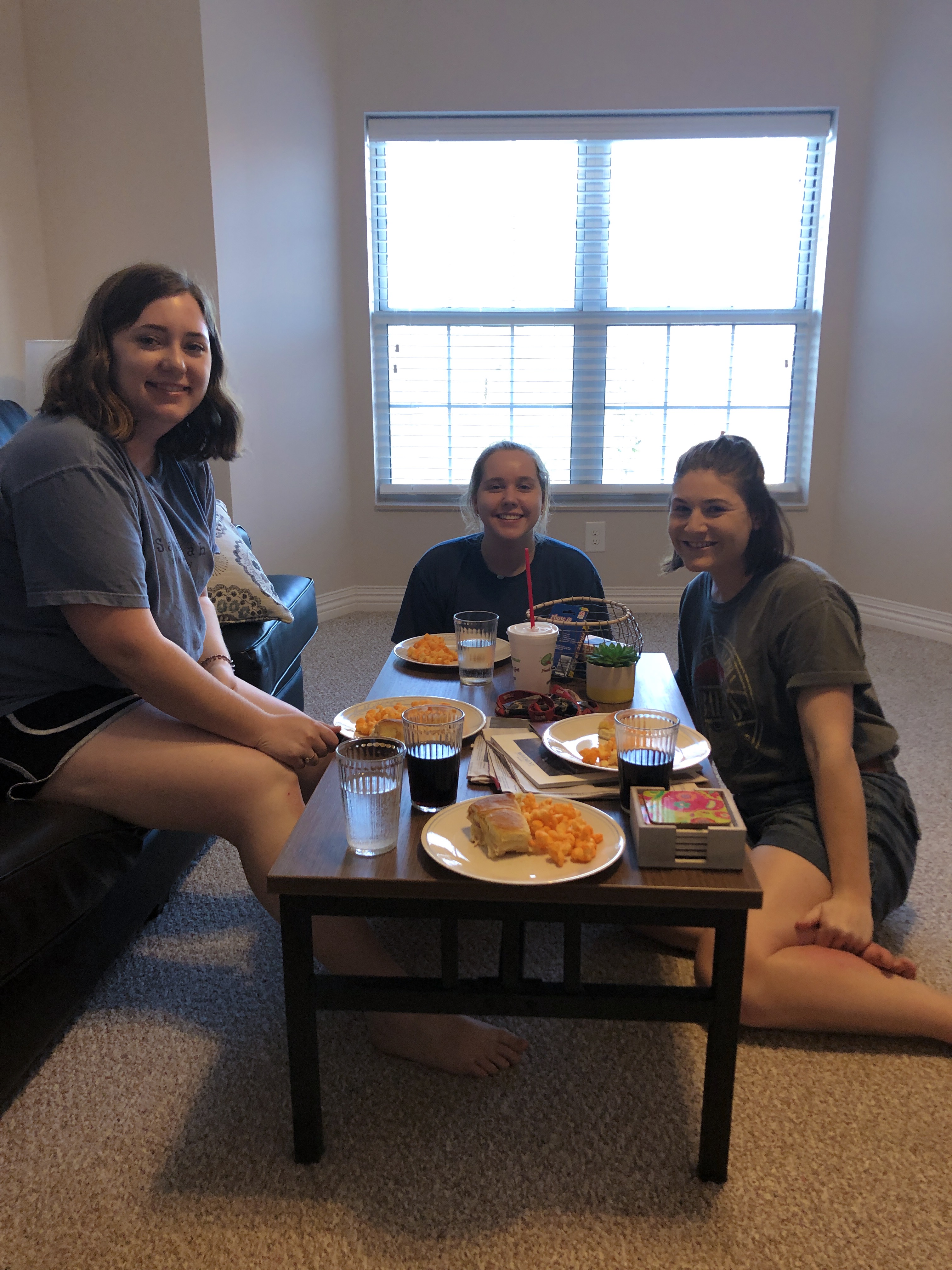
My Kentucky Kitchen Table meal took place on March 29th, 2019, in my hometown of Bowling Green, Kentucky. There were four people in attendance: me (Mallory), Sophie, Lindsey, and my mom, Sherry. Sophie and I are first year college students at Western Kentucky University and are in the same Citizen and Self class. We met last semester in another class we had together, but we do not know each other very well and do not really spend a lot of time together outside of class. Sophie enjoys sports and writes for the WKU newspaper sports section. As for me, I love yoga (when I have time for it) and music, and I work a few days a week at a local private school in the after-school program. Lindsey is my younger sister, who is homeschooled and in her junior year of high school. She is passionate about all things music, dance, and the arts as a whole. She works one day a week for a local dance studio and thinks she may want to pursue teaching dance as a career someday. My mom, Sherry, works from home and is a very active volunteer for planning and chaperoning church youth programs and trips.

We began the evening with some casual chatting about weekend plans and getting to know each other a bit. When all of the food was ready and on the table, we all sat down at the kitchen table, my mom said a blessing for the food, and we began to fill our plates. Since Sherry and Lindsey have only briefly met Sophie before, they spent a few minutes talking to her about where she was from, what she likes to do, what her major is, how her classes are going, and other such “get to know you” topics. Then the conversation turned to the question of: “Beyond voting, paying taxes, and following laws, what does citizenship mean to you?” My mom was the first to answer, and in my opinion said it well when she said, “To me, citizenship is about living somewhere/in a community where you feel you have a sense of belonging. I am a citizen of the United States because I live here, but also because I feel like I belong here.” We all agreed to that statement and Sophie added that she felt that citizenship is about belonging but also about having a sense of responsibility, to which we all agreed to.

After this discussion, we moved on to some of the other questions. Someone asked the question, “What do you think are the best things about our world today?” I answered and said that ease of communication and modern technology was one thing about our world today that I valued, besides freedom and other such qualities we experience in our country.  Lindsey slightly contradicted me on this statement, saying that I only valued modern technology and ability to easily communicate because I am in a long distance relationship. I agreed that that definitely did influence that statement, but even outside of that I value being able to communicate with my friends and family who are traveling abroad or do not live in the same city, state, or even country as me.

Next, I asked, “Do you know your neighbors? Why or why not?” My mom answered this question for me and Lindsey too since we both still live at home. She explained to Sophie that we do know our neighbors that are on the immediate opposite sides of us, but not really anyone else in the neighborhood. She told Sophie about the couple and their child that lives on the left side of us and the older man who is a widower who lives on our right side. We told some fun stories about them, as well of some of the other people who live in our neighborhood that we have not formally met but have had a couple of encounters with. Sophie said that she knew her neighbors on one side, but did not know the others because they have not lived there very long. However, she said she of course knows her “neighbors” in her dorm on campus.

 We also discussed whether we thought our jobs served a greater purpose and if we believed that we had any obligations to other people in our country or our community. Sophie said she did not think her job really served any greater purpose, but the rest of us believed that our jobs did serve a greater purpose through helping and influencing others. We faced a bit of controversy in our discussion on obligation to others. At first, we did not really agree. Sherry stated that she was concerned with the safety aspect of it, specifically using the example of stopping to help someone asking for money on the street. While I agreed that you had to be careful in those types of situations, I said that I thought we could always do something for people who need help, and I brought up the example of the little girl in China who was hit by a vehicle and many passed by but no one stopped to help her. Sophie agreed with me and said that it depends on the situation, and that if you did not feel safe stopping to help someone in that type of situation you could at least call authorities for help. After this, we all agreed that we do have a certain degree of obligation to help others, especially in critical or dangerous situations.

 Through our discussions, I learned some new things about the people I was with. I also learned the value of discussing important matters with people you are close to as well as those you do not know as well and the benefits that can come from practicing that skill. It reminds me of the open conversation setup that we have learned to implement in our Citizen and Self class during discussions, where anyone is welcome to say what they think and not be criticized for their opinions. This relates to one of our main questions of the class, which is: “How do we live better together?” Civilly engaging with one another is a great way to solve problems and live better together, and I think it is a powerful tool and skill to learn how to utilize both in and outside of the classroom. As Andrew Postman’s article, “The Energy Diet,” relates, we can make a difference in the world through small changes and small ideas, which I believe relates to the Kentucky Kitchen Table experience because when we discuss ideas and problems together, we can come up with answers or ideas that could potentially change society for the better.  

R to L: Me (Mallory), Sophie, Lindsey, and Sherry enjoying their KKT meal.

Sophie’s KKT

By Sophie 

I really enjoyed completing the Kentucky Kitchen Table Project which took place on April 4thin Bowling Green, Kentucky. There were six people including myself, three of which I did not know well, and we all sat and ate around the kitchen table together. 

The names of the people who were there were Harper, Nathan, Kat, Ashton, and Hayley. Harper is a sophomore at WKU who is extremely involved in student government and is very passionate about passionate about politics. Kat prides herself in her involvement with her church and her dedication to the WKU Nursing Program. Ashton, a junior, spoke a lot about her passion for social justice, especially racial equality. She mentioned her involvement in numerous mission trips and her love for her sorority and its philanthropic events. Hayley was the other young woman at the dinner with us. She finds joy in her job at a daycare in Bowling Green, and she offered insight as to why she chose not to participate in Greek Life  when we discussed community. 

The conversation that occurred during dinner went extremely well and flowed efficiently. There were many different opinions, but despite this, everyone remained respectful. The group had many different ways of answering the first question. Around half of the table spoke about the importance of serving others as a duty of citizenship. Others mentioned speaking up for what they believe in and being a good example for future generations. 

There were many different themes that came up during the conversation. The idea that our community should be accepting and supporting of everyone was often discussed as an expectation for society. The importance of communication was often a solution brought up when dealing with conflict within our communities which reminded me of our central question in class; how do we live better together? Some of them felt that their jobs reflected on their purpose, but others saw it as their duty in order to achieve success. 

There was a long discussion about religion and its role in citizenship. There were a variety of religious and spiritual perspectives including Catholicism, Christianity, Agnosticism, and one person who was Baptist. Many people thought that their religion impacted their role as a citizen because it affects their political and social viewpoints. Others felt that religion is considered an interference and that people should do what is best for the community rather than strictly follow beliefs of their faith. The group agreed that religion affects how you treat others, and many mentioned the desire for these groups to be more accepting of others with differences from majorities. 

I found what people had to say about the type of person they wanted to be very insightful. Each individual had something unique to add as to how they wanted to impact the world. I came to the realization that social issues influence what inspires others to make a difference. Often the answers to the type of person they want to be related to the issue that was closest to their hearts. Ashton spoke about how she wanted to be a person who accepts, loves and serves others. She said that she realized the type of person she wanted to be after her first couple of mission trips when she began to develop her passion for racial and ethnic equality. In addition, Hayley mentioned how she wants to be a teacher who kids see as a safety outlet and someone they can trust, and she then proceeded to talk about how her social issue concerns teaching rights. I enjoyed making this connection during the conversation and thought it would be a good thing to add to my observations. 

I learned a lot during this entire experience. I did not expect for my eyes to be opened to new ideas, but I feel as though I will have a new perspective not only with deliberations, but also with citizen interaction in general. I became more aware of the intrinsic motivation that causes people to value the morals they do. Often members stated their opinion and supported it with experience that has caused them to feel emotional one way or another. I began to ponder the idea that people often believe the things they do based on their life experiences, their emotions and the people they surround themselves with. I never thought too deeply as to why people value certain ideas, but the Kentucky Kitchen Table Assignment taught me to explore the personal motivation that brings people to have unique perspectives on various ideas. 

When pondering how I could relate my experience to what we have learned in class, many different ideas came to mind. Human interaction and morality can easily be related to the many discussions that have occurred in our class. The conversations at this specific dinner reminded me of the reading “How We Talk Matters,” because the entire project was dependent on respectful and empathetic conversation. The communication was extremely efficient because people were able to deliberate well. Despite there being various opinions, the conversation remained valid and reasonable. As mentioned in the reading, people often struggle to solve problems, because they cannot find any sort of common ground. I thought my group did a great job with understanding other people’s point of views while continuing to emphasize their values. I even thought about this article and how the conversation was a perfect example of community-based discussion. 

Overall, the Kentucky Kitchen Table was an extremely pleasant experience. Not only did I get to meet new people and learn more about those I already knew, but I also gained new perspective on the ideas of democracy and citizenship. It was enlightening to see a group of people with different viewpoints converse in a passionate yet respectful way. It provided a sense of hope for me when thinking of our community as a future; maybe society will be able to come together and deliberate in order to solve bigger problems that are prevalent in the world at that moment. 

Amelia’s Kentucky Kitchen Table

Sunday March 31, in Bowling Green Kentucky, I and six other people gathered around our friend’s tiny kitchen table in her apartment. Sitting closest to me was the girl I knew the least, Tatum, a pre-pharmacy major who will be heading to pharmacy school in Alabama next year. Tatum was one of the girls that lives in the apartment. On my other side, was my newest friend, Elizabeth. Elizabeth and I gotten to be friends in just the past month. Across from me was someone I know from my hometown, Lauren. Lauren is funny and lively. She also lived in the apartment. Beside Lauren was Kate. Kate is very intelligent and has many inciteful things to say during our conversation. Kate is a religion major. Beside Kate was one of my partners for this project, Jeanna. Jeanna is a broadcasting major and on the WKU dance team. Across from Jeanna is Anna. Anna was my other partner for our project. Anna is an exercise science major, and like Elizabeth, I’ve only come to know her in the past month. In fact, all of the people around the table I wanted to get to know better.

After we settled in, with our plates of salad, potatoes, and chicken for some, eggs for me and Elizabeth (we’re both vegetarian), Jeanna began our conversation, “what does citizenship mean to you?” I added, “besides paying taxes, voting, and following laws.” Everyone took a minute to chew and process. Kate began by saying she thinks of citizenship as being a member of a community. You have obligations to your community, like participating in local politics and watching out for one another. She also touches on being a member of a global community. I found her mention of being a global community member interesting, as she wants to be a missionary. We continued with the theme of being a member of a community. There was a general consensus among all of us that being in a community and being a citizen means caring about what happens in your community. Lauren mentioned that being a citizen also means knowing the history of the place you live and seeing how that history has affected the problems you community faces now. She brought up an interesting point. We discussed how the history of citizenship in our country has changed. Instead of assimilating into the American culture, citizenship in American is now more about embracing where you came from. Tatum added that encouraging people to embrace their heritage is important for working towards the betterment of our society. Elizabeth changed the trajectory of the conversation by saying the reason she felt the need to be a good citizen was because of the fact that she is a woman. We were all a little confused at first, until she elaborated. She said it’s important to understand the privilege we have as women in America. She talked about how many women in other countries don’t have the same freedoms as we do. Thus, because of the privilege she is afforded by her country, she felt an obligation to be a good citizen. This was a different way of looking at citizenship then we had considered, seeing being a good citizen as more of an obligation. From there, Kate discussed how global citizenship means fighting for the rights of people who are oppressed. From there, Jeanna asked the question, “what do you think are the best parts of our world today?” This question took a little longer for us to answer, as we all admitted that all we could think about are the negative parts of our world. We discussed advances in medicine and the furthering of human rights. We also discussed how people are becoming more aware of the problems facing our world, like climate change. Then we moved on to one social issue we really cared about. We talked about immigration and climate change and Kate mentioned the current political climate, specifically, how politicians use inflammatory language. We continued that thought, discussing how disrespectful we are to one another. We all agreed that are country could use more civility. We related this problem back to practicing citizenship and said that communities and members of communities should encourage listening to differing viewpoints. Everyone contributed to a really interesting conversation and I had the opportunity to learn a lot about the people I didn’t know very well.

One of the biggest things I learned from this assignment is that a lot of the issues with our current world we talked about, like climate change, are problems that we can address by being good citizens. Communities have the opportunity to fight a lot of these issues, and its up to us as members of that community to fight for change. Additionally, I learned that people with differing views can easily find common ground. We all agreed we needed more civility in our world. I also learned how easy it is to think about the bad things going on in our world but challenging to find good things. Perhaps this says more about the news we spread as opposed to an accurate depiction of the world as it is.

Our discussion reminded me of many of the discussions we have had in Honors 251. It was a lot of bouncing ideas off one another and seeing things from a different perspective. It reminded me of the empathy reading we just read, “The Baby in the Well”. We used our empathy for each other to appreciate each other’s backgrounds and values. We used empathy to discuss the largest issues we feel the world faces. Many of what we discussed a good citizen is includes practicing empathy. Most importantly, like the article encouraged, we used empathy as a jumping off point for change. This kind of conversation helped inspire us to strive for change in our communities and globally. By opening up a dialogue about controversial issues, we were able to delve deeper into the issues and practice empathy when listening to those with different views. In a way, by discussing these issues, we began building a bridge to the world we want to see.  

Emma’s KKT

By Emma

I went home to Louisville, Kentucky to host my Kentucky Kitchen Table Dinner. I invited my dad, David, sister, Sarah, brother, Andrew, and our neighbors Caroline and Sean. My dad is a dentist and leans more conservative. My sister is a nurse and considers herself an independent. My brother is a senior at the University of Louisville and is also conservative like my father. Our two neighbors, Caroline and Sean are more left sided and liberal. I tried to get a demographic of different views and perspectives to broaden the discussion.

I opened the discussion with asking all the members of the dinner to be respectful of everyone’s input and opinions. Sometimes family and friend discussions can get tense and carried off topic.

I began the first question by asking the required question, “Beyond voting, paying taxes and following law, what does citizenship mean to you?” Caroline was the first to jump in and replied with, “Everyone should bring something to the table to their community. It can be simple or small, big or inspiring. Contribution to your community and those around you is important as a citizen.” Andrew added onto the conversation, “I believe citizenship means serving your community on all scales.” The table discussion came to a consensus that contribution to one’s community whether it be voting, charity, one’s occupation, etc. is important regarding citizenship. We conversed that whatever one is motivated and inspired by should use that as a way to feed one’s environment and those around him or her.

I next lead the discussion with the question, “How do you think your job relates to your role as a citizen?” Sean commented and replied, “As an owner of a company, I feel that I am employing people and making their lives better. My company is big on including immigrants and connecting with charities such as Catholic Charities. Working with immigrants, I have learned how their work ethic is so vigilant and that is something as Americans that we can learn from. However, sometimes I do get distracted and involved in my own work that I forget that I do have a purpose as a citizen and to serve others within my job.” My sister, Sarah, added on, “As a nurse, I experience intense, critical medical situations where I am called to assistance. I think my job relates to my role as a citizen because I work to help and save lives every day. I work with families of patients admitted and console them in times of crisis. My job is stressful, but at the end of the day, I am happy to be contributing to peoples’ lives.” The table discussion agreed that having one’s job connect to one’s role as a citizen can be challenging at times. Many jobs in society to not work to serve others as a purpose of charity. However, we agreed that with the occupations all around the world, there is always room to be thoughtful in the way people go about their business. Even if it is as simple as making a work environment comfortable and friendly to all employees, that could be a way to be a way to relate a job to citizenship. Even better, people can get involved in charities and hands-on service within the field of their work.

The next question relates to the one above, “Do you see your job as serving a greater purpose?” My sister commented again on how her role as a nurse is self-explanatory in serving a greater purpose within the medical field. Caroline, who is in Graduate School for her master’s in psychology replied, “I chose this field to work with children and adolescents. I have always been interested in working with those from broken families and be an aid for them. I also want to work with the families as a whole who are struggling to help get to the root of the issues that continue to contribute to the cycle of family brokenness and abuse. I hope to bring a little light to their lives and help them understand that things can get better. I think my occupation serves a greater purpose by guiding, listening, and being there for those in need.” People intend for their jobs to have a greater purpose, but that is not always the case. Economic stability can be a big reason as to why people choose the professions they do. Although not all jobs serve a greater purpose, that does not mean one cannot be the best citizen he or she can.

Later in the table discussion, I told them about the LGBTQ+ deliberation I attended with my class. I told them about how it was about whether religious rights are accepted as to a way of discrimination of those with different sexual orientations. In addition, I told them about the fairness ordinance. I then asked the question, “Does your religious or spiritual identity relate to how you think we should treat other people?” Remaining on the topic of the LGBTQ+ community, my dad replied, “Growing up Catholic, homosexual people were not very accepted. It was rare to really know anyone homosexual—or at least homosexual people being ‘out.’ However, it was very interesting to see how socially accepting society became and still is becoming over the years. Being 53, I have noticed how generational views are regarding this issue.” The table conversation continued to discuss how religion connects to how people treat others. We agreed that it is easy to forget about religious values in treatment of others. Religious values do not always coincide with the actions of people.

The theme within the table discussion I found was individualism. Many topics referred to how a single individual decides to live his or her life and the values they choose to carry. We ended the table discussion talking about humans have intrinsic qualities that lead them to make the decisions they do. We conversed about how all actions relate to one’s own morals and what he or she believes is right. Because humans are inherent to the way they think, it is important for society to come together and listen to one another to come to consensuses on conflicts. Individuals will choose to make their own choices regardless of what may be right.

The Kentucky Kitchen Table Discussion taught me that it is important to have conversations like these with those in your community. I learned a lot about my family and neighbors. I learned the significance of listening to the thoughts and opinions of others that broadened my views. This discussion was very insightful to the idea that working with your community starts with simple conversations as these.

This talk connects with our course because I kept thinking about the central question, “How can we solve problems?” Solving problems begins with discussion and the sharing of ideas and opinions. This reminded me of the reading “How We Talk Matters” by Keith Melville. When discussing controversial issues or sensitive topics that have a broad range of opinions, it is crucial to be thoughtful of how we speak to one another. Keeping an open mind, listening, taking into consideration someone else’s position is all important when solving problems. Surprisingly, my table did a decent job of listening and understanding one another when sharing. The table conversation validated the claim in Melville’s piece that the way we talk truly does matter.

Becca’s Kentucky Kitchen Table

By Becca

My Kentucky Kitchen Table took place in Bowling Green, Kentucky on March 25, 2019. My friend, Kelsi, was so kind and let me use her beautiful home to host the dinner. It proved to be incredibly difficult to get enough people to come, because most people anymore are too busy to make time for a sit-down, home-cooked meal together. Luckily, Kelsi invited a friend and her husband, both of whom I did not know very well. I ended up really enjoying this assignment, because I truly love the conversations that can develop when people are sharing food, and I enjoyed being able to host friends with unique personalities, thoughts, and opinions.

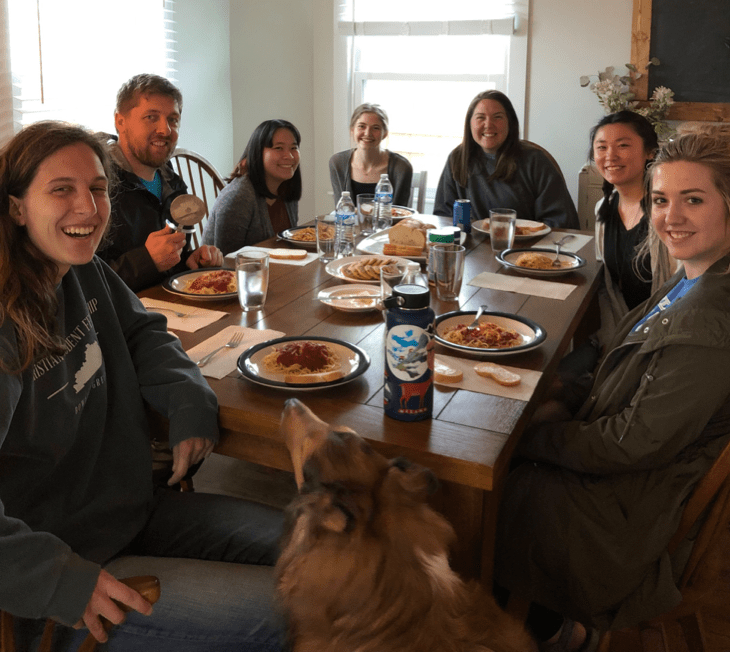
Kelsi’s friend, Callie, is in the bottom left hand corner of the picture. She works as a Christian Student Fellowship staff leader, and she is currently a senior at Western Kentucky University. She enjoys being outdoors and being with friends. Just to the right of Callie is Kelsi’s husband, Nathan. He also works at CSF, and is a landlord for Mimosa apartments. He brought lots of diversity to the table through his perspective as a boy and being full of energy. Next, is my roommate, Emmy. She is a student at WKU, and she loves to listen to music and play piano. She tends to be more on the quiet side, but her opinions introduced some new discussions to the table. Following Emmy is Liz, who is a forensic psychology and criminology major at WKU. Liz expressed many well-reasoned thoughts and opinions that really pushed the table to think deeply about issues. To the right of Liz is Kelsi. She works as a CSF staff leader. Her favorite things include photography, cooking, and talking to people. Beside Kelsi is Emmi. She helped with hosting the Kentucky Kitchen Table. Last in the picture is Haleigh. Haleigh is another freshman at WKU who loves to read and watch UK basketball. I am taking the picture. My name is Becca, and I am a freshman exercise science student at WKU with dreams of becoming a physical therapist. I am from Lexington, love my family, love hiking, and really enjoy spending time with my friends.

The making of the meal was really special to me. I brought ingredients to make a spaghetti dinner, so we all piled into the kitchen to cook the pasta and organize the sides onto plates. I think having a home-cooked meal was really important when it came to discussing community and citizenship.

The first question we discussed was “Beyond voting, paying taxes, and following laws, what does citizenship mean to you?” This question threw a curveball at Nathan, because his first reaction involved giving money to the government. Kelsi implied that being a citizen includes participation. It is possible to participate without merely voting, paying taxes, and following laws. It can also be becoming educated on issues. We used our table itself as a metaphor for citizenship because we actively participated in the conversation, and we even questioned Nathan’s citizenship when he left the table because it comprised his ability to participate in the conversation. Liz mentioned how participation as a citizen arises out of caring for your community and practicing activism. Everyone pretty much agreed that citizenship is a sense of belonging.

Following that question, we answered the question, “Do you know your neighbors?” This really livened the conversation because it stepped on the toes of every single person at the table, especially Nathan and Kelsi. They told us how they have been living in their house for six months now, and they still do not know their neighbors. They are not happy with that fact because their jobs are very relational, but sometimes when they come home, they forget to be a citizen in their neighborhood. Since Emmy and I are roommates, we discussed how we have some very interesting neighbors, but we don’t know any of them very well. Emmi and Liz mentioned the tough issue of the Minton shutdown and how that affected her ability to meet her neighbors. All of the freshmen at the table are now in different residence halls, and it is difficult to get to know neighbors that have already established themselves there. I learned that Nathan went to the same neighborhood Kroger in Lexington that I did. It was really interesting how he talked about riding his bike with neighborhood friends to go a get coffee from there. My childhood was nothing like that, and it was interesting to discover how today’s society does not value community involvement like it used to. In response to our favorite thing about living where we do, the table mostly threw out answers like having a bathroom and having space to host friends. We continued to talk about neighborly love by sharing what advice we would give our neighbors. For Emmi and I it was to turn the music down a little. Kelsi and Nathan just wanted a chance to meet their neighbors, so the table gave them ideas such as have a sweet tea stand to start up some conversations.

My favorite question that we talked about was “Who do you want to be?” Nathan immediately said he wanted to be a dog, because they are loyal and good. Kelsi said she want to look more like Jesus. Liz mentioned how she wants to be someone that makes changes and is not hypocritical. Callie profoundly said how she wants to actively live out what she preaches, which Nathan summed up very well as “Talk the talk, and walk the walk.” Everyone at the table strongly agreed that their religious and spiritual identity relate to how they see themselves as a citizen.

The ideas they shared reminded me of Jane Adams in “The Snare of Preparation.” In this article, Jane Adams talks about how she spent so much time preparing to help people that it took away from her being able to help people. Their idea is also very similar to what is discussed in Michael Pollens’ “Why Bother?” because it suggests the importance of practicing what you preach.

I learned how it is difficult for people in every walk of life to participate as a citizen, because while they may be well-intentioned, today’s society is not the best for forming community relationships and practicing citizenship.