Kentucky Kitchen Table: Georgia On My Mind

kkt pic

By Lauren

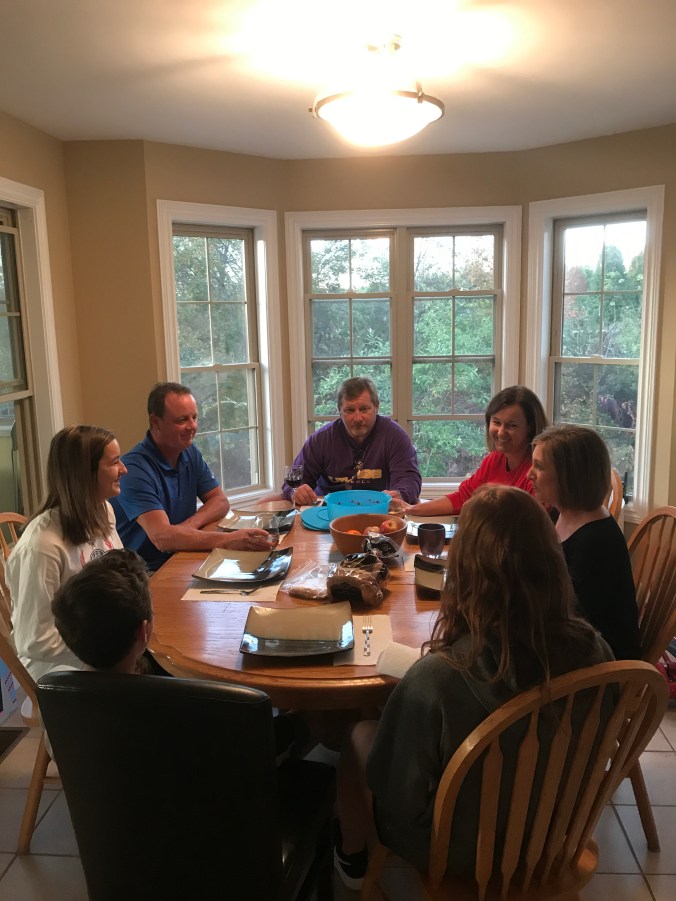
It is often a wonder how we all came to be here, in this exact spot, at this exact moment. I could trace a whole family tree up to my great-great-great-grandfather, a Revolutionary War veteran, but that’s not imperative for the story. Somehow, Eyvonne and Edward met at church when they were just teenagers and married some years later. He chose to attend some big-wig school to study engineering, but the Vietnam War was raging, and Edward had almost no choice but to enlist in some branch of the military – so he chose the Air Force. They settled in couples housing at an Air Force base, and during the same year of the first Moon landing, Lynn, their first child, was born. Sixteen years and several more moves later, Edward was finally an engineer, Eyvonne was a school teacher, and Lynn was a high school student, and it was then that Lynn met Jim. They would be friends for a long time before they would look at each other romantically, but in Lynn’s last year of college, Jim and Lynn went on their first date. A year later, they would marry, and seven years later, I was born. And now, we are here: a Saturday night in October, in a cabin almost like Heaven, nestled in the rolling mountains of Blue Ridge, Georgia.

The day was unusually hot, and to our dismay, the leaves had not yet begun to change for autumn, and were still a Summery, dry green. Nonetheless, this was Fall Break, and the family tradition was to drive four hours southeastward to stay in the rural town of Blue Ridge, and we would enjoy this vacation, even without the chill and color of autumn. Edward was manning the grill, being much more skilled at grilling steaks than the oft-impatient Jim, while Eyvonne, Lynn, and I were busy in the cabin kitchen, preparing baked potatoes, salad, and dinner rolls.

There seemed to be some nervousness at the prospect of tonight, for Eyvonne was quite under the impression that this was to be a performance, despite my reassurances that this was a relaxed chat not unlike any that the five of us had shared before. To assuage her, I provided some sample questions, so she could begin thinking of answers, which seemed to calm her nerves. Lynn, however, seemed to be excited. When I came to her months before and proposed that we do the Kentucky Kitchen Table while we were in Blue Ridge, she was supportive of the idea, if not even a little curious, for she found the BlogSpot and read through some of the entries with interest. Meanwhile, Jim and Edward didn’t know what to expect, nor did they seem to be worried, and were happily conversing on the deck as Edward watched the steaks with vigilance.

Finally, when the table was set and the steaks, potatoes, rolls, and salad were all done, the five of us took our places at the table. I didn’t want to force the conversation, so I waited for a while as we all heaped the food onto our plates. There was, however, a general sense of nervous feeling (or maybe, that was just me) as we built our baked potatoes, and after a little while of munching, I launched into the first question: “Beyond voting, paying taxes, and following laws, what does ‘citizenship’ mean to you?” I was sure there’d be a few moments of silence while Edward, Eyvonne, Jim, and Lynn contemplated this question, but almost immediately, Edward cleared his throat, leaned a bit forward in engagement, and said very simply, “Contribution.”

The rest nodded in agreement, and he continued, “Being a United States citizen means being active in contributing to the nation’s society and its economy.” I wasn’t the least bit surprised by this answer, but I was somewhat puzzled as to how contribution didn’t necessarily mean voting or paying taxes. In seeing my puzzled look, Jim elaborated. Jim, a finance manager, said that he contributes by helping to sell cars, thus contributing to society. Lynn interjected. Lynn, a quality assurance specialist for a software company, said that she contributes by analyzing software that is distributed to many of the nation’s retail stores for bugs, thus contributing to society.

“But ‘contribution’ doesn’t have to mean employment,” Edward replied, with a genial smile. He and Eyvonne were long retired. Gesturing to himself and his wife, he said, “We contribute to society by assisting our grandchildren in their education.” I chuckled, and nodded my head, remembering the many nights I spent on the phone with him as he explained a difficult statistics problem, or even recently, when I went to him for advice on an astronomy lab. I couldn’t help but think at that moment of one of our three central questions: “How do we solve problems?” 1) The economy is in need of cars. Jim can help supply those cars. 2) The economy is in need of retail software. Lynn can help supply the software. 3) The economy is in need of well-educated adults. Edward often assists me in becoming well-educated adult. Where there is a need demanded, there always appears to be someone supplying. Problems are solved by contribution, making contribution key to citizenship.

However, as I sat at that table, I did not take the time examine what I thought was necessary to citizenship. What do I believe to be a key part of citizenship? The definition of “citizen” is more ambiguous than one might initially believe. I’ve pondered the meaning quite recently, questioning why some citizens born to the U.S. struggle to name the three branches of government, and yet have to privilege to be considered citizens. To me, knowledge of our history and government is vital to citizenship, because a knowledgeable citizen can be an active and deliberative citizen.

Moreover, I question now why it is so difficult, even in 2017, for some to see their fellow citizens as people rather than adversaries. Gender relations and, even more specifically, race relations continue to take a virulent forefront in our political discourse, as we see in Citizen: An American Lyric by Claudia Rankine. Rankine’s book highlights the many ways racial tensions still affect the lives of African Americans today through instances of microaggression, racial profiling, and so on. To me, there is much more to being a citizen than contributing time and resources. We can live well together contributing kindness and understanding, as well as time and resources. Yet I digress.

The subject of contribution seemed to be exhausted, so I moved on to a new topic of conversation; I asked, “Did you ever have meals around the table with your family or neighbors growing up?” There was a raucous response to this question, as all four of them burst into warm laughter.

Jim recalled that he and his family rarely ever went out to eat at restaurants when he was growing up. Every meal was home-cooked, prepared by his mother. But concerning our family, he said, “Sure, we eat out, but there was rarely a day where we did not eat together.” And I was reminded suddenly of another one of our central questions: “how do we live well together?” He explained further: because we spent that time around a table, talking and debriefing, a strong bond had formed between the three of us over eighteen years, just from having that time to talk and the freedom to confide in each other.

Eyvonne interjected, grinning, “Honey, we never ate out when I was growing up.” Certainly, Eyvonne and I grew up quite differently. When Eyvonne was ten, her father passed away, and so her mother became the primary provider, working several jobs. In fact, Eyvonne’s mother hired a help to watch over Eyvonne and her two sisters, as well as cook and clean, and the family never went to a restaurant – dinner was always around a kitchen table. “It was a different time,” Eyvonne said, and I couldn’t agree more.

Indeed, the city which we all called home up until the last decade or so had changed drastically from when Edward and Eyvonne were kids, or even when Jim and Lynn were kids. Throughout the years, the city had continually lost its luster and appeal, with high crime rates, unemployment, and corruption running rampant. Eyvonne and Edward were glad to have moved to my little town. Eyvonne said of their new abode, “Here people smile, and say, ‘hello,’” demonstrating another (very simple) way to live well together: common courtesy. This can be as easy as opening the door for others, being on time (or even early! As Jim would say, “There’s no downside to early!”), or paying attention to someone when they are speaking to you, rather than texting or checking Twitter (something that I am often guilty of). Common courtesy is somewhat of a lost art in this millennial age.

And indeed, the differences between generations seems much more evident than ever before. Despite, Edward and Eyvonne being my grandparents, and Jim and Lynn being my parents, I learned things that night that I had previously never knew before, especially concerning their younger days. And yet, every single day of their lives culminated in all of us being there that night, discussing what it means to be a citizen. Whether contribution means the donation of time and resources or kindness and understanding to our fellow citizens, we can all make steps toward living well together.
 

Kentucky Kitchen Table: A Dinner with Diversity

IMG_2420By Emily

Coming from a small town, it can be hard to find diverse individuals. When I first looked over the Kentucky Kitchen Table project, I was absolutely clueless as to who I could invite. Yet, when I really started to look, I found a large amount of diversity in the least likely of places. The dinner was one in which gave me hope for the future of our country and of our world. Having the opportunity to discuss varying topics with many interesting and diverse individuals made me an aware and open-minded citizen, and I cannot wait to share just how much I learned!

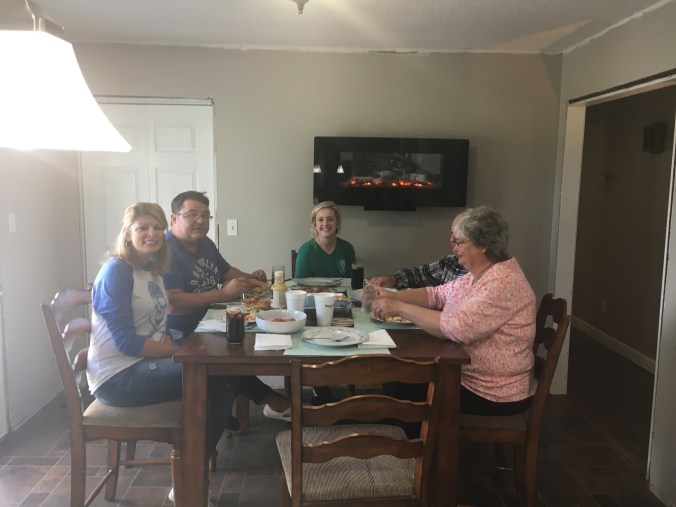
My Kentucky Kitchen Table took place in my hometown: Marion, Kentucky. I decided to invite some family friends of ours who have deep Italian, Croatian, and Catholic backgrounds. Johnny and Tiffany are a young couple with two daughters that are the same age as my sister. Johnny’s parents came from Italy and raised his siblings in Chicago for most of their lives. They then moved to Marion where they had Johnny. Johnny’s wife Tiffany, an English teacher at the local middle school, was born in Marion but has experienced many interesting and large family gatherings full of Italian and Croatian culture. She is an only child, so Johnny’s Italian family was a bit overwhelming for her at first, and even still is today. Johnny and Tiffany brought alfredo, spaghetti, and lasagna to the dinner. I then decided to invite some friends of my mother’s, of whom I had never met before. Rudy and Arlena are an older couple who have traveled the world because of Rudy’s twenty-three and half years in the military. They have lived in Holland, Germany, and Korea. Arlena prepared a special dessert dish from Holland that is popular on New Year’s Day. It was called oilbollen, a sort of powdered Dutch donut. Lastly, my father decided to join our dinner and prepared a large salad for the meal.

Throughout the dinner, we discussed many pressing issues regarding democracy and citizenship. Rudy, Arlena, Tiffany, and Johnny were all extremely active in discussing each question I asked. I began by asking the required question “Beyond voting, paying taxes, and following laws, what does citizenship mean to you?” They all responded similarly. Above all, they believed each American citizen should also have great respect. “We should all have respect for each other, respect for the flag, respect for those who have served, and respect for the elderly. This is an amazing country, and we’re very blessed to live here,” replied Rudy. Everyone agreed, especially Johnny. With family who immigrated to America, they often stressed how important it was to have respect for our country. Johnny’s grandfather took extremely huge pride in being an American citizen because of how hard he had to work to get here. Growing up, Johnny was accustomed to seeing both sides of being an American citizen. One from an immigrant’s point of view, and one from a natural born citizens’.

This led to the next question about the best things about our world today. They were all hesitant to answer at first, even mentioning that it was a difficult question. They loved the idea of the internet. Growing up, Arlena’s grandmother always used a special set of encyclopedias to research and discover new things. She would have loved how convenient and easy the internet makes our lives. “It has made the world a smaller place, one where it’s much easier to communicate,” said Arlena. With both children in the military, it was easy to communicate through Skype. However, above anything else, they believed the best thing about the way we live is our freedom of choice. From personal experience, they have seen the way other countries operate. They were grateful that they have the choice to do what they want when they want. They can choose to live where they want, to worship who they want, say what they feel, and wear what they want. That is why they believe more of us should have respect for our country. “Sometimes I think we forget how truly lucky we are. We like to focus on all the negative, when really we have great lives compared to many overseas,” replied Rudy. Everyone at the table agreed that they were very lucky to live the way they do with who they do.

Living in small town, it isn’t uncommon to build relationships with your neighbors, coworkers, and acquaintances. Growing up in Marion, I remember many times in which our community would come together to help others and support those who were going through a tough time. Rudy regularly visits many elderly widows that live close by, often mowing their grass, bringing them dinner, and checking in on them. Recently, Tiffany started a Consignment Closet at the middle school to help children who cannot afford nice clothes and shoes. All items and clothing are free to students and they can take as much as they want or need. “When something bad happens, people of our town come together to support one another. If one of us hurts, we all hurt. People here stop and take time to get to know you. It’s a place where you feel safe.” As an educator, Tiffany believes her career relates a great deal to being a citizen. She takes part in raising the children of our community to be respectful and caring citizens. She was amazed by how much she influenced the lives of those children. She proceeded to tell a story regarding a young boy in which she had had in class. This child was always getting in trouble and always fighting with her. She punished him for misbehaving and worked endlessly with him to improve his grades. Close to six years later, after he had graduated high school and left for college, she received a call from the same young man. While he was on the phone he apologized for the way he had treated her, but he also wanted her help. He began to tell her that he’d worked hard in college and that he had found a girl whom he loved very much. Coming from a bad home life, he didn’t have a mother to ask for help in proposing to the woman he loved. He wanted Tiffany’s help in choosing the ring. All the fighting and stress that had come six years earlier, suddenly made Tiffany realize that she had done something right. The young man respected her for how hard she had worked for him. Much like Tiffany’s career, Rudy’s career in the military obviously played a great deal in his part as a citizen. He served twenty-three years in the military and eighteen years in the Department of Correction. His son served four years in the Air Force and his daughter served twelve years. Even his son-in-law has served in the military. Because of this, he is full of appreciation and respect for those who have fought.

I then proceeded to tell the group about the video we watched in class of the little girl in China who was ignored by others after being run over. They were all mortified. We discussed the question about whether or not they believed their religion had anything to do with helping others. To all of them, it wasn’t just religion that influenced them to help, but human nature. They all believed that they had a moral obligation to care and watch out for others. Arlena told us about the Bible study she leads at the correctional complex for women. She believes in making sure these women realize that they are still capable of doing good in our world. She was positive that even if she wasn’t religious she would still try to help these women and many others living in her country. My father finally jumped in, saying he couldn’t help but want to help others if they were in trouble or hurting. That was just the way he was taught growing up. However, it’s important to realize that in other cultures it may not be the same. We then moved to the next question: Did you have meals around the table growing up? Did you enjoy them? Johnny’s Italian family takes meals very seriously. Every Sunday they eat meals after church at his parent’s house where it isn’t uncommon to have nearly forty people in attendance. He loved growing up with such a large family and still loves it to this day. It is what truly molded him into who he is and how he teaches his own children. The dinner finally wrapped up a great deal later, after discussing many overseas adventures and childhood memories.

With the theme of respect in my Kentucky Kitchen Table, I think this relates a great deal to our class as a whole. In order to solve problems, live well together, and have more say over what our lives look like, we must have respect for others. We must have respect for their beliefs and their opinions. In Keith Melville’s “How We Talk Matters,” he explains, saying “Talk is the essential ingredient of politics. It not only shapes decisions, it shapes us — our thinking, and our understanding of ourselves and others, our way of dealing with conflict and differences.” Throughout the dinner, each individual talked in a way that respected the others’ beliefs and they whole heartedly agreed that it was essential in order for our country to move forward. It was an amazing experience to have the opportunity to see a group of diverse individuals come together and talk in way that represented the very core of our class. They all discussed each topic with respect for one another and their opinions, leading to a dinner that lasted well over two hours. I learned a great deal about what is was like to grow up in a time where they did not have the technological advances we do today, and also of other cultures around the world. Overall, I thoroughly enjoyed my Kentucky Kitchen Table. This was an incredible experience!

A Surprisingly Enlightening Pot Roast

By Chase

xWXCRIVFT96TPHddKLIHZw

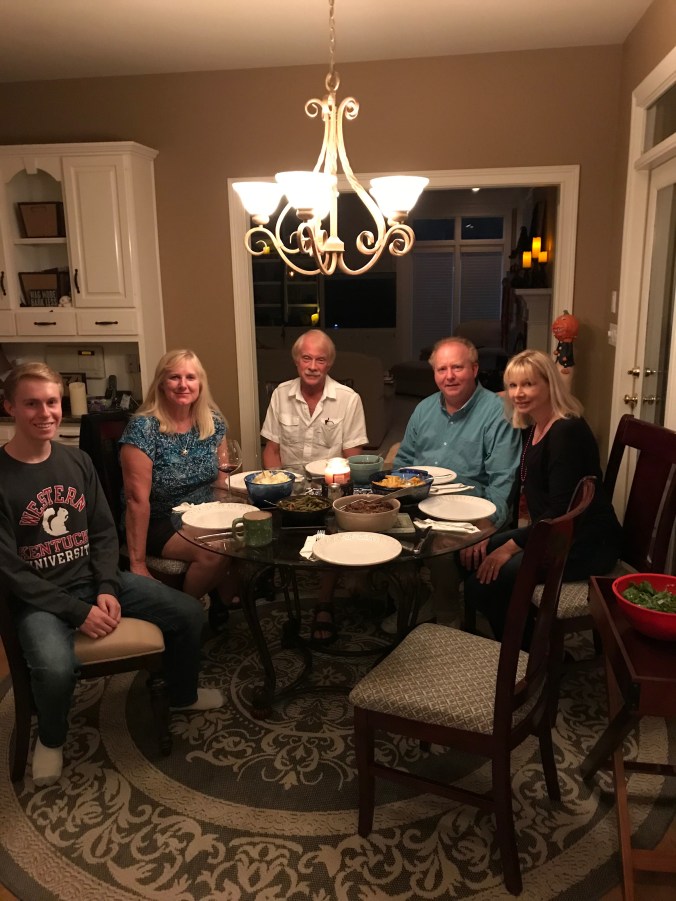
As an unusually warm mid October day came to a close in my hometown of Louisville, Kentucky, I raced downstairs in my Western Kentucky University t-shirt to the sound of expectant knocking at the door. Thoughts of indifference and relative unease swirled through my head as I neared the hungry guests waiting patiently outside. With little excitement for the Kentucky Kitchen Table assignment facing me, I focused on the incredible smell of my mother’s famous pot roast emanating from the kitchen. Opening up our home, our two guests, Karen and Paul, stood before me at the entrance before eagerly coming into the sweet aroma of homemade cooking.

Hearing the sound of our guests, Jan, my mom, raced over to the hallway to exchange hugs with Karen, her old roommate from college at the University of Louisville, and her husband, both chemical engineers. After my dad, Nick, told some corny jokes, we all headed outside to enjoy summer’s last fling before the fall sun quickly disappeared below the horizon. As I sipped on my iced water with my brother, Chad, I silently dreaded the imminent awkwardness of asking family friends of their views on citizenship and society as a whole.

Bellies rumbling, we collectively decided to get ready for dinner as the natural light outside slowly faded into nothingness. As twins, Chad and I softly sighed realizing, even at dinner we would have to do some schoolwork.

Lighting the candle and dimming the lights in our cozy kitchen, I set the tone for an intimate and revealing conversation where everyone could talk freely. Diverse not in race or socioeconomic class, we all gathered around the table as friends of different religions, jobs, and, most importantly, perspectives on the world. Though largely of the same political mindset, I was thoroughly surprised at the difference of opinion that would ensue on issues of citizenship and society throughout the night.

As we passed the lemon salad, pot roast, macaroni and cheese, green beans, and mashed potatoes around the table we made small talk about the delicious feast that lay before us. Though we did not pray before eating we each implicitly went around the table and told something we were thankful for in an almost Thanksgiving-like manner, mostly commenting on the importance of family and friends and the beautiful spread on our many plates. With six people squeezed around a table for four, we dug into our food with relish as I prepared my first question in my head.

And so it began with the first shaky question out of my mouth: “Besides for paying taxes, and voting, what does it mean to be a citizen?” Through the ramble of clanking dishes and chewing mouths, without hesitation Karen chimed in that citizenship was truly about contributing to society. Though interrupted by Nick’s slight tangent on the issue of not being able to contribute to society’s political discourse because of the staunch politically correct culture that embodies American culture at the moment, Jan largely finished Karen’s thought that we may all contribute through supporting the economy through our purchases, and helping others in need.

Karen continued her point about contribution as she cited her own personal endowment to the local community. After the horribly upsetting news about the UofL men’s basketball program the in the past month, she typed and sent a letter to the University of Louisville Board of Trustees to speak her mind about the corruption and ineffectiveness of the athletic program as an avid fan and season ticket holder. Though she recognized her letter probably received little attention at the meeting, Karen expressed just how much better she felt as she properly expressed her opinion through the undeniable right of free speech in American society.

The normally quiet and reserved Paul related that in providing a safe, reliable, and rewarding workplace to his employees at his chemical engineering firm he was doing his own part in providing to society. As more and more comments flooded in about economic security in our communities, Jan’s comment of the necessity of feeling as if we all support ourselves and the society harmoniously struck me as she continued that it proves imperative that we all have a stake in our communities, whether it be through our work and services we offer to other citizens, taxes we pay to help keep the economy, and our society as a whole afloat, or simply working to be a productive member for our own families and by default contributing to the wellbeing of the population of Louisville and Kentucky.

Through continued remarks of just how delicious the pot roast was and probing questions into the location of the butter, we moved on to the idea of “ideal communities” as I began to appreciate this assignment more and more. With her boisterous views, Jan immediately talked of the ideal community in which everyone was working towards the greater good for their families and consequently working towards the greater good for the community as a whole. Recognizing that unemployment was a real issue that plagued many Americans she didn’t mind the idea of welfare and government help to get people back on their feet, but held that everyone should contribute in any way they must while unemployed whether it be through helping the local daycare where their child attends, or actively searching for a way to a better life through persistence and will to not be “a bump on a log”.

With a variety of agreeable comments and the occasional “teach a man to fish” parables, family and friends held firm in their prescription to fix the ailments of society through each individual’s hard working contribution. Though interesting, by far the most resonating idea came from Paul who related his experiences of living in Denmark to the ideal community. I know personally that Paul would never subscribe to the principles of a socialistic government like they have in the very liberal Scandinavia, but even through these convictions he greatly praised the incredible trust the Danish people have in each other and their government giving examples of the government run child-care system and people leaving their babies unattended in their strollers out on street corners while in stores due to such deep confidence in their lack of harm.

Hearing this, I was incredulous at the thought of complete faith in and reliance on the workings of the government and the everyday person as the ever-so polarized American political system exposes and perpetuates American citizens inability to get along with one another and work towards the common goal of happiness and success for all. It seems to me that we are so focused on our political and ideological convictions in this country with two incredibly opposed political points of view, that we forget that most of us really do wish for the betterment of society. Through our lack of understanding one another, both liberals and conservatives alike, we find ourselves facing a wicked problem of our own creation: the ineffectiveness of communication across arbitrary political, racial, theological, and socio-economic divides in our equally as wicked battle in identity politics.

As the conversation ensued, I was constantly reminded of the numerous selections we read in class and their application to real people’s experiences and frames of mind. When we arrived on the topic of global citizenship and its meaning to each of us, quotes and memories of seminar discussions about the necessity for us to make ourselves look at the world from the standpoint of our global effect on one another came flooding back into the forefront of my mind. Though views ranged from never subsidizing and supporting monetarily other countries to our absolute need to make sure other countries do not fail their own people, we all came to the unconditional conviction that we must stand up and speak out for the defense of basic human rights across the world.

I found it quite interesting that at a largely conservative-minded table that stereotypes the focus on the individual and the patriotism of America, everyone saw it imperative to protect and serve our fellow human beings around the world when their humanity was threatened.

Finishing our scrumptious home-cooked meal in the comfort of friends and family, we relished in our gratefulness for one another and our friendship that we shared. Taking the last morsel of mac and cheese on my fork I came to the slow but enlightening conclusion of the importance of this assignment in its ability to start a conversation towards solutions of everyday problems in our local communities and larger society. This idea of proper, intimate, and friendly conversation struck a chord with me in an American society that seems to idealize the polarization of our differences to such a degree that we cannot seem to progress as a unified people. As we focus more on white and black, Christian and Muslim, conservative and liberal, and straight and gay, we lose sight of our shared experiences, and more importantly, our shared humanity. Though it may be hard to believe, most all citizens desire to find betterment not only for themselves but for others in our society and world. If we ever truly want to pioneer a more accepting, trusting, and loving world where everyone works toward society’s advancement, we must learn to communicate not for our differences, but despite them.

Kentucky Kitchen Citizenship

By Dylan

IMG_5182

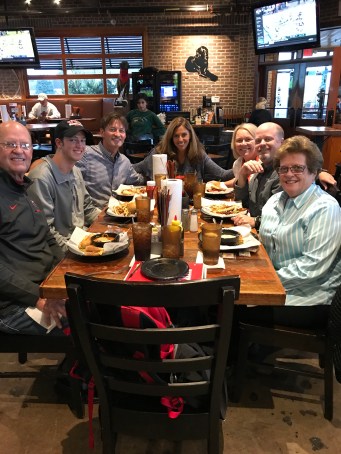
For my Kentucky Kitchen Table project, we met at a restaurant in Bowling Green, Kentucky called Double Dogs. Double Dogs is a sports bar that serves food anywhere from pizza to clam chowder. The people that were there were all part of my family, and we thought it would be interesting to involve our waitress in the project. Our waitress’s name was Amy (you can see her photobombing our picture above). She seemed to be of Middle Eastern background, but we did not ask her about that. She was young and was possibly in college or had just graduated. My family members’ names are my aunt Mary, uncle Todd, grandmother Miki, grandfather David, uncle Chris and aunt Kelly. All of them share similar political views and religious beliefs, but they are all different in some ways as well. They each come from different places and backgrounds. My grandparents are originally from New Albany, Indiana. They came to Western Kentucky University together and stayed here to raise my mom and uncle Chris. My aunt Mary and uncle Todd are both from Bowling Green, Kentucky. Aunt Kelly is from Owensboro, Kentucky. Different backgrounds and families shape the way you think and act. I was interested to see how they each would answer my questions.

The first question I asked was the required question that says, “Beyond voting, paying taxes, and following laws, what does citizenship mean to you?” Out of the things we talked about, the ones that stood out the most were pride, freedom and the responsibility you have as a citizen. Everyone agreed that being a citizen is a privilege. Chris said he felt prideful and thankful that he was a citizen in a country like this. Miki pointed out that the freedom we have in this country means a lot to her. She said this country was founded on freedom. Laws like the Bill of Rights give us basic, but important freedoms. Todd said that these freedoms give us opportunities to get up every day and strive to be successful. American citizens can be anybody they want to be. Amy said the freedom to express yourself was important to her, another aspect this country was founded on.

The next question I asked said, “What do you think are the best things about our world today?” Chris made the point that the communication technology and the internet we have now really shows how it’s a small world after all. Then we started singing the song from the Small World amusement ride at Disney World, in the middle of Double Dogs. Luckily no one seemed to mind. Others said they liked the advancements in medical technology. These advancements improve the quality of life and the longevity of life. David said he thought people of the world stepping up to help each other in times of need was very important. He also said that this question would be easier if it was only about the United States. I asked him what he meant by that and he explained that religious freedom and the quality of life here is better. This made everyone at the table think about how lucky we are to be living in this country with more freedoms than others in some cases.

The third question I asked said, “Does your religious or spiritual identity relate to how you think we should treat other people?” and “Does it relate to how you see yourself as a citizen?” Almost at the same time, everyone said, “Yes!” Nana said she was just watching “The View” on TV where they talked about even if you are not religious, people still follow the Ten Commandment rules. Everyone has the same sense of morality. Either we were born with it or we learned it as we grew up. Everyone at the table also agreed that their religious identity relates to how they see themselves as a citizen. Todd said that sometimes your religious views can make a difference on who you vote for. Nana pointed out that this country was founded on religious freedom. Aunt Mary made a good point when she said, “In God We Trust” is on all of our money and some of the monuments around the country. Religion is very important to a lot of people in this country. We reached the consensus that what we believe is right can definitely change the way you treat other people.

The fourth question asked what kind of person everyone wanted to be. Chris said he wanted to be 6’4” with hair. More seriously though, Miki said she wanted to be a Margaret. Margaret is my grandmother on my dad’s side of the family. She passed away during September of last year. She was loved by everyone and made an impact on each person she knew. Miki continued by saying the person who she wants to be all depends on how people remember you. That got a big “Amen” from several people at the table. Kelly said she wants to become a better Christian. Todd said he wants to build strong, meaningful relationships with people. Miki said she would like to become more involved in community participation. Amy said she wanted to be honest, loyal and hardworking. Chris and Kelly said something that really stood out to me. Chris said he wants to be exhausted at the end of life, and he wants to feel like he has done everything he ever wanted to do. Kelly brought up a poem called, “The Dash” by Linda Ellis. In short it says that the dash between the two years on your tombstone matter the most. While discussing this, we drew two conclusions: we want to be remembered as a good person and we want to make the best of the years between life and death.

The last question I asked said, “What social issue is closest to your heart and why?” This was probably the hardest question for them to answer. This could be because there are so many to choose from, or because they feel strongly about more than one issue. Todd and Mary said abortion was the social issue closest to their heart. When I asked them to elaborate, they explained that their religious beliefs tie into it, but they could see the reasons for it like if there were to be a rape case or something like that. But it is still a baby that cannot save itself. Kelly talked about capital punishment and the sanctity of life being most important to her. Religious beliefs tied into that too. Miki said spouse and child abuse stuck out to her the most. She explained her feelings of sympathy for those families who don’t have the resources or education to get themselves out of that situation. Meaning money or they don’t know who to talk to. David said the use of illegal drugs upset him. He said the ability of drugs to tear families apart hits home for him.

Some of the things mentioned relate to this class. In class, we talked about morality during our week two readings. David Brooks’ essay, “If It Feels Right” talked about how we make moral decisions. In the reading, he claimed that personal interests influence your moral decisions. Around the table, it seemed like religion, which is a personal interest, played a big part in everyone’s sense of morality. In class, we asked ourselves where does one get their sense of morality? Are you just born with it? Or do you learn it while growing up? Being born with your sense of morality connects with a religious factor. At Double Dogs, when we talked about if religious identities could shape the way you think people should be treated, morality was brought up, and it was the center of our discussion for this question. My mind was blown when Miki told us about what they said on “The View”, claiming that religious or not, people still follow the ten commandment rules, and that everyone has a similar sense of morality. This showed me that yes, there is good in the world, and we can have hope in humanity. Learning the moral values while you grow up goes with one of the central questions of our class that says, “How do we live well with each other?” One of the ways we can live well with one another is by setting good examples to those around us. It is easy for someone to follow someone else, so long that there are leaders for people to follow. We can all be leaders in some way.

The Kentucky Kitchen table experience taught me a few things that hit home for me. It taught me that your beliefs, religious or not, can change the way you think, act, treat others, dream and how you view yourself. What was said around or table at Double Dogs made think, “Hey this goes for me too!” or “I agree.” Most of the reasons people gave for why they said something all drew back to their religious beliefs or sense of morality. Sometimes religion teaches you those moral values. I liked this project very much. It was nice to get to see my family members and have a nice lunch with them. I thought at first talking about some of this stuff with them would be kind of weird, and I hoped that it wouldn’t start a fight between anyone. It turned out though that everyone loved it. It gave everyone the chance to voice their opinion about some important topics of today. This project turned out to be an absolutely positive experience.

Food and Friends

Kentucky Kitchen Table

By Rachel

Last night I hosted a dinner for ten people at my home in Utica, Kentucky, a small rural community about ten minutes south of Owensboro. Since the project is Kentucky’s Kitchen Table, I wanted the dinner to feel like a traditional, homey meal, and for this reason I chose to serve pot roast with homemade mashed potatoes, broccoli casserole, carrots, and the most delicious rolls in the world. It is a meal that is a staple in my family, and so it is the one I most closely associate with home. I have never been one to cook, and I barely know my way around a kitchen, but, I decided that I wanted to cook for this dinner. My mother taught me how to prepare the roast just like my grandmother taught her, and my great grandmother taught my grandmother.

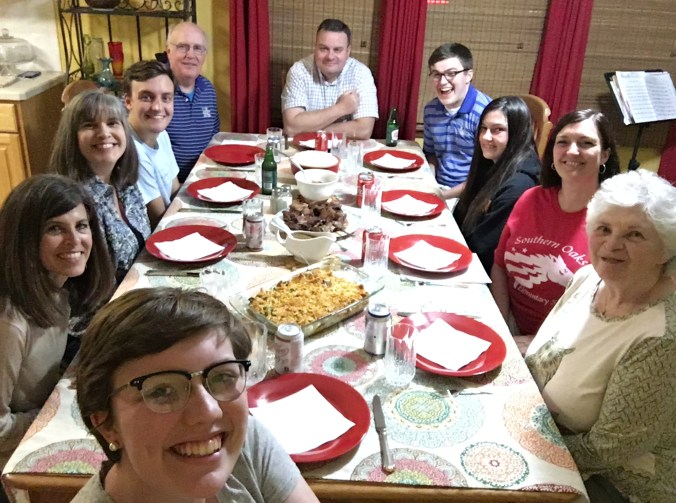
The attendees were William, Dylan, Catherine, Kim, Charles, Jody, Betty, Jim, Terri, and myself. We really had a full table. The group was diverse in age, political views, occupations, and upbringings.

First, there was me, Rachel. I am 18 and a student studying middle grades education at WKU. I have lived my entire life in Utica, but am of course now living in Bowling Green while I am at school. I define myself as a liberal, especially with social issues.

William is 21 and a student at Georgetown College. He will be graduating this December with a degree in religion, and he will be attending seminary next fall to continue his studies. He grew up in Utica as well, but now lives in Georgetown, Kentucky. He defines his political views as progressive.

Dylan is 21 and a student at the University of Kentucky with the goal to become a chemical engineer when he graduates next Spring. He is originally from Owensboro but now lives in Lexington. Politically, he identifies as conservative but does not affiliate himself with the Republican party.

Catherine is 17 and a high school student. She grew up and lives in Utica. She is not typically interested in politics, and hates the polarization it causes among people she cares about. She is a talented violinist and is interested in the ability of music and other arts to unify people.

Kim is a 50-year-old elementary school teacher who is very moderate in her political views. She is the daughter of a pastor, and moved around often while growing up.

Charles is 51-year-old pastor of a small country church who is progressive in his political views. He is the son of missionaries and grew up in multiple other countries, mostly in Southeast Asia, but he has lived in the U.S. since he was eighteen, when he came to Kentucky for college. When he and Kim married, they lived in Louisville for many years, and then relocated to Utica when Charles was offered a job.

Jody is 49 and has a background in accounting. She currently resides in Texas, but lived in Lexington for many years. Politically, she is conservative, but more libertarian than republican.

Terri is 58. She recently retired from a career of teaching French and Spanish at the high school level. She typically makes political decisions based on feelings for others and those in need.

Jim is 75 and is a retired pastor. He is conservative and a registered republican. His wife Betty is 74 and a retired respiratory therapist. She is also a conservative republican. Jim and Betty both grew up in small towns in the mountains in Eastern Kentucky. At one point, Jim described that the road he grew up on was nicknamed for his family, because his many family members occupied almost every house on the street. After Jim and Betty were married, Jim joined the armed forces and later became a pastor, causing them to move around fairly often. They settled in Lexington for many years, but recently moved to Owensboro.

Our conversation centered mainly around the theme of citizenship, and for the most part, everyone agreed that the biggest part of citizenship is service. The most important thing we can do is help other people as best we can. One common thing among the ten of us is the Christian faith, and this faith plays a huge part in dictating what values we hold. It was stated that, as Christians, we are called to help and serve others, thus linking citizenship with religious values.  However, one thing that is hard about this call to service is the fact that we do not want to be taken advantage of. Jim and Betty, having lived in Lexington for a long time, gave the example of people asking for money on the side of the road. It was a large problem in Lexington for a while, and, often, monetary aid was not used in the way that the giver expected, but rather for things like drugs or alcohol. Though they want to help people, they do not want to give money if it will not be used in a way they think is appropriate. Jody provided a well-known metaphor: “Give a man a fish and he’ll eat for a day. Teach a man to fish and he’ll eat for a lifetime.” Though she wants to help people in her community, she would rather “teach a man to fish” than to “give a man a fish.” We talked a lot about how we can help people, and even about whether or not we should help them at all. This part of the conversation really reminded me of our in-class discussion about morality and whether we have an obligation toward our fellow man. We also talked about how one way to help people is simply being aware that problems exist, even if you can’t directly help them by donating food, money, etc. It was said that good citizenship means not being apathetic and ignorant. We need to learn what is going on in the world around us and we need to care about what is going on in the world around us. If we fail to do this, then we also fail to make change.

The conversation soon turned into a discussion about progress. A couple of people around the table label themselves as progressives, and it was during this part of the conversation when they really had a lot to say. Charles said he thinks all societies in the world are moving in a progressive direction toward a goal of social justice and equality. Some groups are moving at faster paces than others, but he believes, eventually, every person will be treated equally anywhere in the world. Charles gave the example of athletes kneeling during the national anthem recently. These athletes are breaking the social norm of standing at attention during the anthem because they are trying to make a statement about the issues they care about. Jim said that, as a veteran, he finds the kneeling to be disrespectful. However, he also says that even though he thinks it is disrespectful, the athletes have the right to do it. He wishes there were another way to protest, but he can at least respect that the athletes are taking advantage of the rights he fought for them to have. Jody said she did not have any problem with people protesting peacefully, but she thinks that, once laws are broken, that is when it has gone too far. Charles disagrees. He says that rules need to be broken if they are unjust. He gave the example of Rosa Parks. She broke the law when she refused to give up her seat, but she did it because that law was unjust. Now, we look back with pride when thinking about Ms. Parks’ actions, but at the time, many people were just as upset about it as they are now about athlete’s kneeling. Someday, Charles says, people will look back at today’s protests in the same way.

By this time, we had finished the main course and were started on dessert, apple pie, and we changed the subject to something a little sweeter as well: what are the best things about the world we live in? Catherine said that, in her opinion, music is the best thing in the world. Music is universal. Every culture has it, and it is a great way to express emotion and ideas. On top of this, it is a wonderful unifier. Kim and Terri think that one of the best things about the world today is the fact that we are able to connect with people and truly be global citizens thanks to technology. Now more than ever we are able to know what is going on in the world, and we are able to communicate and befriend people from all over the globe. Technology does have drawbacks, but the benefits of it are extraordinary. Jody said that, for her, the best thing is to see how people come together in times of hardship. She gave the example of the recent hurricanes. So many people have worked together to help our fellow men when they were in need. Though it sometimes feels like we are all just selfish, and that there is no hope for us, unfortunate events like these prove that we do care about each other. Dylan said one of the best things in the world to him is being able to sit around a kitchen table together having meaningful conversation and lots of fun with good people. I agreed with him.

During this project, I have learned how important it is to me to be able to talk with my friends and family so openly, without fear of judgement and without fear of starting an argument. Often, we get swept up into the emotions behind our opinions on problems, and we want to argue and offend those who disagree with us. We get so absorbed by wanting to be right and wanting to “win” that we forget that the most important thing is maintaining relationships with people we care about. Everyone at my table had different ideas, interests, and opinions, but we are all the same in that we are all people who, ultimately, just want the world to be a better place for everyone in it.

Kentucky Kitchen Table

By: Connor

The meal took place in my hometown of Lexington, Indiana. It is a very small town that no one has ever heard of. It’s mostly farmland and people are spread far in between. I have learned to appreciate the area though because everyone is very friendly and willing to help each other if needed. I have lived here for around six or seven years now. I chose to eat at my house because I was not as nervous to start the discussion. I also think the location can help with the understanding of people’s answers. Joining me for the meal were five people I know. Those people being Jodi, Jerry, Sharon, Delores, and Abbey. Jodi is an elementary school teacher and has been for over twenty years. Jerry is retired, volunteers at King’s Daughters’ Hospital, and is very involved in his church. He never had the opportunity to go to college growing up because his father became very ill and he had to take care of him. Sharon, Jerry’s wife, also is retired, volunteers at King’s Daughters’ Hospital, and is involved in the church. She also did not go to college. She worked at a bank as a teller most of her life and became very good at talking to people. Delores is Catholic and ninety-four years old. She is retired but still volunteers in many ways. She volunteers at the hospital, helps feed people at nursing homes, and she makes meals for some of her older friends in her neighborhood. Abbey is twenty-one and currently pursuing a major in elementary education and a minor in business at Indiana University Southeast. Her mother is currently an elementary teacher and served as a major influence on Abbey’s decision of her major.
Our conversation was primarily centered around the topic of neighbors. Everyone knew their neighbors and could explain how they met their neighbors. We also discussed what each person could do to better their neighborhood. I learned that everyone knew their neighbors somewhat well. Jodi knew her neighbor somewhat well because her neighbor is retired and is usually on her front porch when Jodi gets back from work, so they usually talk for a while. At the same time, Jodi did not exactly seem thrilled to have had so many discussions with her neighbors. This kind of came in to concern for me. Shouldn’t people want to get to know those around them? By not knowing those around you, it prevents the community from running at his highest level. Although this is a common occurrence, I think people should make an extra effort to make an impact in the areas around them. Everyone else in the group just knew their neighbors’ names. Abbey’s answer was unique because all of her neighbors are family members. She said that she obviously knows all her neighbors, but even with her family all living close together, she may not see some of her neighbors all that much.
When asking each individual if they enjoyed having meals with their family I received a resounding yes, but then I asked if they ever had a meal with their neighbors. I got a no from everyone at the table but Delores and Abbey. That is probably because Delores’s neighbor is one of her best friends and Abbey’s neighbors are family. I was more focused on the people who answered no. The reason is that we have been learning in class deliberation is key. I was thinking about how your neighbors, although you may not know them well, are some of the closest people to you, so wouldn’t you want to know where they stand on different things? I am by no means saying you should invite your neighbors to eat so you can engage in a battle of opinions because that is not the best first impression, but what I am trying to say is that it would be nice to know where your neighbors stand on different issues. By doing so, this would also be making it easier to converse with your neighbors rather than just awkwardly saying “hey” whenever you pass them on the way to your house.
Another thing I want to point out is what I noticed when discussing the required question about citizenship. I noticed when asking what citizenship meant, most of the people could not get past following the laws. Jodi made a good point that being a citizen means doing what’s best for your society and having an opinion about your society, but also respecting other’s ideas of society. This sparked the theme of deliberation and how we must take our opinions and compare them to other opinions to come up with the best solution. Once Jodi made this point, I noticed that the rest of the table agreed and found the point made very insightful. It led me to wonder if everyone knows what deliberation means, but did not realize that they did it all the time. When it came to the other questions, I also recognized that people were openly accepting others’ answers and building on them to develop better answers to questions (specifically the question of citizenship). After Jodi’s answer to the question, the others who were stuck on the idea following laws suddenly started coming up with different answers to the question itself.
Aside from all the answers I was getting I noticed that Jerry was staying particularly quiet. Although I tried to give everyone a chance to speak, a conversation would usually spark up after someone else’s answer before Jerry got a chance to speak. This situation applies to the concept of deliberation in a very important way. Deliberation deals with balance. You do not want one or two people controlling the conversations. Jerry very well might have had some solid points or answers to the different questions, but I will not know because I did not give him the opportunity to answer. This happens in discussions all the time. When one or two people are held out of the conversation, the other’s do not get to hear their point of view. These people who are silent could very well have had an opinion or two that could have changed the entire conversation. That is why some deliberations fail and problems are not solved. Without everyone’s input the best idea may not always be revealed. This was something that we discussed in class. It is important to fairly incorporate everyone in conversations in order to have a complete deliberation of an issue.
By focusing on the concept of neighbors it enabled me to focus on one of the essential questions of our class. The question is, “How do we live well together?” One specific question I asked was about what each person could do to help improve their and their neighbors’ community. I got several answers of things that could be done, but not necessarily things that each person is capable of. For example, Sharon, who is in her mid-seventies, offered the idea of fixing the potholes on their street and repairing the light poles. This sparked to the memory the speech we read, “To Hell with Good Intentions,” Ivan Illich. In his speech he talks about how people should help in areas that they have knowledge of. Sharon is not necessarily capable or knowledgeable enough to fix the potholes and street lights, but she could possible provide snacks and drinks to the workers who are hired to fix these problems. This scenario shows how each person can still play an important role in issues of community. Jodi’s answer was different from most of the others. She stated that she did not think there was anything necessary of improving in her community. I viewed her answer in two different ways. In one way I viewed that she was pleased with her community and was satisfied with everything around her. The other way I viewed it dealt with the idea that maybe she was not involved enough in her community to know what would be good improvements. As a whole, everyone should have a knowledge of their community in order play a role and make an impact for the better of society.
One thing I can take away from all of this is that knowing the people closest to you is extremely important. Your community provides you with the opportunity to make a huge impact. Your community should be the area you have the most knowledge of and should be the area that you want to make the biggest impact on. Another central question of our class is, “How do we solve problems?” In order to solve problems, we must be able to deliberate with one another, but in order to deliberate with one another, we must have a knowledge of the topic at hand. The community you live in is your best opportunity to make an impact. I think people should make an added effort to learn more about the people around them in order to be able to discuss issues with those people.

KKT

Union Kentucky Kitchen Table

By Sam


My Kentucky Kitchen Table took place in my home in Union, Kentucky. The names of the people who participated in the dinner, not including myself, are Vince, Elizabeth, Janice, and Manda.
Vince, my father, is 53 years old and a father of three. He spent his early childhood in Southern California, but went to high school in Northern Kentucky so his step-father could pursue a job opportunity. After graduating high school, he immediately went into construction and has been in construction sales ever since. He was raised Catholic.
Elizabeth, my step-mother, is 42 years old. She grew up in Gallatin, Tennessee. She later left Gallatin for Bowling Green as she attended WKU. She obtained a degree in education and was a high school business teacher for a few years before deciding teaching was not her passion. After some time in real estate, she then settled on a career in Human Resources. Roughly eight years ago, through mutual friends, she met my father. She is Methodist but mainly identifies as Christian.
Janice, my grandmother, is 76 years old and a mother of four. She grew up in rural Indiana and, pursuing a job opportunity and family, eventually moved to Southern California. At the time, she was a secretary for a phone company. This is where she met her husband, who would later move her and her four kids to Northern Kentucky. Once in Northern Kentucky, she got a job at a local news station while working on a degree in education. She would go on to spend many years teaching middle schoolers. She is Catholic.
Manda, my grandmother’s friend, is 70 years old. I invited her to dinner because I do not know her very well, and I believed she could add a unique and diverse perspective to the conversation. She is a mother but did not specify how many kids she has. She grew up in Peoria, Illinois in a progressive household. Her mother was a member of the media, so Manda, naturally, pursued a career in broadcasting. She moved to Northern Kentucky after hearing of a job opening at a local news station. This is where her career in the media took off, and where she met my grandmother. She did not mention her religious affiliation.
The first question I asked at dinner was, “Beyond voting, paying taxes, and following laws, what does citizenship mean to you?” The responses I got were very intriguing. Vince and Elizabeth both agreed that citizenship was ultimately the individual’s responsibility of cultivating a better community. They believe a good citizen is active in the community and helps their neighbors when need be. Manda furthered this idea by pointing out how citizenry is an active effort that looks to better society, and effective citizenship that betters our nation, and eventually the world, cannot be achieved until it is practiced in our homes. She emphasized how the home is a microcosm for the world and the birthplace of proper citizenry. The interesting thing I noticed from this discussion was the consensus that moral obligation is a necessary component of being a citizen. Everyone participating in the conversation believed that it is their responsibility to look after their neighbors. It is the “right” thing to do. “Why is this the right thing to do?” I asked. Vince, Elizabeth, and Janice mentioned their faith. Manda noted how she would want others to look out for her, so she looks out for them. This is citizenship to them.
I then asked the question, “How do you think your job relates to your role as a citizen?” The responses I received were similar to the first question. Vince mentioned how he enjoys the constant interaction he has with people in construction sales. He looks forward to seeing clients and hearing about their lives. He mainly just wants to use his job as an outlet to reach others and help them with whatever he can. Janice said her years as a middle school teacher where propelled by a desire to shape young minds and hopefully prepare them for being an active member of their community. She was on the ground level of citizen training. Elizabeth said her job in human resources gives her a firsthand account of the issues fellow citizens are facing and how they are responding to them. She views her position as an opportunity to guide those struggling and steer them towards greater production in the workplace and community. Again, the theme of moral obligation was prevalent. They all think it is their responsibility, as contributing members of society, to help those in need so that they can contribute, perpetuating the cycle of neighbor helping neighbor and societal improvement.
The conversation then got a little lighter as I asked, “Did you ever have meals around the table with your family growing up? Did you enjoy it?” Manda noted she was a raised in a traditional household that emphasized family unity through dinner. It was an expectation to eat dinner together because this was the time for true cohesion. Janice and Elizabeth reiterated this, stating they were both raised in traditional families and enjoyed the time they spent with the family at dinner. Vince, however, said family dinners were not a priority of his childhood due to both his parents constantly working. He said that the lack of family dinners, and the effect this had on his development, cemented the importance of the ceremonial event for family building, urging him to implement it into his children’s lives. This demonstrated to me how important our home life is in shaping us into the individuals and citizens we are.
My next question was, “What kind of person do you want to be?” It took few minutes for them to think of their responses. Elizabeth was first to chime in. She said she wanted to be a better mother and Christian. She admitted to not adamantly practicing her faith and that she needs to. Vince and Janice both desired to be more informed in our information-abundant society. They both stressed how critical it is to discern what is correct information from the incorrect and that they would like to be more skilled at this. Manda, interestingly, mentioned a desire to be more empathetic. She stated empathy was key to promoting social change, and, through empathizing, we can become more informed, and morally well-rounded, citizens. Everyone hit on the desire to become either better moral executioners or more informed with the goal of it furthering moral execution. It is interesting how this theme of morality seems to be the foundation for citizenship and improving as individuals within society.
I then asked, “What advice would you give people running for office in our country?” Vince responded first, noting that someone running for office needs to take into consideration the views of all his/her constituents, and a noticeable effort towards creating a unified nation is key. Manda pointed out how most politicians tend to campaign in the areas containing those funding their campaign. According to Manda, politicians will never take into consideration the views of all their constituents as long as a select few campaign donors are influencing policy platforms and campaigning. This snowballed into the topic of structural flaws in our government, and how these flaws could potentially be fixed. However, everyone at dinner spoke of this governmental reformation as a hopeless and nearly-impossible cause. This forced me to consider how any kind of societal change can occur when the people charged with inciting said change believe its hopeless.
Another question I asked that sparked interesting dialogue was, “Is there anything you can think to do that might make things better for you or your neighbors where you live?” Janice said a significant, but small, change she has made that has created an increasingly-positive neighborhood environment is simply making herself available to her neighbors. She has started a dialogue with other members of the neighborhood and informed them that if they ever need anything, or just want to hang out, she is here for them. She said it has created a friendlier, dependent neighborhood that willingly interacts. Elizabeth mentioned that she also believes an open, honest dialogue with the neighbors will create a safer and smarter community. Similar iterations of community conversation came from Vince and Manda. It is interesting and sensical that simply talking is what can lead to more efficiently operating communities.
My final question was, “What social issue is closest to your heart and why?” This question got somewhat heated as some had differing opinions on prominent social issues. Vince immediately gave his social issue: NFL players kneeling during the national anthem. He believes that the national anthem precedes all social statements and change, affirming everyone should stand for the flag first and then discuss social injustices. In short, the national anthem comes first, and then discussion is had. Manda, being the individual I do not know very well, responded to this with respectful, yet defensive, disagreement. She firmly stated the national anthem means different things to different cultures, and kneeling for the flag is the epitome of being American. It is an individual’s right. If these demonstrations are not done, according to her, no social change can occur. This then led to the conversation of whether kneeling NFL players are kneeling for a cause, or just kneeling with the intent of following their teammates stance. The debate ultimately ended with the recognition we can never truly know someone else’s motives. Elizabeth and Janice did not have much to say as this was discussed. I found it interesting how two people can look at the same situation and have radically varying perspectives. It made sense considering Manda’s liberal and Vince’s conservative background. The main takeaway was that this “debate” over when it is appropriate to protest remained a civilized discussion. It did not escalate into an argument due to both parties’ recognition of the importance of empathy.
One of the main things I learned was how important morals are considered to be in citizenship. Everyone at the table defined citizenship as a moral obligation to care for our neighbors and, thus, further society. Another takeaway was that healthy discussion was key to actually achieving a greater, more representative society. They recognized the need for empathy in order to have healthy discussions, and a community without dialogue is divisive. Finally, there is a sense of hopelessness clouding people’s desire to change their societies. Unfortunately, some believe we are trapped in our current society and view change as dauntingly impossible.
Honestly, I was surprised by how similar everything discussed was to our class. We talked about the role of empathy, how morality factors into our lives, and the presence of wicked problems. The central idea that was most prevalent was definitely the importance of deliberation. The chapter we read, “How We Talk Matters” discusses how the discrepancy between what is happening and what should be happening (like the bridge metaphor we discussed in class) can truly be overcome when a healthy dialogue is created. By listening to and understanding each other’s ideas, we can venture towards compromise and social change. Everyone around my table viewed deliberation as the first step towards understanding, and even practiced this when debating when it is appropriate to protest.

A Meal Back Home

By Ellie


When I first read the syllabus for Honors 251, I saw the description for Kentucky Kitchen Table and immediately started to stress out. I didn’t know when I would be able to come home to do the project, or if anybody I knew would even be willing to help me by agreeing to be interviewed. After the explanation given in class, though, I figured it would be better to get it over with. Since I was going home this past weekend, I asked my parents if it would be okay to host a Kentucky Kitchen Table when I came home. We were already hosting a potluck that Sunday, so they suggested that I sit down all the people I wanted to interview at one table and ask them my questions about citizenship. Before the event, I asked the ladies I wanted to interview if they would be okay doing it while they were at my house and they all agreed. My Kentucky Kitchen Table took place at my home in Mayfield, Kentucky on October 15, 2017. I hosted the event on a Sunday morning after church services in my family’s 4 car garage. We ate a potluck style meal, with lots of home-cooking that I hadn’t had in weeks. I was overjoyed to be able to eat food that wasn’t a greasy pizza or burger. This was the first chance I had since school has started to see anybody from church and say more than “Hello. Yes, school is going well.” I was excited to have the opportunity to have a real discussion with women who helped make me into the person I am today.

I invited several women who go to church with me back home to participate in this project. There were 7 women and 1 little boy present during the conversation. Mrs. Peggy is an independent woman who lives alone and is famous in Mayfield for her hostess skills. Ms. Marti is a widow who spends her days knitting blankets for expectant mothers in our congregation. Mrs. Pat is an Avon saleswoman who met her husband of 52 years while attending Western Kentucky University (her three children later went on to attend there). Mrs. Kay is a Chicago native who has three children, one of whom joined the military. She spends her days now watching her 2 youngest grandchildren for her other son. Mrs. Janice works at the local senior center in Mayfield and has a grandson that I babysit regularly during the summers. My mother also attended, and she is a high school Family and Consumer Sciences teacher at McCracken County High School. Also at the table was Brayden, the 5-year-old grandson of Mrs. Janice, but he was more concerned with eating the sugar cookies my mom had made instead of contributing to the conversation about citizenship. None of these women seem to have any particular qualities in common, beyond their belief in God, but all of these women are very close to each other. These are the type of women who care for others needs before their own and have taught me to try and do the same. I was curious to see what some of their answers would be to the questions I was supposed to ask.

I knew that I really had no reason to be, but I was a little nervous to discuss some of the questions with these women. Most of them are very conservative minded, so I had a general idea of what answers to expect, but I also didn’t know how they would react to being interviewed. Also, a few of these women were elder’s wives, which means they can hold sway over my dad’s job as a preacher, so if I said something that came off wrong, it could potentially negatively impact my dad’s position. They already knew that this project was for school, and were very willing to help. Some of the answers that came out during the meal actually didn’t seem 100% conservative, and that honestly shocked me.  I was happy to have diversity, that I wasn’t yet aware of, present at our kitchen table.

I began our conversation by asking the basic question of what citizenship meant to each of the strong women at that kitchen table. Mrs. Peggy and Mrs. Marti responded that citizenship to them meant freedom, and I asked for an elaboration from the group on what that meant. Mrs. Kay responded that to her, citizenship meant putting your hand over your heart when you hear the national anthem, and that you stand when you hear the pledge of allegiance. To Mrs. Pat, citizenship means being able to worship freely, and to everyone else at the table, they all responded that citizenship meant having the right to freedom of speech. One of the most interesting answers I got was when I asked these women what kind of community they wanted to live in. Mrs. Kay answered that she wanted to live in a world where she didn’t have to lock her doors at night, which seemed a bit odd to me since I know she is from Chicago. After thinking about her response, I later figured that she has learned a lot from small-town life and craves that experience for the rest of the country, even in places that are more densely populated. Everyone at the table responded that a community with unlocked doors was something they crave as well. When thinking back to the video we watched in class of the little Japanese girl who was run over by a moving truck, I asked all the ladies if they felt that we had a moral responsibility to help people in our community and the world, and they all unanimously responded that we all have a responsibility to help our fellow neighbor. I can’t remember who said it, but one of the women responded that that is part of what being a Christian is all about. When asked what advice they would give to their neighbors, the advice that really stuck out to me was to always put others first. Mrs. Kay agreed with that statement and went a step farther to say that God comes first, then others, and then you. One of the last questions I asked was whether or not they had meals at a kitchen table with their neighbors and family growing up. They all smiled and started to reminisce about their childhood. One commented that she enjoyed these meals because it gave her family a chance to catch up after a long day of work. Another commented that she enjoyed these types of meals because it was time for families to nurture their relationships with each other.

As our conversation progressed throughout the meal, I found myself thinking back to the readings we did on empathy by Leslie Jamison (The Empathy Exams) . These women I interviewed have all had vastly different life experiences, and I know that I will never experience what it’s like to go through some of the hardships they have gone through, so the best I can do is imagine what they have been through and try to empathize once they start discussing their childhood experiences.  When I did ask that question about social issues, all of those present chose issues that they had experience with, which also relates back to the idea that empathy can influence your decisions when you are close to a situation. Because of life experiences, women’s rights were an answer that came up almost immediately when asked about what social issues resonated closely with them. A few of these women were widowed fairly young, so this issue is important to them because they were left to provide for themselves, and even their children, in a world that only a few years ago, wouldn’t have given them the option to work. I have never been in a situation where I wasn’t allowed to work or do something because I’m a woman, so listening to their answers elicited empathy from me.

What really stood out to me during the meal was that even after I had finished asking questions pertaining to the assignment, the conversation still went back to topics about citizenship. At one point, towards the end of the meal, Mrs. Kay even looked at me and said, “Put this in your assignment.” as they were discussing citizenship later when they thought my interview was over. This helped me realize how important the topic of citizenship was to everyone, including people you normally don’t think about being extremely patriotic. It also taught me how drastically America has changed, even in the past few years. If you had asked any of these women to interview someone while they were in college about if they ate at a kitchen table growing up, they would have laughed because virtually everyone did that.

Overall, this experience was very rewarding to me. I was not sure how the project would work out at home, but it was really enlightening to see how these women’s life experiences have shaped their view of our society and country. I enjoyed getting to learn more about the way my role models think, and it helped me learn how many different interpretations of citizenship there really are. Overall, the women at my Kentucky Kitchen Table were proud to be citizens of the United States of America, and I am proud that I had the chance to interview all of them.

Kentucky Kitchen Table- Emily

By Emily

IMG_1789

My Kentucky Kitchen Table took place in my hometown Shelbyville, Kentucky at my house. I had 7 people at my house to participate in this dinner. The first four people were my family members. My father, Mike, is 50 years old and is a sales manager for Valvoline oil. He travels quite a bit for his job and experiences many different areas but is very involved in our family. My mother, Stephanie, is also 50 years old and is a goal clarity coach in Jefferson County Public Schools. She is a Christian and is dedicated to her church and community. My twin sister, Lauren, is 18 years old and attends Northern Kentucky University. She is majoring in elementary school education and came home for the weekend. My younger brother, Evan, is 13 years old and is in middle school in Shelby County. He is into fishing and playing baseball which takes up most of his time. The other 3 people I invited for this dinner assignment was a family that recently moved to our neighborhood over the summer before I went to college. One of the family members was Bill, a 47-year-old father who is a real estate appraiser. He grew up catholic and is a strong republican. His wife, Jennifer, also attended the dinner and is a 45 years old. She is an accountant and described her position as a controller. She is also catholic because of her husband and Is opinionated about the government. Their daughter, Anna, is 16 years old and attends high school in Shelby County. She is a cheerleader and also takes classes at the local community college in the area. My family fried fish and made pasta salad while the other family brought brownies and some kind of ranch dip. I have only met them a few times over the summer when my family introduced them to the neighborhood. It was interesting getting to know them and their views on life. They contribute diversity to the group because they have different religious views than my family; they are catholic. They also have strong beliefs about republican viewpoints and government laws which I thought would contribute to interesting conversation.

The conversation at dinner focused a lot about citizenship and personal viewpoints. I was nervous at first that there was not going to be much to talk about or the conversation would get dull but I was surprised by the opposite. The first question I asked was the required question: Beyond voting, paying taxes, and following laws, what does citizenship mean to you? Stephanie started the conversation and was discussing how citizenship means getting involved in your community, state, and country. Everyone else basically agreed but then Bill brought up another point. He said that citizenship was being a good neighbor and then started talking about how he believed that paying taxes was one of the last things he thought about when he considered citizenship. I thought that was very interesting because that is one of the national requirements for having a job. Mike also brought up freedom and the idea of everyone considers the United States the place of freedom and each citizen gets that freedom. There was kind of mutual agreement on this question.

While looking through the options of questions for discussion, I highlighted a few that stood out and I thought could bring up different viewpoints. One question I asked was how do you think your job relates to your role as a citizen? Stephanie said that since she works for the public-school system, she works for the community and gets the opportunity to teach kids to be productive and be good citizens. That stood out to me because she related her role as citizen to be passed down to the children that she teaches so they can be influenced in their role as a citizen. Jennifer brought up how her job as an accountant requires her to follow ethical policies and deal with money which is a significant part of being a citizen. Mike brought up a valid point that I never really considered. He talked about how he pays taxes and helps with the welfare system which overall benefits our community. I never thought about it that way but it allowed for discussion about the importance of taxes and the welfare system.

Another key theme that was discussed at dinner was the question: do you think we have any obligations to other people in our country or our community? Jennifer brought up how controversial this topic is. She believed that we do have obligations but limited it to the people who actually need help and who want to better their lives. She thinks that we have obligations to people that have good intentions to improve their lives. A good point she brought up was that we need to help people so they can teach their children how to become better citizens. I thought this was a good question to ask because I could relate it to “To Hell With Good Intentions” by Ivan Illich that we discussed in class. This reading really intrigued me because I felt the complete opposite than the author. I brought up the reading to the people at the table and how the author believed that United States volunteers are not helping and can make things worse when providing aid to a poor country. That brought up a very opinionated conversation since everyone at the table is religious and believe attending mission trips and helping the less fortunate is part of what we are called to do. Lauren said she did not agree with what Illich was saying because anything that helps the poorer countries are done with the best intentions in mind. A good point that was brought up was anybody needs help, even our own country. Bill brought up other good points that realized that yes we are fortunate but we work for what we have and other countries perceive us as having bad intentions. This conversation related to what we learned in class about how we solve problems. We discussed how someone was supposed to get help if there is just going to be criticism and judgement every time some tries to help. Everyone at the table agreed that to solve the problem of helping the less fortunate was to go on mission trips and donate money. There is only so much one can do to improve the lives of others without overstepping boundaries. It also related to wicked problems (which I informed the table about what a wicked problem was). The discussion about the solution to this problem was very interesting and there were a variety of options. It just proves how this idea is controversial and our deliberation could work through the ideas.

The last question I asked was what kind of advice would you give to people running for office in our country? I thought this would be a good question to ask since there were different political views at the table. Stephanie took the lead in this conversation because she related it back to her job and role as a citizen. She believes that the people who run for office need to take their role professionally and keep their personal opinions limited. She also discussed how Matt Bevin does not listen to the teachers in the country and is affecting their jobs and retirement. This topic related to deliberation quite a bit because whoever is running our country has to take into consideration the voice of the people. To solve problems and live well together, our country has to have a strong relationship between the leaders and the people to get things done. Jennifer said how whoever is running for office needs to listen to the people and understand what the people want. This is a key idea in deliberation because you need to able to listen to others in order to have appropriate discussions which is what we have been learning in class.

What I have learned throughout this dinner is that citizenship is way more than just voting, paying taxes, and following laws. Citizenship takes into account deliberation, helping others, and getting involved, basically what we have been learning in class all semester. Citizenship plays a huge role in our country and in our lives. What we learn in class is a part of our everyday lives and after this discussion I have realized how important being an involved citizen is. Citizenship is solving problems, living well together, and having more say over our own lives, which are our three central ideas of the class. How we live our lives and how we work through problems as a country will shape and affect future generations. A constant theme that kept resurfacing throughout the conversations was that we need to be good citizens for ourselves and for our children. We need to be good citizens and if we want our children to be like that then we need to set a good example. Citizenship and what it consists of is something that has a variety of meanings. This dinner discussion helped open my eyes to what it means to be a productive citizen in society and what it means from the eyes of different people, which is just like our class and the discussions we have every week.


A Dinner with New Friends

By Taylor-Grace

When we were introduced to the idea of Kentucky Kitchen Table, I was more than ecstatic because food and people are two of my favorite things. I knew that I wanted to do my Kentucky Kitchen Table in Bowling Green rather than my hometown from the very beginning; mainly because I thought the idea of getting to know citizens of Bowling Green would be much more interesting. I am so glad that I got to experience this…Now let’s dive into the dinner!

I was assigned to be hosted by Caitlin, who is a coordinator for constituent relations in the Mahurin Honors College. Caitlin lives here in Bowling Green, not very far from campus. Her home was gorgeous! It looked just like one that you would see on Fixer Upper on HGTV. Caleb, a student in another Citizen and Self seminar, also joined us for dinner. Caleb and I decided to carpool from Western Kentucky University’s campus to Caitlin’s house for convenience. We both took desserts for us to have after our dinner that night.

When we arrived, Caitlin led us through her living room into her kitchen, which connected to the dining room. We sat our desserts on the island in the kitchen and then took our seats at the table. Caitlin had prepared a jambalaya for dinner with roasted zucchini and squash from her parents’ garden. Caitlin then offered us a choice of tea, water, or ginger beer for our beverage. Caleb was brave enough to go out of his comfort zone and he tried the [non-alcoholic] ginger beer. Our meal was absolutely delicious. I loved every bite of it!

We discussed many different subjects during our dinner, but we first started off with talking about Western Kentucky University, our majors, our favorite class, and how Caitlin attended Western Kentucky University as well. Caitlin, who was originally from Breckinridge County, Kentucky, was a public relations major during her time here at Western Kentucky University and went on to work in Public Relations for Country Music Television after college, but then decided that she missed Western Kentucky University and thus decided to begin working at the university. Caleb, who is from Barren County, Kentucky, major’s in biology and he is on a pre-med track. I find this impressive because I know that I would never be able to have the time and dedication to do this. I, Taylor-Grace, told Caitlin and Caleb that my major was marketing and explained that I wasn’t exactly sure what I wanted to do with it yet. Caleb and I both agreed that Honors 251 was our favorite class. My reasoning being because it reminded me so much of the Governor’s Scholars Program and the seminars that I had during my time there. Caleb also attended Governor’s Scholars Program and said that it reminded him of seminar as well. We both discussed our love for the Governor’s Scholars Program and the friendships that we had made there. When you go to the Governor’s Scholars Program you can always make a connection with typically anyone around you, we discussed how we had mutual friends from the Governor’s Scholars Program. Caitlin explained to us that this class did not exist when she was a student in the honors college. She went on to tell us that her and her husband met while they were both students at Western Kentucky University, but what was interesting, was that they had not met before, though they both grew up only 15 minutes apart and knew some of the same people, but didn’t know each other until they met at a tailgate. She said that she was eating a BBQ sandwich that she had gotten from the Honors College and he asked where she had gotten it. She said that they began dating soon after that and that they’ve been together ever since.

I then asked Caitlin the required question, “beyond voting, paying taxes, and following laws what does citizenship mean to you?” She responded with, “It means being a good neighbor, giving back to your community through volunteerism, and getting involved.” She talked about how it’s going the extra mile instead of just doing what is required of you. We all agreed with this statement and felt like we’re pretty good citizens, but there is always more that we can do to be better. When we discussed this topic, I thought a lot about the three central questions. Specifically, “how do we live better (or less badly) together?” If we all take part in our citizenship, we will all be living better together. When people choose to not act accordingly as citizens, they are not working towards living better together.

We also talked a lot about how volunteerism is important in all of our communities and we asked each other the question of what our favorite philanthropy was. Caitlin stated that her passion was animals and she wants to do what she can to reduce animal abuse in the community of Bowling Green. Caleb talked about suicide and depression are important to him and he wants to do what he can with that specific cause. I personally could not pick one for certain because there are numerous events that I have worked to give back to the community, but one that I hold special to my heart is Winterfest Toys for Kids. I explained the Caitlin and Caleb that I grew up in a very rural community where many children go without meals during their summer and Christmas break and how many of those children don’t have a toy to find under their Christmas tree on Christmas morning Winterfest Toys for Kids was designed so that underprivileged children in my hometown and their families can have a Christmas dinner together. At the dinner, each child in attendance receives a Christmas gift. Many of the children wait to open the gift until Christmas morning. Events like this give me a better appreciation for the opportunities that I have and the things I have been blessed with. This topic relates greatly to our reading about “To Hell with Good Intentions,” by Ivan Illich but in a positive way. All of the issues that were on our hearts were things that could be helped and fixed right here in the United States. This helped me to see that there are so many problems here that we can work towards solving and we don’t have to go overseas to help out.

After discussing the issue that was closest to each of our hearts, we talked about what type of people we wanted to be. We all agreed that we wanted to be better people and that we wanted people to be able to look at us and say, “oh, they’re doing something good!” Caitlin said that she wanted to be respected. She explained that it was not in a way that demanded respect, but rather by doing good and people seeing the good that she is doing and them being able to say they want to do good like her, as if she was being a role model. I thought this response to the question was awesome! And it honestly made me look up to her in saying this because I hope to one day say the same thing for myself. Caleb explained that he wants to be the person who is always learning and always growing. I thought that that was something great to be too. I explained to Caleb and Caitlin that I wanted people to see me as a loyal friend. Someone that they could depend on in any time of need. I feel like that all of these attributes and types of people that we want to be are people needed in the world.

We then concluded our dinner by eating donuts from Great American Donuts and having small talk about Western Kentucky University, college, and just life in general. I am so beyond thankful for this experience because it allowed me to step out of my comfort zone in discussing some huge topics with people that I had never known before the night began. Kentucky Kitchen Table is an experience that I probably will never have something else that is similar to it. I am so glad that I had the opportunity to meet Caitlin and Caleb because they are people who I will be able to connect with even beyond this point during my next four years at Western Kentucky University. Kentucky Kitchen Table has had an even greater impact on my life than I had imagined it would and I am thankful for that. I believe that this was such a great learning experience and it is a project that should continue to take place in Honors 251 with Elizabeth. Having this experience of talking to two people that I did not know, has also helped me to have better comments and discussion points in Honors 251. Overall, I am just genuinely happy about my experience with Kentucky Kitchen Table. If the opportunity arises, I would SO do it all over again.

IMG_0436