Dylan’s Kentucky Kitchen Table

By Dylan

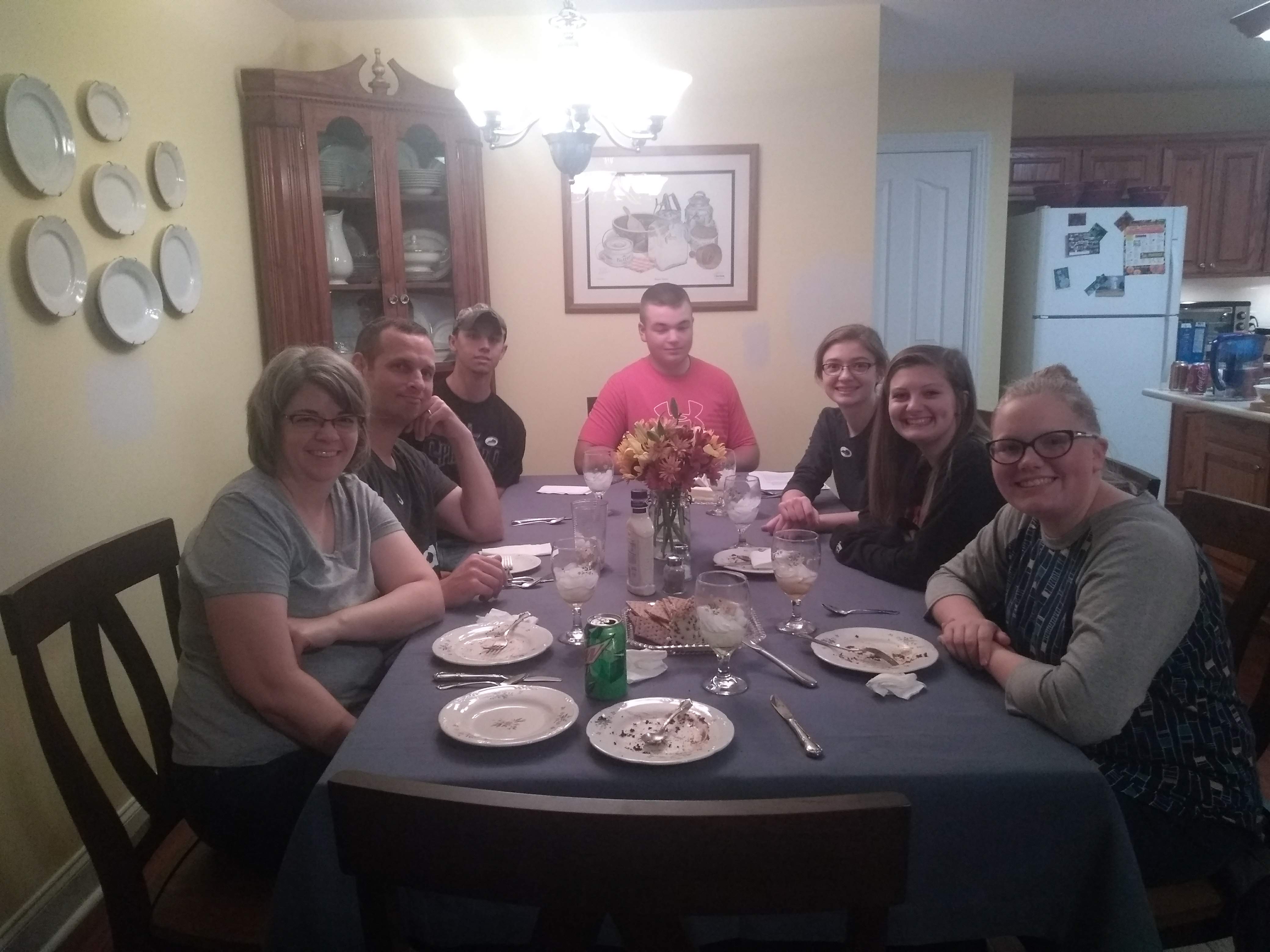
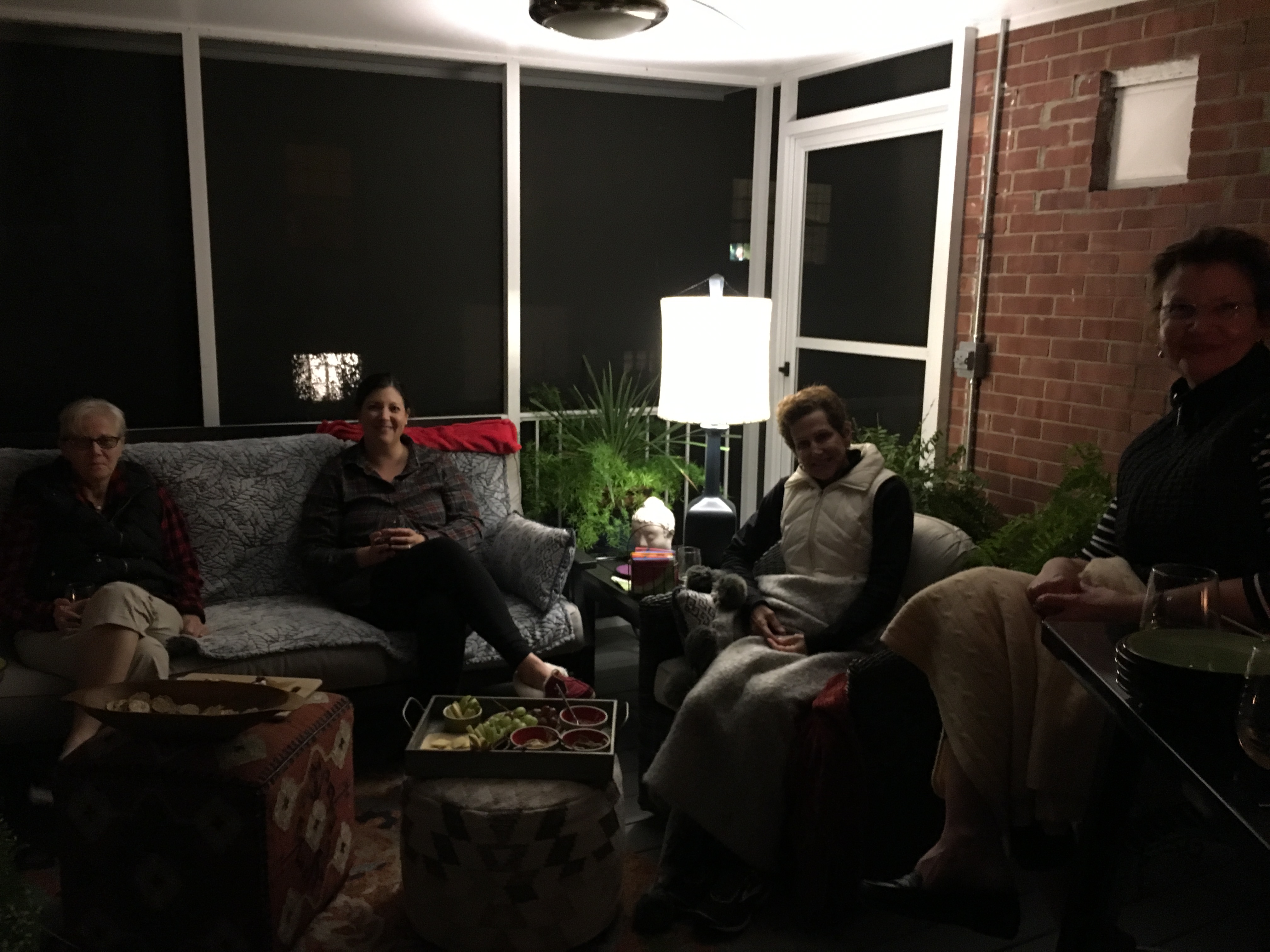
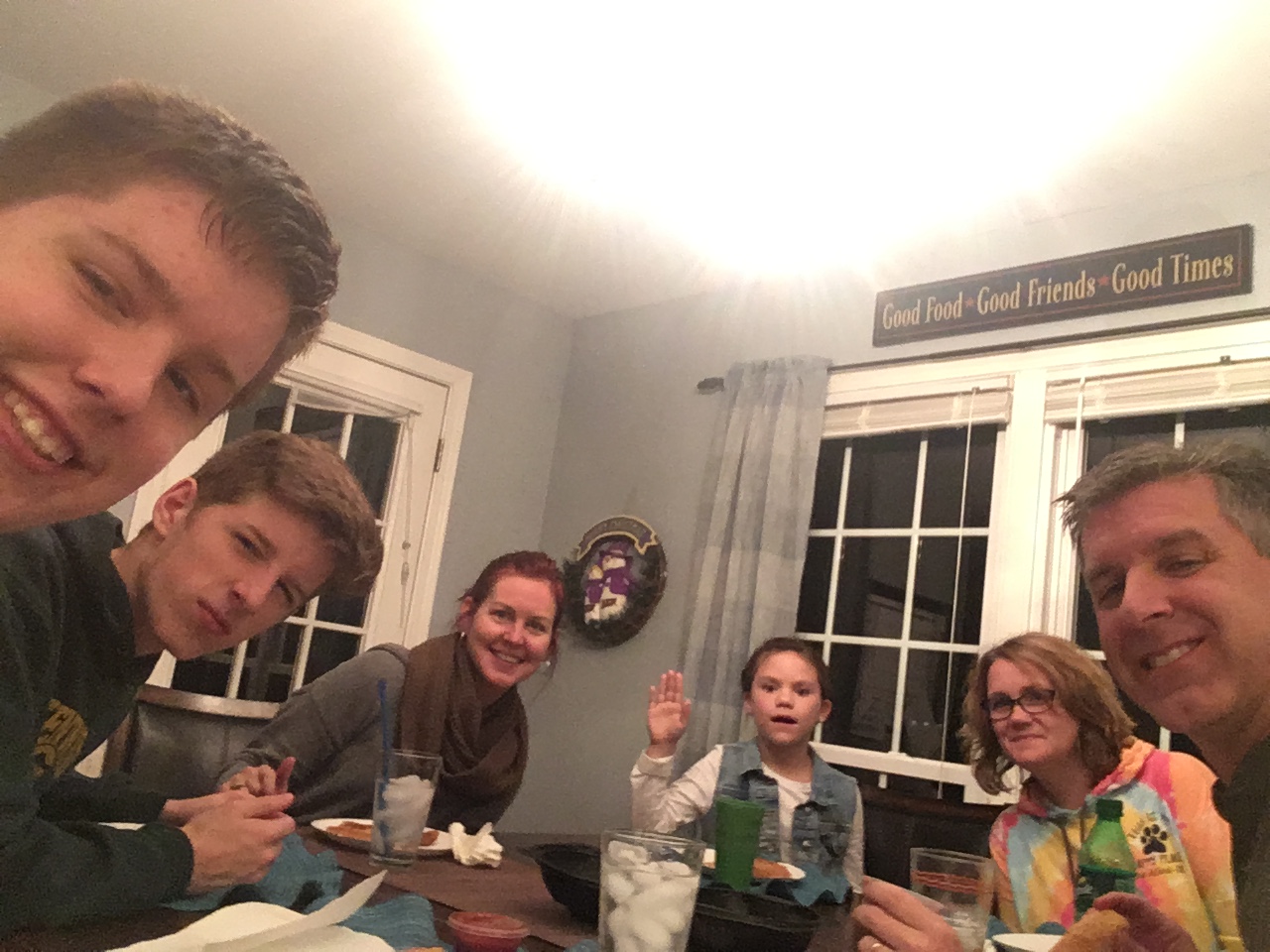
            This Kentucky Kitchen Table was held on November 11, 2018 at my house in Bowling Green, Kentucky. The people who participated were myself, my mom, Courtney, my dad, Scott, my little sister, Sydney, my younger brother, Logan, and my mom’s friend, Michelle. My dad works at WKU and is the Head of the Department of Music. My mom works at the Presbyterian Learning Center as a preschool aid is a very caring person who takes care of the house. My little sister is always full of energy and is a second grader at Briarwood. My mom’s friend, Michelle, was a very fun person who was a really great participant in our discussions.

            The first topic we talked about was the question “Beyond voting, paying taxes, and following laws, what does citizenship mean to you?” Everyone at the table had their own response to this question. My dad, Scott, said that citizenship means everyone in a community working together to make the community that they live in even better than it already is. My mom, Courtney, is a very strong believer in Christianity, so her answer was one of the commandments, in which citizenship means that one should love thy neighbor. Logan said that it was difficult for him to come up with a specific answer outside of voting, paying taxes, and following laws, because those are the things that he usually uses to describe citizenship. Next, we all talked together to come up with more things that could make up citizenship. We said things like being a democracy and everyone having an opinion, the background and history of the cities that citizens live in, as well as recognizing and appreciating each other’s differences, were all things that had to do with citizenship.

            The next topic we talked about was about the disrespect that high school teachers were receiving lately. I decided to make this a topic of conversation due to something I recently saw on the news. A teacher at Maywood High School in California asked the student to leave the classroom because he was not wearing the proper uniform. However, instead of leaving the classroom like he was told, he started hurling racial slurs at the teacher. The teacher than got so angry that he started punching the student, and it turned into a huge brawl until they were separated by the students and staff. This is probably the best example ever of how high school teachers are disrespected. On the news, various students and family members were on the side of the teacher, and everyone at the kitchen table said that they agreed. Regardless of the reason, that student had no right to act the way he did and we all said that he got what he deserved. Teachers are trying their best so that they can give us the skills we need so that we can have a more successful future. Everyone agreed that teachers deserve the respect of their students, and they should be treated that way. We thought that the teacher had every right to retaliate in the way that he did. Now, although I agreed with everyone else at the table, I said that I still thought the teacher could have tried to solve the issue in a more peaceful way. So while I think that the teacher should not have been disrespected in such a way, I still said that I thought he should still be charged for his actions against the student.

            The next thing we talked about was the question “What kind of person do you want to be?” My dad, mom, and Michelle are already adults in their mid-40’s, so they’ve already become the people they want to be. I never really heard what Michelle’s occupation was, however, she did tell me that she helped out with a lot of volunteer work for the clubs at Greenwood High School. She was someone who was willing to take her spare time assisting others rather than for herself, and she said she was really proud of herself for it. As I said before, my dad, Scott, is currently the Head of the Department of Music at WKU. Although playing the drums is what he is best at, he at least knows the basics to most instruments you can think of. Since my dad said he has always loved music for as long as he can remember, and that he has already become the kind of person he wanted to be. My mom is the same. When responding to this question, she said she has already become what she wanted to be. Although she left college early in order to marry my dad, she was trying to become a teacher. She now is a preschool aid working at Presbyterian Learning Center and is also a loving mother. She has also already become who she had wanted to be. For me, I said that I wanted to be a mechanical engineer. I have always enjoyed math as well as putting things together, and since it also pays well, I thought mechanical engineering would be the perfect profession for me. My brother, Logan, said that he was looking into music education. Just like my dad, my brother is a drummer and can also play the guitar a bit, so he said that was the thing he wanted to major in when he goes to college. Right now, my little sister, Sydney, says that she wants to be a dancer because she is currently taking dance classes and she seems to really enjoy it.

I thought our discussion was quite similar to one of the central questions for Honors 251 “How can people live better together?”. Just about everyone at the table thought of citizenship as a way for everyone in a community to live well together, and the topic we discussed about high school teachers needing more respect from their students helped to show one of the many ways people could live better together. Just like mentioned in “How We Talk Matters” written by Keith Melville and others, if we talk and work together, then we can solve problems better. I think that when people who do not know each other and talk to each other, and if they are able to embrace each other’s similarities and differences, then that would be one of the prime examples of citizenship.

During this Kentucky Kitchen Table, I learned just how important it could be to talk to people you have never spoken too people. When you talk with someone you’ve never spoken to before, you are reminded just how similar or different someone else’s opinion could be. There were sometimes when Michelle had a lot to say, and other times when she barely spoke compared to everyone else. I also learned that there are times when people can be a lot more passionate about a certain topic than one would originally think. For example, when we talked about how high school teachers deserved more respect, my brother, who usually doesn’t talk much, spoke much longer than anyone else did. He is currently in high school, so it makes sense that he would have a lot to say about it, but I was still surprised when I saw just how passionate my brother was on the subject. I was also surprised with how mature I was being. I interrupt people a lot because I often get caught up in my own worldview and shut down contrasting opinions as incorrect, but sitting at dinner with these people allowed me the opportunity to connect with them like they were family, thus opening my mind to why people believe what they do. With this, I think I will be much better at listening to what others have to say from now on.

In conclusion, this discussion turned out a lot better than I had expected it to. In my experience, forced discussions were always very awkward, and since I usually eat dinner silently on my own, I was quite surprised with how naturally everyone was talking. I think that having a good discussion with others is a lot more fun than eating all by myself while I watch videos on the internet.

Klay’s Kentucky Kitchen Table

From Left to Right: Brentley, Ben, Blake, Missy

By Klay

I hosted my Kentucky Kitchen Table in Bowling Green, Kentucky at my dad’s house on November 14th. I was accompanied by my Dad (Ben), my step-mom (Missy), and my step-brother (Blake), and my younger brother (Brentley). Due to the fact that I work 6 nights per week, it was difficult to find a time that would work with my family, but we managed to squeeze in a time that would fit the five of us that attended. I first explained the project that I wanted to complete with my family and they were soon very excited to host me for dinner, as well as anticipating the conversation.

Introductions

My dad, Ben, is a local business owner in Bowling Green. He has owned two businesses over his life, and he specializes in textile care, such as carpet cleaning, rug cleaning, janitorial work, and fabric protection. He is 39 years old, and he grew up moving from state to state, finally ending up in Kentucky where he attended Russell County High School. He did not attend college, and he married my mom soon after he graduated high school. He moved to Ohio with my mom and moved back to Kentucky soon after to be a co-owner in a cleaning company, which led to him owning his own cleaning company. He married my step-mom Missy in 2014, and we have been blessed to have been welcomed as a part of her family, including my step-brother Blake.

My step-mom, Missy, has worked for the Medical Center since she was newly out of high school. She works for the corporate office area of Med Center Health, working directly under the CEO. She grew  up in Illinois, and moved to Bowling Green with her parents when her Dad moved for a job at the Corvette Plant with General Motors. She did not attend college but has risen in the ranks among Med Center Health due to her experience and determination. She is 49 years old, and has two sons, Tanner and Blake. She helps my Dad with administration work in his business due to her administration history and experience.

My step-brother, Blake, is 21 years old. He graduated from Greenwood High school here in Bowling Green after growing up in Alvaton, just outside the city-limits of Bowling Green. Blake has struggled throughout life, dealing with a progressive genetic disorder, Ataxia. He lives at home with my Dad and Missy, as he is unable to take care of himself. He struggles with walking due to the negative effects of ataxia on his balance. Blake is a fighter however, as his persistence is inspirational to those around him. When he turned 18, despite his dad’s wishes, he went and got a tattoo on his right bicep that reads, “Never Give Up.”

My younger brother Brentley is eight years old, and was mostly at the table for the food, as we told him we were going to be having a conversation for my class and that he did not have to say anything or do anything, but it was just what we were going to be doing. However, he was able to gather a general understanding of things that were important to his family members about society and citizenship, which I thought was a unique learning experience for him.

I, Klay, am a freshman at Western Kentucky University. I am majoring in chemistry with a minor in biology and a pre-medicine concentration, as it is my dream and career goal to attend medical school and become a surgeon. I was born in Glasgow, Kentucky, and I have lived with divorced parents since the age of two. My parents have both remarried twice, each on their third spouse, which I believe has taken a part in my trait of adaptability, as life has seemed to be ever changing as it has carried on. I work for my grandparents, who own a cleaning business that stretches across south central Kentucky. I clean a factory in Scottsville Monday through Friday, and I manage the cleaning of the Bowling Green Country Club Wednesday through Sunday. I attended South Warren High School until my junior year, when I moved to Glasgow High School, where I graduated in 2018.

Diversity was displayed at my Kentucky Kitchen Table by age, generations, life-experiences, differences in education, as well as differences in political views, differences in careers, and career goals of all in attendance. Due to my Dad and Missy marrying so recently, they do not necessarily share all of their views or many experiences that shaped the people that they are. Furthermore, Blake and I were raised in separate households, attended different high schools, and I am attending college while he is living at home.

The Meal and Discussion

I arrived soon just after leaving class on Wednesday to a home filled with food already prepared, including fried chicken, green beans, macaroni and cheese, coleslaw, rolls, and mashed potatoes. Due to Missy having a red meat allergy, most of the meals that we have feature chicken or turkey as the main dish. Before the meal, I arranged the questions that I wanted to ask in the discussion, and I ran some of them by Dad, Missy, and Blake to give them an idea of what we would be discussing.

I began the discussion over the meal by asking the required question, “Beyond voting, paying taxes, and following laws, what does citizenship mean to you?”, while also talking about how we deliberate in class and encouraging everyone to say what they thought and voice their opinions and feelings, as it was vital to the discussion.

My Dad, being a more dominant person who is usually first to offer an opinion, was the first to answer and really get the conversation going. He described that as a business owner, he felt that it was important to him to provide a service to the community, as he likes to feel that he is helping others and feeling like others come to him for something that he offers. He also talked about how he felt that an important part of citizenship was to have a job and work, providing for one’s self.

Missy, having a rather passive and laid-back temperament, agreed, as she has worked for the same company since she was very young. She added that she felt that it was important to her ideals of citizenship to be a hard-worker and a good influence to those around her. She continued, talking about the reason that she has stayed working with Med Center Health, and that loyalty and promotions were important to her.

Blake got his first words in, somewhat in contrary to what Dad and Missy were saying. He said that to him, working was not as important of a part in citizenship to him, but that he saw community service and giving back as the most important things to him. He talked about how he volunteers at Med Center Health once per week, and how it gives him a sense of purpose. He said that volunteering was another way that he like to inspire others, as he is not physically capable of doing much, but that he is still out in the community doing what he can.

I followed this question up by asking Brentley what he thought about what Dad, Missy, and Blake were saying, to which he provided a bit of comic relief, saying something like “I don’t want to have to work when I get older.”

After asking this required question, I asked a question which turned out to have short answers, “Do you know your neighbors? Why or why not?,” which was almost answered in unison by them, saying “Duh, we live next to Kevin, Chrissy, and DeeDee,” (my step-uncle, step-aunt, and great aunt).

The next and final question I asked was “What kind of community do you want to live in?”

Missy was the first to answer. Rather than talking about what kind of community she wanted to live in, she instead talked more about what she loved about Bowling Green and why she has continued to live here throughout her life since childhood. She talked about how she feels that Bowling Green is just beautiful, mentioning the view she has over all of downtown Bowling Green through her office window. She added that she felt that Bowling Green was the perfect size in her mind, how it has small town outskirts but still has a mall and several other aspects seen in larger cities.

Dad answered next, adding that for growth of his business, he wants to live in a bigger city such as Nashville. He said that the reason he has stayed in Bowling Green, however, was that he liked the presence of small town businesses that were locally owned, keeping the money in the community. He has always been a huge football fan, and he added that he does wish that Bowling Green was big enough to house an NFL team.

Blake was the last to answer, talking about how he didn’t want to live in a community at all, and that his dream was to live in a cabin in the woods so that he could hunt all the time because it’s his favorite thing to do. He said that he does like Bowling Green because his dad lives on the outskirts and has a farm that he can hunt on.

Things I Learned

We wrapped up the meal on this conversation, as I had to go to work afterwards and needed to get back to campus so that I could rest up for class the next morning. One thing that I learned from my Kentucky Kitchen Table was that the careers or lack there of among my family members were huge influences upon their values and what they felt was important to being a citizen. I also learned just how much volunteerism meant to Blake, as I don’t get to see him very much or ask him about what he does at his volunteer job at Med Center Health. I hadn’t realized how much of an inspiration he was to the people at Med Center Health and how good it made him feel to be making contributions to the community.

I felt that the conversation related to the central idea of deliberation in our class for many reasons. I noticed how it was similar to the layout of our classroom, though smaller, that we all circled up so that we could have the conversation, and that everyone could get their voice and opinion in without feeling judged or attacked. I also felt that it related to deliberation because everyone had different experiences and lives that led to their opinions and feelings, but that we could all agree on the importance of citizenship and doing something in the community, no matter what it was.

Furthermore, I felt that the conversation related to what I have learned in class from the reading Love Thy Neighbor by Peter Maas. As harsh as the reading is, it taught me that you never know what someone else has gone through, and not to judge others without knowing their story. Throughout the conversation, I saw a theme of everyone’s story being relevant to their opinions. The things that Blake has been through have kept him from being able to work a job, so working a job isn’t important to him, but helping others through his volunteering gives him a purpose and a feeling of citizenship. Dad and Missy get their ideas of citizenship from their careers and the ways they were raised, relating to the theme of Love Thy Neighbor in that they are a product of their story and their past.

Overall, I truly enjoyed this project, and I felt that it was my favorite thing that I’ve experienced in this class.

Chloe’s Kentucky Kitchen Table

By Chloe

My Kentucky Kitchen Table project took place in Owensboro, Kentucky on November 16th.  I am from Marshall County, however my dads entire family is from Owensboro. I invited both my grandparents, a boy from their church, my Aunt Robin, and then her daughter which is the youngest of all the cousins. My Pop (grandfather) is 77 years old and I have realized over the years that he is one of the most opinionated people I have had the privilege of knowing. Of all the people at the table, he had experienced the most and was eager to share his stories and thoughts that went along with the questions I asked. He is a retired principal from one of the high schools in the area. My Mimi (grandmother) is 75 years old and works part time at a packaging factory just to have something the keep her busy. She always likes to see the best in people and during this project she kept quiet during many of the controversial conversations we had. Aunt Robin is 51 years old and works as an OBGYN at one of the hospitals in Owensboro. She loves to get in heated discussions and it is rare if she ever does not have something to say. The boy from their church goes by Kaleb, he is 20 years old and is currently working full time at Menards while taking some classes at the local community college. He also remained quiet for most of the dinner unless I asked him a question directly. The last person at the table was my cousin, Karsen. She is 13 years old, in her second year of middle school, and brought a totally different view point to the table. Although she is young, she understood much of what we discussed and loved to give her thoughts any time she had any.  

I started with the prompted question of what being a citizen meant to them. My Pop was the first to answer and he did so by talking about the different freedoms he has. He explained to me how he often takes his life for granted and all the things that just come so easily to him such as getting an education, starting a career, having a family and much more. He goes on to talk about how he feels entitled to many of the things he has because he felt as if he had earned them and deserved them. But when he steps back and thought about it, he had been given so many of the things that made him the citizen and person he is. My Mimi related the question to her family. She said that as a citizen and as a mother it was her job to raise a family of good citizens and people. It is like a spiral effect. Without her parents raising her right, then she could not raise her kids right, who would then have not raised me right. She talked about how it was her job to contribute to the next generation of responsible citizens. My Aunt said she had thought about it a lot and that she agreed with my Mimi’s take on it but did not think it always turned out that way because kids will go on to do their own thing and make their own decisions and it was not their fault as mothers if their children did not make the right choices. She thought her citizenship had to do with her always voicing her opinion, making those around her aware of things going on in the community and always trying to make our way towards solutions for the things that are wrong in our world.

When my aunt started discussing this, my immediate thought was deliberation. I told her how we had been having these in the class I was doing this project over, where we would discuss different social issues as a group and try to think of ways to fix the problem. I told her how I loved hearing everyone’s ideas and thoughts when we do this in class but was not sure if it was a feasible goal in the real world. My Pop said it was something he never thought would work, even though the idea sounded pretty. That people in the real world are too hard headed to sit down and discuss issues with people they may not agree with. So I asked him if he would, if given the opportunity, would he actually listen to what others had to say on hot topics such as gun control or homelessness if he did not agree with the people people he was talking to. It took him a minute to think about it and he finally said I do not know. He said he would like to think that he would but he feels like he would close off when speaking about things he was very passionate about such as gun control.

I feel like this conversation with my Pop also relates to our central question of how we can live better together. It is through understanding our strengths and weaknesses that we can accomplish this goal.  Understanding that each person is in some way different from us and that we hold different ideas and that is okay. Once we do this we can answer one of the other central questions of how we can solve problems. Solving the big problems in the world is not going to happen overnight but all the people at the table agreed it is something that can only be done if we first resolve the issues we have with one another.

We then changed the subject at the table and discussed some of the disconnects between generations and about how that causes many of the issues in our society today. My Mimi and Pop both talked about how when they were younger they ate breakfast and dinner every day with their families. They said this was something that was never up for discussion it was just expected. My Aunt, who is their daughter, said she experienced many of the same rules but it did not seem to be as strictly enforced as it was with my grandparents. Kaleb and I, both from the same generation, talked about how we ate dinner at the table with our families only when it was convenient for everyone. Kaleb said most of his childhood was crowded with sports and other extracurricular activities that made it almost impossible to sit down with the entire family and have dinner. I experienced many of the same things and recalled that having dinner as a family at the table was seen as a special thing that had to be planned or it rarely actually happened. My cousin Karsen said most of the time she ate dinner in front of the TV with her parents or sometimes even in her room alone. Her idea of family dinners were the ones she experienced during holidays such as Thanksgiving and Christmas. It was during this conversation that I realized the variety I had sitting at the table in front of me. I asked them if they thought this played a role in why there was not much public discussion today. My Aunt Robin said she thought so, that since conversation was lacking in homes it had also caused conversation in society to dwindle as well. My Mimi talked about how she felt as if it had become a chore to make conversations with people and that it had not always been that way.

I started to wonder if technology also might play a role in this disconnect between generations. I was hesitant to ask what their thoughts on it were because I already knew my Pop’s opinion on technology. I was surprised when my younger cousin was the first to answer. She said she hated and loved her phone. Karsen said she was always able to reach anyone at any moment but it also was the thing that kept her inside on a pretty day or was the reason she was sad she had missed out on someones birthday party. My Mimi said this was something she had never experienced and even though she now had an iphone, Mimi said she hardly used it for anything other than returning phone calls or keeping in contact with her kids.

This conversation reminded me of the question how can we have more say over our own lives? I think more often than not we allow our phones and computers to get in the way of the things we should actually be focussed on, things we would not be concerned about if we did not have a screen displaying them every second of every day. Things have become too easy to access and so it takes away the importance of waiting on knowledge.

Overall, I learned many different things through several different perspectives during my Kentucky Kitchen Table project. My grandparents were more passionate than Kaleb and I in some areas and we were more passionate than them in others. In the end, I was glad to be able to sit down and discuss things that really matter with my family and new friend.    

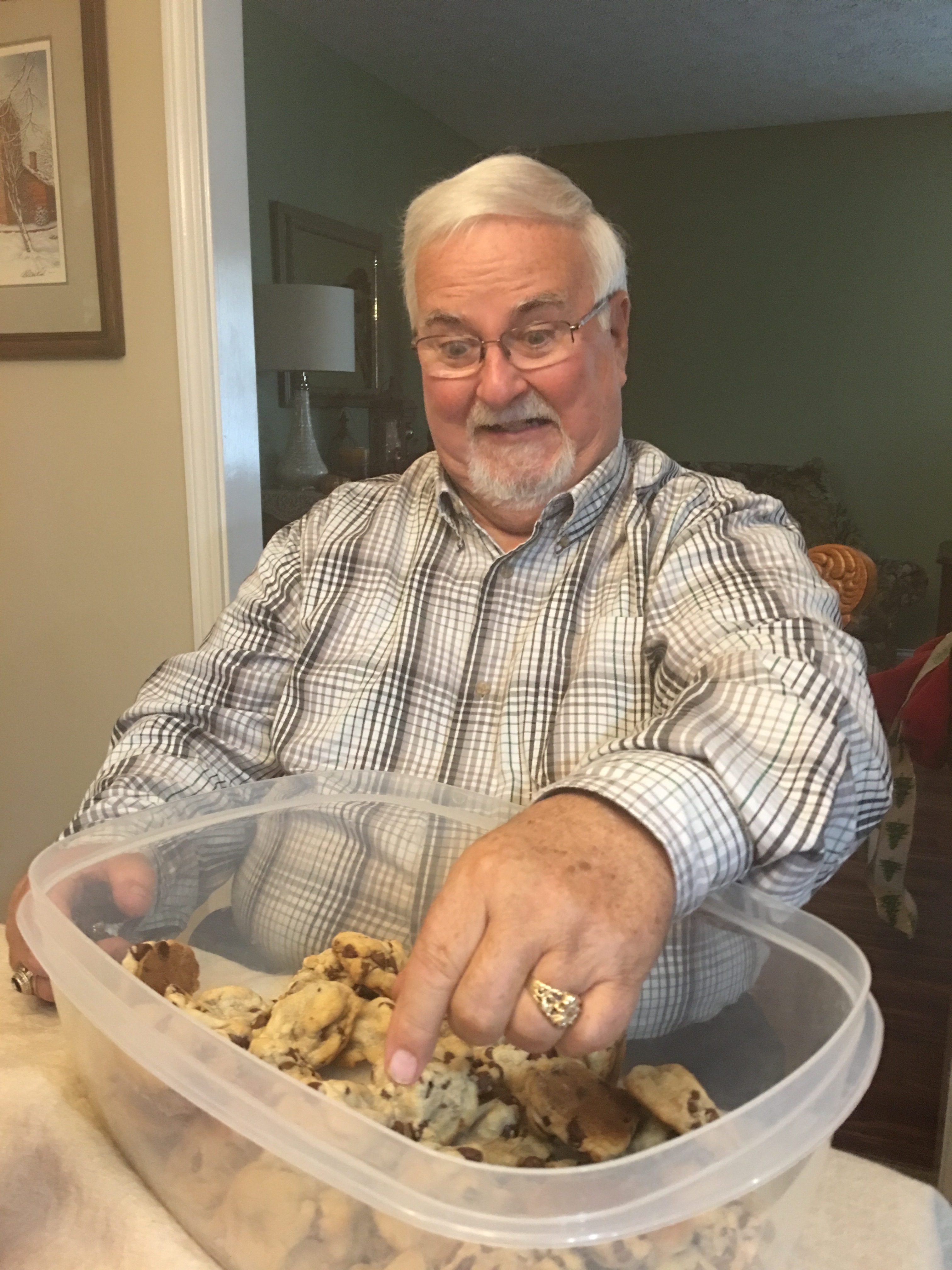
My Pop’s famous double chocolate chip cookies.

Puerto Politics

By Amber Madison

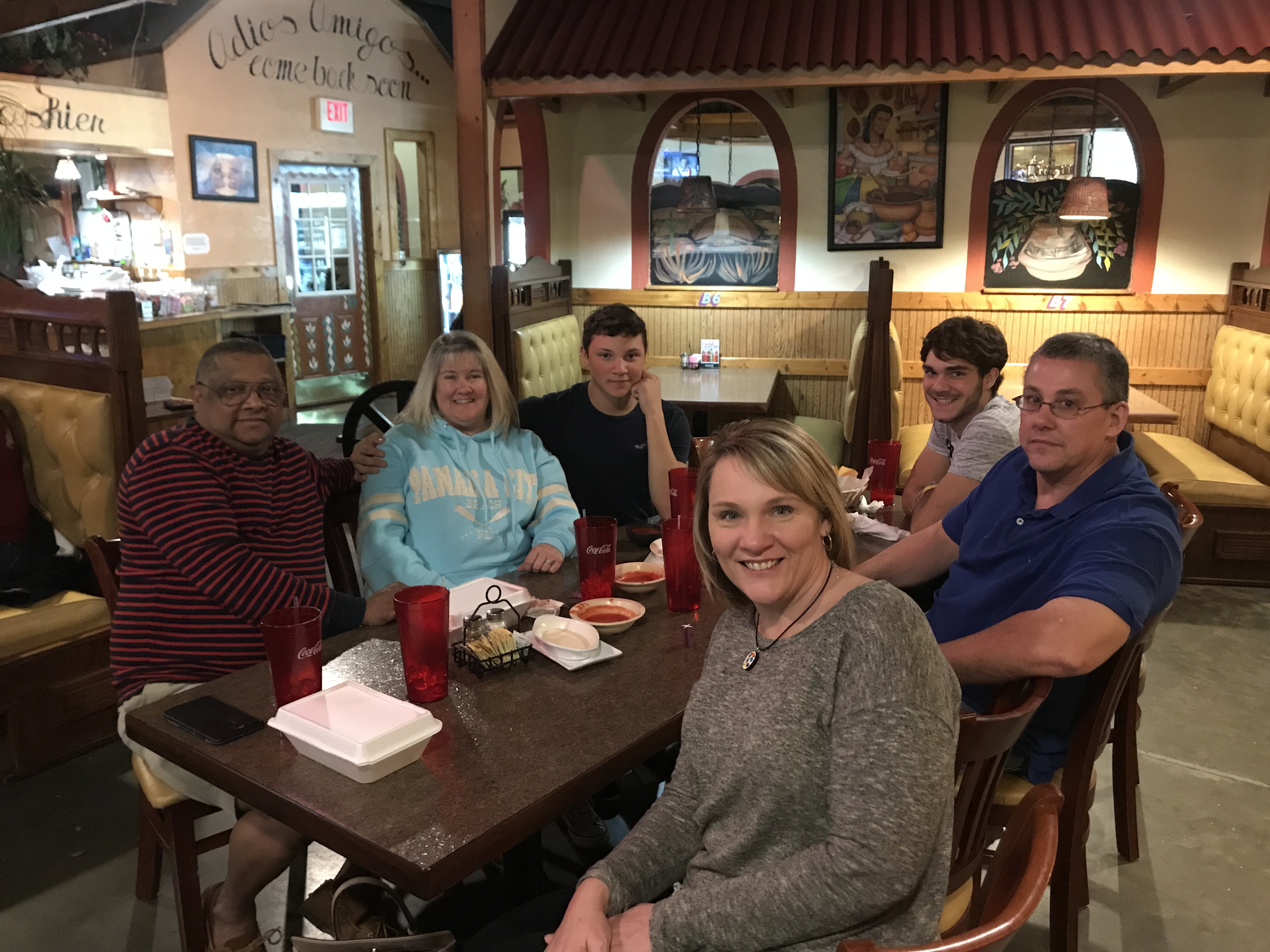
Pictured from left to right: Carla’s husband, Carla, Christian, Kay, Cain, and Tim.

My Kentucky Kitchen Table meal took place on Monday, November 12, 2018. Due to a last-minute kitchen mishap at my parent’s house, we had to relocate the meal to our local (and favorite) Puerto Vallarta, about four minutes from our house and still in Bowling Green. There were seven people, including myself, in attendance, two of which were unexpected (but very welcome) guests.

The first guest was my mother, Kay, who grew up in Edmonson County and moved to Bowling Green just before I was born. She is the branch manager of the PNC bank on Fairview and has been in the banking business ever since she was 15 years old. My next guest was my father, Tim, who also lived in Edmonson County, particularly Rocky Hill, until he and my mom moved to Bowling Green. He works at Country Oven Bakery and has to be working on some new project around the house at all times. My next guest is my mom’s coworker, Carla, whom I’ve known most of my life and see every now and then since she and my mother work together. She is very lively and had lots of insight to add to this conversation. Though I have known Carla almost my whole life, I had never met her husband, but he proved to be a very interesting man from an intriguing background. He moved from Mexico twenty-two years ago without a bit of knowledge of the English language. When he arrived in America, he learned English just by watching American television shows and movies, which impressed me greatly, considering how much time and effort that must have taken. He even ordered his food and conversed in Spanish with the waiters and waitresses, most of whom he knows. Puerto Vallarta was his suggestion; fortunately, my parents and I also spend a lot of dinner nights at Puerto’s. After ordering our drinks, we were joined by Carla’s husband’s son, Christian, and his friend, Cain. Christian is 18 years old and is a senior at Warren East High School. He also works at Hollister and says that the idea of deliberating is very interesting to him. Cain is a junior and a football player at Warren East.

After being introduced to and getting acquainted with everyone I had just met and catching up with Carla, I started off the conversation by describing that a deliberation is a discussion about certain issues in order to work through a problem and then asked the required question:

“Beyond voting, paying taxes, and following laws, what does citizenship mean to you?”

After some silence, stares, and careful pondering, the general answer around the table had something to do with representation in a diverse country, freedom to work towards a desired life, and common morals among people. Carla’s husband, having been to a country where these American ideals aren’t as prevalent, added something that put American citizenship into a better perspective for me:

“You don’t have to fear for your life.”

He and his wife explained that in Mexico, you really have to watch out for yourself. Carla added that you can’t even wear jewelry in most parts because you never know if it will be stolen before the end of the day. This reminded me of the Love Thy Neighbor chapters about Bosnian genocide and the horre overseas. I explained to the table that in our class, we have discussed these international affairs in Bosnia and surrounding areas and the overall theme that just because we don’t see the many gruesome details of what goes on in other countries doesn’t mean they don’t happen every single day. It’s also hard to even imagine similar cruelties happening in America because we haven’t experienced anything so harsh before. Carla’s husband agreed, saying that where he came from is nothing similar to how he lives today.

The next question I asked was, “What is the thing you love most about living where you do?”

Carla’s husband said that Bowling Green is a safe place to raise kids and not have to really worry about where they are at all times. We all agreed that although Bowling Green is the third largest city in Bowling Green, it is still fairly safe and hospitable. Southern hospitality was a large topic regarding this question. Carla talked about how she used to work somewhere where she spoke to many Northerners and explained that many of them were condescending and essentially very different socially from the many people she has interacted with from the South. My mom added that you can still go to Kroger and see several familiar faces while shopping, which received many nods all around. Though Bowling Green is growing at a high rate, there is still a small town feel that makes you feel at home no matter where you are from. At this point, my dad, Christian, and Cain were distracted by the football game on the TV screen. Another thing that Carla brought up was the local parks, saying that you don’t have to worry if you’re walking in parks like Keriakes and Covington late at night. She also included that the new additions and cleanliness of the parks are very impressive for how popular they continue to be.

My next and probably favorite question was, “What social issue is closest to your heart and why?”

I was compelled to ask this question because I was very curious about everyone’s stance, especially my parents since we don’t discuss politics too often. Carla responded first to this question, stating that racism and hate are so prevalent in today’s world that it seems like they could never go away. My dad re-joined the conversation, quickly agreeing with Carla’s position and adding that even though he disagrees with someone, it doesn’t mean that they can’t be friends. He further explained that everyone has their first amendment right to say and believe whatever they want to, but they can still get along with people who believe differently than them, which is part of the reason that different generations tend not to compromise or see eye to eye on certain issues. Christian added that people have become increasingly sensitive over the years and have lost the ability to disagree and truly be civil about the matter. He also brought up the fact that another issue in America is the divorce rate. About 40 to 50 percent of marriages end in divorce, and those numbers are still climbing each year, and he would like to see that settle. People have seemed to become more independent and less loyal over the years. Another one of Carla’s close social issues is gun control. She and my father agreed that taking away guns is not the solution to this never-ending problem in America. Carla explained that the problem is the people, and this violent behavior starts at home. She shared an example of how others can be kinder and help end the problem that can ultimately lead to violence: at her son’s track meets, there is always a kid whose parents never showed up and didn’t have enough money to buy gatorade before running. Carla always bought this kid some gatorade because she felt like he needed a supportive influence in his life since he didn’t have one at home. She feels that moments like these at school, at work, and in life in general can change someone’s mindset and make them feel included. My father, being a gun-owner and concealed carrier, agreed again, stating that guns are not the problem and are often put into the wrong hands. Personally, I’m not the biggest fan of the idea of fighting guns with more guns, but I think we all agreed that background checks should be more strict and in-depth than they are now, which could decrease the chance of those with bad intentions receiving a weapon. After everyone had given their opinions on this question, I ended our deliberation with a final thought: as human beings, we are quick to judge and assume things about other people without knowing their background. No matter your beliefs or opinions about specific social issues or the party with which you identify, we are all citizens and should embrace our freedom to disagree and have different stances.

Before actually hosting and participating in my Kentucky Kitchen Table, the idea of this project was intimidating to me. I am not generally the talkative type and tend to listen more than speak, and the idea of having complete strangers participate in my school project seemed a bit strange and frightening to me. However, I found myself really engaging with this group of people, and I got a new perspective on most of the topics we discussed. I feel that talking about these deep and debatable topics can help you get to know others better than small talk, and I learned something new about every person that I didn’t know before dinner, including my parents. I learned first-hand that deliberations are a great way to keep a conversation civil but still controversial and interesting. We all even agreed that we should do this type of dinner again sometime.

Jake’s Kentucky Kitchen Table

I hosted my Kentucky Kitchen Table at the CSF house on Western Kentucky’s campus on November 12, 2018. Since my family is always busy, and most days I’m on campus all day anyway, I decided to send out a quick text to some friends about eating dinner and talking about citizenship. Fortunately, they texted back, a couple of them really excited that they would be able to share what they felt it meant to be a good citizen. Because most of us college students are broke, and simply because we were all busy with school and had a small time window where we could all be there, we decided just to each go to place at Downing Student Union and get food at a couple different places and then share various things with one another. Our group consisted of Don, David, Victoria, Carleigh, Zac, Whitney, and myself.  Although I consider each of them friends, I didn’t and still don’t know a whole lot about them. I knew that Don, Victoria, Zac, and Carleigh were all from Louisville, but that was where the similarities stopped. David was from a place outside of Louisville, and Whitney was from Louisiana. I, myself, am from Scottsville, which is about twenty minutes outside of Bowling Green. We were all completely different. We came from different environments and while most of them were white, Don was African American, and I have a darker complexion, although I still identify as white sometimes, just to mess with people. While they might see each other at CSF worship Tuesday nights, their interaction with each other was nonexistent. That was partly why I asked these specific individuals; They hardly knew each other. Their only connection to one another was me.By bringing them together over dinner, I was able to give them a common ground to which they could communicate, while also giving me the chance to learn more about all of them. I already had my predictions about how each person would respond to the topic and I was wrong.  When we finally did start our conversation, I found it was very interesting and kind of surprising to see how young adults that were my age thought about citizenship. Now, I did choose people my age intentionally, after realizing that I could not do this event within my home because I wanted to see for myself how others near my maturity level viewed themselves and the role of citizenship in our nation. What I learned was actually disheartening. They obviously had a sense of citizenship, but it was based on what they had grown up learning from people who were older and more knowledgeable about the topic and has little to do with instinct. In fact, the only things outside of the cliché meanings of citizenship were helping others and aiding the community when the chance arises. Don and Whitney both said that obeying laws was a big way to show good citizenship. Voting was also pointed out as being expected from a good citizen. Beyond that, I found that they contained little knowledge about what it means to have good citizenship. This was incredibly shocking since each of them are exceptional students and are probably much smarter than I am. After realizing that their views on citizenship were very limited, I followed up with a question that required them to think about their own actions and decide for themselves if they were good citizens. I asked if they thought they were good citizens. The outcome was pretty much how I expected. Most of them told me yes, they were good citizens with the exception of two, who said they needed to work on their citizenship. When I asked why, however, there was a long pause before anyone said anything. When they did speak, their reasons for believing they were good citizens were centered around the fact that they had never broken any laws and tried to vote as much as possible. Yet, there was nothing unique about why they felt like good citizens. The two who said they thought they should work on things told the group that they don’t help others nearly as much as they should. Upon saying that, others from the group suddenly agreed that they should work much harder to contribute to their communities and to society. Next, I asked them where people might learn to be good citizens. They all came to the conclusion that it’s taught within the walls of their home, and that grade school partially contributes, but that it mostly just depends on the individual. They made mention of how criminals are no less intelligent than law-abiding citizens, they simply just don’t understand the concept of good citizenship, and furthermore, don’t see it as relevant to their lives. For them it’s not about education, it’s about importance. During this part of the conversation, one of the group mentions casually mentioned that lawbreakers are only that because they were caught. We all looked at Whitney and asked how many laws she had broken, to which she quickly verified that she didn’t break the laws but the damage had been done and we laughed at her for few moments.I used this opportunity to stray away from the law and asked the group what it meant to be a bad citizen outside of the context of the law. Carleigh finally spoke about this and basically said that it was doing anything counterproductive to your community and in turn, your nation. I asked if she thought that applied to passiveness and not voting, not helping when your community needs you, and not taking a part in your society in a way that is helpful. She laughed and told me that I was pretty much spot on. As we talked, I saw the social barriers break down between each person and observed how they began to connect. As our conversation progressed, each individual becomes more comfortable with sharing their views. They no longer seemed as bothered to state their opinions, and I got the chance to see how, when people have real conversations, they connect in a much more legitimate way. There weren’t hardly any times that there was a disagreement, and their underlying belief is that good citizenship comes from education sanctioned by schools and part of the teaching that parents give their children, but also from the decision of the individual. It’s choice, that results in what kind of citizen a person becomes. This activity reminded me a lot of the reading and discussions we had over morality in the honors class. We have no problem saying what is what, but when the reasoning comes in, we have no real evidence to support us. In the readings it was about what is morally acceptable, in this Kentucky Kitchen Table, it was about what good citizenship is. Just like we “know” what is morally right or wrong, we “know” that we are good citizens. That is of course until we realize we have no reason behind our decision besides what people expect us to say. That was the case with my friends, most of them agreed they were good citizens, but when I took away the go-to reasons for why, I stripped them of their support. This is also relatable to the reading about the oak trees on the college campus, and how one should know why they do the things they do before presenting their ideas. If you can’t come up with more than three reasons for why a good citizen is a way he/she is, how can you talk to people about citizenship. Most of the time, people have heard the same thing their whole lives about what it takes to be a good citizen. If you try to converse with them about the same things they’ve always heard, it really only defeats the purpose. That being said, the people I ate dinner with, are not completely clueless. They have a relatively clear understanding of what it takes to be considered a good citizen, and some of the things they brought up made me stop and think as well. I was able to learn from them as well as about them. It also allowed us to each connect in a way that was deeper than our struggle with college classes and overabundant homework.Not only in that way but as new friends might. We now know of people whom we can talk to about political and social matter, not having to worry about some sort of fight breaking out, whether physical or verbal. It was real, and we were all able to express how we felt about the matter in an environment that was relaxed and judgment-free. Personally, I feel that more people should invest time in sitting down with family or friends and having good, deep conversations about the things transpiring around them. They should practice expressing their opinions so that they will have a voice in their community and nation, and therefore, take part in being active members of society who demonstrates good citizenship skills.

Megan’s Kentucky Kitchen Table

By Megan

My Kentucky Kitchen Table took place at my house in Bowling Green, KY on November 6. Nine people attended the dinner including myself, my parents, Josh and Karen, my brothers, Seth and Thad, my distant cousin, Caroline, and two people who attend my church, Anna and Brock. This group of people displayed generational, experience, educational, and class diversity, which led to many interesting conversations and learning experiences.

Introductions

I am an 18 year-old freshman at WKU majoring in Biochemistry. I was born and raised in Warren County and live with my parents and two brothers. I participate in SRHA and AED on campus and was on the academic team in high school.

My parents, Josh and Karen, are both teachers and in their 40s. Josh works at elementary/middle school in Logan county as a P.E. teacher. He also coaches the girls volleyball, boys basketball, and girls basketball teams. He was born and raised in a suburb of Phoenix, Arizona and went to college in Florida. He also regularly participates in our worship services. Karen works as a part-time math teacher at WKU. Additionally, she teaches Bible classes at our church and volunteers with both of my brothers schools. She was born and raised here in Warren County and attended WKU.

My brothers, Seth and Thad, attend public school. Seth is a 10th grader in high school who plays football and is in band. Thad is a 6th grader in elementary school who plays basketball and is in band. Both boys share similar interests and spend many weekends mowing lawns for extra money. Seth also regularly participates in our worship services.

Anna is a 12th grader in high school and one of my best friends. In school, she participates in band and 4H. She plans in attend WKU next year, but is unsure about her major. She lives in Warren County with her parents and three siblings.

Of the group, Caroline and Brock are the two that I know the least. Caroline is my distant cousin and, even though she lives in town, my family and I do not get to see her very often. She is a 20 year-old junior at WKU majoring in English with a Political Science minor. She is originally from Lawrenceburg, Kentucky where she lives with her parents and two siblings. Brock lives in Warren County with his mother. He is a 19 year-old part-time student at the local community college and works part-time for a welding company.

Our dinner included chicken pockets, roast beef, mashed potatoes, corn, green beans, carrot casserole, cooked apples, wheat rolls, peanut butter pie, chocolate cake, and cookie dough cheese ball. My mom always cooks way to much food. After we started dinner, I asked the first question, “Beyond voting, paying taxes, and following laws, what does citizenship mean to you?” This question had a variety of interesting answers. I said that staying informed was important so that you would be a responsible voter. Caroline added that just generally being kind to others was a crucial component. Anna included that taking care of your land made the community a more beautiful place. One of my brothers mentioned jury duty. Brock mentioned the right to bear arms. The others in the group echoed our thoughts.

The Requirements of Citizenship: Jury Duty and the Draft

We then discussed the required components for citizenship. We mainly discussed jury duty as my mom served on a murder trial when she was eighteen and my dad had recently been called for jury duty. This part of the discussion was mostly informational, but my mom’s jury experience attested to many different aspects of citizenship. In the murder trial she had served on, the defendant had pled guilty, but his attorney argued for a lesser sentence because the defendant’s judgement had been impaired by his drug use at the time of the murder. However, the defendant had given a false name shortly before the murder took place, proving that he was already aware that his drug use could get him in trouble. This led to a general discussion about how to be a good jury member by paying attention to all the details of a trial in order to give a fair ruling.

Additionally, we briefly discussed signing up for the draft, and whether or not females should be required to do this. Brock had signed up for the draft recently and my brothers will have to in the future. Caroline did not believe females should be required to sign up for the draft as she felt that many women, including herself, would not want to join the armed forces. Although I am sure many women would not want to be drafted, I am also sure that many men did not want to drafted, but it was required of them. We did not discuss the subject much further as we all felt that it was unlikely that the draft would be reconstituted.

Safety in the Community

In addition to talking about jury duty and the draft, we also spent a lot of time discussing safety in the community. This discussion was prompted by the questions “What kind of community do you want to live in?” and “What is the thing you love most about living where you do?” Safety was the unanimous answer to both of these questions; however, it was interesting to see why the members felt that our community was safe. My mom, Caroline, Anna, and I all felt the Bowling Green area was filled with good people and that our safety is determined by the quality of our neighbors. Brock felt safe because he knows that he and many of his neighbors owned guns as protection. It was interesting to see how the collective power of the community was what made us feel safe, but we differed on whether this was due to the communities offensive or defensive behavior.

Religious Influence on Citizenship

As everyone at the table identified as a Christian, we had some discussion how our religion influences our citizenship. We all agreed that Christianity had led to our appreciation for the sanctity of human life, which influenced how we treat others and how we judge others actions. Our religious identity also influenced how we answered the question, “What advice would you give to people running for office in our country?” Everyone wanted officials who appreciated moral standards and stood up for what they believed in, even if there beliefs were unpopular. We also agreed that these qualities were hard to find in leaders today.

This part of the discussion reminds me of the article we read in class titled  “If It Feels Right…” by David Brooks. Everyone at the table wanted to elect leaders who had distinct moral standards, yet young people today have none. If it is difficult to find moral leaders now, it will be even more difficult to find moral leaders in the future when the young generation starts running for offices. The points brought by in my kitchen table discussion agree with David Brooks’ points because morality has become undefined in today’s society.

Election Day and Marsy’s Law

Our final point of discussion happened while we were cleaning up after the meal. Caroline asked if anyone had voted for Marsy’s Law. She had heard a radio announcer explain the problems with Marsy’s Law due to its current wording. Brock agreed with her and said that the current law would end up giving rights to criminals. However, my mom and dad both stated that they hoped the law would be rewritten to specifically give rights to victims and their families as the original law had intended. Everyone of course agreed that this would be the best action as the current law is written in very broad terms.

Final Thoughts

Overall, I really enjoyed this assignment and the discussion we had as a group. I thought our discussion brought up some interesting points about the one of the central questions for Honors 251 “How can people live better (or, at the least, less badly) together?”. We all wanted a safe community that protected the good and punished the evil. In order to live better together, we each needed to take actions to create a safer community, whether that be by encouraging a safer community or protecting ourselves. We also felt that stronger moral standards would create a better community. Finally, we wanted to enact laws that protected the victims instead of the criminals so that the victims can live “at the least, less badly” after they have had crimes committed against them.

In conclusion, we each have a responsibility to make the world a better place. Each person at the table was trying to do this in some way. My mom and dad are teachers of the next generation, Brock helps build stronger structures and equipment, and Anna, Caroline, Seth, Thad, and myself are all trying to be good students so that we can use our education to make the world a better place. In end, we are each just individuals, and we cannot make large changes on our own; we must rely on the collective power of each other and our communities to make the world a better place.

Kentucky Kitchen Table

By Bailey 

My KKT took place in Bowling Green on Sunday, November 18. I was invited to attend a Thanksgiving dinner held by the family of one of my friends. My friend, Madison, told me that her family would love to take part in the discussion, so I decided that this setting would be a great place to conduct a KKT. There would be several people attending that I would not know, and there would be diversity among ages and stages of life.

Not pictured: Bailey (who took the picture), Madison and Eddie (who were helping serve food at the time) 

Madison’s family hosted the dinner. They include Gina and Eddie, Madison’s parents;  Madison’s brother, Chase, and and his wife, Megan; and Sue, Madison’s grandmother. Gina is very kind and thoughtful. She finds joy in taking care of others, especially her family. Eddie does not speak unless he has somethings meaningful to say, but his words always bring valid points to the discussion. Chase is like his father in that he doesn’t demand attention, but he and Megan offer a family’s perspective from the modern world. Sue is very wise, and she humbly shared her wisdom with us as she spoke. Madison is kind-hearted like Gina, and her love for others allows her to give selflessly to those around her.

I opened up the discussion with the main question, “What does citizenship mean to you?” Most of the responses included involvement in the community. We talked about the importance contributing to the betterment of your community and the impact it has both on your own life and the lives of those around you. Gina offered another interesting response. She said that citizenship means that you are working towards the common good. The common good means that your are not focusing on your own interests, but recognizing and working for the interests of others. We all agreed with Gina’s statement, and then I began asking more questions stemming off of the main question. Chase and Megan said that the best thing in our world today is our ability to communicate with so many people across the globe. They said that with this communication, we can build a stronger global community by exchanging ideas. With so many different kinds of people with different experiences and lives, our ability to communicate with each other through technology helps us to understand and learn from each other. Sue said that the people who do good for the world without recognition are the best thing about our world today. There is so much in our world that needs good, and fame and glory can often get in the way of the good we can do. When asked how she thought her job relates to her role as a citizen, Madison said that her job is very customer-based, and that her main focus throughout the day is helping others. Referring back to what Gina said about citizenship, Madison said that service to others is one of her responsibilities, and that her job allows her to fulfil that responsibility. She said that she tries each day to encourage and uplift the people she encounters each day at her work. Eddie said that we have an obligation to treat our community members fairly and with respect. He said that it is important to be considerate of others’ needs and backgrounds even though they may be different from our own. Megan said that she wants to be a person who spreads positivity. She said that she wants to be the person that people can come to if they need help, and she wants to be someone who stands up for good. Sue advised those who are in government office to always remember the image of who they are representing. She said that political leaders are held at such a high standard, and each move they make is subject to scrutiny. When representing such a large body like the American people, leaders must remember that their actions are reflected upon those they represent, for good and bad. When we discussed social issues, issues such as foster care, human trafficking, and racism were brought up. With each of these issues, we talked about the value of a human life and the importance of caring for and supporting each other. Throughout the discussion, there was a central theme of appreciation and service towards others. By the end of the discussion, we all agreed that our responsibility as people is to spread love in our world and help others who are in need. Everyone at the the table shared the same religious beliefs, and I think that similarity helped us in reaching that conclusion. However, at each of the different stages of life we were in, we could all see the value in spreading positivity in our communities.

Through this project, I have learned the importance of community. Coming together as a community gives citizens a platform to express their passions and problems. Community gives people a support system and a family to go to when they need help. Madison’s family invited me their own community to share Thanksgiving together. The small act of kindness they extended to me showed the value their family has placed on community and fellowship. To conduct a KKT during this time of the year I think is a great way to collaboratively consider the impact we can have on our communities and our duties we have towards them. I learned through the discussion that kindness and positivity have power. Extending kindness towards others (like Madison’s family did to me) gives people a reason to be happy. Kind service towards others helps build trust and lift spirits throughout a community. I also learned that there is no room for selfishness in citizenship. When we think of citizenship, we are thinking of what we need to be doing for our government, fellow citizens, and for our fellow human beings throughout the world. Service gives us a purpose in this world and distinguishes our lives from the lives of others. When we think about great men and women in the world, we think of their actions that usually involve great things they have done for others. One way we show our love to those close to us is through service to them in some way. Building relationships in our community and serving others are ways we fulfil our responsibilities as a citizen. I have now learned that these core duties help us contribute to our world in a positive way.

In class, our three central questions are, “How do we live well together?”, “How do we solve problems?”, and “How do we give others more of a say over their lives?”. These questions all go along with our discussion about community and service to others. The first question deals with the function of community. Community works best when members are actively contributing to the common good. This statement related back to what citizenship means to each of us. In our discussion, we talked about how we, as citizens, should work to better the lives of those around us and remember the interests of others. The second question addresses problem solving. As we have learned in class, problems are best solved through deliberation. In “How We Talk Matters”, Keith Melville explains that deliberation allows people to get a better sense of problems they are facing, but they also can get a better sense of problems others are facing. Deliberation with community members is the first step in solving community and world problems. Solving problems also requires people to sacrifice time and resources in order to help others. Citizens use their talents and abilities to serve in the best way they can. The third question deals with autonomy. Through deliberation, communities members feel as if they have an active voice in how their community is ran. Our KKT discussion about community and service related to how we can answer these questions and continually work towards bettering ourselves and our society.

Alecia’s Kentucky Kitchen Table

By Alecia

Steve, Susan, Anna, Brooke, and I ate around the kitchen table in my house in E-town, KY.

When it comes to many things in life, my family and I disagree. We’re at two vastly different ends of the spectrum, with me being at more of the liberal side and them being die-hard conservatives. I feared the worst for this discussion, afraid that it would become wildly out of control and almost to the point of lethality. I knew that these questions would be one of many things we would unfortunately disagree upon that would lead to catastrophe.

But it didn’t end up that way.

My Kentucky Kitchen Table took place November 10th at my home in Elizabethtown, Kentucky. It was a dark, cold night, but the conversations we had were worthwhile and full of understanding and warmth. My dad, Steve, cooked us an absolutely delicious steak; my mom, Susan, made baked potatoes; and my friend Brooke and I cooked the macaroni. All were in attendance: Steve, Susan,my sister Anna, and Brooke. I had wanted the group to be as diverse as possible, inviting a plethora of people from my hometown, but Brooke had been the only one available.

Regardless, we began the discussion with my first question: Besides voting, paying taxes,and following laws, what does citizenship mean to you? After a moment of thought and consideration by everyone and after repeating the question once more, Brooke offered up her viewpoint on citizenship. She argued that citizenship is being a good person within your community. Susan then spoke up and suggested that being a citizen of America includes displaying the rights which are given to you by the Constitution. Both of these answers relate to conversations from within our class about how when addressing problems, we should take advantage of the rights and privileges we have as Americans to do good.

The next question asked was, “What do you think is positive about our world today?”Susan suggested that the best part of living today is the access to rights that people long ago did not possess, including the right to vote. The answers to this question were very similar to the answers about citizenship. I found it interesting that although we may disagree on things politically, that is a privilege we are able to have as Americans. The First Amendment protects us from criminalization of free speech, which is something that many others in multiple countries do not have the privilege of having.

When asked what their ideal community is, each individual offered a piece to a bigger idea of community. The bigger theme was that we each wanted a community full of love and connection, where people help others in need and serve the community. We did not want a community of hate and neglect, which we suggested that religion could play a part of. Steve offered that his ideal community was religious and used God’s word to impact the lives of each other in a positive life. Anna agreed with this statement, but Brooke suggested that in order to achieve this,we would have to be wary of how religion is used.

We have often discussed religion in class, and how it is used by some people as a tool of oppression on others. Brooke’s thoughts and beliefs aligned closely with those within the class discussions. Everyone at our table agreed with this statement and argued that if we wanted a community rich in spirituality, the Bible would have to be used for good and not bad, as it can often be construed differently depending on your perspective.

Overall, the discussion was very insightful and despite my initial fears on our differences in ideas, I learned that everyone in my group had very similar views on what citizenship and community looks—or should look—like.

Ben’s Kentucky Kitchen Table

By Ben

I hosted my Kentucky Kitchen Table meal on November 6th. It was a Tuesday night. The city that the Kentucky Kitchen Table took place in was Greenville, Kentucky. Everyone around the table was my family, but the diversity was in the different generations I had included in my meal. My sister, Baker, and I were the youngest generation there, my mother and father, Jennifer and Brent respectively, were the middle generation, and my grandmother and step-grandfather, Ann and Barry respectively, were our eldest generation. Baker is a freshman in high school. She plays volleyball, tennis, and she swims. My mother is a librarian and a competitive runner in her free time and my father is a principal and a golfer as his hobby. My grandmother is a retired librarian who loves to knit, and my step-grandfather is a retired music teacher who loves comic books just like I do.

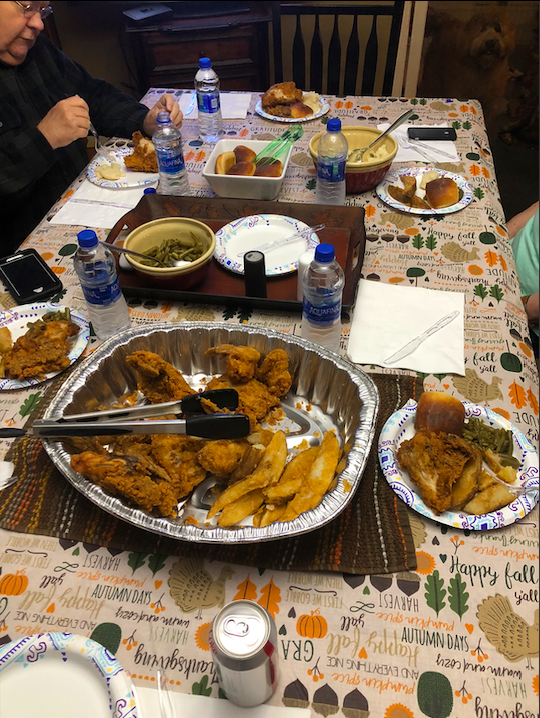
My sister didn’t bring anything because she doesn’t cook. My mother made mashed potatoes and bought some fried chicken along with some potato wedges. My grandmother made rolls and green beans. We sat down at my dining room table after having some small chit-chat for about thirty minutes in the kitchen. Well, part kitchen and part dining room because my kitchen and dining room are one big room. We played with my dog,Boomer, while I told them that it wasn’t anything different from a normal dinner with a slightly more focused discussion. I told them that I would just start different conversations with a certain question or two and we would all take it away from there. My mother and I were the only people at the house prior to the meal, so we had to wait for the other guests to arrive. My grandmother and step-grandfather were the next guests to arrive. The last guests to arrive were my sister and father. They were about 30 minutes later than everyone else because my sister had swim practice in a town about 15 minutes away. My mother and I set the table prior to the guests arriving. We set up plain paper plates and plastic silverware at the dining room table. We kept the foods in the oven to keep them warm while we were waiting for everyone to arrive. After everyone showed up, we brought all of the food to the kitchen table.

I didn’t have someone that I didn’t know at all, but I think that it is better that everyone present knew each other. In my opinion, it caused the deliberation to be more serious and allowed the guests to give answers that people who were strangers wouldn’t feel comfortable telling other strangers. All of the guests really opened up and got personal with our discussion. I know that if I was with a bunch of strangers for a Kentucky Kitchen Table that wasn’t at my kitchen table and I was out of my comfort zone, I would not be able to answer as candidly as I did during this Kentucky Kitchen Table.

Well, as with any meal, the first ten minutes or so were very silent with occasional small talk because everyone was eating. Then, everyone continued with a little small talk, but then the guests just started naturally talking about what they had done that day, how their weeks have gone, and how they were feeling. This went on for about fifteen minutes. After that, the conversation started slowing down, so I decided to start another conversation using the required question for our Kentucky Kitchen Table assignment which was “Beyond voting, paying taxes, and following laws, what does citizenship mean to you?” My mother and grandmother at first glance at that question both said, “Oh man, what else is there?” But that’s not what they thought once they really started thinking about it. My father was looking at me with a confused look on his face and said, “Beyond what?” and I had to tell him again, “Beyond voting, paying taxes, and following laws.” My mother and my father both answered that question with “To us, it means to have the freedom to do as we please.” My grandparents added, “To have the freedom to have the freedom of things like Speech and Religion.” After that, I made sure to add “Citizenship is also about helping those around you, whether they be your neighbors, family, or otherwise.” because, to me, that’s what citizenship means.

After this first question everyone looked at me expectantly, but I made sure to tell them that this wasn’t an interview or a questionnaire. This was just supposed to be a conversation with an occasional conversation starter whenever the conversation lulled. After that, it became a little more fluid. It seemed less like an interview and more organic. The conversation, even with the conversation starters, flowed naturally. I then asked everyone “What is the thing you love most about living where you do?” Ann answered that she loved being so close to her daughter so if she ever needed help, she could be there. Brent said he liked the community around Greenville and liked the school system. That was a little joke by him because he and Jennifer both work in education. There was a general answer after that that everyone agreed on. Everyone agreed that they all loved their communities because they felt like they were safe there.

After this, everyone had more or less finished up eating, so we took a minor break from the conversation starters and went back to some small-talk while my mother and I cleaned up the mess left from dinner off of the table. We cleared off the plates and trash from the table. We left everyone’s drinks for them though. We took the extra food and put it in the oven to keep the leftovers warm in case anyone wanted extras.

I also asked a few more questions like “Is there anything you can think to do that might make things better for you or your neighbors where you live?” and “Does your religious or spiritual identity relate to how you think we should treat other people? Does it relate to how you see yourself as a citizen?”. Both questions garnered answers that were a consensus among everyone at the table. For the first question, everyone agreed that yes, there are many things they can do like reach out and befriend neighbors more often. The overall answer to that question was basically, “Yes, being Christian does relate to how we treat our neighbors, because in the Bible it says to love your neighbors. It relates to us being citizens because it’s also our civic duty to love our neighbors and be kind to our fellow citizens.”

Finally, the last conversation I started was by asking the guests of the dinner “What social issue is closest to your heart and why?”. This one struck a chord with almost everyone at the table. My entire family, who are all former or current educators, of course talked about the issue of how the government has been tampering with educator’s retirement plans. They all agreed that that was a topic that was near and dear to their hearts. My grandparents, my sister, and I also mentioned the overpopulation and neglection of pets nowadays. My grandmother and step-grandfather have about 30 cats living outside of their house right now. That’s not me exaggerating, they just keep reproducing. She keeps trying to get them all fixed, but they keep evading her and she can’t bring herself to quit feeding them which is understandable, so of course she’d feel strongly about that. My sister and I frequently stay with our grandparents, so we’ve experienced the cats living there as well and that’s why we agreed as well.

What I learned from this whole experience is that everyone has different opinions, but also some of the same opinions. They also are very passionate about their opinions, but I also learned that from the class itself. My family all had different opinions on these conversation starters and would defend their opinion with their points of view. They would argue, but not harshly, just bicker mildly. At the end of almost every conversation something very interesting happened. At least I think it was interesting and it might not have happened at every Kentucky Kitchen Table. My family, no matter how much they disagreed or bickered, they would all try to find one common similarity in their opinions and try to agree with that one thing to kind of reunify them as a group, but still maintaining their individuality. It really made me feel warm that these people who have differences, unanimously decided to overlook those differences and focus on the similarities that they share to maintain the relationships they have. That’s one thing that bugs me about politics and other issues in the world today: Some people will literally destroy friendships just if someone doesn’t agree with them over that particular subject or another. I have had friends like that. It’s ridiculous to lose friends over your opinion, but of course I won’t change how I am not affiliated with a political party for example, because someone shouldn’t dictate that for me.

My experience at my Kentucky Kitchen Table relates to what we’ve learned in Honors 251 because one thing we’ve learned about is “How can people live better (or, at least, less badly) together?” I think my family has solved that question without even knowing that we’ve been learning about that question in the class. The way we can live better, or at least less badly, together is by forgetting about or ignoring the differences we all have because we are all different. That’s why we’re individuals. It’s about focusing on the similarities we ALL share and let those similarities bring us together. Just like mentioned in “How We Talk Matters” written by Keith Melville and others, if we talk and work together, then we can solve problems better.

Kaitlin’s Kentucky Kitchen Table

By Kaitlin

My Kentucky Kitchen Table was completed on November 10, 2018, in Louisville, Kentucky, my hometown. I invited four of my neighbors- Martha, Sandy, Gayle, and Jackie. My mom, Shannon, was also in attendance. I have lived in the same neighborhood in the same house for my entire life because of this over the years the neighborhood has changed and I have gotten multiple new neighbors. So, when I told my mom about this assignment we thought it would be a perfect way to get to know our neighbors that had moved in recently or who we just had not really interacted with much before.

Martha has been my across-the-street neighbor for my whole life. We are very close neighbors and even exchange Christmas gifts every year. She is a retired high school teacher and is married. She never had children. I wouldn’t consider her one of the “strangers” in my project, but a friend attending.

Sandy moved in three houses down across the street from me about a year ago. She is a single woman who doesn’t have any human children. I say human children because her miniature poodle Lola is her child. This is how my family met Sandy when we, last spring, got a new puppy ironically enough also named Lola. Her Lola and our Lola are best friends and have play dates frequently. I have had brief, small talk conversations with Sandy, but I do not feel I know her well because of the fact that my mom became friends with her while I was at school.

Gayle I had never met before this dinner. I had only seen her briefly in her yard. She lives two houses down from me, and I did not even know her name was Gayle until Martha suggested we invite her as well. She is divorced with grown children and is an accountant.

Jackie is married with two sons. Her sons are three and five years old. She is a nurse and her and my mom discovered that they actually work on opposite sides of the same hospital. I had never interacted with Jackie more than waving to her when she and her sons were playing outside.

Aside from my mom, I had not really explained why we were having this dinner beside saying I needed to for a class. So, we started with some small talk and got to know each other better during a small “cocktail hour” where we had cheese and crackers and wine for the adults. During this time, I stayed away from the questions on the assignment for the time being. I learned that Sandy had been married at one time a long time ago, but they have now been divorced for many years. She also explained more about her job and that she travels a lot because she helps open hotels in many different areas. Gayle mentioned that she loves going to the movies which is something I also love to do. So, we chatted about current movies for a while. Jackie talked about her kids and how they were enjoying their school and how her younger son Jack, still wanted to put on his Halloween costume at least once a week. It was nice to at least know a little about the people I live so close to.

After this, we moved into theDining Room and started our meal which is when I started describing the class and its objectives and then I decided to start with a buffer question so they could get a feel for what this discussion would be like before I asked the main citizen question. I decided to ask “Did you ever have meals around the table with your family or neighbors growing up? And did you like that?” I imputed my answer first so my guests would feel comfortable. “I almost always ate with my family around a kitchen table. I always enjoyed it and while we did watch TV most nights we always had to share our favorite thing that happened to us that day before the TV could be turned on. It could share something big or small, but this was a small way that my family connected with each other about the parts of our days that we were apart.” My mom answered next saying she lived across the street from her best friend growing up so they would have dinner at each other’s houses frequently and she enjoyed it very much because it felt like she was a part of two families. Martha, Gayle, and Sandy said about the same idea. They said they also ate regularly with their families and they found it was a way to reconnect with each other at the end of the day. Jackie said that her family did eat together but they did not normally eat around the table but in front of the TV in the living room. She said she thinks she would have enjoyed the intimate family time of being around an actual table. She did like how when they did eat at the table all together it felt special, and she liked how exciting it was to eat a formal meal together,

Now that everyone had an idea ofhow this discussion would kind of go, I then asked: “Beyond voting, payingtaxes, and following laws, what does citizenship mean to you?” They were alittle stumped at first, but then Sandy answered that it is getting involved inthe world around us. She also said, “As a citizen, you have human rightsand a voice in important international matters. We need to use our citizenshipto advocate for the big issues in our world today. We have rights and we needto use them.” Martha had a more small idea of citizenship. As citizens weshould, Martha thought, try to contribute what we can to the community we are currently inbecause first and foremost we are citizens of the Highlands then Louisvillethan Kentucky then the United States and then the world. She thought we need towork from the inside out. We needed to work on our community and fix thedeep-rooted problems there first. Once these two opposite views were presentedthe other members at the table kind of decided to stand on one side or theother. Jackie and my mom views fell closer to the small community effort iswhat citizenship entailed. Gayle, however, fell more with Sandy’s view ofcitizenship involving big actions. They talked about how it was important to bevocal about what we agreed with that our government was doing, but also bevocal about what we did not agree with, and we should try to take actions tofix, or at least make better, what we did not agree with.

Since the conversation then shifted to social issues, I decided to ask what social issue is closest to their hearts and why? My whole group was women so women’s rights came up quickly and all guests agreed that this was one of the issues closest to their hearts. They felt that this is an issue that affected both their views of citizenship.Women’s rights and sexism is an issue we all had faced in our community and have seen in the media the sexism other women are experiencing around the world. This question seemed to reinforce to the group the idea that social issues have a close connection to being a citizen and our duties of citizenship go beyond voting and paying taxes because we are citizens we have a duty to respond and fight these issues we are passionate about and hold in our hearts.

I learned from this dinner that it is good to discuss things with strangers even if it may make you uncomfortable or nervous.I was very nervous to host this dinner, hints why I waited to the last possible weekend to complete it. It actually was a very positive experience and I am glad I decided to do it with my actual geographic neighbors. The next day I saw Gayle outside and could actually go up to her, thank her again, and have a personal conversation instead of just doing a courtesy wave from a distance. I learned not only their names but also more about their beliefs and passions.This conversation showed me that what the article “How We Talk Matters” was right and how we talk really does matter. It may seem like sometimes that talking does not do much in the big picture context, but if it does nothing else it brings you closer to the people around you. I think that people coming together and finding similarities and embracing each other’s differences is an important aspect of citizenship. One definition of being a citizen is being a member of a community. I think that when you have connections to people in the community around you you become more passionate about helping your community and in turn helping the world